


Tribal gaming regulator unable to enforce key responsibilities due to lack of chairperson

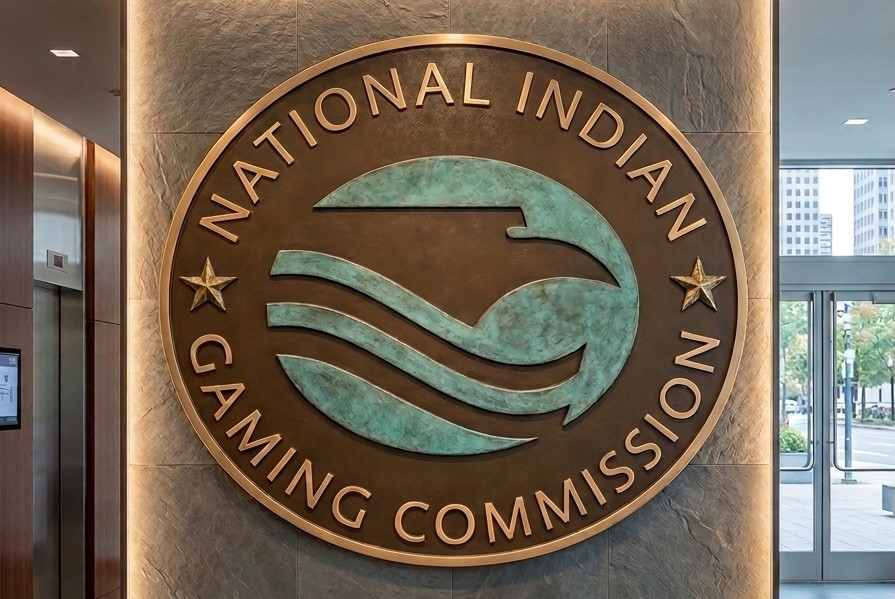
The National Indian Gaming Commission (NIGC), the federal regulator for US tribal gambling, is facing severely limited enforcement powers due to its lack of a chairperson, being unable to undertake some of its key responsibilities.
The chairperson of the NIGC is nominated by the US president and must be confirmed by the Senate. While the last chairperson stepped down from the role in January, President Donald Trump has yet to name a replacement, and the White House has not given a timetable for the nomination.

The commission’s enforcement powers are given to the chairperson, including oversight of legal and safety violations, approval of tribal gaming laws and certifying management agreements between tribes and casino operators.
The Commission’s most recent enforcement action was issued on 12 January, the same day that acting chairperson Sharon Avery’s term ended. Avery remains an associate commissioner.
The leadership void comes at a time when tribal governments also face growing concerns from online prediction markets. At least eight tribes have taken legal action against prediction market operators, arguing that their contracts constitute gambling and violate tribal gaming rights.

Prediction market operators argue that their products are futures contracts, not gambling, and fall under federal derivatives regulation.
According to the Associated Press, the vacancy has also stalled a management agreement between the Iowa Tribe of Oklahoma and the gambling brand Harrah’s parent company.
The tribe opened a 175,000-square-foot casino in Chandler in April but plans for the Harrah’s parent company to assume the day-to-day management have been delayed because the NIGC cannot certify the management agreement without a chairperson.

Dig Deeper
Related stories
 2025/08/11: Laguna Development joins anti-online gambling group
 2026/07/15: Indian Gaming Association takes prediction market fight to Washington, D.C.
 2025/04/01: FanDuel and DraftKings made peace with California tribes over sports betting expansion
 2026/02/17: Indian Gaming Association says prediction markets pose urgent threat to tribes
2025/08/11: Laguna Development joins anti-online gambling group
2026/07/15: Indian Gaming Association takes prediction market fight to Washington, D.C.
2025/04/01: FanDuel and DraftKings made peace with California tribes over sports betting expansion
2026/02/17: Indian Gaming Association says prediction markets pose urgent threat to tribes
The Backstory
A regulator built around a single decisive office
The National Indian Gaming Commission’s leadership gap matters because the agency’s authority is not evenly distributed across its three-member structure. Under the Indian Gaming Regulatory Act, some of the commission’s most consequential powers sit with the chairperson, including approval of tribal gaming ordinances, management contracts and enforcement actions tied to legal or safety violations. Without a Senate-confirmed chair, the commission can continue some administrative work but is constrained on decisions that often determine whether tribal gaming projects can move, expand or correct compliance issues.
That structure has turned a personnel vacancy into a market and governance problem. Tribal gaming is no longer a niche segment of the U.S. gambling economy. It is a $43.9 billion industry, according to the NIGC’s fiscal 2024 gross gaming revenue report at NIGC.gov, and it supports government services across Indian Country, from health care and education to housing and public safety. When the federal regulator cannot exercise key powers, the consequences can be felt by tribes, casino operators, lenders and state governments that rely on clear approvals and enforceable rules.
Online pressure has sharpened sovereignty concerns
The vacancy comes as tribal governments are facing a broader challenge from digital gambling models that do not fit neatly into older regulatory categories. Prediction markets have become the most immediate flashpoint. Operators contend their sports-event contracts are federally regulated derivatives, not gambling products. Tribes and state gaming regulators argue the products function like sports bets and risk bypassing gaming compacts, state laws and the Indian Gaming Regulatory Act.
That dispute has moved from industry panels to Capitol Hill. The Indian Gaming Association has been pressing lawmakers in Washington to restrict prediction-market gambling, arguing that federal commodities oversight should not become a route around tribal and state gaming authority. The group has sought changes to the CLARITY Act to make clear that sports and casino-style wagering cannot be offered through prediction markets in a way that preempts existing gaming laws.
The political stakes are significant. Tribal gaming rights are rooted in government-to-government compacts and a federal statutory framework designed to balance sovereignty, economic development and regulation. If prediction markets are allowed to offer sports-related products nationwide under commodities law, tribes fear the result would be an unlicensed, federally shielded competitor operating outside the compact system. That concern helps explain why at least eight tribes have taken legal action against prediction market operators and why the absence of a fully empowered federal tribal gaming regulator is drawing scrutiny now.
California remains the testing ground for commercial detente
The same sovereignty issues have shaped the long fight over online sports betting in California, the largest untapped U.S. market. In 2022, voters rejected competing ballot measures backed by tribes and commercial sportsbook operators after one of the costliest gaming campaigns in U.S. history. The result left no side with legal sports betting and reinforced a lesson that national operators have since acknowledged: California cannot be opened without tribal leadership.
That recalibration has been visible in public. DraftKings and FanDuel executives recently sought to repair relations with California tribes at the Indian Gaming Association’s annual convention, saying any future effort must be led by tribes and structured around sovereignty, ownership and long-term tribal benefit. Their tone contrasted with the 2022 campaign, when commercial operators tried to legalize mobile sports betting through a measure tribes opposed.
California tribal leaders, however, have not rushed toward another ballot fight. At ICE 2025, leaders from Morongo, San Manuel and Pechanga described efforts to develop a unified tribal sports betting policy before returning to voters, possibly no earlier than 2026. They also warned that polling still shows voter resistance to expanded gambling, particularly mobile wagering. The message to commercial partners has been consistent: patience, respect and tribal control are prerequisites, not negotiating points.
Digital expansion divides opportunity from threat
Not all tribal gaming entities view online gambling the same way. Some see digital products as necessary to compete with national gambling brands and to preserve revenue as consumer behavior shifts. Others see online casino expansion as a direct threat to land-based tribal properties, particularly in states where tribal casinos are among the few legal gambling options and serve as major regional employers.
That split was illustrated when Laguna Development Corp., representing the Pueblo of Laguna, joined the National Association Against iGaming. The New Mexico tribal corporation warned that online real-money gambling could drain revenue from physical casinos that fund elder care, scholarships, health services and public safety. Its stance reflects a broader concern among tribes that large online operators can scale quickly while contributing little to local economies or tribal government programs.
At the same time, other companies are positioning themselves to help tribes build digital capacity on tribal terms. Acquire.bet’s partnership with Trilogy Group was framed as a way to support tribal igaming brands through marketing, acquisition planning and digital strategy. That type of arrangement highlights the strategic crossroads facing many tribal enterprises: reject online gambling as cannibalization, embrace it through controlled partnerships or seek a hybrid model that protects land-based assets while preparing for future markets.
Why the NIGC vacancy carries wider consequences
The NIGC’s limited enforcement posture is therefore not occurring in isolation. It intersects with three simultaneous pressures: the rise of prediction markets, renewed commercial interest in tribal-led sports betting and internal tribal debate over online casino expansion. Each area depends on clear lines of authority. Tribes want confidence that federal law will protect compacted gaming rights. Operators want certainty that agreements can be approved. States want assurance that gaming policy cannot be undercut by products labeled as financial contracts.
The stalled management arrangement involving the Iowa Tribe of Oklahoma and the parent company of Harrah’s shows the practical effect. A tribe can open a major casino, line up an experienced commercial management partner and still face delay if the regulator cannot certify the agreement. That is more than a paperwork problem. Management contracts can affect financing, operations, employment, revenue projections and the ability of a tribe to use gaming proceeds for government services.
The enforcement gap also risks weakening deterrence at a time when tribal gaming is under pressure from products moving faster than traditional regulatory systems. Even if the commission’s staff and associate commissioners continue routine work, the absence of a chair limits the agency’s ability to act decisively. For an industry built on compacts, federal oversight and tribal sovereignty, delay can become its own policy outcome.
That is why the chair vacancy has become a test of federal commitment to the tribal gaming framework. The next chair will inherit not only routine regulatory duties but also an industry facing questions the original 1988 law did not anticipate: whether sports contracts are gambling, how online platforms should interact with tribal rights and how federal agencies should coordinate when financial technology collides with gaming law. Until that appointment is made and confirmed, tribal governments are left defending a rapidly evolving market with one of their key federal tools only partly available.
