


Sportsbet told to stop using AI content of AFL players

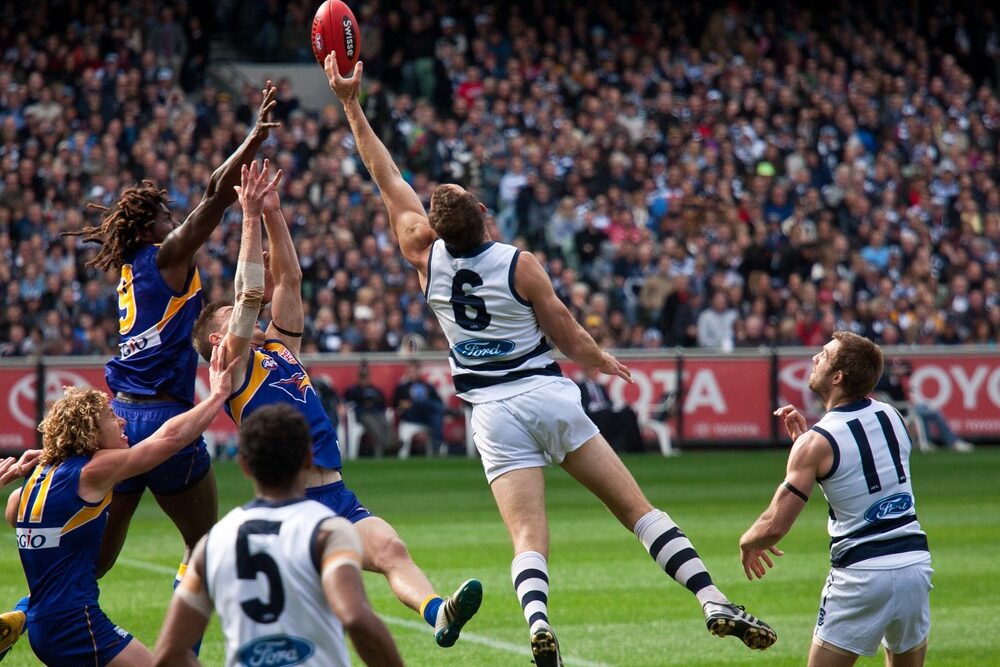
The Australian Football League (AFL) has told its sportsbook partner, Sportsbet, to stop posting AI-generated content of its athletes without permission from the players.
According to The Guardian, the content, posted on Sportsbet’s Instagram platform, depicts the players in various scenarios. One included a manipulated video of former Brisbane Lions player Lachie Neale accepting an award at his new club, mimicking Snoop Dogg’s 2018 speech in which he accepted a Hollywood Star.

“Last but not least, I want to thank me,” the AI-generated content of Neale said. “I want to thank me for believing in me. I want to thank me for doing all this hard work.”
The AFL has since asked Sportsbet to delete all videos that contain players saying lines from films, television or speeches, as well as videos depicting players reacting to real-world events. The videos have since been removed.
Sportsbet’s AI-generated content was also not only restricted to players. The sportsbook generated videos of coaches too, prompting the AFL Players’ Association to write to the AFL, sharing its concerns over the AI content and saying it was not impressed and that videos of players and their coaches were not permitted without approval.

A Sportsbet spokesperson told The Guardian that the videos were only for entertainment and engagement purposes and that it has listened to the feedback and will “respond accordingly.” They continued, “We’re continuing to work with the AFL on the evolving use of AI in our content, taking account of partner feedback and community expectations.”
Earlier in the year, the Australian government introduced measures to crack down on gambling ads, meaning that athletes will no longer be allowed to appear in them. The measure goes into effect next year, but some have raised concerns that it should be further amended to prevent operators like Sportsbet from using AI to circumvent the regulations.
Charlotte Capewell brings her passion for storytelling and expertise in writing, researching, and the gambling industry to every article she writes. Her specialties include the US gambling industry, regulator legislation, igaming, and more.

Dig Deeper
Related stories
 2026/07/03: Australia’s Sportsbet cleared by financial watchdog over prior AML/CTF control deficiencies
 2025/08/05: Sportsbet faces scrutiny over multi-bet ads on AFL website
2026/01/05: Class-action lawsuit against Australia’s Sportsbet likely to expand after court order
2026/03/31: Sportsbet drops stadium branding from AFL deal
2025/08/05: Sportsbet faces scrutiny over multi-bet ads on AFL website
2026/01/05: Class-action lawsuit against Australia’s Sportsbet likely to expand after court order
2026/03/31: Sportsbet drops stadium branding from AFL deal
2026/07/03: Australia’s Sportsbet cleared by financial watchdog over prior AML/CTF control deficiencies
2025/08/05: Sportsbet faces scrutiny over multi-bet ads on AFL website
2026/01/05: Class-action lawsuit against Australia’s Sportsbet likely to expand after court order
2026/03/31: Sportsbet drops stadium branding from AFL deal
The Backstory
AI dispute lands amid a wider advertising retreat
Sportsbet’s use of AI-generated images and videos of Australian Football League players has drawn the bookmaker into a fast-moving debate over consent, synthetic media and gambling promotion in sport. The AFL’s direction that its wagering partner remove the content is not an isolated brand-management dispute. It comes after months in which Sportsbet has tried to reduce the visibility of some betting promotions while preserving the most valuable parts of its relationship with the league.
The company’s AFL partnership gives it wagering category exclusivity and access to digital and broadcast-linked assets in one of Australia’s most lucrative sports markets. That makes any dispute over how players, coaches or club identities are used commercially more than a social media issue. The AI posts raised questions about whether gambling operators can use emerging content tools to generate engagement around athletes even as governments and public health advocates seek to restrict the use of sporting identities in betting ads.
Sportsbet has said the material was intended for entertainment and engagement and that it is working with the league on expectations for AI content. But the episode cuts across a policy environment in which lawmakers have already moved to limit gambling marketing around athletes. Measures due to take effect next year are intended to stop athletes from appearing in gambling ads, and critics have warned that synthetic content could become a workaround unless rules are tightened.
Self-regulation has become Sportsbet’s main defense
Before the AI content controversy, Sportsbet had moved to position itself as responsive to community concern over gambling saturation in live sport. The company said it would stop running live odds commercials during National Rugby League and AFL broadcasts, part of a broader reduction in wagering advertising. That decision followed sustained pressure for stronger limits on betting ads and came after the federal government had considered caps on broadcast advertising and restrictions on social media promotion.
The shift was framed by the industry as evidence that operators could adjust without a blanket ban. Responsible Wagering Australia argued at the time that self-regulation could reduce exposure for children and vulnerable groups while avoiding unintended consequences for broadcasters and sporting bodies. Sportsbet’s decision to drop live odds-style ads before the football seasons was a visible concession in a market where Australians bet tens of billions of dollars on sports each year.
Yet the company’s later conduct has kept the self-regulation argument under strain. Critics said Sportsbet appeared to be withdrawing from the most politically sensitive formats while maintaining aggressive promotion in digital channels. That distinction matters because online advertising is harder for viewers to avoid and has become central to betting operators’ customer acquisition and retention strategies.
The tension was evident when Sportsbet faced criticism for promoting expanded same-game multi-bets on the AFL website after pulling similar ads from free-to-air television broadcasts. The ads did not breach existing rules, but gambling reform advocates argued they showed why voluntary restraint was insufficient. Lawmakers including Kate Chaney and David Pocock used the episode to press for faster and broader reforms, while public health campaigners said the migration from television to online channels undermined claims of meaningful restraint.
AFL relationship balances revenue and reputational risk
The AFL’s response to the AI posts reflects the league’s need to manage competing pressures. Sportsbet is a major commercial partner, and the wagering relationship is understood to be worth about AU$100 million over seven years. The deal protects Sportsbet’s exclusivity against rival bookmakers and includes assets beyond visible stadium branding, including digital advertising, hospitality and rights linked to broadcast inventory.
At the same time, the league has faced criticism over its dependence on wagering revenue and its role in normalizing betting products tied to individual matches. Same-game multi-bets have been particularly contentious because they create higher-engagement wagering markets and can raise integrity concerns. Previous reporting cited concerns that the AFL receives a larger revenue share from such bets and had sought a greater cut because of the risks linked to wagering.
Sportsbet tried to address part of that reputational problem when it agreed to drop stadium branding from its AFL deal at Marvel Stadium and the Melbourne Cricket Ground. The company described the move as voluntary and part of a multi-year strategy to reduce the prominence of wagering advertising around live sport. The step reduced some of the most conspicuous betting signage in AFL-controlled venues, but it did not unwind the commercial structure of the partnership.
That is the context for the current AI dispute. Even if synthetic videos are posted on social platforms rather than in-stadium or during broadcasts, they can reinforce the association between athletes, clubs and betting brands. For players and coaches, the issue is also one of personality rights and consent. For the AFL, it raises the risk that commercial partners can create quasi-endorsements without formal appearances, complicating efforts to show that betting promotion is being reduced.
Regulators have widened their focus beyond ads
Sportsbet’s position in Australia’s wagering market means advertising disputes are unfolding alongside tighter scrutiny of legal compliance. The bookmaker, owned by Flutter Entertainment, has about 40% of Australia’s online wagering market, making it central to debates over whether large operators can be trusted to police themselves.
In July, the company received some regulatory relief when AUSTRAC said it had completed remediation work tied to earlier anti-money laundering and counter-terrorism financing deficiencies. The financial intelligence agency had required Sportsbet to improve risk assessment, customer monitoring and suspicious matter reporting after identifying serious weaknesses in its controls. AUSTRAC later said the company had implemented and operationalized the required changes, based on external audit findings.
The finding that Sportsbet had been cleared by AUSTRAC over prior AML/CTF control deficiencies removed one significant compliance overhang. But the watchdog also warned that online gambling faces heightened risks from identity and payment fraud, signaling that the sector remains under close supervision. That message was reinforced by separate action against rival Entain, which entered a court-enforceable undertaking after the communications regulator found hundreds of breaches of national self-exclusion rules.
The broader lesson for Sportsbet is that compliance is becoming multidimensional. Operators are judged not only on financial-crime controls, but also on advertising, responsible gambling, data use, customer monitoring and the way technology is deployed. AI-generated content sits at the intersection of several of those issues because it can scale quickly, blur consent and intensify personalized marketing around sports audiences.
Court claims add pressure on business practices
Sportsbet is also defending litigation that could test the legality of one of its betting mechanisms. A class action over the company’s “fast codes” system alleges that Sportsbet breached the federal Interactive Gambling Act by enabling in-play betting through codes that allowed customers to place live bets online. The company denies wrongdoing and says its conduct was lawful.
The case expanded in significance after a Supreme Court of Victoria order required affected customers to be told they would automatically become group members unless they opted out. The proceeding, filed by plaintiff Jeremy Bergman, could cover thousands of customers and seeks refunds for live bets placed using fast codes from 2018 to 2024. Sportsbet has warned that if the claim succeeds, customers may have to repay winnings from the disputed betting method.
The lawsuit, described in a report on the Sportsbet class action likely to expand after a court order, adds another layer to the scrutiny facing the bookmaker. An allowed external report by The Straight said affected in-play punters are set for automatic inclusion in the proceeding at this class-action update.
Together, the litigation, regulatory remediation and advertising disputes show why the AI content episode carries broader stakes. Sportsbet is trying to maintain growth and exclusivity in a lucrative market while demonstrating that it can adapt to changing political and social expectations. The AFL, meanwhile, must protect player consent and the integrity of its commercial model without deepening criticism that sport has become too dependent on wagering money. AI has made that balance harder by giving betting brands new tools to generate attention in areas where formal advertising rules are still catching up.
