


Playradar launches football-themed gaming titles for 2026 World Cup

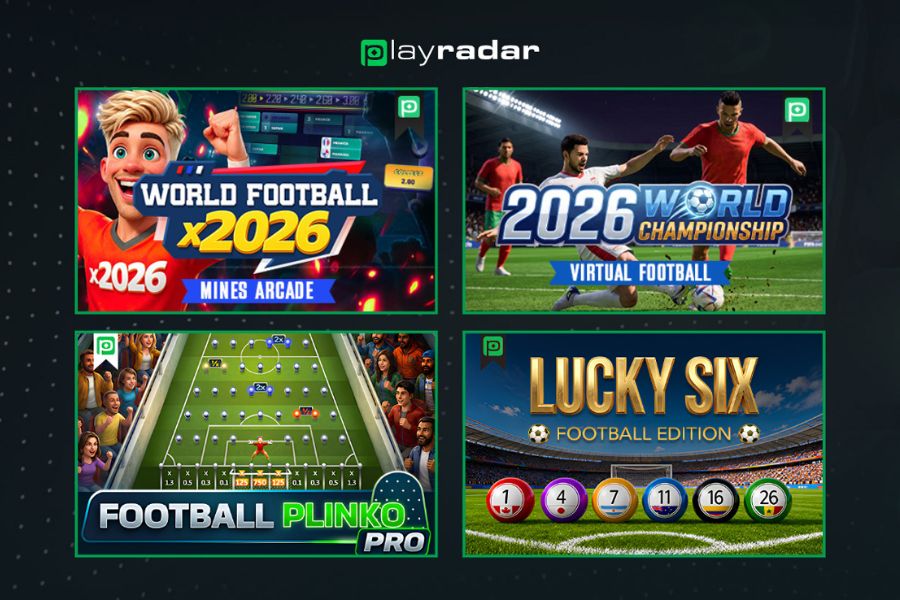
The online gaming brand of Sportradar, Playradar, has released four football-themed gaming titles to coincide with the start of the 2026 World Cup on June 11.
The new titles include World Football x2026, Virtual Football World Championship 2026, Football Plinko, and Lucky 6: Football Edition. According to Playradar, each was designed to target various player bases.

Among the titles, more focus is placed on World Football x2026, a new original title from Playradar. It combines mine-style mechanics with a tournament bracket layout. Players can select outcomes for the Round of 16 and, if correct, advance to later stages of the game. If they are wrong, the game ends with cash-out options available throughout the process.
The other three games include a plinko-style format, a virtual football product that allows players to bet on outcomes and in-play markets, and a football-themed bingo spin-off.
“The scale of the 2026 World Cup is unprecedented with the sheer volume of fans entering markets worldwide creating huge demand for football-themed content, and the operators best placed to succeed are those with games that meet every need. These four titles have each been designed with that in mind. The World Cup attracts a huge spectrum of customers, and when taken together, this product stack provides operators with the tools needed to keep them engaged throughout the tournament,” said Edo Haitin, Executive Vice President of Igaming.

Playradar launched back in March as Sportradar’s first online gaming brand, combining sports data with casino-style gaming.

Dig Deeper
Related stories


The Backstory
World Cup scale pushes suppliers beyond traditional betting
Playradar’s release of four football-themed gaming titles for the 2026 World Cup reflects a broader shift in how betting and gaming companies are preparing for the largest edition of the tournament. The World Cup, scheduled to begin June 11, 2026, will feature 104 matches across North America, creating a longer commercial window and a larger set of audiences than prior editions.
For suppliers, that scale has changed the product brief. The tournament is not just a betting calendar event built around match odds, outright markets and in-play wagering. It has become a chance to package football interest into casino-style games, virtual formats, free-to-play products and retention tools designed to keep users active between matches. Playradar’s new slate fits that strategy by offering several ways for operators to convert football attention into gaming sessions, from bracket-style mechanics to plinko and bingo-inspired formats.
The move also illustrates why Sportradar has been pushing deeper into igaming. The company already serves sportsbooks with data, odds services, streaming and integrity tools. Through Playradar, it is attempting to extend that infrastructure into products that sit closer to casino revenue and player engagement. That expansion gives operators a way to link sportsbook customers with gaming content during a tournament expected to generate intense traffic across regulated markets.
Sportradar built Playradar for cross-sell
The foundation for the current launch was laid in March, when Sportradar introduced Playradar as its first online gaming brand. The company said at the time that the brand would focus on integrating sportsbook and casino experiences, using sports data to create content that could travel across betting and gaming channels. The original announcement described a portfolio that would include virtual sports, slots, table games and streaming-linked products.
That positioning is important to the World Cup launch. Playradar was not presented as a stand-alone casino studio disconnected from Sportradar’s core business. It was framed as a cross-sell product line for operators that already rely on sport to acquire and retain customers. The company’s launch of the Playradar online gaming brand emphasized longer sessions and higher player value, two priorities that become more urgent during major sporting events when acquisition costs rise and customers have many competing options.
The brand also arrived with leadership changes. Sportradar appointed Edo Haitin, previously chief executive of Playtech Live, to lead its igaming division. His background in live gaming and product development signaled that Sportradar was seeking to blend sports-led demand with interactive formats familiar to casino operators. The World Cup titles are an early test of that strategy: They use football imagery and tournament logic but rely on mechanics that are meant to function like gaming products rather than conventional betting markets.
Rights, sponsors and data deals widen the market
The commercial backdrop has also become more favorable for gambling-linked World Cup products. FIFA has expanded its relationships with betting and data companies, giving the sector a more visible role around the tournament than it had a decade ago. Betano, operated by Kaizen Gaming, became the first betting sponsor of a World Cup during the 2022 tournament in Qatar under a Europe-only arrangement. It has since expanded that relationship for 2026.
In April, Betano agreed to sponsor the World Cup in European and Latin American markets, adding to the perception that gambling brands will be central advertisers around the event. FIFA has projected the expanded tournament will generate US$11 billion in revenue, a figure that helps explain why suppliers and operators are moving early. The Betano sponsorship extension across Europe and Latin America also came alongside other commercial moves, including a deal with Stats Perform to allow certain betting operators to livestream World Cup matches online.
Those agreements matter for a company such as Sportradar because they point to a tournament environment in which official data, live content and regulated betting products are increasingly connected. Even where Playradar’s new games are not direct sports bets, their value depends on the same cycle of attention that match data and broadcast access create. More official betting partnerships can make operators more willing to invest in tournament-themed content and promotions, particularly if they believe customers will spend more time inside betting apps throughout the monthlong event.
Latin America becomes a focal point
Latin America is a key reason suppliers are treating 2026 as a larger opportunity than previous World Cups. Matches will be played in the U.S., Canada and Mexico, placing the event in time zones that are favorable for audiences in many Latin American markets. That proximity could increase viewing, betting and gaming activity, particularly in countries where football already drives customer acquisition.
Media Troopers, a digital marketing and customer acquisition firm, has already moved to expand in Latin America ahead of the tournament. The company said it would provide operators with soccer-focused marketing channels and localized campaign tools across Brazil, Mexico, Colombia, Argentina and Chile. Its Latin America expansion before the 2026 World Cup shows how affiliates and acquisition platforms expect operators to spend heavily to reach fans during the tournament.
That regional push has implications for Playradar. Sportradar said Playradar’s rollout would include North America, Latin America and the U.K., markets where sportsbook-to-casino cross-sell can be valuable if regulation allows it. Football-themed gaming products give operators a way to localize content without depending entirely on national-team betting performance. If Brazil, Argentina, Mexico or Colombia advance, engagement may rise naturally. If they exit early, operators still need tournament-themed products that can keep users active through later rounds.
Data-driven storytelling feeds engagement
Sportradar has also used the run-up to the World Cup to highlight its data and modeling capabilities. In a separate release, the company said an AI-based simulation projected France and Spain as the most likely winners of the 2026 tournament, with each winning about 16,000 out of 100,000 simulated tournament runs. The model used sportsbook data, historical match information and tournament factors to generate the forecasts.
The AI simulation predicting Spain or France as potential World Cup winners serves a different commercial function than Playradar’s games, but the two are connected. Forecasts create discussion, betting angles and content for operators. Gaming titles create additional places for that attention to be monetized. Together, they show how Sportradar can use its data assets not only for odds and risk management but also for marketing narratives and entertainment products.
The tournament’s expanded format increases the importance of these tools. More matches mean more betting markets, but also more downtime, more casual fans and more chances for users to disengage after a key match. Bracket-style and football-themed casino products are designed to fill those gaps. They can be promoted around knockout stages, national teams, player storylines and statistical predictions, making them useful across the full tournament calendar rather than only during live match windows.
Operators prepare for a crowded promotion cycle
Playradar’s launch comes as operators are building their own World Cup promotional calendars. BetMGM, for example, has tied a US$500,000 bonus-bet pool to each goal scored by the U.S. men’s national team. Eligible customers must place a pre-match wager of at least US$5 on a U.S. match to qualify. The operator also plans to continue its 2-Up Early Payout soccer promotion and offer more than 300 betting markets per match.
The BetMGM promotion tied to U.S. goals underscores the competitive environment Playradar is entering. Operators will use bonus bets, sweepstakes, retail events, watch parties and free-to-play games to capture attention. Suppliers must give them content that is easy to market, distinct from standard odds and capable of supporting retention after acquisition campaigns bring users into the app.
That is the practical stake behind Playradar’s four-title release. The World Cup will drive large audiences, but attention alone will not guarantee revenue. Operators need products that can convert casual football interest into repeat activity while staying within local regulatory limits. Sportradar’s bet is that its data relationships, tournament modeling and new gaming brand can combine into a broader engagement stack. The 2026 World Cup will test whether that strategy can make Playradar more than an extension of Sportradar’s sportsbook technology business.
