


PhilWeb posts 96% y-o-y 2Q26 revenue growth


Philippines technology and digital infrastructure group PhilWeb has posted a 96% yearly increase in total revenue for 2Q26, reaching Php352.4 million (US$5.8 million)1 PHP = 0.0163 USD
2026-08-12Powered by CMG CurrenShift, boosted by significant growth in its digital solutions segment.
The group has been significantly increasing its business recently, revamping leadership and partnering with key operators in both the land-based and online space to drive growth.

Second quarter income rose to Php47.02 million (US$767,319)1 PHP = 0.0163 USD
2026-08-12Powered by CMG CurrenShift, compared to a Php16.26 million (US$265,347)1 PHP = 0.0163 USD
2026-08-12Powered by CMG CurrenShift loss registered in the same period of 2025, boosted by the fact that there are “131 locations across the country that are operating under PhilWeb,” under partnerships.
In the first quarter of this year, PhilWeb secured PAGCOR accreditation for B2B Providers, enabling the group to “deliver technology and operational services to licensed gaming operators within PAGCOR’s regulated ecosystem.”
PAGCOR is the gaming regulator in the Philippines.

Given this licensing, the group in the first half of the year “entered into strategic partnerships with several casinos for the operation and management of regulated online gaming platforms,” under which it “provides end-to-end operational and technology services.” This tie-in with its ability to provide “game content distribution and aggregation business services” has allowed for the “strategic expansion of its role within the Philippines’ regulated gaming ecosystem”.
EBITDA for the quarter hit Php51.5 million (US$840,429)1 PHP = 0.0163 USD
2026-08-12Powered by CMG CurrenShift, an 886% yearly rise, with the margin expanding to 15% in 2Q26.
“The rapid sequential growth and margin expansion in the second quarter validate the massive operating leverage of our digital gaming solutions segment,” highlighted the group’s President Brian Ng.

“By empowering tier-one licensed operators and global content providers, we are establishing a comprehensive, regulatory-compliant digital ecosystem that drives long-term commercial value,” furthered the executive.
As the group evolves following the recent election of strategic investor Lance Y. Gokongwei to its Board of Directors, the company is “now focused on scaling its B2B AI-enabled infrastructure” to “strengthen three core operational priorities: fraud detection, regulatory compliance, and customer service efficiency,” aiming to be “a technology leader in the region’s regulated digital platform industry.”
The group currently powers the regulated online frameworks for Okada Manila, Hann Resort, NUSTAR Online, Newport World Resorts, PT Gaming and FBM Philippines.
It also integrates leading global content providers including Pragmatic Play and Games Global into its offerings.

Dig Deeper
Related stories
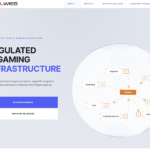 2026/06/22: PhilWeb unveils new visual identity as “technology-driven infrastructure provider”
 2026/07/09: PhilWeb inks exclusive partnership with Pragmatic Play to provide its games to licensed operators
 2026/06/23: Philippine billionaire Lance Gokongwei assuming personal 15% stake in gaming tech firm PhilWeb
 2026/04/17: Philippine online gaming surpasses land-based casinos as largest revenue source
2026/06/22: PhilWeb unveils new visual identity as “technology-driven infrastructure provider”
2026/07/09: PhilWeb inks exclusive partnership with Pragmatic Play to provide its games to licensed operators
2026/06/23: Philippine billionaire Lance Gokongwei assuming personal 15% stake in gaming tech firm PhilWeb
2026/04/17: Philippine online gaming surpasses land-based casinos as largest revenue source
The Backstory
A fast pivot from outlets to infrastructure
PhilWeb’s second-quarter surge did not emerge from a single contract or a short-term market rebound. It followed a rapid repositioning of a company once identified largely with e-Games outlets into a business-to-business technology provider serving licensed Philippine gaming operators. The latest numbers reflect that transition: higher revenue from digital solutions, a return to profit and a wider role in the regulated online gaming market overseen by the Philippine Amusement and Gaming Corp.
The company’s strategy has been to move away from balance-sheet-heavy operations and toward platform management, systems integration, content aggregation and operational support. That model gives PhilWeb exposure to the expansion of online gambling without necessarily owning the consumer-facing casino brands. Instead, it sits behind operators, providing the technology and services needed to run regulated digital platforms.
That distinction matters in the Philippines, where gaming companies are seeking growth in online channels while regulators, banks and payment providers scrutinize the sector more closely. PhilWeb’s recent PAGCOR accreditation as a B2B provider positioned it to serve licensed operators inside the regulated ecosystem, giving partners a compliance-oriented route to expand online. The company has repeatedly framed its role as an infrastructure layer rather than a traditional gaming operator.
New partners supplied the revenue base
The company’s second-quarter performance was built on a series of partnerships signed or launched earlier in the year. In May, PhilWeb and FBM Philippines announced plans to deploy an online gambling platform across at least 30,000 electronic bingo machines in 500 venues, an effort to link digital play with established retail locations. The FBM rollout across gaming machines gave PhilWeb a nationwide channel tied to physical venues, supporting an online-to-offline model rather than a purely remote product.
That agreement illustrated how PhilWeb has tried to use existing land-based networks as distribution points for digital engagement. FBM, which has operated in the country for more than two decades, brought an installed machine base and venue relationships. PhilWeb brought platform operation and online functionality. The combination offered both companies a way to increase player engagement while keeping the model connected to regulated, known locations.
PhilWeb also moved into branded online casino support. Earlier in the year, it helped relaunch Hann Online in the Philippines, providing infrastructure for the digital counterpart of Hann Casino Resort. The platform was described as supporting thousands of games, local payment options and customer service features. Its launch underscored how quickly PhilWeb could deploy a compliant online product for a casino partner at a time when new digital entrants were competing with larger incumbents.
Those agreements were followed by other operator relationships, including support for Okada Manila, NUSTAR Online, Newport World Resorts, PT Gaming and FBM Philippines. Together, they explain the scale effect visible in the second quarter. As more platforms and locations used PhilWeb’s systems, incremental revenue could rise faster than fixed costs, producing the margin expansion highlighted by management.
Content aggregation became another lever
PhilWeb’s expansion has not been limited to platform operations. It has also sought a place in game content distribution, where the ability to host and integrate popular titles can deepen relationships with licensed operators. In July, the company announced an exclusive partnership with Pragmatic Play for licensed Philippine operators, allowing operators to access the supplier’s games through PhilWeb’s remote infrastructure and API-enabled integration.
The Pragmatic Play agreement strengthened PhilWeb’s case that it can act as a commercial and technical bridge between global game suppliers and local licensed operators. For operators, outsourced aggregation can reduce integration complexity and help them add content faster. For PhilWeb, content hosting creates recurring, scalable revenue tied to operator adoption and player activity.
The arrangement also signaled a broader ambition. PhilWeb said the partnership could serve as a platform for additional collaborations with international gaming services providers. That is important because online gaming platforms compete heavily on content breadth and user experience. If PhilWeb can combine regulatory familiarity, local operator access and global supplier relationships, it could become harder to displace within the Philippine B2B stack.
The second-quarter results suggest that content and platform services are beginning to reinforce each other. Operators that rely on PhilWeb for platform support may also use its aggregation services, while content providers gain a distribution route into a regulated market. This network effect is central to the company’s claim that it is building a digital gaming ecosystem rather than a set of isolated vendor contracts.
Capital and governance reset the company’s profile
PhilWeb’s commercial push has coincided with a governance and capital reset. The most visible development was the entrance of businessman Lance Gokongwei as a strategic investor. In July, the company confirmed that Gokongwei was taking a personal 15% stake in PhilWeb through a Php2.03 billion subscription, separate from his role at JG Summit Holdings.
The investment gave PhilWeb fresh capital as it scaled its technology roadmap, including data intelligence and automated compliance tools. It also raised the company’s profile with investors. Gokongwei is one of the Philippines’ most prominent business figures, and his backing was presented by PhilWeb as an endorsement of its technology platform and long-term plan.
The transaction also connected with PhilWeb’s broader operator ecosystem. NUSTAR Online, one of PhilWeb’s platform clients, is linked to NUSTAR Resort Cebu, an asset associated with JG Summit through Universal Hotels and Resorts Inc. While the subscription was described as personal, the overlap underscored how PhilWeb’s new strategy sits at the intersection of major Philippine casino, resort and technology interests.
Capital matters because PhilWeb’s next phase is less about simple platform deployment and more about defensible infrastructure. The company has said it wants to scale AI-enabled systems focused on fraud detection, regulatory compliance and customer service efficiency. Those functions are increasingly critical in digital gambling, where regulators expect tighter monitoring and operators need tools to manage risk across faster, higher-volume channels.
A rebrand followed the operational shift
The company’s public-facing identity changed after the business model had already begun to move. In late June, PhilWeb unveiled a new visual identity as a technology-driven infrastructure provider, saying the refreshed branding aligned its investor communications and digital presence with its evolving role in regulated digital industries.
The rebrand was more than cosmetic. It gave investors and partners a clearer narrative for the company’s transformation: compliance, infrastructure, platform services and scalable technology. PhilWeb said its redesigned website would provide better access to information on corporate governance, investor relations and operational updates, a useful step for a company courting institutional credibility after a period of ownership and board changes.
The timing also reflected improving financial results. PhilWeb returned to profit in the first quarter, reporting Php13.9 million in net income after tax compared with a year-earlier loss, as revenue rose 30.4% on contributions from eGaming Solutions. The second-quarter figures accelerated that trend, showing that the new model was not only generating revenue but also improving operating leverage.
The stakes for Philippine online gaming
PhilWeb’s performance lands in a market where online gaming remains both attractive and politically sensitive. The Philippines has licensed operators and a regulator seeking to capture tax and economic benefits from digital gambling, but the sector faces pressure over consumer protection, payments, fraud and social risk. Last year’s move by the Bangko Sentral ng Pilipinas ordering e-wallets to delink from igaming platforms showed how quickly policy decisions can affect gaming revenues and user access.
That backdrop helps explain PhilWeb’s emphasis on compliance and regulated infrastructure. Operators need growth, but they also need systems that can withstand scrutiny from PAGCOR, financial institutions and policymakers. A B2B provider that can support identity checks, fraud controls, reporting and customer service may become more valuable as the market matures.
The second-quarter results therefore serve as an early test of PhilWeb’s reinvention. The company has converted accreditation, partnerships, content deals, capital raising and rebranding into measurable growth. The challenge now is sustaining that momentum as competition intensifies, regulators refine rules and operators demand more sophisticated technology. If PhilWeb can keep adding partners while improving compliance and automation, it could become a central vendor in the Philippines’ regulated digital gaming market rather than a legacy outlet operator adapting to online play.
