


Ohio lawmakers introduce bill to repeal online sports betting

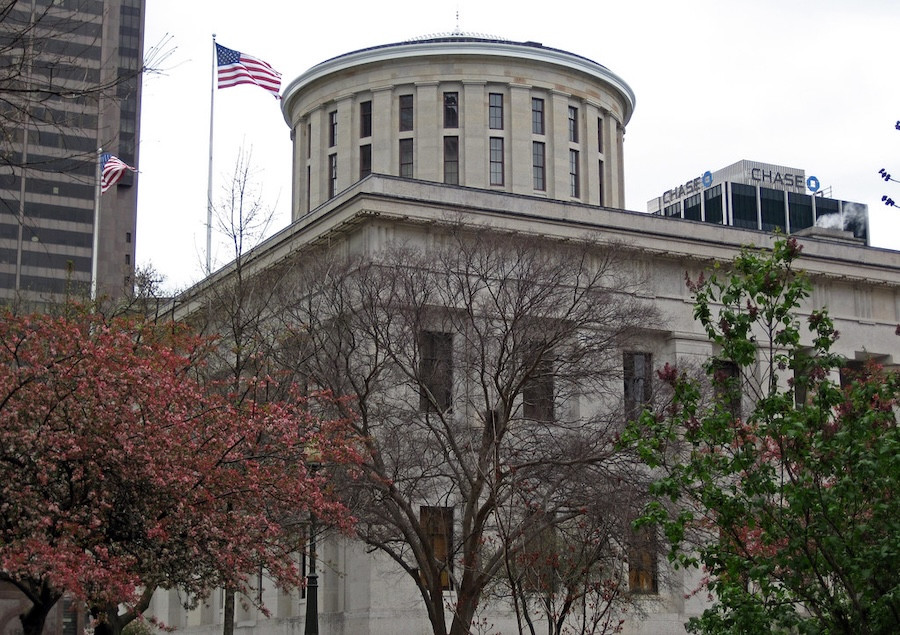
A group of Ohio lawmakers has formally introduced a bill to ban online sports betting, while allowing in-person sports betting to continue.
House Bill 971, also known as the “Save Ohio Sports Act,” was introduced on Wednesday by state Representatives Jonathan Newman and Beth Lear. The legislation would make online sports wagering illegal and bring in new restrictions on the retail market.

Only single-game bets would be allowed, while parlays, live betting and prop bets would be banned. It would also set a maximum wager of US$100, limit bettors to eight wagers per day and ban betting on college sports.
The proposed legislation includes new advertising restrictions, including the banning of gambling ads inside college sports venues and during live sports broadcasts. It also proposes a ban on the use of credit cards to fund gambling accounts.
Representative Newman said the legislation was designed to address concerns about gambling addiction and its social impact.

“Monetizing addiction to fund public education is the wrong direction for Ohio. Who wins when predatory gambling preys on the vulnerable? It’s not our schools; that’s for sure!” he urged. “It’s the trillion-dollar big gambling companies who win. How is this good for Ohio?” questioned the official.
The proposal comes after Governor Mike DeWine expressed regret for signing Ohio’s sports betting legislation in 2021 during an interview with the Associated Press last November. The comments came after news broke that Cleveland Guardians pitchers Emmanuel Clase and Luis Ortiz were involved in a match-fixing scheme.
DeWine has since called for tighter restrictions, including the elimination of prop betting.

House Bill 971 has not yet been assigned to a committee for consideration but, if approved, it would make Ohio the first state to repeal online sports betting since the Supreme Court overturned the federal ban on sports wagering in 2018.
Charlotte Capewell brings her passion for storytelling and expertise in writing, researching, and the gambling industry to every article she writes. Her specialties include the US gambling industry, regulator legislation, igaming, and more.

Dig Deeper
Related stories
 2026/01/26: Missouri rejects NCAA push to restrict college athlete prop bets
 2025/08/01: Ohio governor calls for sports betting changes after Major League Baseball investigation
 2026/02/05: New York latest gambling regulator to discuss banning prop bets
 2025/08/12: Ohio lawmaker opposes governor’s push to ban prop bets
2026/01/26: Missouri rejects NCAA push to restrict college athlete prop bets
2025/08/01: Ohio governor calls for sports betting changes after Major League Baseball investigation
2026/02/05: New York latest gambling regulator to discuss banning prop bets
2025/08/12: Ohio lawmaker opposes governor’s push to ban prop bets
The Backstory
Ohio’s reversal push follows a rapid expansion
Ohio’s move to consider repealing online sports betting marks a sharp turn for one of the largest U.S. wagering markets created after the Supreme Court cleared the way for states to legalize sports betting in 2018. The state launched legal sports betting in 2023 after Gov. Mike DeWine signed House Bill 29 in December 2021, authorizing mobile wagering, retail sportsbooks and bets on professional, college and motor sports.
The model Ohio adopted was broad. It allowed betting through apps and in-person locations, giving national sportsbook operators access to a large population and a deep sports culture that includes major professional franchises, college athletics and extensive media markets. That structure quickly made mobile wagering the center of the business, as it has in most states where online betting is legal.
The new repeal proposal does not seek to eliminate sports betting entirely. Instead, it would unwind the mobile market and leave only a restricted retail version in place. That distinction is central to the political argument now unfolding: Supporters of the repeal say the issue is not only gambling but constant access, aggressive advertising and product design that allows consumers to wager repeatedly from their phones.
DeWine’s regret changed the political climate
The bill arrives after DeWine publicly said he regretted signing the legislation that legalized sports betting. His comments, described in an earlier account of the governor’s reversal, helped move concerns about gambling harm from the margins of the policy debate to the center of it.
DeWine’s objections have focused on the reach and resources of sportsbook companies, particularly their ability to advertise heavily and keep users engaged through mobile apps. He has also singled out proposition bets, which allow wagers on discrete events within games, as a risk to sports integrity. Those concerns intensified after federal authorities pursued cases tied to alleged manipulation of athletic performance for betting purposes.
The governor’s change in tone matters because he was the official who signed Ohio’s legalization law. His comments gave Republican lawmakers political cover to challenge a market that had been promoted as a regulated alternative to illegal betting and a source of tax revenue. Once DeWine framed legalization as a mistake rather than merely a policy needing adjustment, a more sweeping repeal proposal became easier to imagine.
That shift also reflects a broader unease in statehouses. Legal sports betting was initially sold as a way to capture activity already occurring offshore or through bookies. But the post-launch debate has increasingly centered on whether legalization, especially through smartphones, has expanded the number of bettors and increased the frequency of gambling rather than simply moving existing wagers into regulated channels.
Earlier proposals laid out the guardrails
The current bill did not emerge in isolation. Ohio lawmakers had already floated a plan to restrict mobile wagering and curb the most controversial types of bets, as detailed in a previous proposal to ban online sports betting. That earlier effort framed the issue as one of access and velocity: phones allow betting at any hour, while in-game wagers, parlays and prop bets can multiply the number of decisions a customer makes during a single event.
Those themes now appear in more formal form. The latest bill would ban online wagering, limit retail sports betting to single-game bets, cap wagers at $100 and restrict customers to eight bets per day. It would also prohibit college sports betting, live betting, parlays and prop bets, all of which are important revenue drivers for sportsbooks.
The proposed advertising rules follow the same logic. By targeting gambling promotions inside college venues and during live sports broadcasts, the bill takes aim at the saturation strategy used by operators since legalization. Lawmakers backing restrictions have argued that sports betting has become inseparable from the viewing experience, exposing younger fans and vulnerable consumers to constant prompts to wager.
The ban on credit card funding is another sign of a consumer-protection approach. Supporters view credit cards as a way for bettors to gamble with borrowed money, increasing the risk that losses become debt. Operators and some industry advocates typically counter that regulated platforms offer tools such as deposit limits, self-exclusion and responsible gambling messaging, though critics argue those safeguards are insufficient when betting is available continuously.
Online casino bills created a competing revenue argument
At the same time some lawmakers are trying to scale back sports betting, others have sought to expand online gambling. Sen. Nathan Manning introduced a bill to legalize online casinos, poker, online lottery products and online horse racing betting, estimating that internet casino legalization could generate up to $1 billion in annual revenue for the state.
That proposal, SB 197, would tax online casino operators at 36% if land-based casinos owned at least half of the platform and 40% if they partnered with a third-party operator. It also proposed large license fees, including $50 million for certain licenses and $100 million for operators using management partners. Most of the revenue would go to the state’s general fund, with 1% directed to problem gambling programs.
A separate House proposal, HB 298, offered another route into online casino gambling. That bill would allow casinos and racinos to offer online slots and table games while excluding online lottery and horse racing wagers. It proposed a lower 28% tax rate but similarly relied on the premise that digital gambling could produce hundreds of millions of dollars for Ohio.
Together, those bills highlight the tension behind the repeal effort. Ohio lawmakers are weighing two opposing views of digital gambling. One treats online products as a modern extension of legal casinos and a significant fiscal opportunity. The other treats mobile betting as a public health and sports integrity threat that tax revenue cannot justify.
Sports integrity concerns raised the stakes
The political momentum for repeal has been strengthened by scandals involving professional athletes and betting-related misconduct. Allegations involving Cleveland Guardians pitchers became a turning point in Ohio’s debate, reinforcing concerns that certain bet types can create incentives to manipulate individual plays rather than game outcomes.
Prop bets are especially vulnerable to that criticism because they can hinge on narrow, player-specific events. A pitch, turnover, rebound or statistical milestone may not determine who wins a game, but it can determine whether a bet pays. That makes the potential for manipulation harder to detect and, in the eyes of critics, more tempting for athletes, associates or bettors seeking inside information.
DeWine had already called for restrictions on prop betting before the repeal bill was introduced. Lawmakers supporting the new measure are now going further, arguing that the risks are not limited to one product category. In their view, the broader architecture of mobile sports betting — instant access, complex bet menus and relentless marketing — has produced a market that is too difficult to contain through incremental regulation.
The proposed ban on college sports betting also reflects integrity and welfare concerns. College athletes are more exposed to harassment from bettors and generally have less financial security than professionals. States have taken different approaches to college wagering, with some banning bets on in-state teams or player props. Ohio’s repeal bill would take a more sweeping approach by removing college sports from the legal market altogether.
A national test for the post-2018 market
If Ohio repeals online sports betting, it would become the first state to reverse course on mobile wagering since the federal ban fell. That would make the debate significant beyond Ohio’s borders. Other states have adjusted tax rates, tightened advertising rules or restricted certain bet types, but a full rollback of online access would challenge the assumption that legalization is politically irreversible once markets launch.
The proposal also lands as states examine adjacent forms of online wagering. Maine, for example, is considering a bill to ban online sweepstakes platforms using dual-currency systems, with regulators seeking to close perceived loopholes that compete with licensed sportsbooks. That effort reflects a broader regulatory concern: gambling-like products are proliferating faster than many state laws can classify them.
Ohio’s debate is therefore about more than one bill. It asks whether states can draw a durable line between legal entertainment, addictive product design and sports integrity risk. The answer will affect sportsbook operators, casinos, colleges, leagues, broadcasters and state budget writers that have come to rely on gambling revenue or advertising dollars.
The repeal bill faces an uncertain path, including committee assignment, hearings and resistance from an industry with substantial financial interests. But its introduction shows that Ohio’s gambling debate has entered a new phase. The question is no longer only how much revenue online betting can generate. It is whether the state believes the social and integrity costs of mobile wagering have become too high to manage.
