
New app offers hope for Japan’s igaming addicts

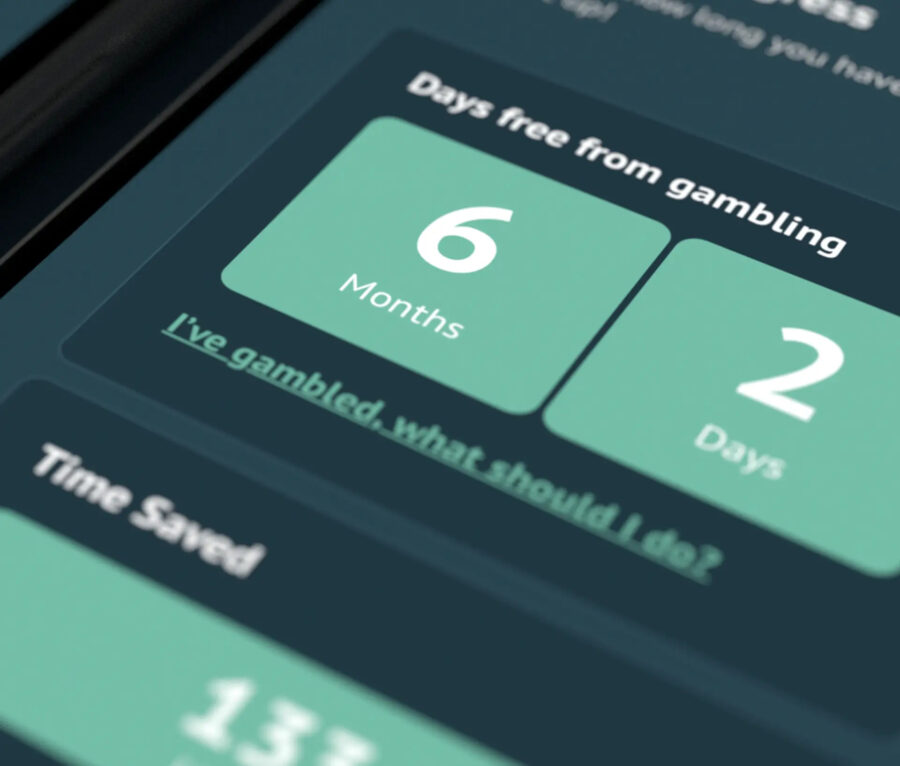
An app that blocks iagming platforms, Gamban, has been translated into Japanese, with some hoping that it will help suffering gambling addicts in the country.
Gamban, developed in the United Kingdom, is available through a Japanese-language website, providing users in Japan with easier access to the service. The app blocks gambling websites and gambling software on all devices linked to a user.

It draws on a list of more than 360,000 gambling domains and applications that is updated daily.
The software also tracks time and money saved by avoiding gambling and connects users with local support services. According to Matt Zarb-Cousin, Co-Founder of Gamban, nearly 500,000 people have registered to use the app, with more than 100,000 of them active users.
The app has proven so successful that in several countries, including parts of the United States, regulators and gambling companies subsidize its annual fee, allowing it to be offered free to users.
In Japan, the Society Concerned About Gambling Addiction covers the cost for users, with the head of the group, Noriko Tanaka, saying that the app is “extremely effective” in stopping gambling harm. However, it also was revealed that demand far exceeds capacity.
Although igaming is illegal in Japan, a National Police Agency report estimated that around 3.37 million people have used such sites. It also appears that recent legal revisions banning icasino advertising have had a limited effect, with most operators based overseas.
Charlotte Capewell brings her passion for storytelling and expertise in writing, researching, and the gambling industry to every article she writes. Her specialties include the US gambling industry, regulator legislation, igaming, and more.

Verticals:
Sectors:
Topics:
Dig Deeper
Related stories
 2025/06/16: West Virginia launches gambling addiction app
2025/09/23: Tokyo hosts Japan-UK online gambling addiction conference
2025/11/25: Philippine Department of Justice offers PHP1 million reward for help finding POGO-linked Cassandra Li Ong
2025/08/08: Philippines’ president announces igaming conference
2025/06/16: West Virginia launches gambling addiction app
2025/09/23: Tokyo hosts Japan-UK online gambling addiction conference
2025/11/25: Philippine Department of Justice offers PHP1 million reward for help finding POGO-linked Cassandra Li Ong
2025/08/08: Philippines’ president announces igaming conference
 2025/06/16: West Virginia launches gambling addiction app
 2025/09/23: Tokyo hosts Japan-UK online gambling addiction conference
 2025/11/25: Philippine Department of Justice offers PHP1 million reward for help finding POGO-linked Cassandra Li Ong
 2025/08/08: Philippines’ president announces igaming conference
The Backstory
Why a blocking app is landing now
Japan is moving to curb online gambling harm as digital wagering accelerates elsewhere. The timing reflects a broader industry pivot: operators are pushing deeper into entertainment, new distribution and always-on channels while regulators and public health groups race to build counterweights. Recent developments in the United States, Latin America and the Philippines illustrate how fast the landscape is changing and why demand for self-exclusion and recovery tools is growing.
On one end, legal markets are inventing new ways to lure casual fans, especially around tentpole events. On the other, illicit operators and gray zones continue to thrive, complicating enforcement and consumer protection. Parallel to both trends, governments, nonprofits and tribal nations are experimenting with technology to expand safeguards and reshape where and how gaming occurs. Together, these forces set the stage for Japan’s latest step to make digital self-control easier to access.
Sportsbooks court casual bettors with pop culture
U.S. sportsbooks are fine-tuning the funnel for first-time and infrequent players by leaning into celebrity and pop culture. Oregon’s state-run book, operated by DraftKings, rolled out a slate of Taylor Swift-themed props ahead of the Super Bowl, framing outcomes with song titles that resonate with nonsharps. The Oregon Lottery’s manager described the NFL finale as the biggest annual driver of interest, particularly among casual participants drawn by spectacle and novelty. Since the state launched sports betting in 2019, Oregonians have wagered more than $2.6 billion. The playful packaging underscores a disciplined strategy: meet new customers where entertainment already holds their attention, then convert that attention into wagers. Read more about the themed slate from the Oregon Lottery in its Super Bowl push.
For policymakers and treatment advocates, the pitch-perfect branding illustrates both progress and risk. Legal operators can enforce age checks, promote responsible play and fund treatment, but the same engagement mechanics that widen the market can also normalize betting and increase exposure to at-risk groups. That tension has prompted governments to tighten advertising, rethink promotional hooks and invest in tools that help individuals set boundaries or stop entirely.
When the TV becomes the sportsbook
The convergence of media and betting is entering a new phase: interactive broadcasts where watching, wagering and shopping blend into a single experience. In Colombia, DirecTV’s Latin American unit partnered with BetPlay and fintech startup TAPPP to integrate a sportsbook directly into live television streams. Viewers can place parlays, order team merchandise or buy food without leaving the screen. Executives say the goal is to boost customer “stickiness” and fend off cord-cutting by making sports viewing a transactional platform, not just a passive pastime. The initiative went live in several Colombian jurisdictions, where partners are testing monetization across bets, commerce and advertising. Details on that rollout are in the Colombia TV betting launch.
For regulators, interactive TV betting raises questions familiar to online gaming: identity verification, geofencing and consumer safeguards. For treatment providers, it adds a new context where impulse and convenience converge. As betting becomes ambient across devices and screens, the need for technology-based guardrails increases—especially tools that can block access across the same surfaces where bettors engage.
Illicit markets test enforcement capacity
While legal channels expand, illegal operators still attract customers with fewer checks and harder-to-trace networks. In the Philippines, the Department of Justice is offering a PHP1 million reward for information on the whereabouts of Cassandra Li Ong, a figure tied to a pending case involving offshore gaming operators and alleged human trafficking in Central Luzon. Authorities say Ong’s movements have been difficult to track and have moved to cancel her passport, illustrating how cross-border structures and local facilitation can frustrate law enforcement. The reward reflects a broader push to rein in abuses linked to offshore platforms and related crimes. The latest enforcement step is detailed in the DOJ’s reward announcement.
For markets like Japan, where offshore sites remain only a click away, the Philippine case is a reminder that bans and ad restrictions alone may not resolve demand. Tools that reduce exposure—whether through blocking software, financial frictions or device-level controls—are becoming part of a layered approach that includes policing, education and treatment.
Public health goes mobile
States are adapting addiction recovery playbooks for gambling, meeting people on their phones with round-the-clock support. In West Virginia, the Problem Gambling Help Network launched a customized version of the Connections app, an evidence-informed platform already used for substance use recovery. The app enables daily check-ins, virtual peer meetings, crisis support and educational content, and it ties into the 1-800-GAMBLER hotline and existing forums. The goal is to fill treatment gaps in a rural state with limited in-person options and to identify co-occurring conditions through future screening tools. The deployment reflects a recognition that gambling disorder often overlaps with other behavioral health challenges and that digital care can extend reach at lower cost. West Virginia’s approach is outlined in the state’s new app launch.
The move complements passive protections like domain blocking by giving users active recovery pathways. As governments evaluate what works, the template taking shape blends self-exclusion, behavioral nudges, telehealth and peer communities—an integrated model that can adapt to the same mobile behaviors that enable betting anywhere, anytime.
Tribal gaming rewrites distribution rules
A parallel expansion is underway in tribal gaming, where Class II products—bingo and non-banked card games regulated by tribes under federal oversight—are reaching new audiences through mainstream app stores. Vetnos, a Class II sports gaming provider, partnered with the Chicken Ranch Tribe of Me-Wuk Indians to launch its app on the Google Play Store, making it accessible to more than 133 million U.S. Android users. Tribal leaders framed the change as both recognition and opportunity: because revenues stay with the tribe, mobile distribution could strengthen community funding while preserving tribal sovereignty. The launch underscores how platform policies can reshape access, economics and oversight in weeks rather than years. More on the rollout is in Vetnos’ Play Store debut.
As tribal and commercial operators meet consumers on phones and connected TVs, the line between venue and platform blurs. That amplifies the importance of device-level protections and cross-platform tools for self-exclusion—mechanisms that can travel with the user rather than stay tethered to a single casino or website.
Across these threads, the stakes are clear. Legal operators are competing on convenience and culture; illicit networks remain resilient; and public agencies are rebuilding the safety net for a digital era. Japan’s latest step slots into a global pattern: using technology to cut off access where regulation cannot reach and coupling that with support that mirrors how people live and consume media today. The test ahead is not only adoption, but capacity—ensuring that demand for help can be met as betting becomes another button on the screen.

