


Maine considers credit card ban for online sports bets

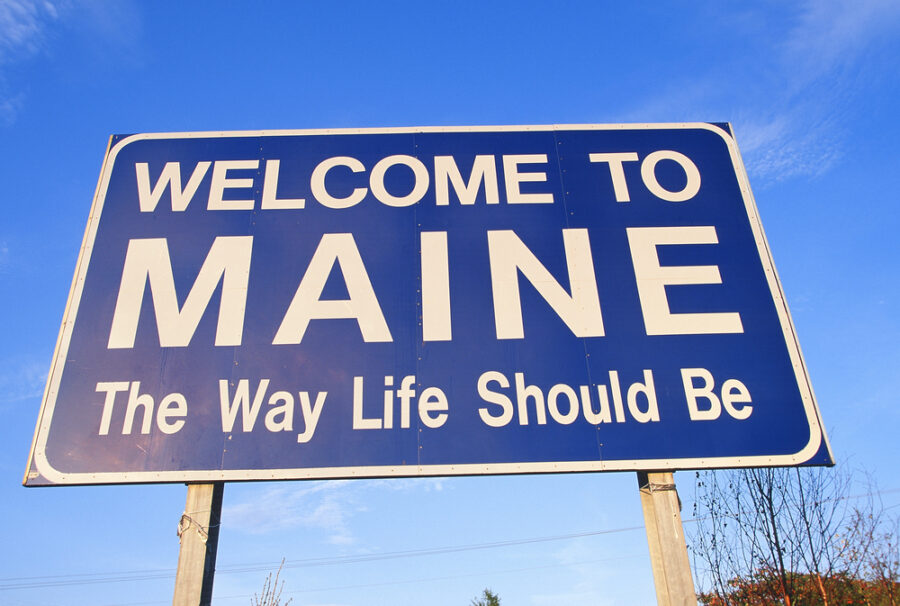
A Maine lawmaker has introduced a bill to ban credit card use for online sports betting, aiming to limit the harm caused by problem gambling.
State Representative Marc Malon, the sponsor of Legislative Document 2080, says the bill will help Mainers struggling with gambling addiction, arguing that credit cards allow people to gamble beyond their means.

LD 2080 would still permit online sports betting, but bettors won’t be able to use credit cards or debit cards linked to borrowing.
Malon said online betting poses greater risks than gambling in physical casinos, and that credit cards were more of a risk than other forms of payment.
“When you run out of money, you’re done. Whereas when you use a credit card, you run the risk of incurring a boatload of debt,” Malon told WGME.

He also noted that Maine has banned credit cards for slot machine gambling at casinos, and says that the same logic should apply to online wagering.
The proposal comes at a time when Maine is continuing to expand and regulate igaming.
This month, Governor Janet Mills allowed legislation to become law, authorizing the Wabanaki Nations to operate igaming in the state. Although expressing concerns about public health effects, the governor emphasized the importance of regulation and responsible safeguards in a growing market.
Charlotte Capewell brings her passion for storytelling and expertise in writing, researching, and the gambling industry to every article she writes. Her specialties include the US gambling industry, regulator legislation, igaming, and more.

Dig Deeper
Related stories




The Backstory
Why payment rules are in focus now
Maine’s debate over whether to block credit cards for online sports wagers comes as policymakers nationwide reassess how payments drive gambling harm and compliance. State Rep. Marc Malon’s proposal follows a broader push to limit borrowing-based betting and mirrors restrictions already common in brick-and-mortar settings. The question is whether cutting off credit curbs losses or merely shifts how people fund bets. Recent evidence abroad and enforcement actions next door suggest the answer is complicated and high stakes for operators and regulators.
The bill, known as LD 2080, would extend Maine’s existing casino-era caution to the digital market by barring credit cards and other borrowing-linked instruments online. Malon has framed the move as a guardrail to prevent spiraling debt, echoing comments he made to local media about the immediacy of harm when funds are borrowed rather than on hand. For readers tracking the legislative path, the Maine Legislature’s bill summary is posted on the state website, and Malon previewed the rationale in coverage by WGME. The timing aligns with Maine’s broader effort to grow and regulate online gambling, including the governor’s decision this month to allow Wabanaki Nations to operate igaming, with an emphasis on consumer safeguards.
As lawmakers weigh whether the payment tool is the right lever, they are watching how neighboring states and international counterparts have fared in tightening rules around credit. A key thread: policy design and enforcement capacity matter as much as the headline ban.
Massachusetts offers a nearby case study in enforcement
No jurisdiction is more relevant to Maine than Massachusetts, where regulators have drawn a hard line against credit-funded sports betting since legalization. In July, the Massachusetts Gaming Commission issued a record penalty after finding that DraftKings accepted credit card deposits and wagers despite the prohibition. The commission detailed 1,160 impermissible wagers and $83,667.92 in credit card-funded handle across 218 customers, concluding the violations occurred during the market’s early rollout.
The regulator levied a $450,000 fine and ordered restitution to affected customers. Our coverage on the enforcement action lays out the scope and remedies in Massachusetts regulator fines DraftKings US$450,000 for accepting credit card wagers, while NBC Boston reported it was the largest sports betting fine issued by the commission to date. The full decision is posted in the commission’s noncompliance order, and related materials are included in the agency’s meeting packet. For Maine, the takeaway is twofold: banning credit is one step; sustained auditing and penalties are what make the rule bite in practice.
Massachusetts also underscores how payment rules intersect with broader responsible gambling policy. Regulators there are rethinking high-roller perks and marketing aimed at frequent bettors, a sign that payment restrictions alone may not address risk. The commission’s chair has floated changes to loyalty and VIP programs after staff research flagged elevated problem gambling risk among VIP cohorts. Details are in our coverage, Massachusetts Gaming Commission considers new rules for sports betting VIP programs. For Maine lawmakers, that debate signals that card bans could be complemented by controls on incentives that encourage chase behavior.
Global lessons: bans help, but design and loopholes matter
International peers provide a mixed report card on credit card bans. Australia barred credit cards for online wagering in 2024, aiming to sever the link between betting and borrowed money. Early analysis suggests heavy gamblers largely adapted by shifting to transaction accounts without cutting spend significantly. As reported in our story, Australia’s credit card betting ban found to have had limited effect on heavy gamblers, the e61 Institute found average spending by prior credit users fell on cards but continued around AU$150 per fortnight via bank accounts. Researchers said persistent bettors had sufficient funds and did not need to rely on alternative borrowing channels, though loopholes such as cash advances and some e-wallet pathways complicated enforcement.
The Australian findings highlight two policy challenges Maine will need to confront: plugging workarounds and aiming interventions at the small share of customers who drive most losses. Without measures like affordability checks or friction at the point of spend, bans can inconvenience casual bettors while leaving heavier users’ behavior largely unchanged.
New Zealand, meanwhile, is building a credit card prohibition into a new licensing framework for online casinos now moving through Parliament. The government touted the ban as a key consumer protection to win support for authorizing up to 15 operators by late 2026. Our report, New Zealand introduces credit card ban for online casinos, notes the measure was pitched to reduce debt cycles, but it also raised questions about license appeal and market participation. For Maine, that tension is familiar: tighter payments oversight may promote safer play but can affect operator economics and product design.
Beyond cards: regulators target incentives and access
If payment restrictions are one pillar, many regulators are simultaneously targeting the conditions that can intensify losses: aggressive bonuses, VIP inducements and rapid re-deposit tools. Massachusetts’ exploration of raising the VIP eligibility age to 25 and introducing affordability checks, described in our analysis of the commission’s proposal, reflects a shift toward structural guardrails. The move follows self-exclusion communication lapses under review and comes on the heels of the DraftKings credit card case, linking compliance culture across marketing, payments and safer gambling protocols.
Australia’s experience also illustrates that stand-alone card bans can leave gaps, particularly if alternative financing options or payment intermediaries remain available. Policymakers there are facing renewed calls to address the broader online gambling ecosystem, including default limits and universal exclusions, after registration for the BetStop self-exclusion scheme lagged far below estimates of high-risk gamblers. For Maine, that context suggests that credit rules may need to be paired with account-level tools, clearer consumer messaging and real-time monitoring to meaningfully reduce harm.
Market expansion raises the policy stakes
Maine’s payments debate arrives as digital gambling options expand across the U.S., putting pressure on statehouses to reconcile growth with guardrails. Indiana offers one example of the trade-offs. Lawmakers there advanced a plan to allow online lottery ticket sales while weighing a crackdown on unregulated sweepstakes casinos. The revenue case is strong: an analysis projected hundreds of millions in added lottery sales within three years, with profits rising as much as $94 million annually. The dual-track deliberation is covered in Online lottery bill advances as Indiana considers sweepstakes ban. The lesson for Maine: as regulated channels proliferate, regulators must keep pace with payment oversight and consumer protection or risk growth outstripping safeguards.
Closer to home, Maine’s lawmakers can draw on neighboring enforcement and international pilots to calibrate LD 2080. A clear statutory ban, backed by auditing and meaningful penalties like those in Massachusetts, can tighten compliance. Addressing loopholes, from cash advances to third-party payment workarounds, can reduce leakage. And aligning payments policy with broader measures—such as curbing risk-promoting incentives, refining self-exclusion and exploring affordability checks—can strengthen the bill’s effectiveness where harm risk is highest.
The stakes are practical and political. If Maine enacts a credit card prohibition for online sports betting, residents could see fewer debt-fueled losses, while operators would adjust onboarding and funding flows. If the state stops short, it will lean more heavily on education and voluntary tools even as access grows. Either way, the experiences in Massachusetts, Australia and New Zealand show that the details—definitions, exceptions, oversight—will determine whether the rule changes behavior or merely routes it through a different payment rail.
For readers tracking the legislative journey, Maine’s bill details are posted on the Maine Legislature site, and earlier comments on the proposal’s consumer-protection aims were outlined by WGME. As other states and countries have found, the toughest work begins after a vote: building systems that ensure the rule is followed—and that it works.
