


Kelly Kehn highlights importance of backing igaming startups

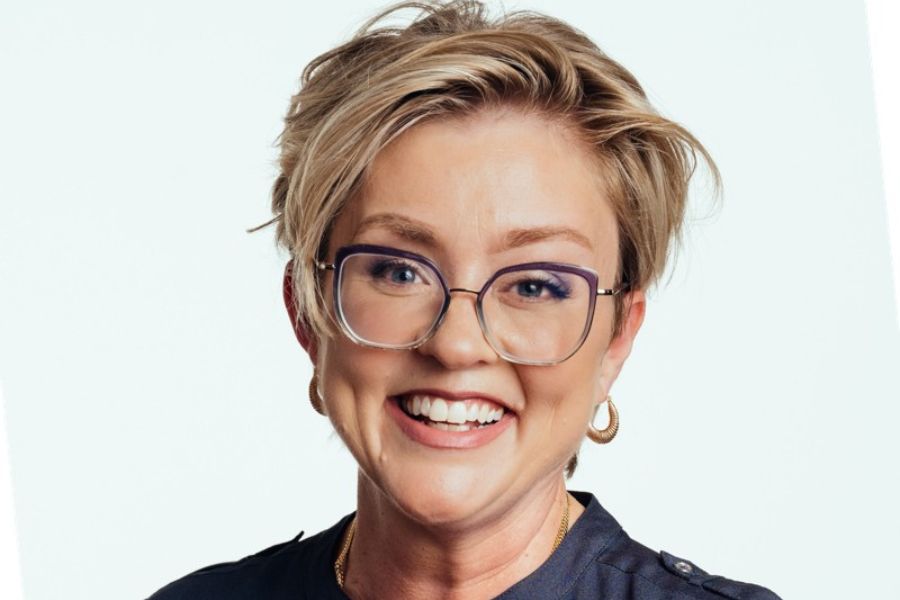
Kelly Kehn, co-founder of startup launchpad Defy the Odds, has highlighted the role that startup investment has in supporting the future of the igaming industry, noting that funding is available for early-stage businesses but it can be hard to find.
Speaking ahead of moderating the Startup Accelerator at iGB Live, Kehn noted that startups will need the right introductions in order to access such funding, and events are key opportunity makers.

“Exited founders have been through exactly what these founders are facing, so they get it in a way most investors don’t: the grind, the regulatory walls, what it actually takes to build here,” she said. “That makes them strong prospects, both as capital and as people who can open doors.
“The catch is there aren’t many of them and they’re not always visible, which is why networking initiatives such as the Startup Accelerator matter so much in fundraising. A lot of the best money in this industry isn’t advertised. You find it through the right introduction.”
iGB Live’s Startup Accelerator puts early-stage founders and investors face-to-face at Excel London on 30 June, aiming to offer entrepreneurs a clearer understanding of what investors want and help them to make the right connections.

“Tech isn’t a moat anymore. Anyone can build the product, so the question every founder has to answer is What actually protects them?” Kehn added.
“Every one of the biggest businesses in this industry was a startup once. The companies coming through now will, by definition, not be widely known but supporting them is an investment in the future of the industry. Events like iGB Live and ICE are where the industry gathers, so they’re in the best position to help open that door to potential investment.”
Kehn co-founded her own startup accelerator, Defy the Odds, alongside igaming leaders Sue Schneider and Paris Smith. It is an advisory service that has helped accelerate early-stage businesses in sports betting, sportstech and fintech.

Dig Deeper
Related stories
 2025/07/08: Sue Schneider: Holding the door open for igaming innovators
 2026/04/21: Defy the Odds and BettingStartups partner to support emerging igaming businesses
 2025/06/11: Former F1 Team Principal Claire Williams announced as iGB Live keynote
 2026/06/24: Gamecheck offers iGB Live attendees one-month free game authentication
2025/07/08: Sue Schneider: Holding the door open for igaming innovators
2026/04/21: Defy the Odds and BettingStartups partner to support emerging igaming businesses
2025/06/11: Former F1 Team Principal Claire Williams announced as iGB Live keynote
2026/06/24: Gamecheck offers iGB Live attendees one-month free game authentication
The Backstory
Startup capital becomes a strategic issue
Kelly Kehn’s call for more visible backing of igaming startups lands at a moment when the sector is under pressure to prove it can keep innovating while navigating tighter regulation, higher acquisition costs and new technology risks. Her central argument is that early-stage companies do not just need capital; they need access to investors who understand the peculiar constraints of gambling markets, from licensing and compliance to state-by-state expansion in the U.S.
That view reflects a broader shift in how the industry talks about growth. After years in which the largest operators and suppliers consolidated market share, startup support has become a proxy for the sector’s future direction. Emerging companies are trying to build products in sports betting, online casino, sportstech, fintech and responsible gambling at a time when technology itself is no longer enough to create defensible advantage. The question, as Kehn framed it, is what protects a company once a product can be copied quickly.
The Backstory to that message is the formation of Defy the Odds, the launchpad Kehn co-founded with Sue Schneider and Paris Smith. The group is designed to make introductions that are often difficult for new founders to secure, especially in an industry where investment networks can be informal, fragmented and closed to outsiders.
Defy the Odds grew out of long industry cycles
Defy the Odds emerged from the combined experience of three executives who have watched igaming move from a marginal digital experiment to a regulated global business. Schneider, in particular, has spent decades working around the same tension now facing startups: innovation often arrives before lawmakers, regulators and incumbents are ready to accommodate it.
In a profile of Sue Schneider’s work with Defy the Odds, COMPLETE iGAMING traced how Schneider, Smith and Kehn decided against building a formal investment fund and instead chose to use their networks to support founders. The distinction matters. A fund would have added bureaucracy and narrowed the group’s role to capital allocation. A launchpad allows the founders to challenge business models, make introductions, advise on market entry and help startups understand where investor interest is likely to come from.
The same profile showed why the model has resonance. Schneider’s history includes early igaming publishing, trade show development and work with industry associations during periods when online gambling’s legal status was contested. Those experiences shaped Defy the Odds’ practical approach: help startups anticipate the regulatory and commercial obstacles that can overwhelm young companies before their products reach scale.
By the time Defy the Odds began taking on companies, Schneider said interest was stronger than expected. The group had about eight startups on its books and was considering a broader online platform to connect founders, investors, regulators and subject-matter experts. That plan pointed to a larger problem in igaming: the industry has money and expertise, but both are unevenly distributed.
Networks fill gaps formal funding has not solved
The funding gap is not only about whether capital exists. It is about whether founders can find investors who know the industry well enough to price risk correctly. Igaming startups can face long sales cycles, licensing uncertainty and reputational scrutiny that generalist venture investors may not understand. Specialist investors and former founders can be more useful, but they are harder to identify.
That is why the partnership between Defy the Odds and BettingStartups was a significant precursor to Kehn’s latest comments. BettingStartups, an early-stage business funder, joined with Defy the Odds to address limited visibility, fragmented networks and access to financing. The first joint activity was set for SBC Summit Americas in Fort Lauderdale, with additional initiatives planned for 2026.
The partnership also helped define the role Defy the Odds wants to play. Rather than simply mentoring founders in private, it is trying to create public-facing infrastructure around startup formation. That means programming, networking and affordable routes into rooms where operators, investors and suppliers are present. For early-stage companies, those rooms can determine whether an idea becomes a pilot, a commercial contract or a fundable business.
Kehn’s emphasis on “the right introduction” is therefore not incidental. In igaming, introductions can act as due diligence signals. An investor may be more willing to evaluate a company if it arrives through a trusted industry operator. An operator may be more open to a pilot if experienced advisers have tested the founder’s assumptions. That network effect is the commercial logic behind launchpads and accelerators.
Regulation raises the cost of getting it wrong
The need for experienced support is sharpened by the regulatory environment. Startups entering gambling do not operate in a neutral technology market. They build around licensing rules, responsible gambling duties, payments restrictions, advertising limits and political cycles. Misjudging those constraints can turn a promising product into a liability.
Recent U.S. developments show the stakes. In Georgia, gambling companies have moved aggressively into electoral politics after a sports betting bill collapsed in the state House. COMPLETE iGAMING reported that the sports betting industry committed more than US$10 million to support pro-gambling candidates in Georgia, turning legalization into a major 2026 campaign issue. For startups, such fights determine market access. A product designed for a state that fails to legalize may need to wait years or pivot elsewhere.
At the same time, regulators and public health officials are scrutinizing harm more closely. A study of online gambling risks in Laramie County, Wyoming found that online gamblers were more likely to play longer, exceed budgets and experience strained relationships, with young adults particularly vulnerable. Wyoming allows online sports betting but not legal online casino, while illegal casino sites remain accessible. That gap between legal frameworks and consumer behavior creates both risk and opportunity for startups focused on safer gambling tools, compliance technology and consumer protection.
Schneider’s earlier comments about sweepstakes and prediction markets also fit this pattern. She has argued that igaming has always advanced through disputed models before regulators settle the boundaries. For founders, that history is both encouraging and dangerous. Novelty can create openings, but it can also provoke enforcement, political backlash and investor hesitation.
Technology promise now comes with governance questions
Artificial intelligence has added another layer to the startup debate. Many young companies see AI as a way to automate personalization, fraud detection, trading, customer service and responsible gambling interventions. But operators and regulators are beginning to ask whether the governance structures around those systems are mature enough.
A report by the University of Nevada, Las Vegas and KPMG found significant weaknesses in sector oversight. COMPLETE iGAMING reported that the UNLV study highlighted gaps in igaming AI governance, including low scores for governance on its AI Maturity Index and limited evidence that companies planned to hire dedicated AI oversight roles. Most gaming companies had adopted AI in some form, but few had embedded responsible AI frameworks.
That finding is relevant to startup funding because AI can no longer be pitched as a simple efficiency tool. Investors increasingly need to know how a company manages data privacy, model accountability and regulatory risk. Operators considering startup partnerships have similar concerns, especially if a product touches customer segmentation, affordability checks, odds creation or risk monitoring.
The result is a higher bar for new entrants. Founders must show not only that their technology works, but that it can survive procurement reviews, regulator questions and reputational scrutiny. For accelerators such as Defy the Odds, this creates a clear advisory role: helping startups build governance and compliance into the company early, rather than retrofitting it after a commercial problem emerges.
The industry’s next phase depends on who gets access
Kehn’s latest comments ahead of iGB Live’s Startup Accelerator should be read against that backdrop. The issue is not whether igaming has entrepreneurs. It is whether those entrepreneurs can reach informed capital, experienced advisers and commercial partners before market complexity exhausts them.
Defy the Odds has positioned itself as part of the connective tissue between those groups. Its founders’ argument is that igaming’s next generation will not come only from large operators or suppliers. It will also come from smaller companies working on tools and models that incumbents may overlook until they become strategically necessary.
That makes startup support more than an industry goodwill project. It affects competition, product quality, responsible gambling capability and the pace at which regulated markets can adapt. In a sector shaped by political fights, uneven legalization and fast-moving technology, the companies that get early guidance may be the ones best able to survive long enough to matter.
