


Kambi to license sportsbook source code to Allwyn in €50 million deal

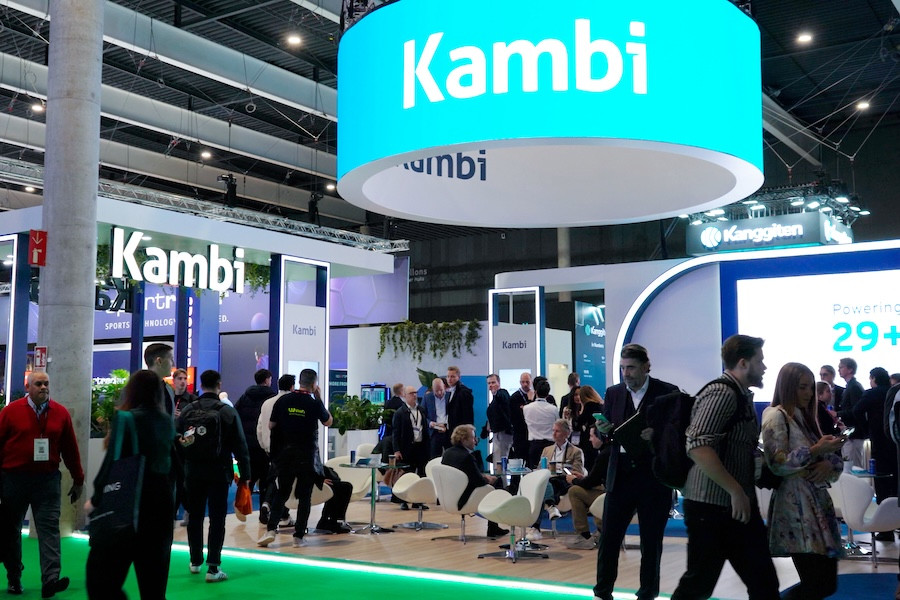
Sports betting technology supplier Kambi has signed agreements with Allwyn to move the lottery-led operator’s sports betting brands onto a single sportsbook platform, built on Kambi’s source code.
Under the deal, Kambi will grant Allwyn a perpetual, global license to its sportsbook source code and provide associated services. It will also supply its AI-powered trading services under a separate long-term agreement.

The group expects the agreements to contribute approximately €45 million (US$50 million)1 EUR = 1.1165 USD
2026-11-11Powered by CMG CurrenShift to €50 million (US$56 million)1 EUR = 1.1165 USD
2026-11-11Powered by CMG CurrenShift to its operating profit between 2027 and 2031, with around 40% recognized in 2027 and 20% in 2028.
Kambi has also committed to building and training a team that will transfer to Allwyn once implementation is complete, giving the operator full operational control.
Speaking of the deal, Kambi CEO Werner Becher noted that it shows “the quality and strategic value” of the technology the company has built over more than 15 years.

Allwyn Digital CEO Kresimir Spajic said bringing the sportsbook in-house gives the operator greater freedom to evolve its offering and tailor products to individual brands and markets.
The deal follows Kambi’s recent brand refresh, while Allwyn has been building its digital business, including through its acquisition of a majority stake in PrizePicks.
Both companies have a growing presence in the Americas. In August, Kambi signed a 10-year deal with Station Casinos to enter Nevada for the first time. It also counts Hard Rock Digital, Bally’s and Rush Street Interactive among its partners and powers sportsbooks for OLG in Ontario and Stake in Brazil.

Allwyn works with the Illinois Lottery through Allwyn North America and holds a 62.3% stake in PrizePicks, which lifted its North America net revenue to €294 million (US$328 million)1 EUR = 1.1165 USD
2026-11-11Powered by CMG CurrenShift in 2Q26.
In Asia-Pacific, Kambi agreed a long-term partnership with Racing and Wagering Western Australia in 2021. Allwyn, meanwhile, has been pulling back from the region, agreeing in 2025 to sell its 42% stake in the Reef Hotel Casino in Cairns.

Dig Deeper
Related stories
 2025/08/05: Sportradar posts ‘solid’ second quarter, Jefferies analyst says
 2025/09/23: Allwyn International to acquire majority stake in PrizePicks
 2025/01/08: Kambi Group and Stake sign sports betting partnership in Brazil
 2025/01/07: Illinois lottery provider Allwyn acquires controlling interest in igaming developer Novibet
2025/08/05: Sportradar posts ‘solid’ second quarter, Jefferies analyst says
2025/09/23: Allwyn International to acquire majority stake in PrizePicks
2025/01/08: Kambi Group and Stake sign sports betting partnership in Brazil
2025/01/07: Illinois lottery provider Allwyn acquires controlling interest in igaming developer Novibet
The Backstory
Allwyn’s digital shift set the stage
Allwyn’s agreement to license Kambi’s sportsbook source code is the latest step in a broader move away from being primarily a lottery operator and toward becoming a larger digital gaming group with direct control of more product infrastructure. The company has spent the past several years extending beyond national lottery contracts into online sports betting, igaming and daily fantasy sports, a shift that has increased both its revenue opportunity and its need for proprietary technology.
The Kambi deal gives Allwyn a perpetual, global license to sportsbook source code and a path to run its sports betting operations on a single platform. That matters because Allwyn’s recent acquisitions have added scale but also complexity. Integrating brands across markets typically requires operators to balance regulatory compliance, product localization, trading capability and customer data control. Bringing more of the sportsbook stack in-house is meant to reduce dependence on external platforms while allowing Allwyn to tailor products by brand and jurisdiction.
The move also follows a period in which large gaming groups have increasingly sought to own, rather than rent, core technology. For lottery-led companies entering sports betting, that choice can be strategic. Lottery contracts often emphasize long-term stability and compliance, while sports betting rewards faster product iteration, pricing flexibility and localized engagement tools. Allwyn’s deal with Kambi reflects an effort to bridge those models.
PrizePicks changed the scale of the U.S. opportunity
Allwyn’s biggest signal of intent came with its agreement to buy a majority stake in PrizePicks, a U.S. daily fantasy sports operator. The company agreed to acquire about 62.3% of PrizePicks in a transaction with an expected initial cash consideration of $1.6 billion, plus as much as $1 billion in potential performance-based payments in 2029. Allwyn described the deal as a way to enter the strategically important U.S. sports and entertainment sector beyond its Illinois Lottery business, according to its majority investment in PrizePicks.
That transaction gave Allwyn a sizable consumer-facing foothold in North America. PrizePicks operates in more than 45 U.S. jurisdictions and built its business around simplified fantasy contests that appeal to casual sports fans. While daily fantasy sports is not the same as regulated sportsbook wagering, the customer behavior, sports content and engagement patterns overlap. For Allwyn, the deal created a larger reason to invest in sports-related technology and product development.
The financial impact soon became visible. Allwyn later reported that second-quarter net revenue rose 27% to €1.25 billion, helped by PrizePicks’ contribution. North America net revenue climbed to €294 million from €54 million a year earlier, while the company’s daily fantasy sports segment generated €231 million in net revenue. Those figures strengthened the case for building a more integrated digital operation around sports engagement, rather than treating the U.S. expansion as a stand-alone asset.
PrizePicks also widened Allwyn’s exposure to product categories where user experience and speed of innovation are central. That creates pressure to connect fantasy, prediction-style products and sports betting capabilities without fragmenting the customer journey. A unified sportsbook platform based on licensed source code can support that ambition, even if the exact regulatory pathways differ by market.
Novibet added sportsbook know-how before Kambi deal
Allwyn’s move toward Kambi also followed its agreement to buy a controlling stake in Novibet, a sportsbook and online gaming developer. In that transaction, Allwyn agreed to acquire 51% of LogFlex MT Holding Ltd., the company behind Novibet, for an initial €217 million, with an additional €110 million tied to performance. The acquisition was framed as a way to strengthen Allwyn’s online sports betting and gaming capabilities, as outlined in its controlling investment in Novibet.
Novibet brought operational experience across multiple markets, including online casino and sportsbook products. It also had a history of pursuing regulated-market opportunities, including a planned partnership with Caesars Entertainment in New Jersey and a licensed online casino presence in Mexico through Big Bola Casino. For Allwyn, Novibet offered technology and talent in areas that lottery operators do not always possess internally.
But adding Novibet did not eliminate the broader platform question. Acquisitions can leave operators with overlapping systems, different trading arrangements and uneven product road maps. The Kambi source-code license provides a way to establish a common sportsbook foundation across brands, while still allowing Allwyn to use internal teams and acquired capabilities to customize products. The planned transfer of a Kambi-built and trained team to Allwyn after implementation underscores that the deal is not merely a vendor contract. It is a capability transfer.
That distinction is important. Kambi will provide associated services and AI-powered trading services under a separate long-term agreement, but Allwyn is expected to gain full operational control after implementation. The structure gives Allwyn a way to accelerate internalization without building a sportsbook engine from scratch, a process that can take years and carry regulatory and execution risk.
Kambi has been repositioning around regulated markets
For Kambi, the Allwyn agreement fits a broader strategy built around regulated-market operators and selective technology partnerships. The company has long supplied sportsbook platforms to betting brands, but the Allwyn deal is notable because it monetizes its source code and expertise in a different way. Kambi expects the agreements to contribute about €45 million to €50 million to operating profit from 2027 through 2031, with a large portion recognized in the first two years.
Kambi has also been expanding in markets where regulatory complexity favors experienced suppliers. In Brazil, the company signed a strategic partnership with Stake to provide its turnkey sportsbook solution after the country opened its regulated betting market. The Brazil sportsbook partnership with Stake showed Kambi’s focus on operators entering newly regulated jurisdictions where compliance, pricing and localization must be handled at launch.
Latin America has been another area of emphasis. Kambi later reached a long-term omni-channel sportsbook agreement with RedCap, covering the Betpro and Starplay brands and beginning with online launches in El Salvador and Panama. That Latin America deal with RedCap included potential retail expansion and future market entries, reinforcing Kambi’s role as a platform provider for operators seeking regional scale.
Those agreements show why Allwyn would look to Kambi for a source-code arrangement rather than a conventional supplier relationship alone. Kambi’s technology has been tested across multiple regulatory settings, from Latin America to Ontario and Brazil. Allwyn, meanwhile, is assembling assets that span lotteries, fantasy sports, online casino and sportsbook operations. The overlap creates a commercial logic: Kambi can monetize mature technology and services, while Allwyn can internalize a sportsbook platform capable of supporting expansion.
The stakes are control, margins and market access
The commercial rationale for Allwyn is not limited to product design. Owning more of the sportsbook stack can affect margins, customer data strategy and speed to market. External suppliers can help operators launch quickly, but dependence on third-party road maps may become a constraint as companies scale across brands. By licensing the source code, Allwyn can seek to align trading, front-end features and compliance tools with its own priorities.
The strategy also reflects a changing competitive landscape. Lottery groups are no longer insulated from digital competition, and sports betting operators are increasingly looking for adjacent products that keep customers engaged outside major events. Allwyn’s PrizePicks investment gave it a U.S. audience built around sports engagement. Novibet added sportsbook and igaming expertise. Kambi now provides a technology base that can tie parts of that strategy together.
Execution remains the central risk. Technology transfers can be complex, particularly when they involve live betting systems, market-specific compliance requirements and multiple brands. Allwyn must also integrate teams and maintain service quality while shifting toward greater operational control. For Kambi, the deal highlights the value of its platform but also requires careful management of a partner that will eventually operate more independently.
The result is a transaction that says as much about industry direction as it does about the two companies. Sports betting technology is becoming a strategic asset, not just a procurement decision. Allwyn’s expansion has created the need for a deeper technology base, and Kambi’s regulated-market experience gives it a way to supply that base while preserving a long-term services role. If the implementation succeeds, Allwyn could emerge with a more coherent digital platform at the same time its North American and online gaming ambitions are accelerating.