


Kalshi restricted in India after warnings followed by country-wide block

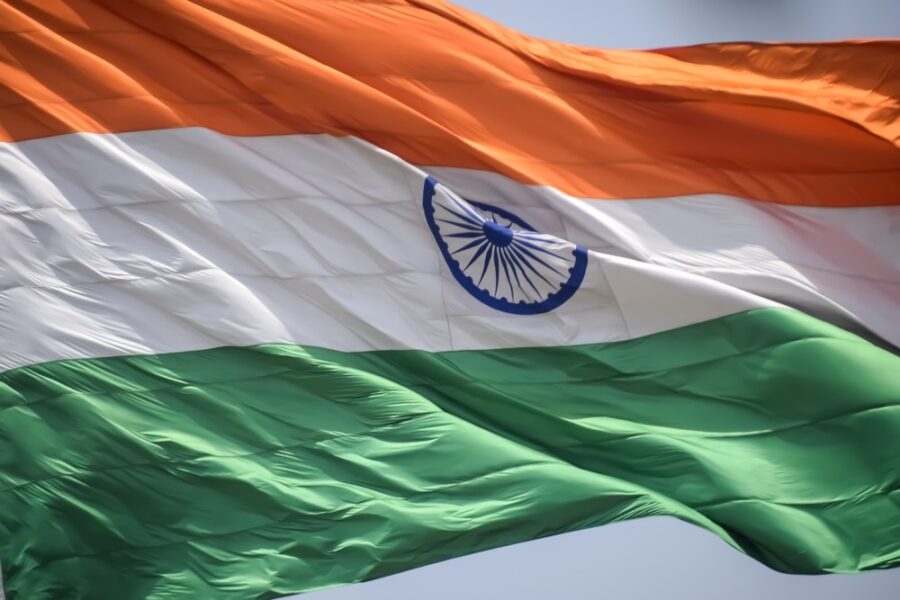
Online prediction market operator Kalshi has added India to its list of restricted jurisdictions following the country’s block on the platform, according to Bloomberg.
Kalshi has updated its member agreement to include that users located in India would be banned from trading event contracts on its platform. Since May, Kalshi’s platform has been inaccessible to Indian users on various internet providers.

According to The Post, the government had been preparing to issue a formal order banning both Kalshi and rival Polymarket last month, after both operators continued to allow Indian users to sign up and trade despite internet providers being told to cut off access.
Kalshi and Polymarket were issued warnings by India’s Ministry of Electronics and Information Technology the same month. In a letter published on the ministry’s website, they said that users were still able to access “illegal and blocked prediction market and online betting platforms,” which was in violation of “domestic prohibitions.”
The ministry also issued a letter to VPN providers in April, stating that the virtual networks were being used as workarounds to allow users to continue accessing both platforms. The ministry warned that, if users were still able to access the sites, the service providers could face legal consequences.

The build-up to both Kalshi and Polymarket’s block in the country was expedited by the Promotion and Regulation of Online Gaming Act, which passed in August and went into effect on 1 May, banning real-money online gaming in the country.
Charlotte Capewell brings her passion for storytelling and expertise in writing, researching, and the gambling industry to every article she writes. Her specialties include the US gambling industry, regulator legislation, igaming, and more.

Dig Deeper
Related stories




The Backstory
India’s block turns a compliance dispute into a market-access test
Kalshi’s decision to add India to its restricted jurisdictions marks the clearest concession yet that the country’s new online gaming regime applies to prediction markets that offer real-money event contracts. The move followed months of warnings, internet blocks and government pressure aimed at Kalshi and Polymarket, two platforms that had continued to draw Indian users even as authorities characterized their services as prohibited betting activity.
The immediate trigger was enforcement under India’s Promotion and Regulation of Online Gaming Act, which Parliament passed in August and which came into force May 1. The law created three categories: permitted e-sports, non-monetary social games and banned online money games. Prediction markets were not placed in a permitted class. That left platforms offering contracts tied to elections, sports, economics or other outcomes exposed to the same restrictions as online betting operators.
The current restriction also reflects a practical reality. India has one of the world’s largest online consumer markets, but the central government has shown it is willing to use internet-blocking powers aggressively when platforms are deemed noncompliant. For Kalshi, which presents itself as a federally regulated financial exchange in the U.S., India’s action underscores how that argument does not automatically travel across borders.
Warnings came before the countrywide shutdown
The dispute escalated in stages. In April, India’s Ministry of Electronics and Information Technology wrote to virtual private network providers, warning that users were bypassing restrictions to access banned platforms. The advisory described Polymarket and similar operators as prohibited and said service providers could face legal consequences if they allowed continued access.
That warning was followed by broader action against the platforms themselves. In earlier reporting on Kalshi and Polymarket continuing to operate in India despite the ban, the ministry said users were accessing “illegal and blocked prediction market and online betting platforms” in violation of domestic prohibitions. The agency named Polymarket and referred to similar sites, while making clear that internet service providers were expected to cut access.
At that point, Kalshi maintained that it had been in contact with Indian authorities and had not been instructed to stop operating. Polymarket also said it maintained geoblocking measures in jurisdictions where its services were not permitted. Those positions left room for ambiguity over whether the platforms considered India formally closed or merely subject to access restrictions handled by intermediaries.
That ambiguity narrowed when the government moved toward formal blocking orders. In a subsequent report on the Indian government preparing to block Kalshi and Polymarket, a senior official at the Ministry of Electronics and Information Technology said an order against Polymarket had been issued and that Kalshi was moving through the same process. The expected legal basis was Section 69A of the Information Technology Act, the same provision India has used in high-profile technology bans, including TikTok.
The law changed the risk calculus
The Promotion and Regulation of Online Gaming Act gave regulators a firmer statutory basis than prior warnings alone. Before it took effect, offshore and foreign-linked platforms could argue that their products did not fit neatly into India’s older gambling framework or that users were accessing international financial or information markets. The new law made real-money online games the core target, regardless of whether operators labeled them as betting, gaming or trading.
That matters because prediction markets sit at the boundary of finance and wagering. Kalshi’s product allows users to buy contracts tied to whether future events occur. The company describes those contracts as derivatives, not bets. But Indian regulators focused on user behavior and monetary risk: customers were paying money for positions whose value turned on uncertain outcomes.
The enforcement structure also raised pressure on intermediaries, not just platforms. Internet providers, VPN companies and other service providers were warned that allowing continued access could expose them to penalties. In the earlier government-blocking report, noncompliant intermediaries were described as potentially facing up to seven years in prison and a fine. That threat gave authorities leverage even when platforms were outside India or able to shift domains.
The ministry’s concern over VPN access also showed that a simple domain block was unlikely to be the end of enforcement. Policy experts noted that mirror sites could be an even larger problem, with blocked platforms often reappearing under modified domains. Kalshi’s member-agreement change therefore does more than acknowledge a block. It creates a contractual basis for excluding users located in India, reducing the chance that the company is seen as relying on circumvention while maintaining nominal distance from the market.
U.S. battles shaped Kalshi’s global posture
Kalshi’s India problem is unfolding while the company is fighting state regulators in the U.S. over the same core question: whether event contracts are financial instruments or gambling products. The company’s position has been consistent. It argues that its exchange is overseen by the Commodity Futures Trading Commission and that state gambling regulators lack authority to shut down federally regulated event contracts.
That theory is now being tested across multiple states. In Arizona, Kalshi sued regulators after the state warned that only licensed operators may accept sports wagers and that state law also bars wagers on contingent future events. The company’s lawsuit, detailed in coverage of Kalshi’s effort to block Arizona regulators, asks a federal court to prevent the state from enforcing gambling laws against it.
Massachusetts has presented a different front. A state judge ruled that Kalshi could not offer sports-event contracts to residents without a gambling license, though enforcement of the order was put on hold while the parties addressed the injunction’s wording. The case, described in the report on a Massachusetts court order affecting Kalshi’s sports contracts, followed a lawsuit by Attorney General Andrea Joy Campbell alleging that the products functioned as unlicensed sports betting.
Kalshi has also gone on offense in Minnesota, where a new law makes it a criminal offense to operate or promote prediction market services in the state. In its federal complaint, covered in the article on Kalshi’s challenge to Minnesota’s prediction market ban, the company argues that the statute conflicts with the CFTC’s exclusive jurisdiction and violates the Supremacy Clause.
India exposes the limits of the federal-regulation argument
The U.S. litigation is important to Kalshi’s business model because a favorable line of federal rulings could protect its access to lucrative state markets, including sports-linked contracts. But India shows the limits of that strategy internationally. A platform regulated as a financial exchange in one jurisdiction may still be treated as an illegal betting operator in another.
For governments, prediction markets create a policy challenge because they can replicate the economic exposure of gambling while using market terminology and exchange infrastructure. Users are not merely discussing event probabilities; they are putting money at risk on discrete outcomes. That makes regulators sensitive to consumer protection, taxation, integrity risks and the possibility that betting-like products can grow outside established gambling frameworks.
For Kalshi and Polymarket, the stakes are commercial and reputational. India’s block removes access to a large base of potential users at a time when prediction markets are trying to broaden beyond niche political and financial audiences. It also gives other jurisdictions a case study in how to restrict platforms without directly litigating the classification of each contract.
Kalshi’s decision to restrict India therefore fits a broader pattern: the company is willing to litigate where it sees a strong federal-preemption argument, especially in the U.S., but may comply when a sovereign regulator has both a clear prohibition and the practical ability to block access. The result is a fragmented growth path in which prediction market operators must navigate not only product demand but also sharply different legal definitions of what their markets are.
