


Kalshi leads lobbying efforts against US state regulation

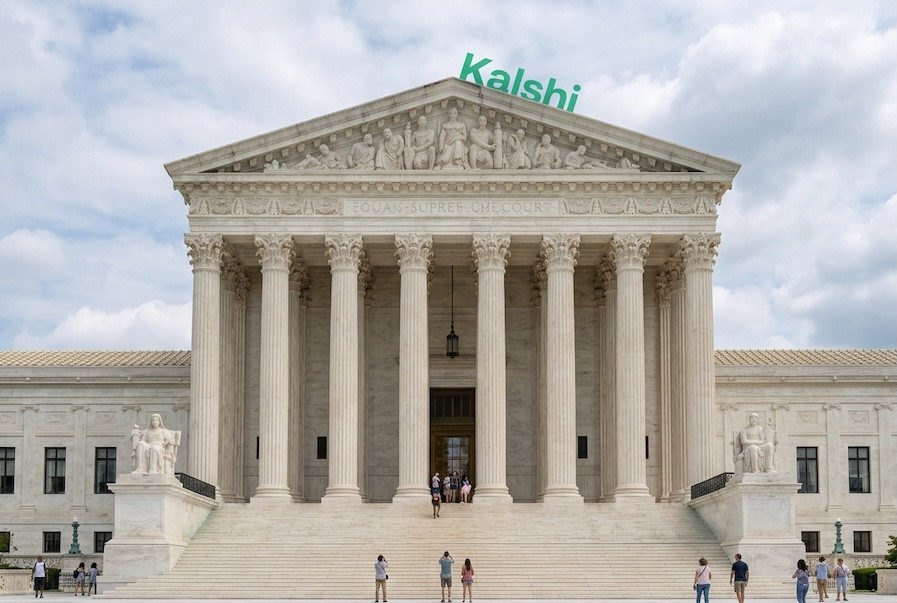
Prediction markets Kalshi and Polymarket have so far spent up to US$3 million on lobbying and campaign efforts to fight states seeking to regulate the platforms, with Kalshi being the largest spender.
According to IRS filings supplied by research firm OpenSecrets, Kalshi reportedly hired lobbyists in 41 states, with most of its efforts centered around California and New York, as well as contributing US$147,500 to the Republican Attorneys General Association, US$170,000 to the Democratic Attorneys General Association, and US$250,000 to both the Republican and Democratic governors’ associations.

Kalshi also allegedly donated directly to some state attorneys general, including campaigns for Charity Clark in Vermont, Dan Reyfield in Oregon, and James Uthmeimer in Florida. Although not an attorney general, Kalshi also donated to a super PAC supporting Ken Paxton’s run for the Texas Senate.
For Kalshi, state attorneys general are leading the fight against regulating prediction markets. In July, a bipartisan coalition of 44 attorneys general, led by Nevada Attorney General Aaron Ford, signed a letter opposing the Commodity Futures Trading Commission’s (CFTC) regulation of prediction markets, arguing that it lacked authority to regulate sports-event contracts.
Kalshi and other prediction markets maintain that, because their contracts are regulated by the CFTC, they have the right to supply them nationwide.

So far, states like Nevada have taken prediction markets to court over the regulation of event contracts. Most recently, a Sixth Court ruling late last month said that Kalshi’s sports-event contracts did not fall under commodities law, meaning states like Ohio and Tennessee were free to impose their gambling laws on Kalshi.
Altogether, Kalshi has spent up to US$1 million on lobbying in the first half of 2026, including opening its own Washington, DC, office to facilitate liaising with the White House as well as founding the Coalition of Prediction Markets with other prediction market platforms.
Charlotte Capewell brings her passion for storytelling and expertise in writing, researching, and the gambling industry to every article she writes. Her specialties include the US gambling industry, regulator legislation, igaming, and more.

Dig Deeper
Related stories
 2026/08/25: Coalition for Prediction Markets spends US$50,000 on California lobbying in just four months
 2026/09/14: Donald Trump agrees to state enforcement role in CLARITY Act
 2026/03/02: Kalshi lobbying in New York as state lawmakers seek to regulate event contracts
 2026/07/22: US Congress questions whether CFTC is fit to oversee prediction markets
2026/08/25: Coalition for Prediction Markets spends US$50,000 on California lobbying in just four months
2026/09/14: Donald Trump agrees to state enforcement role in CLARITY Act
2026/03/02: Kalshi lobbying in New York as state lawmakers seek to regulate event contracts
2026/07/22: US Congress questions whether CFTC is fit to oversee prediction markets
The Backstory
State fights move from theory to enforcement
Kalshi’s lobbying push comes after prediction markets shifted from a niche financial product into a direct challenge to the state-by-state gambling system. The company and rivals such as Polymarket argue that contracts tied to the outcome of sports, elections and other events are federally regulated derivatives overseen by the Commodity Futures Trading Commission. State regulators, attorneys general, tribes and casino groups say many of those products look and function like unlicensed betting.
That dispute has become more than a policy argument. States including Nevada, Ohio, Tennessee, Arizona and others have moved to stop or penalize sports-event contracts, testing whether federal commodities law can shield platforms from state gambling rules. The question is now moving through courts, legislatures and Congress at the same time, creating a fragmented regulatory map for companies seeking national scale.
The stakes are especially high because prediction market operators built their model around federal recognition rather than 50 separate gambling licenses. If states can enforce gambling laws, platforms could face age limits, licensing requirements, tax obligations, responsible gambling rules and restrictions on collegiate or in-state sports events. If federal preemption prevails, states and tribes could lose leverage over a fast-growing form of sports wagering that does not fit within existing sportsbook statutes.
Court rulings fractured the legal landscape
The most immediate pressure on Kalshi has come from appellate courts. The 6th U.S. Circuit Court of Appeals recently held that Ohio and Tennessee may enforce gambling laws against the company, rejecting Kalshi’s argument that its sports-event contracts are swaps governed exclusively by the CFTC. As reported in the appeals court decision against Kalshi’s bid to block state regulation, the panel said that even if the contracts qualified as swaps, the Commodity Exchange Act would not necessarily prevent state gambling enforcement.
That ruling followed a similar outcome in the 9th Circuit, which supported state authority over Kalshi’s sports contracts. But the legal picture is not uniform. The 3rd Circuit reached a different conclusion in April, allowing Kalshi to keep operating in New Jersey while litigation continues and finding that the company was likely to succeed on its argument that federal law preempts state action.
The split has strengthened Kalshi’s argument that the market needs a single national standard. It also has given state officials reason to accelerate enforcement while favorable rulings exist. For operators, the risk is not just losing in one state. It is the creation of a patchwork in which identical contracts are treated as regulated derivatives in some jurisdictions and illegal gambling in others.
New York and California became central battlegrounds
Kalshi’s political strategy has focused heavily on states with large gambling economies and significant regulatory influence. New York is a critical front because it is the largest U.S. sports betting market and a state where lawmakers have already introduced proposals to regulate prediction markets. In Kalshi’s New York lobbying effort as lawmakers advanced event-contract bills, the company registered to lobby on financial services issues and prediction market legislation through a $10,000-per-month contract with Albany firm Brown Weinraub.
New York proposals would impose licensing requirements and age restrictions on platforms that allow users to trade on future events. For lawmakers, the absence of a clear federal framework is an invitation for state action. For Kalshi, New York regulation could become a template copied elsewhere, particularly because the state already has a mature sports betting regime and significant revenue to protect.
California is another key arena, though sports betting remains illegal there. The Coalition for Prediction Markets, which represents companies including Coinbase, Crypto.com, Kalshi, Robinhood and Underdog, spent $50,000 lobbying California officials between April and July, according to disclosures on the coalition’s California lobbying campaign. The work targeted Gov. Gavin Newsom’s office and Attorney General Rob Bonta’s office, underscoring that prediction market companies are trying to shape rules before enforcement hardens.
California also brings tribal gaming politics to the center of the dispute. Tribal operators have opposed sports-event contracts, arguing they infringe on rights built through compacts and voter-approved gaming systems. That tension has spilled into sports sponsorships, including Kalshi’s relationship with the Los Angeles Dodgers, whose long-standing tribal casino partner has opposed prediction markets.
Congress questions whether the CFTC can carry the load
The dispute has moved to Capitol Hill because existing law was not written with modern, app-based sports-event trading in mind. At a House Agriculture subcommittee hearing, lawmakers questioned whether the CFTC has the authority and capacity to oversee sports-event contracts on prediction markets. As detailed in congressional scrutiny of the CFTC’s role in prediction market oversight, members examined whether additional legislation is needed to close gaps between commodities law and gambling regulation.
The American Gaming Association and Indian Gaming Association have urged lawmakers to ban sports-event contracts, arguing that prediction market platforms avoid taxes, licensing reviews and consumer safeguards required of regulated sportsbooks. Sports organizations have raised separate concerns, especially around college athletics, where contracts tied to student athletes could increase integrity risks and harassment.
For Kalshi, the CFTC’s role is central to its business. Federal oversight gives the company a national compliance story and supports its claim that event contracts are financial instruments, not wagers. But the more sports products resemble betting markets to lawmakers, the more difficult it becomes for the industry to rely on CFTC supervision alone. Congressional uncertainty also encourages states to act first, rather than wait for federal rules that may not arrive quickly.
State attorneys general gained leverage across digital markets
State attorneys general have become pivotal actors because they can bring enforcement actions and influence national policy through coalitions. In July, a bipartisan group of 44 attorneys general led by Nevada Attorney General Aaron Ford opposed CFTC regulation of sports-event contracts, arguing the agency lacked authority over products they view as gambling. That coalition signaled that resistance to prediction markets is not confined to one party or region.
The same state enforcement debate is playing out in adjacent digital markets. President Donald Trump reportedly agreed to give state attorneys general a role in enforcing the CLARITY Act, a cryptocurrency bill aimed at creating rules for digital assets. As reported in the agreement to include state enforcement powers in the CLARITY Act, the provision reflected pressure from lawmakers who wanted states to police exchanges and banned digital assets alongside federal authorities.
That development matters for prediction markets because it shows a broader shift: states are seeking a formal role in sectors that companies often describe as federally regulated financial technology. If Congress endorses state enforcement in crypto, attorneys general may be emboldened to demand similar authority over event contracts. Kalshi’s donations to attorney general associations and individual campaigns reflect that reality. The officials most likely to challenge prediction markets are also among the most important political audiences for the industry.
Lobbying reflects an existential fight over classification
The surge in spending by Kalshi, Polymarket and the Coalition for Prediction Markets is not merely defensive. It is an attempt to define the category before opponents do. If prediction markets are classified mainly as commodities exchanges, the industry can pursue national growth under federal supervision. If they are classified as gambling, companies face expensive, state-by-state licensing and potential exclusion from major markets.
Traditional gaming interests see the fight in similarly existential terms. Sportsbooks and tribal casinos operate under rules that require licensing, tax payments, geolocation, responsible gambling controls and, in many cases, negotiated market access. They argue prediction markets are competing for the same sports customers without bearing the same regulatory costs. That creates pressure on lawmakers to either subject event-contract platforms to gambling rules or prohibit sports contracts altogether.
The result is a widening political contest involving courts, attorneys general, Congress, tribes, sports leagues and financial regulators. Kalshi’s lobbying spending signals that the company views state action as a direct threat to its national model. The next phase will depend on whether courts converge, Congress intervenes or states continue building a patchwork that forces prediction markets to adapt one jurisdiction at a time.
