


Kalshi accuses Washington gambling regulators of bias targeting in new letter

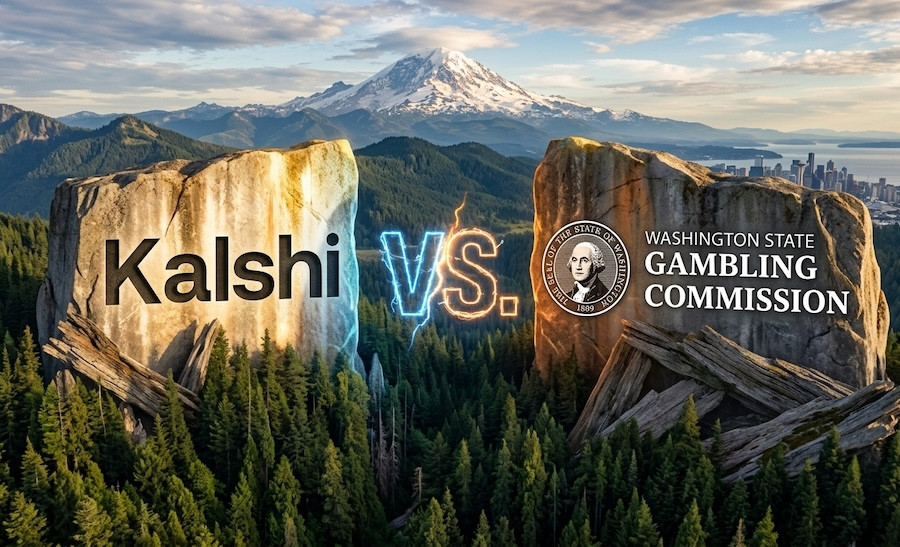
Lawyers for prediction market platform Kalshi have sent a letter to the Washington State Gambling Commission and the state attorney general’s office, accusing both of “selective non-enforcement” when it comes to targeting prediction markets aside from Kalshi.
The letter, sent last Friday and obtained first by The Spokesman-Review, argues that Washington is treating Kalshi differently from other prediction markets, which Kalshi says are also operating in the state, citing Polymarket as an example.

Kalshi maintains that its operations in Washington are legal as it is federally regulated by the Commodity Futures Trading Commission (CFTC). Washington regulators dispute this, arguing that Kalshi violates state gambling laws.
“This is particularly surprising as it relates to the Attorney General’s non-enforcement against Polymarket, which, along with its CFTC-licensed DCM, operates an unregistered, offshore platform that accounts for the majority of its business and offers many categories of event contracts that are prohibited by the CFTC,” the letter claims.
The lawyers went on to state that if Washington regulators cared about protecting consumers from unregulated gambling, then they would “not block the door for one allegedly non-compliant operator but prop it open for all others.”

Mike Faulk, a spokesperson for the attorney general’s office, said that Kalshi’s claims that it was being specifically targeted over other platforms were “not true” and that the attorney general does not need to “simultaneously prosecute all entities” engaged in the same activities to “obtain a judgment against one of them.”
Washington Attorney General Nick Brown sued the company back in March, and in August, a King County Superior Court judge issued an order requiring Kalshi to halt most of its event contracts in the state, including those on sports, elections, politics, entertainment, culture and science. Kalshi was also asked to impose geofence restrictions by 2 September.
A hearing regarding an update to the lawsuit has been scheduled for Wednesday.
Charlotte Capewell brings her passion for storytelling and expertise in writing, researching, and the gambling industry to every article she writes. Her specialties include the US gambling industry, regulator legislation, igaming, and more.

Dig Deeper
Related stories
 2026/03/30: Washington State Attorney General sues Kalshi
 2026/06/29: US Democrats try to block CFTC funding supporting prediction market cases
 2026/08/12: CFTC uses emergency authority to allow Kalshi to continue operating in New York
 2025/10/24: NHL signs multi-year deals with Kalshi and Polymarket
2026/03/30: Washington State Attorney General sues Kalshi
2026/06/29: US Democrats try to block CFTC funding supporting prediction market cases
2026/08/12: CFTC uses emergency authority to allow Kalshi to continue operating in New York
2025/10/24: NHL signs multi-year deals with Kalshi and Polymarket
The Backstory
Washington case sharpens a national fight
Kalshi’s confrontation with Washington regulators is the latest front in a broader dispute over whether prediction markets are federally regulated derivatives exchanges or online gambling businesses subject to state control. The company says its event contracts fall under the Commodity Futures Trading Commission’s authority. Washington officials say many of those contracts amount to illegal wagering under state law, particularly when they involve sports, elections and other real-world outcomes.
The immediate dispute began when Washington Attorney General Nick Brown sued Kalshi in King County Superior Court, alleging the platform violated state gambling laws. Washington permits only limited gambling, with sports betting largely confined to tribal casinos. The attorney general’s complaint portrayed Kalshi as an unlicensed gambling operator that allowed Washington residents to place wagers on sports outcomes, political races and other events. State officials said more than 90% of activity on the platform was tied to sports-related contracts.
Kalshi’s response has been to frame Washington’s action as an attempt to override federal law. The platform, launched in 2021, is a CFTC-regulated designated contract market. It argues that states cannot selectively apply gambling statutes to financial contracts cleared through a federal regulatory system. Washington’s regulators reject that position, saying federal registration does not give a company immunity from state gambling restrictions when the product functions like betting.
Sports contracts changed the stakes
Prediction markets long occupied a niche in U.S. financial regulation, offering contracts tied to elections, inflation, weather or other measurable events. The category became more politically sensitive as platforms expanded into sports. Those products resemble wagers to state gambling regulators, tribal gaming interests and licensed sportsbooks, even if they are structured as binary derivatives contracts.
The CFTC has tried to draw a distinction between the financial presentation of event contracts and sportsbook marketing. In August, the agency warned prediction market operators against using sportsbook-style American odds, saying that format could mislead customers about the nature of the transaction and obscure market depth and pricing information. The guidance specifically referenced operators including Kalshi and Polymarket and underscored that federally regulated markets must present pricing as derivatives, not casino products.
That warning cut both ways. For state officials, it bolstered the argument that consumer confusion is real and that sports event contracts can look and feel like gambling. For Kalshi and the CFTC, it showed federal regulators were policing the market and did not need states to impose a separate gambling-law regime. The result is a regulatory split in which the same product can be described as a federally supervised financial instrument in one forum and illegal sports wagering in another.
CFTC moves from regulator to courtroom actor
The CFTC has increasingly shifted from overseeing prediction markets to defending its jurisdiction in court. The agency has sued several states that tried to block federally regulated platforms, arguing that a patchwork of gambling laws cannot govern interstate derivatives markets. That posture has put the CFTC in direct conflict with state attorneys general, gaming regulators and tribal interests that have traditionally controlled gambling policy within state borders.
Kentucky became one of the most visible examples. The CFTC sued Kentucky after state officials targeted prediction market operators and lawmakers approved a 14.25% excise tax on operator transaction fees. Kentucky Attorney General Russell Coleman had filed lawsuits against Kalshi and Polymarket, calling them illegal sportsbooks and arguing that the Kentucky Horse Racing and Gaming Commission, not the CFTC, regulates sports wagering in the state. The federal agency said Kentucky was threatening federally regulated markets with large penalties and interfering with federal authority.
The conflict then expanded to New York, where Attorney General Letitia James sued Kalshi and sought a temporary restraining order, restitution and civil penalties. The CFTC responded with an extraordinary step: It used emergency authority to keep Kalshi operating in New York. CFTC Chairman Michael Selig said New York had no role in regulating interstate financial markets and argued Congress did not intend derivatives exchanges to be governed by state gaming laws.
That intervention signaled to states that the CFTC was prepared not merely to defend its licensees but to preempt state enforcement in urgent circumstances. It also raised the cost of each state-level case, turning local gambling disputes into tests of federal supremacy, administrative authority and the reach of the Commodity Exchange Act.
Congress enters through the budget process
The CFTC’s aggressive posture has drawn scrutiny in Congress, especially from Democrats concerned that the agency is enabling a workaround of state gambling laws. Sens. Richard Blumenthal of Connecticut and Jeff Merkley of Oregon, joined by 15 others, have asked Senate appropriators to restrict the CFTC from using federal funds to challenge state and tribal enforcement actions against online prediction markets.
The senators’ proposal, described in a letter seeking limits on CFTC litigation spending, differs from earlier efforts to ban certain event contracts outright. Rather than prohibit contracts tied to sports, elections or government actions, the budget approach would constrain the agency’s ability to finance lawsuits against state regulators. It is a narrower tactic but one with potentially significant consequences: If adopted, it could leave companies such as Kalshi with less federal backing when states seek injunctions or penalties.
The letter accused the CFTC of pursuing “litigation and intimidation” and warned that the agency could become an enabler of online prediction markets seeking to bypass consumer protections. It also emphasized tribal gaming compacts, a major issue in states where tribes hold exclusive or near-exclusive rights to operate sports betting. For tribes, the concern is not only consumer protection but the economic value of gaming agreements negotiated over decades.
The budget fight reflects a larger policy question. If prediction markets are treated primarily as financial exchanges, they are subject to federal market rules, disclosure obligations and CFTC oversight. If they are treated as gambling, they fall under a state-by-state framework built around licensing, taxation, age limits, responsible gaming rules and tribal compacts. Congress has not resolved that tension, leaving courts and regulators to define the boundary contract by contract and state by state.
Selective enforcement claim raises pressure
Kalshi’s latest argument in Washington adds a procedural and political layer to the substantive dispute. By accusing Washington regulators of selective non-enforcement, Kalshi is not merely contesting whether its contracts are legal. It is alleging that the state is targeting one federally regulated operator while leaving other prediction markets, including Polymarket, able to reach Washington users.
That claim is designed to challenge the consistency of the state’s consumer-protection rationale. If Washington’s overriding concern is unregulated gambling, Kalshi argues, regulators should pursue all similar platforms rather than focus on one company. Washington’s attorney general’s office has rejected the allegation, saying it does not need to prosecute every potentially unlawful actor at once to obtain judgment against one.
The point matters because state enforcement actions often proceed incrementally. Regulators commonly target one operator first to establish legal precedent, conserve resources or respond to the clearest evidence. Kalshi is trying to turn that normal enforcement discretion into a fairness argument, suggesting Washington is picking winners and losers in a market where federal registration should be decisive.
A King County judge has already ordered Kalshi to halt most event contracts in Washington, including those involving sports, elections, politics, entertainment, culture and science, and required geofencing. The next phases of the case will test whether Washington can sustain that order against federal preemption arguments and whether Kalshi can persuade the court that uneven enforcement undermines the state’s position.
What the ruling could affect beyond Washington
The Washington case is part of a chain of lawsuits that could determine how quickly prediction markets expand into areas traditionally reserved for licensed gambling. A ruling favoring the state would strengthen attorneys general seeking to block event contracts under gambling statutes. It could also encourage more states to demand geofencing, penalties or licensing changes from federally registered platforms.
A ruling favoring Kalshi would reinforce the industry’s claim that CFTC registration carries nationwide operational authority, limiting the ability of states to treat event contracts as illegal bets. That outcome could accelerate sports-linked and politics-linked prediction markets, while putting pressure on the CFTC to show that federal oversight can address age limits, addiction risks, market integrity and misleading presentation.
For now, the market is operating in legal uncertainty. The CFTC is defending its jurisdiction, states are defending gambling laws and Congress is weighing whether to cut off federal support for those fights. Kalshi’s Washington letter shows the company is also trying to shift attention to enforcement consistency, a strategy that could complicate the state’s case even if it does not resolve the central question: whether prediction markets are financial exchanges, gambling platforms or a hybrid that existing law was not built to handle.
