IGT PlayDigital releases Money Gong Emperor to Alberta and select US jurisdictions

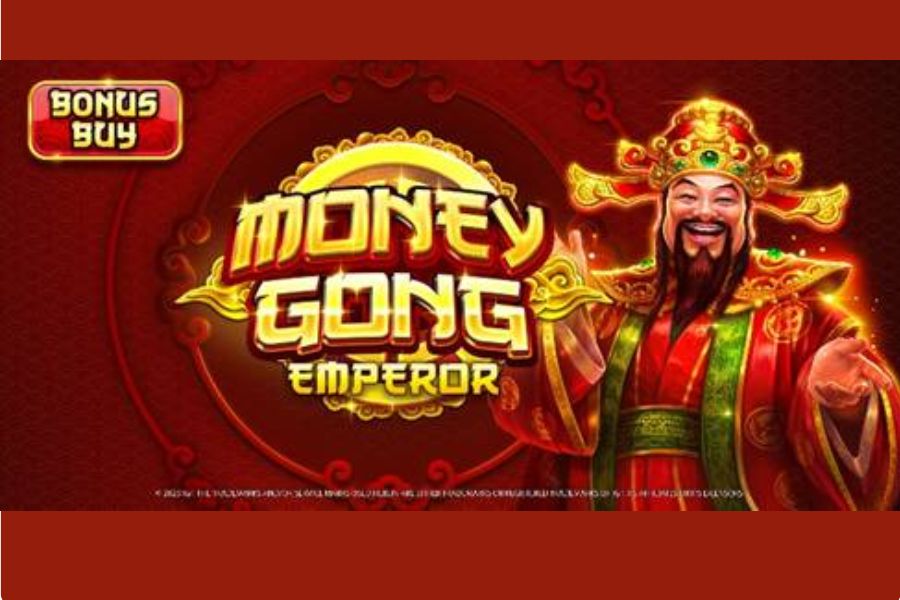
IGT announced on 23 July that IGT PlayDigital is introducing the Money Gong Emperor game to online players in Ontario, Alberta, and multiple US jurisdictions including Connecticut, Michigan, and New Jersey.
The release marks the broader North American online rollout of the global hit title, expanding its reach to players across multiple jurisdictions.

Money Gong Emperor is one of IGT’s top-performing premium slot games worldwide and was recently named Top Performing Game in EMEA at the 2026 EKG Slot Awards. Featuring a high-volatility math model and a hold & win bonus, the game delivers strong performance across casino floors globally.
The launch reflects IGT PlayDigital’s strategy of expanding its library of releasing proven land-based titles for online players.
Money Gong Emperor is the first title in the Money Gong collection to launch online in North America. Designed for digital and land-based play, the collection features, according to a news release, “engaging gameplay, vibrant visuals, and bonus-driven mechanics.”

Additional titles are expected to be released in the future.

Dig Deeper
Related stories
 2025/03/19: Galaxy Gaming reaches licensing agreement with IGT PlayDigital
 2025/03/14: IGT PlayDigital extends Latin America presence with Brazil launch
 2025/05/30: IGT PlayDigital launches Mega Vault engagement tool
 2025/10/17: IGT Digital to debut Tiger and Dragon Cash Reels in Ontario, Canada, and select US jurisdictions
2025/03/19: Galaxy Gaming reaches licensing agreement with IGT PlayDigital
2025/03/14: IGT PlayDigital extends Latin America presence with Brazil launch
2025/05/30: IGT PlayDigital launches Mega Vault engagement tool
2025/10/17: IGT Digital to debut Tiger and Dragon Cash Reels in Ontario, Canada, and select US jurisdictions
The Backstory
IGT leans on land-based hits for digital growth
IGT PlayDigital’s rollout of Money Gong Emperor in Alberta, Ontario and several U.S. states fits a clear pattern in the supplier’s North American strategy: take proven casino-floor titles, adapt them for regulated online markets and use familiar mechanics to reduce the risk of digital launches.
The approach reflects how the igaming content market has matured. Operators in states such as Michigan, New Jersey and Pennsylvania increasingly compete on game depth, brand recognition and promotional cadence rather than basic market access. For suppliers, that has elevated the value of slot titles with established land-based performance, recognizable math models and bonus structures that can translate across channels.
Money Gong Emperor is entering that environment as part of IGT’s broader push to make its online library look more like its casino-floor catalog. The company has repeatedly emphasized omnichannel development, a model that allows players to encounter similar brands, features and visual identities whether they are playing in a physical casino or through a licensed online platform. That strategy is not unique to IGT, but the company’s deep slot library gives it a large pipeline of titles to migrate.
Recent launches show a consistent playbook
IGT’s North American digital releases over the past year show the company pairing recognizable themes with bonus-driven mechanics that are already familiar to retail casino players. The launch of Tiger and Dragon Cash on Reels in Ontario and select U.S. jurisdictions was another example of a land-based title being repositioned for online play.
That title carried over the Cash on Reels mechanic and layered it with three bonus features, giving online operators a product that could be marketed around both recognizable branding and feature density. It also debuted across several of the same major regulated markets now targeted by Money Gong Emperor, including Connecticut, Michigan, New Jersey and Pennsylvania.
IGT took a similar approach with Prosperity Link Cai Yun Heng Tong, which was timed around Lunar New Year and positioned as another omnichannel addition to its U.S. igaming portfolio. That game leaned on the Prosperity Link mechanic, multiple game grids and jackpot potential, using features already associated with IGT’s broader slot portfolio to support online engagement.
Together, the releases suggest IGT is not simply digitizing older games. It is selecting titles with mechanics that can support repeat play, operator promotions and cross-channel recognition. In regulated online casino markets, where many customers are exposed to hundreds or thousands of slot titles, that recognition can help a game stand out on an operator’s lobby page.
Canada and U.S. states remain the key testing ground
The company’s focus on Ontario, Alberta and U.S. igaming states underscores where North American online casino growth remains concentrated. Ontario has become Canada’s most important competitive online gambling market since opening to private operators. Alberta is moving more deliberately but has attracted attention as a province with potential to expand its regulated online gaming framework.
In the U.S., online casino legalization remains limited compared with sports betting, making states such as Michigan, New Jersey, Pennsylvania, Connecticut, Delaware, Rhode Island and West Virginia especially important for suppliers. These markets offer scale, regulatory certainty and established operator relationships. They also allow companies such as IGT to test which retail casino titles can produce durable online performance.
The same market map appears across other recent developments in the sector. Penn Entertainment’s relaunch of its sportsbook as theScore Bet across 21 U.S. jurisdictions highlighted the growing importance of integrated platforms, particularly in states where online casino can sit alongside sports betting. Penn said users in Michigan, New Jersey, Pennsylvania and West Virginia could access its Hollywood Casino product through theScore Bet, showing how operators are using sportsbook brands as entry points into higher-margin casino products.
For content suppliers, that integration matters. Sports betting can drive customer acquisition, but online casino games often drive profitability. Suppliers with deep slot catalogs and proven titles are positioned to benefit when operators seek fresh content to retain players after acquisition costs have already been spent.
Social casino partnerships broaden the audience
IGT’s digital strategy is not confined to real-money online casinos. Its partnership activity in the free-to-play sector shows another route for extending the life of slot brands and building awareness before, or alongside, regulated real-money expansion.
Playtika’s Slotomania released Regal Riches in partnership with IGT, bringing an IGT casino title into one of the largest social casino environments. The game added bonus games, a guaranteed wilds meter and free-games features designed for a free-to-play audience while preserving the slot’s core identity.
The partnership, first reported externally by CDC Gaming, shows how suppliers can use social casino distribution to keep older titles visible and relevant. Social casino games do not involve real-money wagering, but they can reinforce brand familiarity among players who may also gamble in retail or regulated online settings.
That matters because brand recall has become a competitive advantage. Online casino lobbies are crowded, and players often gravitate toward names, themes or mechanics they have seen elsewhere. By circulating titles across land-based casinos, real-money online platforms and social casino apps, suppliers can create a feedback loop in which familiarity in one channel supports engagement in another.
Regulation shapes where content can scale
IGT’s latest launch also arrives as governments continue to decide how far regulated online casino should expand. The company’s current North American footprint is shaped less by demand than by law. In the U.S., only a small group of states permit full online casino gambling. In Canada, provincial models determine access, with Ontario’s open competitive structure standing apart from more controlled systems elsewhere.
Internationally, the same debate is playing out in markets that are still deciding whether to legalize and regulate online casino activity. New Zealand’s proposed framework recently advanced after a parliamentary committee recommended approval of an online casino bill, though the legislation faces political resistance. The proposal would permit up to 15 licensed online casinos and raise gambling duty on revenue, while opponents warn of increased advertising and potential harm. The committee report is available through the New Zealand Parliament’s site at this select committee report.
The debate around the New Zealand online casino bill illustrates the stakes for suppliers and operators. Legalization can create new regulated markets, but it also brings limits on advertising, licensing costs, taxation and responsible gambling obligations. Those rules influence which companies can enter, how many brands can compete and what kinds of games operators prioritize.
For IGT, regulated expansion creates opportunity but also requires patience. Each new market demands compliance work, operator integrations and localization. Proven titles such as Money Gong Emperor can help justify that investment because they arrive with performance data from land-based casinos and other regions. That can make them more attractive to operators seeking content with a clearer commercial case.
The stakes for IGT’s online pipeline
Money Gong Emperor’s North American online rollout is therefore more than a single game release. It is part of a broader attempt to convert IGT’s legacy strength in slot development into a larger position in regulated digital casino markets.
The stakes are rising as operators demand content that can support retention and differentiation. New sportsbook launches, casino integrations and market rebrands are increasing the need for reliable online casino inventory. At the same time, suppliers face pressure to deliver games that can perform across multiple jurisdictions without losing the qualities that made them successful in retail casinos.
IGT’s recent sequence of launches suggests it is betting on continuity: established mechanics, familiar brands and omnichannel design. If Money Gong Emperor performs online as it has on casino floors, it could reinforce that strategy and help set up additional titles in the Money Gong collection for digital release.
The broader question is how quickly North American regulation will allow such titles to scale. In the near term, growth will remain concentrated in a limited set of states and provinces. But within those markets, the competition for player attention is already intense, and suppliers with recognizable slot franchises may have an advantage as operators search for content that can keep customers engaged after they log in.