
Hong Kong Jockey Club World Pool turnover rose 20% in 2025

World Pool, the pari-mutuel betting pool operated by the Hong Kong Jockey Club, saw a 20% increase in turnover on overseas horse races in 2025.
All of Hong Kong’s Group 1 contests were run as World Pool races for the first time in 2025, generating HK$1.6 billion (US$205 million)1 HKD = 0.1284 USD
2026-01-07Powered by CMG CurrenShift in turnover. This brought the total turnover across all World Pool races to HK$10.9 billion (US$1.4 billion)1 HKD = 0.1284 USD
2026-01-07Powered by CMG CurrenShift.

Across 57 international racedays throughout the year, the total bet amount reached HK$9.3 billion (US$1.2 billion)1 HKD = 0.1284 USD
2026-01-07Powered by CMG CurrenShift, rising from HK$7.8 billion (US$1.0 billion)1 HKD = 0.1284 USD
2026-01-07Powered by CMG CurrenShift in 2024.
A total of 329 races were conducted under the World Pool banner in 2025, spanning 10 jurisdictions. Of those races, 70 were ranked in the International Federation of Horseracing Authorities’ Top 100 over the last three years.
Hong Kong Jockey Club Executive Director, Racing, Andrew Harding said, “It’s been a very positive year for World Pool. We’ve had more racedays and jurisdictions involved than ever before, and we’ve seen turnover records broken too.”
The news comes after the Hong Kong Jockey Club partnered with XIX Entertainment in May 2025.
Harding added, “World Pool’s growth over the past 12 months has played a key role in the globalization of racing and all the benefits that come with that, not least the increased revenue streams for racecourses and rights holders which leads to greater prize money.
“Heading into 2026, we’re confident that World Pool will continue to act as a positive force for racing globally and we will be confirming an expansion of fixtures very soon, bringing World Pool to even more racing fans in the new year.”

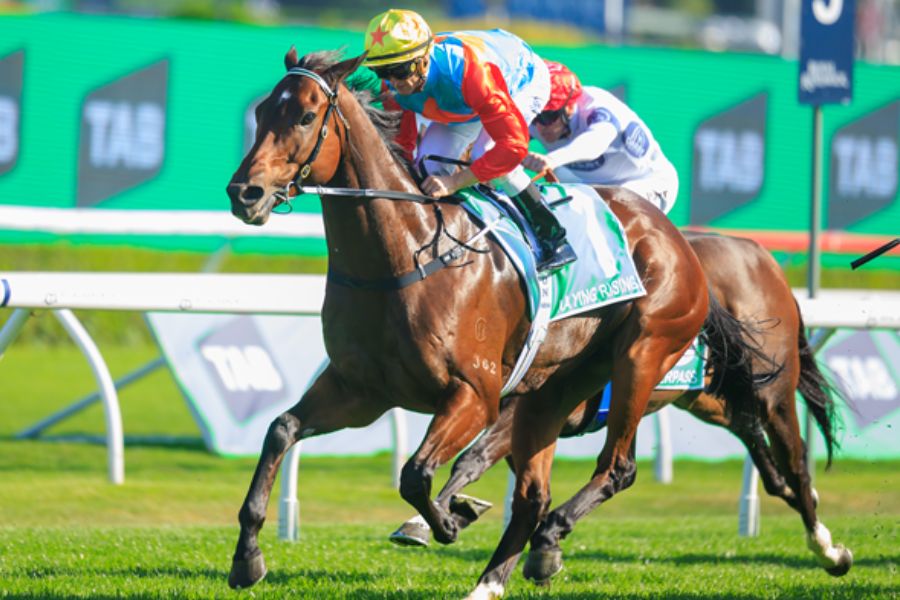
Last year also saw a new single-race turnover record for World Pool bet types. Wagering on Ka Ying Rising’s appearance in The Everest reached HK$83 million (US$11 million)1 HKD = 0.1284 USD
2026-01-07Powered by CMG CurrenShift, exceeding the previous record of HK$66.2 million (US$8.5 million)1 HKD = 0.1284 USD
2026-01-07Powered by CMG CurrenShift set during the Queen Elizabeth II Jubilee Stakes in 2023.
Abi Bray brings strong researching skills to the forefront of all of her writing, whether it’s the newest slots, industry trends or the ever changing legislation across the U.S, Asia and Australia, she maintains a keen eye for detail and a passion for reporting.

Verticals:
Sectors:
Topics:
Dig Deeper
Related stories
 2025/05/13: Hong Kong Jockey Club sets out stall as global sports entertainment brand
2025/02/27: Hong Kong Jockey Club supports bid to legalize online basketball betting
2025/06/09: Hong Kong proposes 50% betting duty on basketball wagers
2025/09/12: Hong Kong legalizes basketball betting in majority vote
2025/05/13: Hong Kong Jockey Club sets out stall as global sports entertainment brand
2025/02/27: Hong Kong Jockey Club supports bid to legalize online basketball betting
2025/06/09: Hong Kong proposes 50% betting duty on basketball wagers
2025/09/12: Hong Kong legalizes basketball betting in majority vote
 2025/05/13: Hong Kong Jockey Club sets out stall as global sports entertainment brand
 2025/02/27: Hong Kong Jockey Club supports bid to legalize online basketball betting
 2025/06/09: Hong Kong proposes 50% betting duty on basketball wagers
2025/09/12: Hong Kong legalizes basketball betting in majority vote
2025/06/09: Hong Kong proposes 50% betting duty on basketball wagers
2025/09/12: Hong Kong legalizes basketball betting in majority vote
The Backstory
How racing’s global pool set the stage
The Hong Kong Jockey Club’s investment in international reach did not begin with basketball or branding. Before 2026, the Club had already pushed deeper into global racing by expanding World Pool, its pari-mutuel network that commingles bets across jurisdictions. That push translated into scale: more racedays, more jurisdictions and more high-quality contests aggregated into a single liquidity engine. The Club positioned that growth as fuel for prize money and racing’s international appeal. In parallel, it kept adding marquee fixtures and capitalizing on records set at headline events, underscoring how global liquidity can lift returns for rights holders and entice new bettors. That strategic arc frames the latest financial milestones and explains why the Club is leaning into cross-border products and broader fan pipelines.
The World Pool footprint dovetails with Hong Kong’s aspiration to serve as a connector market for sport and entertainment. Large, synchronized pools thrive on attention and trust. They also need fresh audiences. The Club’s moves outside traditional racing, in both marketing and product, are best read as attempts to widen the funnel while protecting regulated market share.
A pivot to entertainment to widen the funnel
In 2025, the Club sharpened that aperture with a high-profile partnership designed to elevate Hong Kong racing on global screens. It partnered with Simon Fuller’s XIX Entertainment to position itself as a global sports and entertainment brand, bringing Now United to Hong Kong for racecourse performances and social content while opening auditions for a new band member. The initiative mirrored the Club’s recent streak of tourism-led engagement and its strategic collaboration with China Tourism Group, aiming to turn race meetings into broader cultural events that carry beyond the track.
The message was twofold. First, entertainment programming can convert casual visitors into recurring customers, especially when bundled with premium raceday experiences. Second, the Club’s ambition to be a “premier destination for equestrian sports” depends on visibility and narrative, not just wagering products. In APAC’s crowded attention market, building an entertainment overlay extends time on platform and raises the lifetime value of each fan. That approach also aligns with Hong Kong’s five-year plan to deepen international connectivity, a point Club executives have emphasized as they court new audiences and sponsors.
Illegal basketball betting forces policy action
While racing expanded outward, pressure built at home from a different sport. Hong Kong’s fiscal challenges and the rise of illegal basketball wagering converged into a policy problem the government could not ignore. In early discussions, officials weighed how to channel demand into regulated channels. The Club reinforced the case, citing the social harms tied to unregulated markets and the scale of money leaving the tax net.
As debate intensified, the Club publicly backed the government’s budget direction and said it would submit proposals to regulate basketball betting. It argued that a legal market could curb underage access, reduce loan shark exposure and preserve revenue for social purposes. The Club’s estimate that illegal basketball wagers reached as high as HK$70 billion to HK$90 billion a year highlighted the potential uplift if even a fraction migrated to regulated platforms. That position was spelled out when the Club supported the bid to legalize online basketball betting, framing legalization as a pragmatic response rather than an endorsement of more gambling.
Government officials echoed that posture. The stated aim was to redirect entrenched demand through a tightly controlled channel using protections already embedded in Hong Kong’s soccer betting regime. The move also aligned with efforts to reduce a roughly HK$100 billion fiscal deficit without broad tax rises, making regulated basketball betting a revenue valve with political and social guardrails.
From consideration to a 50% duty and a new license
The policy path moved quickly through stages of consideration, consultation and design. Early signals came when Financial Secretary Paul Chan Mo-po weighed legalization to address the deficit and illegal market size. Industry data suggested that basketball could generate profits rivaling or exceeding soccer in some periods, given the sport’s calendar density and in-play betting appeal. The Club’s CEO previously warned that up to 150,000 residents were already betting illegally on basketball, with illegal sportsbooks estimated at HK$350 billion in 2023 across all sports.
By midyear, the policy blueprint crystallized. The government proposed applying the existing soccer model to basketball and recommended a tax rate that matched it. After a public consultation in which more than 94% of respondents favored legalization, officials proposed a 50% duty on operators’ net profits from basketball betting, replicating soccer’s calculation. The Home and Youth Affairs portfolio would oversee licensing, with measures to minimize harm and keep the focus on enforcement against illegal operators. That symmetry reduced implementation risk by lifting a tested framework rather than writing new rules from scratch.
Legislative Council support followed. Lawmakers approved legalization in a 77–two vote, with two abstentions, and backed the 50% duty. The Secretary for Home and Youth Affairs was tasked with issuing the Club’s license and embedding responsible gambling conditions. Critics warned of potential normalization of gambling and questioned whether regulation would truly suppress illegal syndicates. The government maintained that a legal channel, paired with education and enforcement, offered the best chance to reclaim activity from offshore and underground markets.
What it means for the Club and for racing
The convergence of three tracks—World Pool expansion, an entertainment pivot and basketball’s legalization—reshapes the Club’s revenue mix and its strategic risk. Larger, more frequent global pools improve the economics of racing rights, which in turn support prize money and field quality. Entertainment partnerships expand the top of the funnel, bringing in tourists and casual fans that can be nurtured into racing customers. Legal basketball betting introduces a new, high-velocity product into the regulated ecosystem, creating cross-sell opportunities but also new responsibilities around harm minimization.
For government, the stakes are fiscal and social. A 50% duty on net receipts promises a fresh revenue line in a tight budget cycle, provided the legal market is competitive enough to attract bettors from illegal operators. Early performance will be judged by how quickly turnover migrates on major basketball calendars and whether enforcement keeps pressure on unlicensed channels.
For the Club, execution risk sits in product integration and trust. The same operational discipline that scaled World Pool—liquidity management, market integrity, transparent pricing—will matter in basketball. So will content and experience. The bet is that a stronger brand, amplified by entertainment assets, can retain users across sports and keep them within Hong Kong’s regulated framework. If that holds, the Club’s enlarged platform could stabilize earnings, diversify away from single-sport volatility and reinforce Hong Kong’s role as a regional hub for regulated wagering and sports entertainment.
The through line is scale with safeguards. Building global pools, staging raceday performances and launching a new betting vertical all extend reach. The policy choice to mirror soccer’s regime, backed by a 50% duty and tight licensing, tries to ensure that reach does not outpace responsibility. The coming seasons will test whether those pieces lock together as intended—and whether Hong Kong can convert more of its existing demand into legal, taxable play without undercutting the integrity of the sports it promotes.

