


Hong Kong adult film star arrested for promoting illegal online gambling


Hong Kong Police have arrested 29-year-old model and adult film actress Erena So Hoi‑lam for allegedly facilitating illegal online gambling by promoting an offshore gambling website through social media.
According to reports, So was arrested in Sham Shui Po before being released on bail and is due to report back to police in late July.

The West Kowloon Regional Crime Unit said its investigation found that the website in question recruited local personalities as brand ambassadors to promote the platform and encourage gambling.
Police stated that the website, which presented So as one of its brand ambassadors, offered sports betting, esports, online slot games, table games, and live dealer titles, despite online gambling being illegal under Hong Kong law.
So told local media that she believed the website was legally registered in Malaysia and that its advertising campaigns targeted audiences across Asia instead of Hong Kong.

However, under Hong Kong’s Gambling Ordinance, promoting or facilitating betting constitutes an offense if the promotion is accessible in Hong Kong, regardless of where the gambling platform is based or which audience it targets.
The arrest comes as authorities in Hong Kong continue to crack down on illegal online gambling, with police recently warning that football fans who use offshore betting websites could be in violation of local gambling regulations.

Dig Deeper
Related stories
 2026/06/08: Hong Kong police warn of offshore betting during World Cup
 2026/07/22: Hong Kong Police arrest 991, seize US$47 million in betting records from illegal World Cup wagering
 2025/05/13: Hong Kong Jockey Club sets out stall as global sports entertainment brand
2026/04/14: Hong Kong pauses basketball betting launch due to concerns around impact of prediction markets
2025/05/13: Hong Kong Jockey Club sets out stall as global sports entertainment brand
2026/04/14: Hong Kong pauses basketball betting launch due to concerns around impact of prediction markets
2026/06/08: Hong Kong police warn of offshore betting during World Cup
2026/07/22: Hong Kong Police arrest 991, seize US$47 million in betting records from illegal World Cup wagering
2025/05/13: Hong Kong Jockey Club sets out stall as global sports entertainment brand
2026/04/14: Hong Kong pauses basketball betting launch due to concerns around impact of prediction markets
The Backstory
Legal betting channels frame the enforcement push
Hong Kong’s arrest of a social media personality accused of promoting an offshore gambling site sits at the intersection of two policy tracks that have been moving in opposite directions: a tighter campaign against illegal online wagering and a cautious expansion of legal betting options. The city permits betting only through authorized channels, principally horse racing and soccer betting operated by the Hong Kong Jockey Club, while offshore online casinos, sports books and live dealer sites remain outside the law if they are accessible to people in Hong Kong.
That distinction has become harder to police as gambling operators use influencers, brand ambassadors and regional advertising campaigns to reach audiences across borders. Authorities have made clear that the physical location of a platform, or the jurisdiction where it claims to be registered, does not determine legality for Hong Kong users. Under the Gambling Ordinance, the promotion or facilitation of betting can be an offense when the activity is available in the city.
The current case therefore is not only about one celebrity endorsement. It reflects a broader concern that offshore platforms can use local fame, social media reach and entertainment branding to make illegal wagering appear mainstream, even as the government tries to steer demand into regulated channels with tax collection, consumer controls and responsible gambling safeguards.
Basketball debate exposed the scale of illegal demand
The scale of that demand became central to the government’s recent debate over basketball betting. Officials moved toward a regulated model after acknowledging that illegal basketball wagering had grown too large to ignore. A government paper recommended a 50% duty on operators’ net profits from basketball wagers, mirroring the structure used for soccer betting. The proposal followed a public consultation in which more than 94% of respondents favored legalization.
The policy logic was pragmatic rather than promotional. Secretary for Home and Youth Affairs Alice Mak Mei-kuen said legalization would be a last resort where illegal gambling had become rampant, creating a limited legal channel to divert betting away from criminal or offshore markets. The Hong Kong Jockey Club estimated illegal basketball betting at as much as HK$90 billion a year, a figure that gave urgency to the debate and underscored why enforcement alone may not be sufficient.
That same figure helped turn basketball betting into a fiscal and social policy question. Financial Secretary Paul Chan Mo-po had said regulating online basketball betting could raise more than HK$2 billion in government revenue. The Home and Youth Affairs Bureau then began consultation on how a limited regime could work, including licensing arrangements and measures aimed at reducing harm. In that context, arrests tied to offshore promotion show the pressure on authorities to act before illegal operators consolidate their brands with Hong Kong consumers.
Revenue arguments broadened the political stakes
The basketball proposal also drew support from groups that saw legal wagering revenue as a way to fund public benefits. Our Hong Kong Foundation, one of the city’s best-known think tanks, argued that proceeds from legalized basketball betting should be directed toward sports development. Its plan, detailed in a proposal to use basketball gambling revenue for community facilities, coaches and events, suggested allocating 40% of proceeds to repair and upgrade sports venues, 30% to hire international coaches and the remainder to attract international sports events.
That argument strengthened the case for regulation by linking betting revenue to visible public investment. It also made the illegal market more politically salient. If large volumes of wagering are already taking place, policymakers face a choice between allowing offshore operators to capture the proceeds or shifting some activity to a supervised monopoly that contributes taxes and charitable funding.
But the revenue case is not risk-free. Expanding legal betting can normalize gambling, particularly when sports, entertainment and online media overlap. That is why the government has emphasized limited outlets, a restricted licensing framework and the continuation of enforcement against unlicensed platforms. The current arrest reinforces that policy message: legalization in one category would not create tolerance for offshore websites offering wider menus of sports betting, esports, slots, table games and live dealer products.
The Jockey Club’s dual role keeps expanding
The Hong Kong Jockey Club is central to this system because it is both the city’s authorized betting operator and one of its largest civic funding sources. In 2023/24, the club contributed a record HK$40.1 billion in tax and charity donations. Its position gives the government a ready-made channel for legal wagering, but it also heightens scrutiny of how betting, sports and entertainment are packaged for the public.
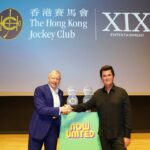
The club has been moving to broaden its appeal beyond traditional racing. It recently partnered with Simon Fuller’s XIX Entertainment in an effort to position the Hong Kong Jockey Club as a global sports entertainment brand. The initiative includes performances and social media content involving the pop group Now United, along with auditions in Hong Kong. The club has also worked with China Tourism Group to promote racing on the mainland and reported more than 143,000 tourist visits to racecourses so far this season.
Commercially, the club’s global ambitions are supported by its World Pool business. The pari-mutuel betting pool posted a 20% rise in turnover on overseas horse races in 2025, reaching HK$10.9 billion across all World Pool races. International racedays generated HK$9.3 billion, up from HK$7.8 billion a year earlier, with 329 races across 10 jurisdictions. That growth shows the strength of regulated betting products when they are tied to international sports content and formal revenue-sharing structures.
For policymakers, the contrast is sharp. The Jockey Club represents the sanctioned model: taxable, supervised and linked to public contributions. Offshore gambling sites represent the opposite: accessible, promotional and difficult to control. Influencer marketing narrows that gap in the eyes of consumers, which is why authorities are likely to treat local promotion as a priority enforcement issue.
Prediction markets added a new complication
Hong Kong’s caution deepened after officials paused a planned launch of basketball betting because of concerns about prediction markets. The government had passed a proposal to allow basketball betting and planned to issue a license to the Jockey Club in time for the 2026/27 NBA season. But officials later halted the timetable, saying they needed to study whether fast-growing prediction platforms could create spillover risks.
The pause, described in the government’s decision to delay basketball betting over prediction market concerns, showed how quickly the regulatory perimeter is changing. A Home and Youth Affairs Bureau spokesperson warned that introducing basketball betting under current conditions could draw more public attention to prediction markets, indirectly fueling illegal gambling. The bureau also said betting on sports events through prediction markets would be illegal in Hong Kong.
That concern reflects developments in the United States, where platforms such as Polymarket and Kalshi have faced legal battles with several states over whether their products amount to unlicensed gambling, even as federal commodities regulators oversee aspects of the sector. Blockchain security auditor CertiK reported that prediction market trading volume rose from US$15.8 billion in 2024 to US$63.5 billion in 2025, illustrating why Hong Kong officials are wary of adding a new legal betting product while adjacent markets are expanding rapidly.
Why the arrest matters beyond one platform
The arrest of a Hong Kong adult film star accused of promoting illegal online gambling is best understood against that policy backdrop. Authorities are trying to preserve a narrow legal betting structure while evaluating whether to expand it, and they are doing so in a market where offshore websites can move faster than legislation. Social media endorsements can give those operators local visibility without physical premises, agents or traditional advertising.
The case also sends a warning to public figures and marketing intermediaries. Claims that a website is licensed elsewhere, or that a campaign targets Asia broadly rather than Hong Kong specifically, may not shield promoters if the content is accessible in the city. For police, that principle is essential because offshore gambling operators often rely on precisely those jurisdictional ambiguities.
The stakes extend to tax revenue, consumer protection and the credibility of Hong Kong’s gambling regime. If illegal platforms can recruit recognizable local personalities with limited consequence, the government’s effort to channel demand toward regulated products becomes harder. If enforcement is too blunt, however, officials risk appearing inconsistent while they consider legalizing additional sports betting. The current crackdown is an attempt to hold that line: regulated gambling may expand, but offshore promotion remains a criminal exposure.
