


Hawaii lawmaker wants to ban prediction markets

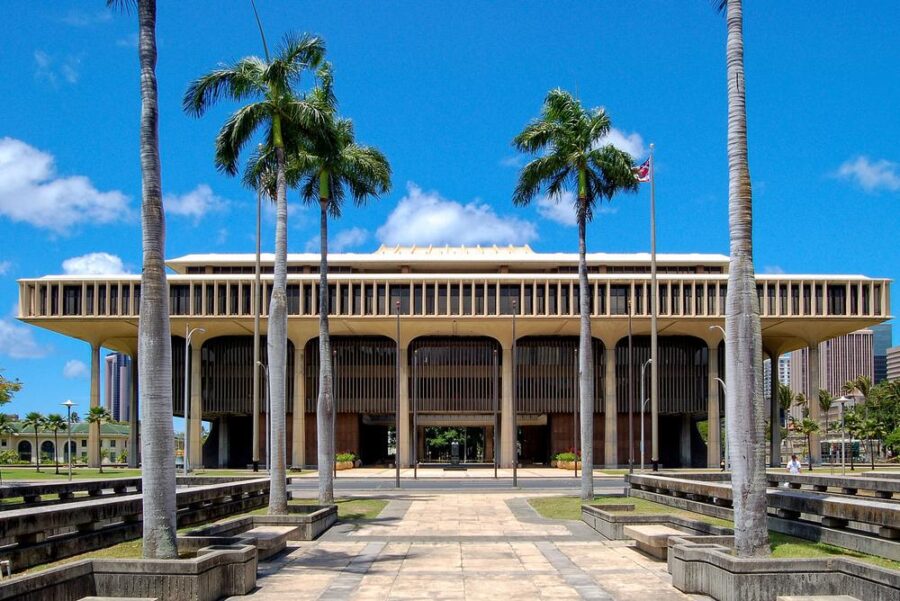
A Hawaii state lawmaker has introduced legislation that would ban prediction market wagering, citing concerns that the products circumvent the state’s long-standing ban on gambling.
According to West Hawaii Today, State Rep. Scot Matayoshi, Chair of the House Commerce and Consumer Protection Committee, introduced House Bill 2198 after online bettors placed US$448,667 on prediction markets tied to phrases expected to appear in Governor Josh Green’s State of the State address.

The wagers were placed on an online platform offering yes-or-no markets on political events, natural disasters, elections, and sports outcomes. It remained unclear where the bets originated, though Matayoshi said interest in the governor’s speech was unlikely to have come largely from outside Hawaii.
Matayoshi said prediction market platforms allowed users to trade event contracts rather than place traditional wagers, creating what he described as a loophole in Hawaii law.
Hawaii and Utah remain the only US states that ban gambling.

Prediction markets have expanded rapidly in recent years. According to industry data reported by the New York Times, nearly US$12 billion was traded on two major platforms, Kalshi and Polymarket, in December, more than four times the level recorded a year earlier.
Supporters argued that prediction markets differed from gambling because operators did not set odds or act as the house, instead charging transaction fees between users. However, critics said the structure made markets vulnerable to manipulation, particularly when participants have access to related information.
Over the weekend, news broke that prediction market platform Polymarket had been temporarily barred from Nevada for two weeks after a judge had said that its sports event contracts violated the state’s gambling framework.
Charlotte Capewell brings her passion for storytelling and expertise in writing, researching, and the gambling industry to every article she writes. Her specialties include the US gambling industry, regulator legislation, igaming, and more.

Dig Deeper
Related stories

The Backstory
Why Hawaii is suddenly a prediction market battleground
Hawaii’s bid to shut down prediction markets taps into a fast-changing corner of online wagering that regulators have not fully defined. A state lawmaker moved to ban event-contract trading after bettors reportedly staked nearly $448,700 on whether specific phrases would appear in Gov. Josh Green’s State of the State address. The wagers were flagged by local media and cast as a workaround to the state’s long-standing gambling prohibition. The activity surfaced despite Hawaii, with Utah, being among the only states that ban gambling outright. The episode underscores how event contracts blur lines between trading and betting, allowing users to buy and sell outcomes rather than place traditional wagers.
The flashpoint follows a burst of national growth for prediction markets and fresh regulatory friction. The New York Times recently tallied heavy volumes on major platforms, while a Nevada judge temporarily barred one platform’s sports markets, citing conflict with the state’s gambling framework. In Hawaii’s case, the concern is both legal and practical: whether such markets slip through statutory cracks and whether in-state interest is being catalyzed by apps that present wagers as trades. The pushback traces to coverage in West Hawaii Today, which detailed the spike in bets tied to the governor’s address.
A state that bans gambling weighs full legalization
The legislative drive to outlaw prediction markets lands as Hawaii debates whether to legalize online gambling more broadly. A suite of bills introduced this session would, at various levels, authorize sports betting and create new oversight bodies. One proposal, SB 1572, would form a Hawaii State Sports Wagering Commission to regulate online betting, with a 15% tax. Other measures, including HB 1308 and SB 1569, contemplate mobile-only frameworks and lower tax rates. Another bill, SB 1507, would stand up a Hawaii Lottery and Gaming Corporation to manage poker, lottery and casino games.
The contrast is striking: the state is weighing a crackdown on prediction markets even as it studies a path to regulated online wagering. Backers of legalization argue that a licensed system can capture revenue and fund guardrails. Opponents say the state’s ban is a bulwark against addiction and financial harm. The prediction market flare-up gives both sides new evidence. Proponents of bans cite loopholes that allow unlicensed activity; legalization advocates point to the same loopholes as proof that demand will migrate to gray or offshore offerings without a regulated alternative.
States redraw lines on prop bets and microbetting
Hawaii’s inflection point mirrors a broader recalibration of high-velocity betting products on the mainland. In Massachusetts, state Sen. John Keenan unveiled the Bettor Health Act to ban live televised sportsbook ads and outlaw in-game prop wagers, while increasing operator contributions to a public health trust fund. He framed the bill as a course correction after legalization.
Ohio’s debate has turned on player safety and integrity. Gov. Mike DeWine urged regulators to remove prop bets from pro sports amid an investigation that put two Cleveland Guardians pitchers on leave, calling the harms clear in a public statement. State Rep. Brian Stewart pushed back, arguing prop bets are popular and drive tax receipts, and vowed on X to keep them legal, as reported in coverage of the Ohio fight. College prop bets are already banned in the state.
New Jersey is targeting the fastest slice of the market. Assemblyman Dan Hutchinson proposed a ban on microbetting — wagers on single pitches or coin tosses — citing risks to younger users and the product’s speed-driven addictiveness. He amplified the case in an interview with CBS News Philadelphia, noting that current federal probes into alleged illegal wagering in the NBA have focused attention on prop markets. The throughline: regulators are moving to constrain the most impulsive, frequent-bet formats even in states that embraced sports betting.
Wisconsin’s preemptive move to keep betting on-compact
Wisconsin is advancing a different strategy: channel activity into a tribal-regulated system before prediction markets gain more ground. Lawmakers are weighing AB 601, which would redefine legal betting to permit mobile wagers placed within the state so long as servers sit on tribal land. The governor has signaled support for tribal oversight, and the bill’s backers say the model would align jurisdiction, consumer protections and revenue capture.
The timing is deliberate. Prediction markets are proliferating by framing wagers as event contracts that do not, in their view, require state gaming licenses. Wisconsin lawmakers argue that if a compact-based mobile system is not enacted, unregulated apps will fill demand. Tribal operators also see a defensive play: litigation against event-contract exchanges, such as planned actions by the Ho-Chunk Nation noted by bill supporters, is one lever, but establishing a clear legal alternative may be more effective at keeping bettors onshore and under supervision.
The stakes for regulators, bettors and tax coffers
The Hawaii episode crystalizes the policy trade-offs facing states. Event contracts can move fast and at scale, but their legal status remains unsettled. For absolute-ban states, they expose the limits of prohibition in the mobile era. For legal states, they challenge the integrity protections and responsible gambling rules tailored to sportsbooks rather than marketplaces that match users and charge fees.
Consumer risk and public revenue are both on the line. Massachusetts has reported more than $315 million in sports betting tax revenue since early 2023, a figure used by opponents of rollbacks and by supporters of tighter safeguards who argue the state can afford stronger standards. Ohio says sports betting generated $359 million in taxes since January 2023, even as leaders spar over prop restrictions. New Jersey’s microbetting debate centers on the speed of losses and the intensity of engagement, with counselors warning that product design matters as much as access.
Hawaii now sits at a crossroads that other states have confronted from different angles. It can double down on prohibition by outlawing prediction markets, move toward a regulated model that attempts to absorb demand, or try a hybrid approach that bans high-risk formats while authorizing tightly controlled betting. The result will ripple beyond the islands. Platforms test boundaries where rules are weakest. States revise statutes when enforcement lags technology. The next moves in Honolulu, Boston, Columbus, Trenton and Madison will help decide whether prediction markets remain a legal gray area or are pulled firmly into — or out of — the regulated fold.
