


Handle, win well up in Michigan online sports betting in July

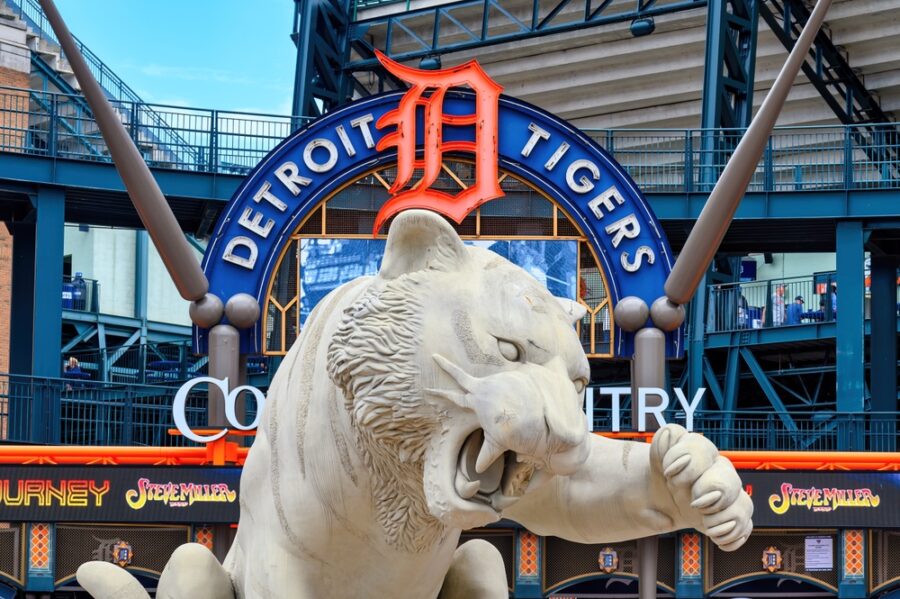
Online sports betting win and handle soared by double digits in Michigan in July, state results reported by J.P. Morgan analysts on 18 August show.
Revenue was US$44 million, a 26% leap from July 2025. Handle grew 25% to US$361 million. Igaming venues grossed US$303 million, a 21% jump.

Dramatic gains in revenue were made by Fanatics Sportsbook, BetRivers, DraftKings and Caesars Sportsbook. They were up 110%, 35%, 32% and 19% respectively. Win for theScore Bet was halved.
Despite a comparatively modest growth in win (6%), FanDuel remained predominant with US$15.4 million in win. DraftKings was second with US$12.4 million in revenue.
BetMGM slipped slightly but remained in third place with US$5.2 million, trailed by Fanatics and its US$4.4 million in win. Bet365 notched US$2.3 million in winnings, while Caesars reported revenue of US$1 million.

TheScore Bet edged BetRivers in win, US$900,000 to US$800,000. All other operators combined for an aggregate gross of US$1.9 million.
DraftKings and FanDuel far outspent their competitors in terms of promotions, with DraftKings displaying US$4.3 million in generosity. FanDuel laid out US$3.2 million.
The three lowest spenders in promotions were the three lowest grossers: Caesars, theScore Bet and BetRivers. Each dished out promotions to the tune of US$200,000 in July.

BetMGM spent US$1.5 million to Bet365’s US$1.2 million, while Fanatics laid out US$1 million. Promotionally derived win was most expensive for Bet365, at 50% of revenue, and cheapest for FanDuel at 21%.
FanDuel led in igaming win, with US$74.6 million, up 14%. It led BetMGM and its US$63.1 million, a 2% uptick.
DraftKings was next with US$51.7 million, a 3% improvement. BetRivers surged 14% to US$22.4 million and Caesars Digital slid 10% to US$18.9 million. Hollywood Casino grossed US$8.2 million, a 3% slippage. All other operators combined for an aggregate US$14.4 million, a 21% jump on average.
David McKee is an award-winning journalist who has three decades of experience covering the gaming industry.

Dig Deeper
Related stories


The Backstory
July rebound followed a volatile early summer
Michigan’s July online sports betting results marked a sharp recovery from June, when sports wagering revenue fell despite a sizable increase in betting volume. The latest numbers showed operators benefiting from stronger customer losses, steadier promotional discipline and continued gains in online casino play, which has become the state’s more reliable digital gambling engine.
The improvement came after Michigan sports betting win plunged in June, with online sportsbooks generating US$41 million in revenue on US$373 million in handle. That month’s 11% hold was not weak by industry standards, but revenue still declined 10% from the prior year as promotional allowances rose to 5.4% of handle. Bet365, still early in its Michigan expansion, helped lift the statewide promotional average because 22% of its handle came from promotional play.
July’s results suggest that the state’s operators were able to convert betting activity into revenue more efficiently, even as competition remained intense. Handle rose to US$361 million and revenue reached US$44 million, putting the market back on a growth track after June’s softness. The month also reinforced that Michigan’s sportsbook rankings are increasingly shaped by how much operators spend to acquire or retain bettors, not just by how much volume they attract.
Bet365 changed the Michigan comparison base
The largest distortion in Michigan’s recent year-over-year comparisons has been Bet365’s arrival. The operator launched in mid-April and quickly altered the state’s promotional and handle mix. In May, Michigan online sports betting win, handle and hold erupted, with revenue jumping 51% to US$77.5 million and handle rising 18% to US$468 million. But much of that surge reflected the new entrant’s heavy incentive spending.
Bet365 captured 14% of Michigan handle in May, and 57% of that action was promotional play. Without Bet365, statewide handle would have risen only 1%, and promotional outlays would have represented 3.8% of handle rather than 11.5%. That distinction matters because it shows that the headline May expansion was partly a product of launch economics rather than an underlying step change in consumer demand.
By June, Bet365 remained meaningful but less distorting, generating US$3.8 million in revenue from US$26 million in handle. In July, it posted US$2.3 million in win while spending US$1.2 million on promotions, making its promotional cost equal to about half of revenue. That was the most expensive promotional ratio among the named operators, underscoring the challenge for new or scaling books: gaining share in a mature state often requires spending heavily, which can compress near-term profitability.
FanDuel and DraftKings still set the pace
Despite the advances by Fanatics, Bet365 and other challengers, Michigan continues to be led by FanDuel and DraftKings. Their position has held through wide swings in hold, promotional intensity and seasonal sports calendars. In May, FanDuel led DraftKings in sports betting revenue, US$134.3 million to US$121.5 million, while holding at 17.3% compared with DraftKings’ 12.3%. DraftKings, however, grew win while FanDuel was flat, signaling a more aggressive push by the No. 2 operator.
In June, both leaders weakened. FanDuel’s sportsbook revenue dropped 25% to US$14 million, while DraftKings fell 17% to US$10.9 million. Yet they remained first and second in Michigan, supported by handle of US$111.8 million and US$105.7 million respectively. July preserved the same hierarchy: FanDuel led with US$15.4 million in sportsbook win, while DraftKings followed with US$12.4 million.
The difference between the two is not only market share but promotional efficiency. July data showed DraftKings spent US$4.3 million on promotions, more than any other sportsbook in Michigan, while FanDuel spent US$3.2 million. FanDuel’s promotional expense was equal to 21% of revenue, the lowest among major operators cited, suggesting it retained pricing power and brand strength even in a competitive month. DraftKings’ higher spending points to continued investment in share defense and acquisition.
Fanatics and BetRivers showed the value of momentum
July also highlighted the volatility beneath the top tier. Fanatics Sportsbook more than doubled revenue from a year earlier, rising 110% to US$4.4 million. That marked a reversal from June, when its revenue fell 30% to US$2.8 million. The swing reflects the sensitivity of smaller and midtier books to hold rates, promotional cadence and seasonal betting mix. With less scale than FanDuel or DraftKings, a favorable month can shift reported revenue sharply.
BetRivers followed a similar path, though from a smaller base in sports betting. Its June sportsbook revenue collapsed 48% to US$400,000, but July win improved to US$800,000 and was up 35% from the prior year. In online casino, BetRivers has been a more consistent growth story. It rose 29% in June igaming revenue to US$23.2 million and then posted US$22.4 million in July, up 14% year over year.
Those figures show why operators with both sports betting and online casino platforms can tolerate volatility in one product line. Sports wagering revenue depends heavily on outcomes, promotional timing and the sporting calendar. Igaming is steadier, higher frequency and generally more profitable. For companies such as BetRivers, the casino product can offset sportsbook fluctuations and strengthen customer economics.
Missouri’s launch offered a contrast in promotional economics
Michigan’s July results also fit into a broader regional pattern: new and young sports betting markets often show high holds and heavy promotional spending before settling into more normalized competition. Missouri provides a recent comparison. In its first month of legalized online sports betting, Missouri sportsbooks held tight in their debut month, generating US$103.4 million in revenue on US$538 million in handle for a 19.2% hold. But operators spent US$125.1 million on promotions, more than they won, creating a net loss.
That launch dynamic later moderated. In March, Missouri sportsbooks produced US$36 million in revenue from US$329 million in handle, with promotions equal to about a third of win. DraftKings and FanDuel controlled the market, taking 36% and 33% of handle respectively. Bet365 and Fanatics each took 8%, showing the same challenger pattern visible in Michigan.
By April, Missouri’s handle had slipped to US$273.4 million, but revenue remained solid at US$33.5 million as operators held 12.3%. Promotions fell to US$10 million, or 31% of win. DraftKings led in both handle and revenue, while FanDuel held at a stronger rate and spent more aggressively on promotions. Missouri’s early months illustrate the trade-off Michigan operators continue to manage: market share can be bought, but profitability depends on how quickly promotional spending converts into durable wagering behavior.
Online casino remains Michigan’s stabilizer
The deeper story in Michigan is that online casino continues to provide a steadier revenue base than sports betting. In June, even as sportsbook revenue declined, igaming revenue rose 25% to US$301.2 million. FanDuel led with US$72.1 million, followed by BetMGM at US$66.3 million and DraftKings at US$52.1 million. BetRivers, Caesars Palace Online and smaller operators also posted gains, showing broad-based demand.
July extended that pattern. Michigan igaming venues grossed US$303 million, up 21%. FanDuel again led with US$74.6 million, while BetMGM reported US$63.1 million and DraftKings posted US$51.7 million. The results matter because online casino is less seasonal than sports betting and less dependent on favorable game outcomes. It also gives operators more opportunities to cross-sell, retain customers and absorb sportsbook promotional costs.
For state regulators and tax authorities, the mix is significant. Sports betting attracts public attention because of major events and brand advertising, but igaming is producing the larger and more stable revenue stream. For operators, July’s results reinforced a familiar hierarchy: FanDuel and DraftKings dominate, BetMGM remains a major casino-led competitor, Bet365 and Fanatics are buying relevance and BetRivers is using igaming strength to stay in the conversation. The stakes now center on whether challengers can reduce promotional dependence without losing share as Michigan’s digital gambling market matures.
