Genius Sports enters definitive agreement to acquire digital sports and gaming media network Legend
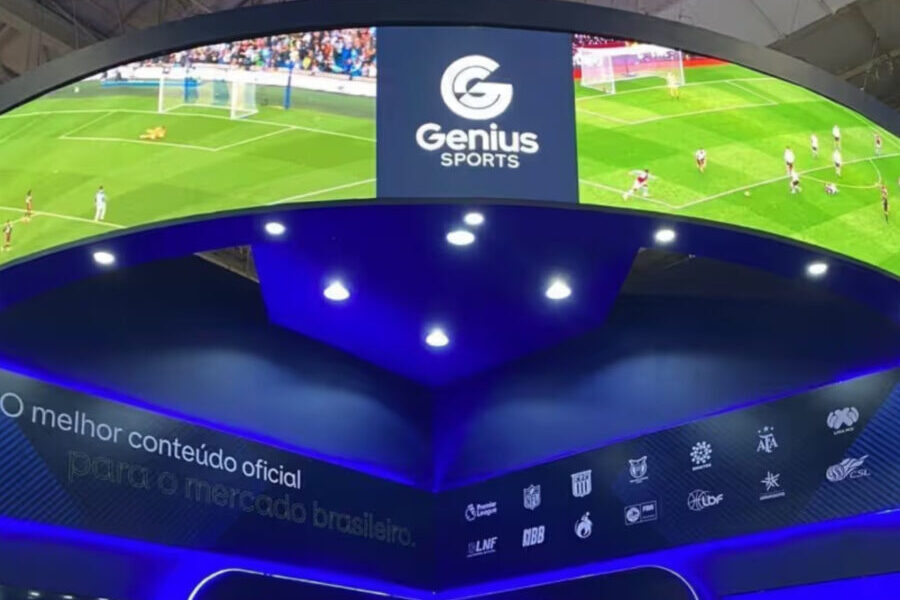
Genius Sports on Thursday announced it has entered into a definitive agreement to acquire Legend, a digital sports and gaming media network, in a transaction valued at up to $1.2 billion, including $900 million payable at closing and an earnout of up to $300 million.
In a news release, Genius Sports said the transaction is expected to be immediately accretive to group Adjusted EBITDA margins and free cash flow conversion while maintaining at least 20% group revenue CAGR through 2028. On a 2026 annualized pro forma basis, after giving effect to the acquisition, the combination is expected to position Genius to achieve about $1.1 billion in group revenue, $320 million-$330 million in group adjusted EBITDA with about 50% free cash flow conversion.

“This deal accelerates our strategic and financial objectives, supercharges fan monetization, and builds a fully integrated sports and gaming media network,” Genius Sports CEO Mark Locke said in a statement. “For Genius Sports and our global partners, it delivers more data, more audience, more inventory and greater monetization of sports fans. The acquisition of Legend will drive higher margins and stronger free cash flow, positioning Genius Sports to immediately transform the market and grow the size and scale of our business.”
Legend monetizes sports audiences through a scaled media network, with marketing technology powering owned and operated digital properties. It also syndicates sports and betting content across major publications, including Sports Illustrated and Yahoo Sports.
When sports fans actively research teams, players, odds, or scores, Legend’s technology helps connect those fans with relevant sportsbooks, gaming products, and advertisers in the moments they are most likely to act.

In 2025, Legend generated 320 million annual visits from 118 million unique visitors, with more than two-thirds returning on a regular basis. The acquisition will bring a large, highly engaged sports and gaming audience to Genius Sports’ media ecosystem, along with predictable revenue.
“Joining forces with Genius Sports brings together two world-class teams, unlocks unparalleled growth opportunities for our partners and products, and gives us an even stronger platform to scale,” said Legend Founder Nick Kisberg. “I am immensely proud of what we have built and the decades of hard work that have brought us here today.”
Through FANHub, a fan activation platform, Genius Sports will connect a global audience and marketing technology with its range of more than 2,000 combined sports, media and betting partners via one integrated platform.

The upfront consideration represents $900 million at close, comprising $800 million in cash and $100 million in stock consideration, with an additional earnout of up to $300 million split evenly across two years post-closing. The earnout is tied to the achievement of certain profitability and cash flow thresholds and is payable in cash or stock, at Genius’ election, subject to customary conditions.
At closing, Genius Sports expects to fund the acquisition with a $850 million Term Loan B issuance, with its revolving credit facility remaining undrawn. Pro forma leverage is expected to be below 3.0x, and the company expects to rapidly de-lever by more than half by 2028, driven by strong and visible growth trajectory. The proposed acquisition is expected to close in the second quarter.
Texas Capital Securities’ David Bain, in an analyst statement, commented on the transaction.

“Genius stock is down over 20% today (vs. the S&P 500 down 0.9%) as of this writing, which we believe is due to negative investor perception/sentiment surrounding performance marketing businesses and a general added layer of business complexity for investors to work with,” Bain wrote. “In its release, Genuis’ pre-announced 4Q25 EBITDA in-line with consensus issued 2026E guidance (not inclusive of acquisition) of between $180 million to $190 million, which compares to Street estimates of $181 million.”
Genius Sports also reported preliminary unaudited estimates of financial results for the fiscal year ended December 31, subject to normal year-end adjustments:
- Group revenue of $669 million, reflecting 31% year-over-year growth
- Group Adjusted EBITDA of $136 million, reflecting 59% year-over-year growth
- Group Adjusted EBITDA margin of 20%
- Cash and cash equivalents of $281 million
Genius Sports also expects it will generate group revenue of about $810 million-$820 million, and group Adjusted EBITDA of approximately $180 million-$190 million in 2026 on a standalone basis.
The acquisition and integration of Legend also will set a higher performance benchmark for 2028, reflecting the expanded scale of Genius Sports’ media and advertising platform and accelerated monetization across its global inventory.
- Group revenue of $1.6 billion, representing about 21% CAGR from 2026 to 2028
- Group Adjusted EBITDA margin of about 35%
- Free cash flow conversion of at least 60%

Dig Deeper
Related stories
 2025/12/04: Aristocrat Interactive launches online Cash Express Legend Buffalo game
 2025/07/03: Genius Sports running a ‘two-horse race,’ Truist analyst says
2025/02/07: Genius Sports aspires to a ‘new standard for in-play betting’ with latest BetVision release
2025/07/03: Genius Sports running a ‘two-horse race,’ Truist analyst says
2025/02/07: Genius Sports aspires to a ‘new standard for in-play betting’ with latest BetVision release
 2025/04/02: Big names turn out for Sportradar event
2025/12/04: Aristocrat Interactive launches online Cash Express Legend Buffalo game
2025/07/03: Genius Sports running a ‘two-horse race,’ Truist analyst says
2025/02/07: Genius Sports aspires to a ‘new standard for in-play betting’ with latest BetVision release
2025/04/02: Big names turn out for Sportradar event
The Backstory
What’s driving Genius toward a media network
Genius Sports’ move to acquire Legend, a digital sports and gaming media network, follows years of convergence between sports data, targeted advertising and sportsbook customer acquisition. Genius has long pitched itself as an infrastructure provider for leagues and operators. Buying a scaled media network is a bid to own more of the fan journey — from data-fed engagement to the last mile of conversion — at a time when audience addressability and direct monetization are the industry’s tightest choke points.
The company is positioning the deal as an EBITDA and cash flow accelerator, but the real strategic hinge is distribution and signal. Legend brings owned and operated sites, syndication across mainstream sports portals and a performance engine that converts intent into betting and commerce. If Genius can wire those pipes into its live data, ad tech and sponsorship stack, it gains not just inventory but a feedback loop: content that surfaces in moments of high intent, measured by real-time signals, sold programmatically to brands and sportsbooks.
That is the logic of marrying data rights to media scale. The financial targets — faster growth, higher margins, improved free cash flow conversion — depend on whether Genius can turn that loop into predictable, repeatable unit economics amid volatile sports media traffic and tougher performance marketing scrutiny.
A blueprint in live, data-driven advertising
Genius has already been building the plumbing for a connected media business. Earlier this cycle, it rolled out an intelligent content platform with FanDuel Sports Network, stitching real-time game telemetry into sponsorable moments across linear, digital and streaming. The collaboration spans more than 300 NBA games each season and includes WNBA coverage, with advertisers targeting events such as shot probability, player ID and heat maps instead of vague context. That effort, detailed in Genius Sports rolls out intelligent content platform with FanDuel Sports Network, previews how the company wants to sell sports media — not as static placements, but as dynamic, data-native inventory.
Legend’s network is designed to capture fans when they are actively researching teams, players, odds or scores. Folding that audience into Genius’ live-moment ad stack potentially creates a closed loop: identify the moment, serve the message, attribute the action. The scale matters. Legend reported 320 million annual visits from 118 million unique visitors last year, with more than two-thirds returning regularly. If Genius can map those visits to real-time data triggers, it can pitch advertisers and sportsbooks a higher-fidelity conversion funnel across screens.
That integration also speaks to a broader industry trend. Networks and operators are experimenting with telemetry-driven ad units as cord cutting fragments reach and privacy changes limit tracking. Owning both the signals and the surfaces gives Genius a chance to standardize a product across partners and leagues, then syndicate it at scale.
Marketing tailwinds, investor headwinds
The near-term hurdle is sentiment. Performance marketing has been a red flag for investors after years of expensive customer acquisition in U.S. online sports betting and casino. Even as the media and gaming economy recovers, budgets are rotating toward provable ROI, and anything that looks like adding marketing complexity can spook the market. Genius acknowledges as much by emphasizing immediate accretion and cash conversion.
Across the sector, companies are recalibrating their go-to-market mix to wring more value from every touch. Player acquisition specialists and brands are leaning into data-led storytelling and partnerships that signal intent rather than spray-and-pray spend. One example is Acquire.bet’s partnership with Trilogy Group to grow tribal igaming brands, which leans on targeted media, affiliates and owned channels to lift digital impact for tribal operators. Another is the focus on distinctive ambassadors and content to differentiate acquisition funnels, reflected in Betby’s alliance with Magnus Carlsen. These moves underscore a pivot from broad awareness to measurable engagement — the same territory Genius wants to monetize by fusing data, content and ad delivery.
Legend’s model of connecting fans with sportsbooks and advertisers at the point of research is tightly aligned with that pivot. The question for investors is execution risk: can Genius integrate the network quickly, maintain traffic quality, protect margins and demonstrate that every incremental user touch converts at higher yield than the status quo.
Capital, leverage and the profitability mandate
The industry’s balance sheets have grown more disciplined as growth at any cost gives way to durable profitability. Financing structures and leverage targets are under heavier scrutiny, particularly for companies adding assets while rates remain elevated. That backdrop informs how deals like Genius’ are judged — not just on synergy narratives but on debt service, deleveraging paths and the visibility of cash generation.
Peers and adjacent players are threading the same needle. In Canada, operator NorthStar Gaming lined up a credit facility of up to CAD$43.4 million backed by Beach Point Capital Management and Playtech to refinance debt and bolster operations, a bid to scale responsibly while advancing toward profitability. The details in NorthStar Gaming enters CAD$43.4 million finance agreement with Beach Point and Playtech underline the market’s preference for structured capital and clearer runways to breakeven. For Genius, funding the Legend deal via term debt while targeting sub-three times leverage and faster cash flow conversion will be watched closely. The company’s ability to delever on schedule will hinge on how fast the combined media platform can translate audience into high-margin revenue.
Content and the omnichannel arms race
Another current under the deal is the value of content that converts. Sportsbooks, suppliers and media platforms are racing to create omnichannel experiences that keep users in ecosystem and justify higher lifetime value. That can be a broadcast augmented with live stats, a fantasy contest seeded with official data or an online casino game that extends a hit franchise.
Recent launches point to the premium on recognizable IP and synchronized releases. Aristocrat Interactive’s Cash Express Legend Buffalo online debut in North America blends two of its best-known franchises, mirroring land-based popularity to accelerate digital adoption. The push toward near-simultaneous omnichannel rollouts speaks to a simple truth: familiar content reduces acquisition costs and improves retention. Genius’ bid to own more fan touchpoints through Legend follows the same playbook. If the company can orchestrate data-driven media moments around marquee content — from NBA broadcasts to betting research — it can increase the likelihood that a casual viewer becomes a repeat customer.
Where this moves the market next
If Genius executes, the acquisition could reset expectations for how sports data firms compete. Rather than selling inputs to third parties, the model shifts to operating an end-to-end media and advertising network built on official data, real-time triggers and high-intent audiences. That would blur lines between supplier, media owner and ad network, pushing rivals to bulk up on either signals or surfaces to keep pace.
In the near term, watch three markers. First, integration speed: how fast Genius ports Legend’s properties into its ad platform and proves yield lift. Second, partner uptake: whether networks and sportsbooks expand spend on data-native ad units like those showcased with FanDuel. Third, cost discipline: progress on leverage and free cash flow as macro conditions and sports calendar volatility test the thesis. The stakes are straightforward. If the flywheel spins, Genius will have built a defensible moat where audience, data and monetization reinforce each other. If it stalls, the company will own a more complex business in a market that is rewarding focus and financial clarity.