


Games Global enters Asian market by partnering with PhilWeb


Games developer Games Global is gaining a foothold in Asia, after Philippine igaming supplier PhilWeb Corporation announced that it has entered into “an exclusive partnership” with the group.
In a release from 24 July, PhilWeb noted that the partnership “will enable licensed gaming operators in the Philippines to utilize hosted gaming services, subject to applicable regulatory approvals and contractual arrangements.”

While headquartered in the Isle of Man, Games Global also has a strong presence in the US market, having partnered with BetMGM, Hard Rock Digital, LeoVegas and Bet365, among others.
The group also operates in Canada and has been expanding its presence in LatAm – including a live casino studio in Brazil.
Its entrance into the Asian market is strategic, partnering with the Philippines’ fast-growing PhilWeb, which has been heavily expanding its presence this year after gaining its PAGCOR accreditation, allowing it to operate as a service provider and affiliate within the country’s gaming market.

PhilWeb manages the online gaming platform for Hann Casino, has partnered with casino content supplier FBM Philippines, has launched Okada Manila’s online brand and recently inked a deal to bring Pragmatic Play’s games to licensed operators in the country.

Dig Deeper
Related stories
 2026/07/09: PhilWeb inks exclusive partnership with Pragmatic Play to provide its games to licensed operators
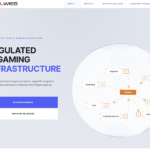 2026/06/22: PhilWeb unveils new visual identity as “technology-driven infrastructure provider”
 2026/06/23: Philippine billionaire Lance Gokongwei assuming personal 15% stake in gaming tech firm PhilWeb
 2026/02/24: PhilWeb launches online gambling platform across 30,000 FBM gaming machines
2026/07/09: PhilWeb inks exclusive partnership with Pragmatic Play to provide its games to licensed operators
2026/06/22: PhilWeb unveils new visual identity as “technology-driven infrastructure provider”
2026/06/23: Philippine billionaire Lance Gokongwei assuming personal 15% stake in gaming tech firm PhilWeb
2026/02/24: PhilWeb launches online gambling platform across 30,000 FBM gaming machines
The Backstory
PhilWeb’s rapid pivot from operator to infrastructure partner
Games Global’s entry into Asia through PhilWeb Corp. lands at a point when the Philippine supplier is trying to redefine its role in the country’s regulated online gaming market. The deal is not an isolated content agreement. It follows months of corporate restructuring, new capital, product launches and supplier tie-ups that have repositioned PhilWeb as a technology and commercial gateway for licensed operators in the Philippines.
PhilWeb’s current strategy rests on a shift away from legacy perceptions of the company toward a platform and infrastructure model. That change has been visible in the company’s recent partnerships with casinos, gaming-machine suppliers and international content studios. The Games Global agreement adds a major Isle of Man-based supplier to that roster and gives the company another way to deepen relationships with operators that need hosted game content, integration support and regulatory alignment.
The timing matters because the Philippines is one of the few Asian jurisdictions actively expanding a regulated domestic online casino market while distancing itself from offshore gambling structures that drew political and law enforcement scrutiny. For international suppliers, that creates a narrower but clearer opening: access through locally accredited partners serving licensed operators rather than through less transparent offshore networks.
A board reset laid the groundwork
PhilWeb’s recent commercial push followed a broader corporate reset. The company has described its transformation as part of a change in ownership, board replacement and new strategic direction. That gave management room to reposition the business around technology-enabled gaming services, rather than a single product or venue-driven model.
The pivot accelerated after PhilWeb secured accreditation from the Philippine Amusement and Gaming Corp., allowing it to operate as a service provider and affiliate in the domestic gaming market. PAGCOR’s approval gave the company a regulatory foundation to approach casinos and licensed online operators with platform, hosting and integration services.
That regulatory foothold became central to PhilWeb’s pitch. Instead of merely distributing games, the company has framed itself as a trusted intermediary that can help global suppliers serve Philippine operators through approved channels. For Games Global, whose footprint already includes the U.S., Canada, Latin America and Brazil, PhilWeb offers an entry point into Asia that does not require the supplier to build local infrastructure from scratch.
The company’s rebranding in June reinforced that message. PhilWeb launched a new visual identity and described itself as a technology-driven infrastructure provider. The language signaled that management sees the opportunity less in owning a single consumer brand and more in supplying the systems, integrations and commercial relationships behind multiple licensed platforms.
Pragmatic Play showed the template
The clearest precursor to the Games Global deal was PhilWeb’s exclusive partnership with Pragmatic Play to serve licensed Philippine operators. Announced July 9, that agreement allowed operators to use Pragmatic Play content through PhilWeb’s hosted gaming services, subject to implementation and regulatory conditions.
The Pragmatic Play arrangement established the model now being extended with Games Global: PhilWeb provides remote technology infrastructure and API-enabled integration, while the international supplier contributes recognized game content. The commercial logic is straightforward. Operators gain access to supplier portfolios through a local partner, suppliers gain distribution into a regulated Asian market and PhilWeb earns recurring revenue from technology-enabled services.
PhilWeb said at the time that Pragmatic Play was already widely used by online gaming platforms in the Philippines. The significance of the agreement was not just access to the games but the exclusive commercial structure and the opportunity to formalize supplier relationships through PhilWeb’s infrastructure. The company also said the deal could serve as a platform for further collaborations with international gaming service providers.
Games Global appears to be the next step in that strategy. The supplier brings a large catalogue and experience with major operators such as BetMGM, Hard Rock Digital, LeoVegas and Bet365. Its recent expansion in Latin America, including Brazil, shows an appetite for regulated growth markets. PhilWeb’s role is to localize that expansion for the Philippines and potentially create a bridge to other parts of Asia if regulation and licensing conditions allow.
Casino launches built local credibility
Before adding high-profile international suppliers, PhilWeb worked to prove its platform capabilities with domestic casino partners. The company manages the online gaming platform for Hann Casino and launched Hann Online earlier this year. It also partnered with FBM Philippines on an online gaming platform tied to a large base of electronic gaming machines.
Those deals were important because they connected PhilWeb’s technology strategy to existing land-based gaming brands and machine networks. In the Philippine market, licensed casino operators already have customer recognition, compliance systems and relationships with PAGCOR. Online extensions of those brands can scale faster when supported by a provider that handles platform functionality and supplier integrations.
PhilWeb also partnered with Okada Manila on Okada Play and has provided online gaming platform support for Newport World Resorts. Those projects gave the company credibility with prominent integrated resort operators, which is critical as international studios assess whether a local partner has meaningful distribution rather than merely regulatory credentials.
The pattern is now clear. PhilWeb is assembling three layers of the value chain: licensed operator relationships, platform and hosting infrastructure and exclusive or preferred access to international content. Each new supplier agreement strengthens the proposition to operators, while each operator launch makes PhilWeb more attractive to suppliers seeking regulated market access.
Capital and data ambitions raised the stakes
The expansion has been backed by new capital. PhilWeb recently secured a 2.02 billion Philippine peso strategic equity investment from businessman Lance Y. Gokongwei. The company said the funds would strengthen its balance sheet and support integration of advanced data and artificial intelligence capabilities across its technology roadmap.
That investment is relevant to the Games Global partnership because content distribution alone is unlikely to be enough in a competitive online gaming market. Operators increasingly want personalization, risk tools, analytics, payment efficiency and campaign management. A supplier that can host content and help operators use data more effectively can become more embedded in the operating stack.
For PhilWeb, the capital injection also helps answer a scale question. Exclusive supplier deals and casino platform launches can create demand quickly, but they also require stable systems, security, technical support and compliance processes. A stronger balance sheet gives the company more room to invest before revenue from new partnerships matures.
The emphasis on AI and data also reflects broader regional competition. Other gaming and prediction-market companies are moving into Southeast Asia with technology-first models. PhilWeb’s advantage is its regulated Philippine base, but maintaining that advantage will depend on execution, uptime, product quality and the ability to keep adding content without creating compliance or operational risk.
Regulation shapes the opportunity
The Philippines’ online gaming market is expanding under intense scrutiny. The government has moved to clamp down on criminal activity linked to the now-banned offshore POGO sector, while maintaining a regulated domestic framework for licensed operators. That distinction is central to the business case for PhilWeb and its partners.
The risks in the region were underscored by a United Nations report warning of US$40 billion in Asian gambling and fraud scams. The report described illegal gambling, fraud and money laundering networks across Southeast and East Asia, including operations in the Philippines. It also said enforcement pressure has pushed some groups into new regions.
That backdrop makes regulatory alignment a commercial asset. International suppliers entering Asia must avoid being associated with grey-market networks or operators lacking proper authorization. By routing services through a PAGCOR-accredited Philippine partner and limiting access to licensed operators, Games Global can pursue regional growth while reducing reputational and enforcement risk.
For Philippine regulators, partnerships like this also test whether the domestic online gaming sector can attract legitimate investment and suppliers while keeping illegal operators out. If the model works, it could strengthen the Philippines’ position as a regulated hub for Asian iGaming. If compliance failures emerge, political pressure could tighten rules and slow the market’s growth.
Games Global adds international weight
Games Global gives PhilWeb another internationally recognized name as it tries to consolidate its position in the Philippine market. The supplier’s presence in the U.S., Canada and Latin America suggests experience working with regulated operators and adapting content distribution to different licensing regimes. That is valuable in a market where regulators, casino operators and technology providers are still defining the next phase of online gaming.
The agreement also increases competitive pressure on other platform providers in the Philippines. PhilWeb is moving quickly to bundle content, infrastructure and operator access in ways that could make it a default partner for global studios entering the market. The more exclusive arrangements it secures, the harder it may be for rivals to match its catalogue and commercial reach.
The stakes are therefore larger than one supplier’s Asian debut. The Games Global deal reflects PhilWeb’s effort to become the connective tissue of regulated Philippine iGaming: a company that links casino brands, content developers, machines, platforms and data services. Its success will depend on whether it can convert a burst of partnerships into durable revenue, maintain regulatory confidence and prove that the Philippines can support a scalable, locally controlled online gaming ecosystem.
