


Flutter execs blame the NFL for quarterly results

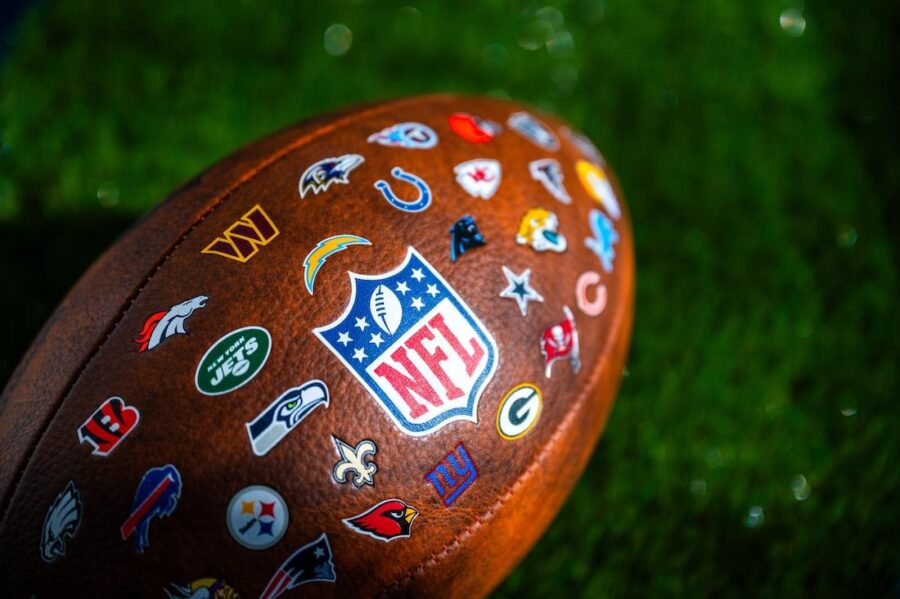
Football — the American kind — was on the minds of Flutter Entertainment leadership in their fourth-quarter earnings call. NFL results and offerings, they argued, dampened the returns of their FanDuel subsidiary.
“The second half of the NFL season saw less-compelling content,” lamented CEO Peter Jackson. He said the gridiron action engineered more churn by players but less market share for FanDuel.

“When I think about the NFL season,” Jackson mused, “there were a lot less of the key marquee players” in the postseason, driving parlay action down. Still, he observed, 10 out of 11 weeks of NFL play were very favorable for FanDuel.
Still, lackluster handle was ascribed to less-popular teams making the playoffs. Of bettors, Jackson said, “they put their cues back in the rack and stopped betting.”
On the brighter side, “we don’t think prediction markets are having a meaningful impact on our business,” Jackson said. He added that FanDuel reached 5% of Missouri’s population with online sports betting in the first few days of its December debut. Jackson called it “one of our most successful state launches to date.”

Prediction markets, Jackson continued, “will accelerate state regulation of sports betting and igaming,” adding that the event contracts created a new addressable market to pursue. Jackson thought FanDuel could capture the 40% of the United States market that can’t access OSB and “early results have been encouraging.” The opportunity, he said, was greater than the potential for cannibalization of revenue.
Internationally, “the results of the PokerStars integration in Italy have been encouraging,” leading to a 19% ramp-up in revenues. Brazil, Jackson said, had seen “a surge in customer acquisition,” up by significant double digits. “As a result, we expect to invest more.”
Chief Financial Officer Rob Coldrake promised US$250 million in share repurchases in the first six months of 2026, while “preserving our flexibility to invest in our business.” He also expected Flutter to launch in Alberta by the end of June.

Non-NFL trends were positive, Coldrake said, but “we’re taking a measured view of how these trends will progress.” He also expected to invest US$300 million in FanDuel Predicts in 2026.
“We’re pleased we got our prediction market product into those 18 states where we can’t offer OSB,” Jackson said. He added that FanDuel has plans to improve its offering in time for the World Cup. “Soccer is actually the fourth-most-popular sport for us by GGR.”
The CEO noted that prediction markets were “an opportunity for us to acquire customers in advance” of traditional OSB. However, “fruitful conversations” about OSB and igaming were happening at the state level.

Queried about potential US tax increases, Coldrake said, “there’ll be some noise and soundings in some states” but that he didn’t think that would drive them out of any markets. He added that Flutter’s scale would enable it to weather higher levies.
Asked if muted US guidance for 2026 meant FanDuel had changed its philosophy, Coldrake replied, “we’ve not changed. We’ve taken a more measured approach to our guidance,” citing a “complex relationship” between gross revenues and cash-flow margins.
FanDuel recently launched sports betting in Arkansas and one Wall Street analyst wanted to know why Flutter hadn’t gone in with prediction-market products instead. Jackson pointed to FanDuel’s Missouri success, adding that the breadth of a traditional OSB offering is more compelling to consumers.
“We must be one of the few consumer businesses in the US that doesn’t use a loyalty program,” Jackson mused about FanDuel’s OSB side. But that, he said, is changing.
“We’ve been at it [loyalty programs] in the casino business,” Jackson continued, “and there’s still a long way to go. You get much better saliency for your customers around the rewards you’re giving them” in igaming and the same will be true for OSB, the CEO said.
When the sustainability of igaming was questioned, Coldrake pointed to the 26% growth in the market in 2025. Flutter’s igaming business grew 33% in that same timeframe, he said, and there was plenty of space still not penetrated.
Stoppage of US credit-card deposits also was queried. Coldrake said it was something Flutter had gone through in more than half of its markets internationally. “We’re not expecting it to have a material impact.”
David McKee is an award-winning journalist who has three decades of experience covering the gaming industry.

Dig Deeper
Related stories




The Backstory
Why this quarter looked different
Flutter’s explanation for FanDuel’s softer finish to the NFL season comes amid a split-screen across U.S. betting and igaming. While FanDuel grappled with churn tied to fewer marquee teams and players deep in the playoffs, rivals leaned on product mix, igaming strength and selective marketing to offset NFL variance. The divergence helps frame how operators with different portfolios and risk appetites can ride the same calendar and emerge with sharply different outcomes.
BetMGM, for instance, credited a strong year-end to favorable sports results, tighter cost discipline and deeper integration between sports and casino. In its latest call, CEO Adam Greenblatt called it “a pretty tremendous year” for BetMGM, noting record December revenue, a higher proportion of bettors crossing into igaming and a deliberate focus on fewer, higher-value customers who stick around longer. That approach helped dull the noise of week-to-week NFL hold and set up what management billed as a next phase of profitable growth.
Rush Street Interactive struck a similar tone. Executives told investors at G2E that even with some customer-friendly NFL weeks, the company’s heavier igaming mix blunted volatility and market share kept creeping up. As J.P. Morgan summarized, RSI sees localized casino marketing and continued cross-sell as advantages, and thinks the current wave of change could catalyze new markets rather than derail them. The company detailed those views in remarks captured from G2E, including optimism in core U.S. icasino states and growth corridors in Latin America.
Competitors saw opportunity where FanDuel saw drag
FanDuel’s thesis—that a less star-studded NFL postseason dented parlay appetite and engagement—lands in tension with how others parsed the same stretch. BetMGM said NFL outcomes actually aided its result while igaming did the heavy lifting. The company emphasized continued investment in live-dealer tables and branded slots and reported higher handle even as marketing spend and the overall player base shrank, according to its year-end update. That playbook contrasts with FanDuel’s newly acknowledged need to lean harder into loyalty on the sportsbook side after years of resisting it.
The split matters because it highlights an expanding performance gap tied less to pure top-line scale and more to mix, retention architecture and product cadence. Greenblatt reiterated that igaming remains BetMGM’s “powerhouse,” with fourth-quarter growth outpacing sports. He also spotlighted Nevada as a strategic engine now that remote sign-up is live and a Las Vegas live-dealer studio is feeding differentiation. Those themes also colored BetMGM’s prior disclosures that it was “rebuilding momentum” despite wider 2024 losses, guiding to higher 2025 revenue and a tilt toward near-term profitability over longer-dated market-share grabs.
A rift over prediction markets widens
FanDuel is treating prediction markets as a customer-acquisition wedge in states where traditional online sports betting remains off limits, with plans to invest hundreds of millions and improve the product ahead of global tentpoles like the World Cup. The company argued that event contracts could accelerate state-level regulation of both sports betting and igaming by broadening the addressable market.
That stance is not universal. BetMGM has planted a flag on the other side, saying it “remains steadfast” against prediction markets alongside regulators, attorneys general and tribal entities, pointing to growing litigation and opposition from major sports bodies. RSI sits between those poles, signaling it would not be a first mover into that gray area but expects the phenomenon could nudge states toward full igaming to safeguard tax receipts. Where FanDuel sees a front door into long-term customers, peers see regulatory risk—and potentially a spur for legislation that could ultimately favor their core strengths.
Taxes, Alberta and the regulatory chessboard
Another through line is tax and jurisdictional timing. FanDuel and BetMGM both flagged Alberta as near-term runway, with Flutter expecting to launch by the end of June and BetMGM cautioning that startup costs there could weigh on 2026 results. RSI echoed that it expects to be ready on day one whenever Alberta flips the switch, underscoring a Canadian pivot that several operators believe can diversify away from U.S. tax uncertainty.
Stateside, management teams keep warning that higher taxes can distort the legal market’s ability to compete with offshore books. BetMGM has been explicit about the risk in updates on its financial posture, arguing that targeted igaming legislation would produce more reliable revenue for governments than ratcheting up sports betting levies. Flutter, for its part, said its scale would allow it to absorb some pressure, and that it doesn’t expect tax noise to force exits. The policy question looms over 2026 guidance and promotional discipline as operators prune spend in thin-share states while deepening investment where unit economics hold up.
NFL-branded content and the fight for engagement
The NFL remains the sport that sets the tempo for U.S. betting and the marketing calendar, even as outcomes whipsaw weekly P&Ls. That leverage extends into content. Aristocrat Leisure and the league recently widened their collaboration with the launch of NFL Super Bowl Slots, a free-to-play social casino title that taps team branding, licensed footage and gamified “seasons.” For operators, the rise of NFL-branded digital content running parallel to regulated wagering is a reminder that engagement now stretches beyond the bet slip. Products that keep fans in the ecosystem between games—or after a cold streak—can cushion sportsbook volatility and seed cross-sell back into real-money casino.
That is why live dealer, branded IP and loyalty mechanics feature so prominently in competitor playbooks right now. BetMGM says its live-dealer products are the fastest-growing segment in U.S. igaming and are becoming a core differentiator. Flutter signaled it will expand loyalty on the sportsbook side after finding traction in casino. Content cadence and rewards design are becoming as central to margin as odds and promos.
Legal overhangs shape the competitive map
One subplot sits outside operating metrics but could affect strategy: governance and legal overhangs. Entain, which co-owns BetMGM with MGM Resorts, remains entangled in the aftermath of its former Turkish operations. Two former leaders, Kenny Alexander and Lee Feldman, have sued the company and its law firm over access to advice tied to the bribery probe that culminated in a deferred prosecution agreement and hundreds of millions of pounds in penalties and donations. Leadership turnover followed, with Entain’s CEO stepping down after five months and the chair taking the helm on an interim basis.
For BetMGM, the joint venture has moved to shore up liquidity with a revolving credit line and emphasize that parent support is not being tapped for ongoing operations, as noted in recent disclosures. The message to investors is stability despite parent-level turbulence. For Flutter and other rivals, it is an opening to press any branding or execution edges while the field navigates governance noise, tax shifts and an unsettled regulatory debate around prediction markets.
Taken together, the quarter shows how the same NFL season can amplify different strengths. FanDuel’s read on star power and playoff composition explains part of its variance. But the wider story is the one operators are writing off the field—through product, loyalty, jurisdictional sequencing and how they choose to meet or resist the next frontier of wagering formats.
