


Florida targets big tech groups promoting illegal sweepstakes casinos

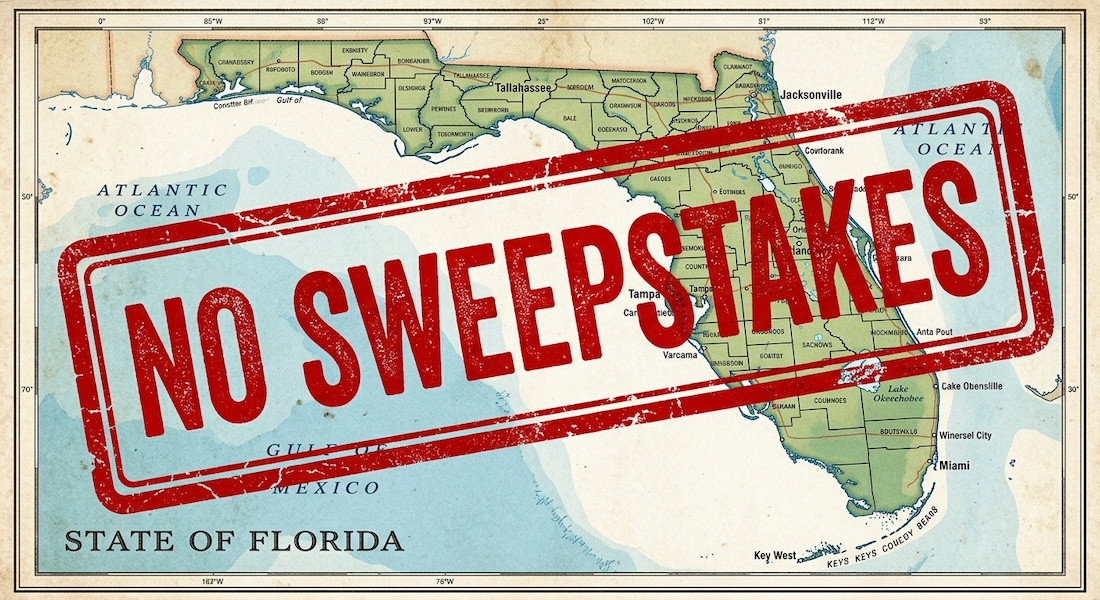
Authorities in the US state of Florida have taken the next step in cracking down on illegal sweepstakes casinos, sending letters to five big tech companies asking them to confirm by next month that they are not promoting the platforms.
Florida Attorney General James Uthmeier indicated that his office had sent letters to Google, Meta, Reddit, Snapchat and TikTok, after learning that the companies may be promoting sweepstakes casino gaming, which is illegal in Florida.

According to the letters, the tech companies have until 23 October to confirm to the Attorney General’s Office that they are not promoting sweepstakes platforms such as Stake, as well as VGW brands including Chumba Casino, LuckyLand and Global Poker.
“The promotion and advertisement of such illegal gambling in Florida is similarly unlawful under Florida law,” the letter sent to Google reads. “Google therefore cannot advertise these illegal ‘sweepstakes’ websites on its social media platforms in Florida.”
The letters also reference two lawsuits that Uthmeier’s office filed in August targeting illegal online casinos. The suits accuse sweepstakes and social casino platforms of offering illegal gambling in the state through the use of a dual-currency model, which allows users to exchange virtual coins for real-world prizes.

“These so-called ‘sweepstakes’ and ‘social casinos’ are illegal online gambling operations,” Uthmeier commented in a statement regarding the lawsuits in August. “If it looks like a casino, takes real money like a casino, and pays out like a casino, it is a casino—and it is illegal under Florida law.
“These companies have been preying on Floridians, including minors and seniors, with deceptive marketing, and 24/7 access, while dodging our state’s licensing, taxation, and consumer-protection requirements. They must be stopped,” he furthered.
Florida only permits the use of online gambling through its Hard Rock Bet and Hard Rock Casino platforms, which are operated by the Seminole Tribe. Aside from this, promoting online gaming is illegal in the state.
Charlotte Capewell brings her passion for storytelling and expertise in writing, researching, and the gambling industry to every article she writes. Her specialties include the US gambling industry, regulator legislation, igaming, and more.

Dig Deeper
Related stories
 2026/08/21: Florida AG sues sweepstakes operators over alleged illegal gambling
 2025/07/10: Behshad Behzadi left Google for front row seat at Sportradar
 2025/02/05: Florida Gaming Control Commission sends out cease-and-desists to illegal online gaming operators
 2026/01/14: Google Ads bans rummy and fantasy sports advertisements in India
2026/08/21: Florida AG sues sweepstakes operators over alleged illegal gambling
2025/07/10: Behshad Behzadi left Google for front row seat at Sportradar
2025/02/05: Florida Gaming Control Commission sends out cease-and-desists to illegal online gaming operators
2026/01/14: Google Ads bans rummy and fantasy sports advertisements in India
The Backstory
Florida widens its enforcement target
Florida’s latest move against sweepstakes casinos shifts the state’s campaign from operators to the digital platforms that help them find customers. Attorney General James Uthmeier’s letters to Google, Meta, Reddit, Snapchat and TikTok ask the companies to confirm they are not promoting sweepstakes casino brands to Floridians, including Stake and VGW’s Chumba Casino, LuckyLand and Global Poker.
The step builds directly on the state’s August litigation against sweepstakes operators. In those cases, Uthmeier argued that sites marketed as “social” or “free” casinos are functioning as illegal gambling businesses because players can buy virtual currency packages and receive separate sweepstakes credits redeemable for cash, gift cards or cryptocurrency. The attorney general’s office is now extending that theory to the advertising ecosystem, saying promotion of illegal gambling is itself unlawful in Florida.
The escalation matters because sweepstakes casino operators depend heavily on broad online distribution. Paid search, social video, influencer posts and app-style acquisition campaigns can give unlicensed platforms the reach of mainstream entertainment products, even in states where online casino gambling is prohibited. By warning major technology companies, Florida is seeking to cut off demand generation rather than only pursue individual gambling sites after customers have already signed up.
The lawsuits set the legal foundation
The current pressure on technology platforms traces to Florida’s lawsuits against sweepstakes operators over alleged illegal gambling. Those complaints, filed in Hillsborough County Circuit Court, targeted companies behind casino-style products and payment processors accused of facilitating transactions. The filings described games that resemble slots, poker, roulette and blackjack, then focused on the dual-currency model that has become central to the sector’s legal debate.
In that structure, players typically buy one type of virtual coin for entertainment play and receive another type of coin that can be used in sweepstakes contests. Operators argue the format is distinct from gambling because the sweepstakes entries are not directly purchased as wagers and because free entry routes are usually available. Regulators increasingly see the distinction as formal rather than practical, especially when the products are presented like online casinos and offer redeemable prizes.
Florida’s lawsuits also alleged deceptive marketing and raised concerns about exposure to minors and seniors. Those claims help explain why the state is now examining social media and search channels. If regulators can show that operators used mainstream ad platforms, celebrity marketing or influencer campaigns to encourage Floridians to play, the state could argue that the promotional chain contributed to consumer harm and avoidance of licensing, tax and responsible gambling rules.
A state with little room for online casino ambiguity
Florida’s online gambling market is unusually constrained. The state permits online wagering through Hard Rock Bet and Hard Rock Casino, operated by the Seminole Tribe under the state’s gambling framework. Outside that structure, online casino gambling is not authorized. That narrow legal channel gives regulators a clearer basis to challenge sites that offer casino-style games to residents without state approval.
The Florida Gaming Control Commission had already signaled a tougher posture before the attorney general’s sweepstakes actions. In a separate enforcement push, the commission sent cease-and-desist letters to illegal online gaming operators including BetUS, Bovada and MyBookie. Those companies were accused of offering unauthorized betting or casino-style products to Florida users.
That earlier action was aimed largely at offshore bookmakers and online casinos. The newer sweepstakes campaign addresses a different category: operators that often present themselves as social gaming or promotional sweepstakes businesses rather than gambling companies. For Florida regulators, the distinction appears to be narrowing. If a product takes money, offers casino games and provides a path to monetary value, the state’s position is that it should be treated as gambling regardless of branding.
The stakes go beyond individual enforcement orders. Licensed gambling operators and tribal partners operate under costly compliance regimes, including age checks, geolocation, taxes, responsible gambling controls and regulatory oversight. Sweepstakes operators can compete for similar customer attention without the same burdens if their model remains outside gambling law. That creates pressure on regulators to defend the perimeter of the legal market.
National scrutiny is converging
Florida is not acting in isolation. State regulators and attorneys general across the U.S. have become more aggressive toward sweepstakes casinos as the format has grown. Kentucky, Iowa, Oklahoma, Maryland, Michigan and New York have all taken steps against operators or related platforms, according to prior enforcement actions and industry reports.
New York has been among the most visible. Attorney General Letitia James said her office halted 26 sweepstakes casino operations in the state after sending cease-and-desist letters to operators. Her office said the sites mimicked real online casinos while using virtual coins that could be bought with money and exchanged for cash prizes. State Sen. Joseph Addabbo also introduced legislation to ban sweepstakes casinos, reflecting a broader push to convert enforcement theories into explicit statutory prohibitions.
That matters for Florida because state-by-state enforcement can create a feedback loop. Once one major jurisdiction frames dual-currency sweepstakes games as illegal gambling, other regulators can cite similar reasoning, request documents or follow advertising trails. Operators that once relied on legal gray areas are facing a patchwork of actions that could make national marketing riskier and more expensive.
The New York action also highlights a shared policy concern: consumer protection. Regulators argue that sweepstakes casinos operate without the oversight applied to licensed gambling businesses and may expose minors or vulnerable users to gambling-like products. Operators generally say they comply with sweepstakes laws and offer free play alternatives, but the enforcement trend shows regulators are looking at how consumers experience the products, not just how companies describe them in legal terms.
Big Tech is being pulled into gambling compliance
Florida’s letters to Google, Meta, Reddit, Snapchat and TikTok reflect a broader reality: gambling enforcement increasingly depends on the policies of the companies that control discovery, ads and social distribution. If major platforms block or restrict promotions, operators lose scale. If they allow campaigns to continue, regulators may argue they are enabling illegal activity in specific jurisdictions.
Google has already shown how quickly platform policy can reshape gambling marketing. The company recently tightened its rules for rummy and fantasy sports advertisements in India, citing local regulation and removing those formats from approved advertising categories for Indian audiences. Google also said it would treat sweepstakes casino ads as outside its social gaming category, signaling a more cautious stance toward products that resemble gambling even when operators use alternative legal labels.
For technology platforms, the compliance challenge is jurisdictional. A campaign that is permissible in one market may be illegal in another. Ad systems must identify restricted gambling content, screen advertisers, apply geolocation rules and prevent exposure to minors. Florida’s demand that companies confirm they are not promoting sweepstakes platforms raises the possibility that state attorneys general will increasingly use platform accountability as an enforcement tool.
The broader gaming industry is also moving toward more sophisticated data and advertising systems. Sports betting suppliers are investing heavily in artificial intelligence, personalization and real-time content, as reflected in Complete iGaming’s interview on Behshad Behzadi’s move from Google to Sportradar. Those tools can improve regulated products, but they also increase regulators’ concern that unlicensed gambling-like businesses can target consumers with precision and scale.
What comes next
The immediate question is how the five technology companies respond by Florida’s deadline. A narrow response could say they already prohibit illegal gambling ads and enforce local rules. A more consequential response would involve specific restrictions on named sweepstakes brands, tighter advertiser verification or expanded blocking of sweepstakes casino content in Florida.
For operators, the risk is that enforcement expands from lawsuits and cease-and-desist letters to the infrastructure that supports customer acquisition and payments. For platforms, the issue is whether gambling compliance becomes a more active state-level obligation rather than a matter of general advertising policy.
Florida’s campaign is therefore not just about whether sweepstakes casinos fit within gambling law. It is about who bears responsibility when unlicensed casino-style products reach consumers through mainstream digital channels. If the state succeeds, the practical effect could be a smaller advertising funnel for sweepstakes operators and a stronger precedent for other states seeking to police the boundary between social gaming, promotions and illegal online gambling.
