


FanDuel to produce short films focusing on Special Olympians

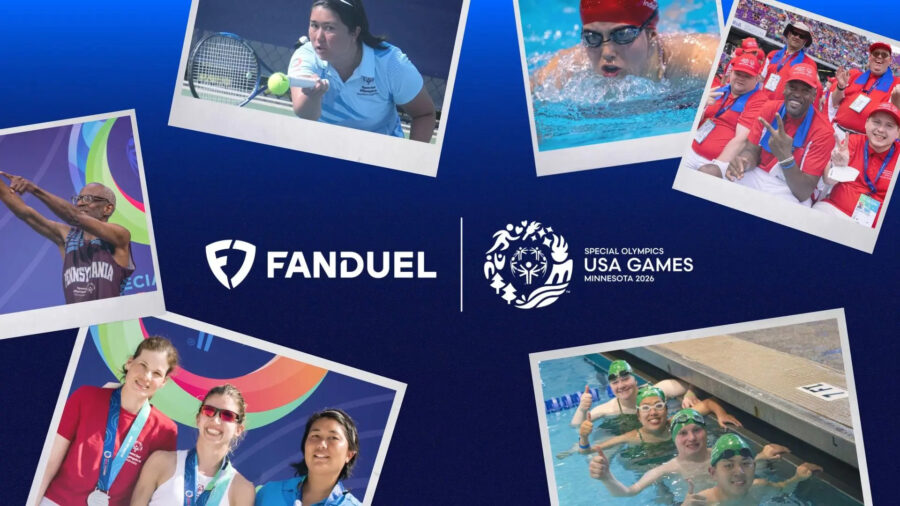
FanDuel is getting into the film business for a worthy cause.
In advance of the 2026 Special Olympics USA Games in Minneapolis, FanDuel is producing a new and original content series that takes fans behind the scenes of the games.

Starting 28 May, the short films will follow Special Olympics athletes as they prepare for competitions. As one athlete says in a teaser, “this opportunity will change your life forever.”
A new episode will be released each week leading up to the Games, which start 20 June . The series will follow athletes from Minnesota, Maryland, Illinois and Virginia, offering an inside look at their training, routines, support systems, and personal journeys leading into the Games.
The stories aim to bring greater visibility to Special Olympics athletes while celebrating the dedication and perseverance required to compete at the highest level

According to a news release, as an official partner of the 2026 Special Olympics USA Games, “FanDuel is supporting the initiative as part of its broader commitment to expanding access to sports and uplifting inclusive athletic communities.”

Dig Deeper
Related stories


The Backstory
Why FanDuel is betting on storytelling now
FanDuel’s move into original short films featuring Special Olympics athletes lands at the intersection of brand building, responsible gaming and a shifting U.S. regulatory map. The series, set to debut May 28 and run weekly until the 2026 Special Olympics USA Games in Minneapolis, extends FanDuel’s positioning beyond promotions and product into values-driven content that highlights inclusion and perseverance. The strategy aligns with how major sportsbooks are reframing their public profiles amid intensified scrutiny of advertising, the maturing of high-spend customer cohorts and slower gains in player engagement.
The timing also reflects a broader sports calendar and content demand curve. With the NFL offseason and NBA playoffs bridging into summer tournaments, long-form brand narratives can fill gaps that odds-driven marketing can’t, while reaching audiences that may be disengaged from day-to-day betting. For FanDuel, the bet is that mission-led storytelling can differentiate in a crowded market and deepen goodwill with regulators, partners and communities that drive venue and media access.
Responsible gaming becomes the core product pitch
FanDuel has been reshaping its responsible gaming posture from compliance obligation to customer feature set. In March, the company rolled out “Play with a Plan,” a platform-wide initiative designed to nudge players toward proactive money management and healthier play. Guided by behavioral research, the effort elevates tools such as My Spend dashboards, loss limits, deposit alerts and the Real-Time Check-In system, which uses machine learning to flag risk patterns and prompt interventions across sportsbook, racing and casino products.
The company says engagement with RG tools rose 41% year over year in 2024, and that last year’s sweepstakes—co-run with league partners—brought more than 550,000 participants and measurable repeat use of protections within 90 days. By spotlighting Special Olympians’ discipline and support systems, FanDuel’s film series complements that narrative—repositioning “responsibility” as empowerment rather than restraint. As lawmakers and watchdogs increasingly scrutinize ad intensity and inducements, joining purpose-led content with RG functionality is both reputational hedge and product differentiation.
A high-spend market with an engagement problem
The backdrop is a U.S. betting market where deposition levels are strong but player stickiness lags global peers. Optimove’s US Gaming Pulse Report for March found American bettors deposited an average of $538 over 12 months—two and a half times the global average. During the NFL season, sports betting activity spiked 32% with bettors averaging $1,010 per month, while casino betting volume rose 37% to $8,511 monthly bets per player.
Yet overall engagement trails other regions: global players were active 70% monthly on average versus 65% in the U.S., and logged 13% more activity days. Optimove links incremental casino growth to expanding legalization—Rhode Island’s 2024 launch among them—but warns future success hinges on long-term retention, not just seasonal surges. For FanDuel, elevating content that broadens audience touchpoints beyond odds and offers could help counter fatigue and encourage sustained, lower-intensity engagement that aligns with RG goals. It may also appeal to regulators evaluating whether operators are investing in player safeguards and community impact as aggressively as they invest in promotions.
Regulatory wins are uneven, and patience is a strategy
The path to sustained growth still runs through the statehouse, where momentum is mixed. In Georgia, House lawmakers rejected a sports betting resolution 98-63, far short of the 120-vote threshold required for a constitutional amendment. It was the second straight year the measure fell short, keeping Georgia among the minority of states where sports wagering remains illegal. Supporters emphasized economic gains, but dissent spanned ideological lines and focused on revenue governance and addiction risks. The failure reinforces that bipartisan revenue-sharing frameworks and visible consumer protections are prerequisites in late-adopter states.
Hawaii’s debate followed a similar arc. The state’s online sports betting bill, HB1308, missed a key deadline after lawmakers failed to agree on tax rates, license fees and oversight. A task force of law enforcement, government, tourism and industry voices will now study legalization models, with a focus on balancing fiscal benefits and social costs. Opponents warned of the creep toward “virtual casinos” and cultural resistance to gaming, while supporters framed regulated wagering as an overdue revenue stream. For national operators, the takeaway is clear: policy headwinds persist, and brand trust—bolstered by community investments and responsible marketing—can influence the tenor of these deliberations.
Global ambitions reshape the industry’s agenda
The market’s center of gravity is also evolving. Organizers of SBC Summit 2025 are expanding with two stages dedicated to Global Markets and Emerging Markets, citing surging international attendance last year, including triple-digit growth from Latin America and North America and sharp gains from Asia and Africa. Sessions will drill into regulatory change, partnership models and entry strategies across Brazil, Western Europe, North America, the Middle East, Africa and Asia.
For U.S.-led brands, the programming reflects a two-track reality: while domestic growth continues through new state launches and product innovation, diversification across faster-growing regions can offset slower onboarding and stiffer RG constraints at home. It also underscores why operators are spending on content that travels—sports storytelling and purpose-driven campaigns can resonate across jurisdictions without running afoul of varying advertising rules.
Stakes for FanDuel: credibility, customers and the long game
FanDuel’s documentary series is more than goodwill. It is risk management and customer strategy in an era when acquisition is expensive, legislation is uneven and engagement must be earned. By aligning with the Special Olympics and elevating narratives of discipline and inclusion, the company strengthens a case it is already building through its responsible gaming overhaul: that growth can be decoupled from aggressive inducements and reframed around informed play.
If Optimove’s data holds, the next phase of U.S. igaming will be defined by retention, not just handle. And if Georgia and Hawaii are any indication, the permission to compete will hinge on more than tax receipts. Storytelling that foregrounds community impact, paired with product-level safeguards, gives FanDuel an argument that can travel—from statehouses weighing legalization to global stages mapping the next set of markets. The films are a branding play, but also a policy and performance hedge aimed squarely at the long game.
