


DraftKings signals intent to invest in prediction markets during earnings call

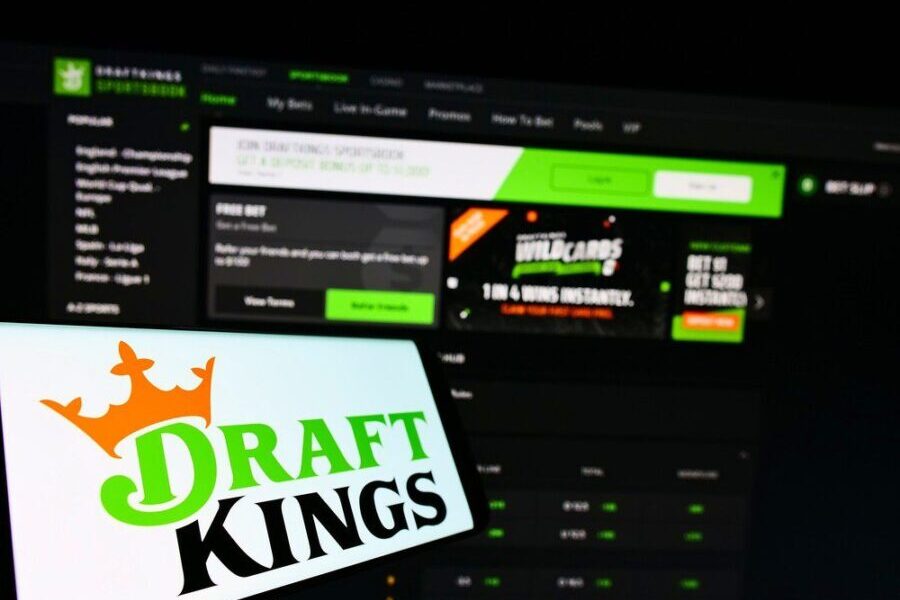
DraftKings is going all in on prediction markets.
During Friday morning’s earning call, DraftKings CEO Jason Robins said he expects to invest between US$200 million and US$300 million this year on predictions markets.

“A lot of that will be marketing, but some of that will be product technology investment as well,” Robins said. “What that means is that the rest of the business is going to do somewhere in the billion-plus range in Adjusted EBITDA this year, which we’re really excited about. That’s the latest thinking, but obviously we’ll assess the data, and as always, we’ll follow what the numbers say.”
DraftKings posted revenue of US$1.64 billion, up US$237 million, or 17%, year-over-year, for the first quarter of 2026. Expected fiscal year 2026 revenue is US$6.5 billion to US$6.9 billion, and Adjusted EBITDA is US$700 million to US$900 million for the year.
Robins noted that the online sports betting component of DraftKings business has flourished in a stable, competitive environment, allowing the company to focus on optimization.

“I think one of the things that’s been consistent with us as a company is we’re very data oriented,” Robins said. “We’re extremely strong on that front. The more time and the more data you give us, the better we can create efficiency and optimization.”
That is part of the reason why Robins is optimistic that DraftKings will succeed in prediction markets.
“I think the really important thing is the opportunity to grow in predictions,” Robins said. “We have the entire other half of the country now open to us, and we haven’t even begun to ramp marketing. And if you look at our early predictions data, it’s very modest marketing investment.

“We are seeing really exciting things on the customer acquisition side … I think if you look at the back half of the year, you’re going to see tremendous increase in MUPs (multiple user payers) for us, via predictions customer acquisitions, and we’re really excited about that. I think that’s kind of our main focus on the MUPs side.”
Robins said the most avid predictions market users are often the earliest ones to sign up, although the customers who bet via online sports betting are not markedly different. He noted that college basketball has done well compared to other sports on the prediction markets side compared to other sports because its win-loss focused compared the NBA, which is “very SGP (single game parlay) heavy.”
“There’s not a product that’s sufficiently equivalent yet in terms of predictions to make that (SGP) as attractive,” Robins said. “There’s probably some reasons for it that have nothing to do with the customer, but it is something we noticed. But largely they (customers) look very similar. We’re not seeing a whole lot of differences between who we’re getting on the prediction side and who we have on our sports betting business.”

One of the benefits of increased numbers of prediction markets, Robins thinks, is that more states will look to approve sports betting and igaming.
“People are starting to really understand that if you haven’t legalized sports betting yet, you have this thing called sports predictions now that is not within your own jurisdiction,” Robins said, “and you still have companies like us that are very interested in doing it under the state framework. I do think that is starting to resonate. Sometimes these things take a little time, so I’m not 100% sure we’re going to get any (online sports betting legislation) over the line this year, but I do see increased momentum.”
Per igaming, Robins said there has been momentum. He noted that Washington, D.C., is considering a proposal, Maryland has increased interest, and Virginia came close to legalizing igaming.
“I think once we start to really breakthrough in one of these regions, you typically see multiple states, or in case of D.C. jurisdictions, that move to (legalize),” Robins said. “It’s not surprising to see momentum regionally like that. And I do expect that we’ll start to see momentum develop in some of the Midwestern states, too.”

Dig Deeper
Related stories
 2025/11/07: DraftKings earnings call focuses on prediction markets and how new partnership with ESPN can be leveraged
2026/02/13: DraftKings intends to go full bore into prediction markets
2025/11/25: What does the future hold for prediction markets after big players break from AGA?
2025/11/07: DraftKings earnings call focuses on prediction markets and how new partnership with ESPN can be leveraged
2026/02/13: DraftKings intends to go full bore into prediction markets
2025/11/25: What does the future hold for prediction markets after big players break from AGA?
 2025/12/19: DraftKings launches prediction market without Railbird
2025/11/07: DraftKings earnings call focuses on prediction markets and how new partnership with ESPN can be leveraged
2026/02/13: DraftKings intends to go full bore into prediction markets
2025/11/25: What does the future hold for prediction markets after big players break from AGA?
2025/12/19: DraftKings launches prediction market without Railbird
The Backstory
Why DraftKings is betting big on predictions now
DraftKings’ new push to pour hundreds of millions into prediction markets comes after a year of testing the water, assembling regulatory cover and mapping the gaps in U.S. sports betting. The company has repeatedly framed event contracts as a way to reach the half of the country that still lacks legal online sportsbooks, and to do it with products that feel familiar but avoid state-by-state prohibitions. That logic crystallized on a recent earnings call focused less on a splashy media partnership and more on how prediction products can unlock new states, new users and a broader funnel for its core business.
In the prior quarter, Chief Executive Jason Robins laid out the approach plainly: DraftKings would prioritize states where it doesn’t offer a sportsbook, leverage existing media reach, and scale spending only if returns warrant it. He also highlighted the acquisition of a CFTC-licensed exchange as part of the rationale shared with lawmakers to explain the path into event contracts and the limits of where it will operate. The emphasis, he said then, was that the biggest financial opportunity sat in non-OSB states and that much of the company’s existing media footprint could be redeployed to promote predictions without heavy new national spend. That framing set the stage for this week’s investment guidance and signals DraftKings sees predictions as a durable bridge into harder-to-penetrate markets, not just a marketing experiment. For context, see the company’s earlier commentary in its earnings call that also unveiled an exclusive ESPN partnership.
A divided field: rivals push back, partners lean in
DraftKings’ stance lands in a sharply fractured competitive landscape. Some operators see event contracts as a regulatory end run and a threat to customer-acquisition economics. Others see a new onramp for younger or underserved audiences and a way to keep fans engaged in the moments between outcomes.
BetMGM has become the most vocal critic. Chief Executive Adam Greenblatt has called predictions “in essence illegal sports betting” under current law, stressing the absence of consumer protections and gaming taxes. He argues they distort acquisition costs and will ultimately prove unsustainable. The company says it will not jeopardize relationships with regulators who have warned against participation. Greenblatt has also portrayed the spike in competitive spending as temporary and self-correcting, positioning BetMGM to benefit as “recreational players flow back” to licensed sportsbooks. Those themes dominated in back-to-back calls covered in BetMGM’s third-quarter discussion and its first-quarter update.
There is also a middle lane. A roundup of first-quarter commentary captured a spectrum of views: Rush Street Interactive downplayed cannibalization, Kambi cited regulator caution but acknowledged a younger-fan acquisition channel, and Caesars emphasized the insulation provided by its loyalty database. On the content and data side, Sportradar leaned in, arguing predictions can expand the total addressable market by opening new states and demographics while shifting consumption toward live engagement. That synthesis is detailed in a survey of operator and supplier positions.
Regulatory gray zones and the ESPN megaphone
The core strategic bet for DraftKings is that predictions can grow legally and commercially alongside regulated sportsbooks, not in place of them. Robins has said the company engaged policymakers early, especially after acquiring an exchange governed by federal commodities rules, and that it would avoid sensitive jurisdictions. He has also suggested that predictions may nudge some states toward legalizing online sports betting and igaming, as lawmakers weigh losing activity to federally overseen contracts versus capturing tax revenue under state frameworks.
Still, the regulatory path is bumpy. Flutter Entertainment, the parent of FanDuel, has told investors it is watching closely but views prediction markets as less rich than full sportsbooks, echoing concerns about depth and product breadth. Flutter’s top executives also flagged tax hikes in key states as pressures they are actively managing, underscoring why new lines of growth are attractive yet fraught. The dynamic is explored in Flutter’s earnings call exchange with analysts.
Amplifying all of this is distribution. DraftKings’ new role as the sole official sportsbook and odds provider for ESPN gives it unparalleled reach into the U.S. sports audience. Robins has argued that ESPN’s fantasy footprint and app scale can be leveraged not just to acquire customers but to deepen engagement through integrations. If predictions are the front door in non-OSB states, ESPN’s pipes could provide the water pressure. The company previewed that synergy while still cautioning that spending would remain disciplined in its earlier call.
Economics meet product reality
DraftKings’ latest numbers show the company believes it can absorb heavy predictions investment while preserving billion-plus adjusted EBITDA from the rest of the business this year. That confidence rests on several operational claims: more stable competition in sportsbooks, improved optimization as data matures and a customer mix that looks similar across predictions and OSB. The company has also identified where predictions currently outperform, citing win-loss sports like college basketball where single-game parlays have less sway than in the NBA. The next leg is product refinement to make predictions feel as sticky and varied as parlay-heavy betting.
Rivals have their own math. BetMGM says it is better insulated from “noise” created by predictions and will prioritize high-value players while reining in marketing where event contracts are reshaping costs. Others, like Vici Properties, barely flinch, emphasizing the staying power of brick-and-mortar patrons. Suppliers like Sportradar see incremental, not substitute, demand, arguing that the immediacy of predictions complements results-based wagering. This divergence matters for investors tracking unit economics: whether acquisition costs normalize, whether predictions attract durable cohorts, and whether conversion to regulated betting justifies near-term spend.
What to watch next
Three signposts will determine whether DraftKings’ predictions push pays off. First, regulatory clarity: expect more state-level scrutiny and potential tests of jurisdictional reach even as federal oversight of event contracts remains a wedge. Flutter’s measured posture and BetMGM’s hard line hint at a drawn-out compliance chess match, as reflected in Flutter’s and BetMGM’s calls.
Second, customer quality: DraftKings says early cohorts resemble OSB users and that marketing has been modest to date. The back half of the year will test whether multiple user payers inflect from predictions-led acquisition and whether retention holds without supersized incentives. Here, ESPN integration and cross-sell into fantasy and casino could be decisive, a theme Robins previewed in the ESPN partnership call.
Third, competitive response: If spending cools, BetMGM’s thesis that rationality returns to the market will look prescient. If predictions become a durable channel with meaningful live engagement, suppliers and hybrids could pull ahead and put pressure on hold, product road maps and marketing efficiency. The split reactions captured across operators and suppliers in a cross-industry review show how unsettled the economics remain.
DraftKings is wagering that predictions are not a sideshow but a scalable bridge to new users and new jurisdictions. The payoff depends on whether product innovation and ESPN’s reach can overcome regulatory friction and acquisition inflation faster than rivals can say, “we told you so.”
