
DraftKings launches prediction market without Railbird

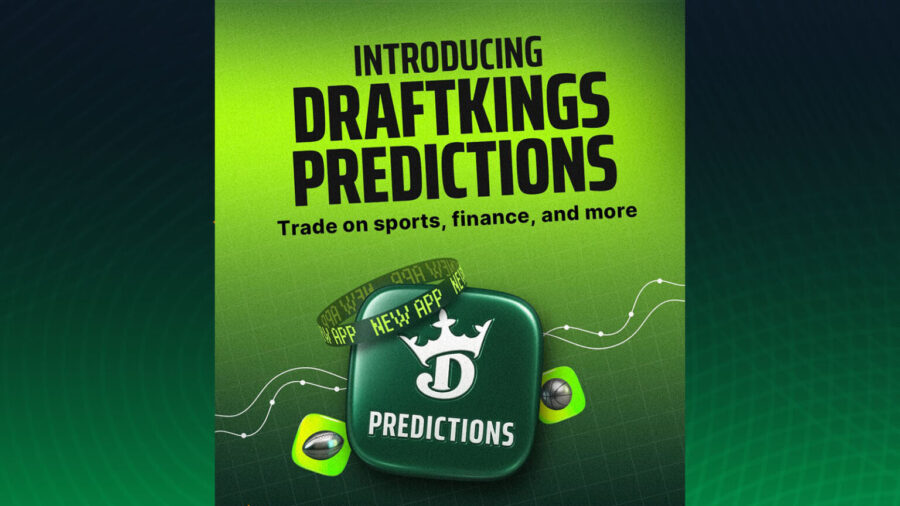
A month after cutting ties with the American Gaming Association, DraftKings formally announced the launch of its prediction-market products. The 19 December disclosure affects 38 states and the District of Columbia, including non-sports betting states California, Georgia, and Texas.
DraftKings incepted event contracts without going through Railbird, the prediction-market firm it bought for a reported US$250 million in October. Rather, DraftKings Predictions will be launched in tandem with CME Group.
Asked by Sportico if Railbird wasn’t yet ready to handle DraftKings products, Chief Product Officer Corey Gottlied replied, “Sort of.” According to DraftKings’s official statement, a “planned rollout” of Railbird Technologies and subsidiary Railbird Exchange will follow, enabling access to still more states that will “deliver advantaged economics over time.
“DraftKings Predictions is a significant milestone and reflects our ongoing commitment to delivering products that tap into the passion of our customers,” Gottlieb said in a prepared statement. “We will create an unparalleled customer experience, leveraging key strategic relationships like ESPN and NBCUniversal to provide an authentic, real-time product that moves at the speed of sports. … We believe we are uniquely positioned to lead this space over the long term.”
In Washington, D.C., and 21 states, DraftKings will deploy an attenuated portfolio of exchanges that do not include sports. Full sports wagering via event contracts will take place in 17 states.
As part of its announcement, DraftKings promised the ability to trade on “a wide range of markets, with sports and finance available initially and additional categories such as entertainment and culture expected as the offering expands.” Despite concerns by state-level regulators, DraftKings invoked the oversight of the Commodity Futures Trading Commission as evidence that its product will be properly regulated.
DraftKings said that it would be extending its responsible-gambling programs into the prediction-market sphere, through a Responsible Trading outreach. This would, the company said, stress “education, awareness, and informed participation, helping customers understand how event contracts work and manage their trading activity responsibly. Customers can set deposit limits, take cool-offs or self-exclude, and access educational materials.”
DraftKings also announced a $1 million launch promotion, as well as $25 conditional bonuses for initial trades. Funds deposited in sports book accounts cannot be transferred to the new platform, however. Parlay trades also will not be initially available.

The event-contract rollout comes on the heels of DraftKings’s resignation from the American Gaming Association. FanDuel also quit the trade group in order to enter the prediction market.
According to InGame reporting, a cocktail-hour meeting of the AGA ended in a rupture “and the end result was a clear split between the AGA, DraftKings, and FanDuel about prediction markets.” Said DraftKings at the time, “As the company’s business strategy evolves — including with prediction markets — DraftKings determined that its plans no longer fully align with the AGA’s direction in certain areas and [it] has decided to relinquish its membership.”
An AGA representative told InGame, “we wish them the best and we expect to maintain close ties in our mission to promote and protect legal regulated gaming.” DraftKings and FanDuel are keeping their memberships in the Sports Betting Alliance.
“The AGA has been lobbying against prediction markets, arguing that they are not beholden to the same sorts of regulation as state-regulated sportsbooks, including a lack of responsible gambling guideline,” reported InGame’s Jill Dorson. “Prediction markets also do not pay state taxes.”
In conversation with Sportico, Gottlieb said unlike Kalshi or other rivals, DraftKings would eschew bet-laden terms like “parlay” to promote its new products. He added, “These products on the prediction side are very nascent and very thin where content and experience are concerned, whereas a sports book is so deep and robust in its offering. And I think for an extended period of time, if not forever, that’s going to be the case.”
DraftKings Predictions will be blacked out in Washington, Montana, Arizona, Nevada, Iowa, Illinois, Arkansas, Tennessee, Ohio, Pennsylvania, New Hampshire, and Maine. Gottlieb told Axios that this was pursuant to discussions with state regulators and “A lot of it is rooted in the fluidity of states and regulators forming their perspective on the space.”
David McKee is an award-winning journalist who has three decades of experience covering the gaming industry.

Verticals:
Sectors:
Topics:
Dig Deeper
Related stories
 2025/07/16: DraftKings mulls acquisition of prediction market Railbird Exchange
2025/10/24: DraftKings acquires Railbird Technologies
2025/11/07: DraftKings earnings call focuses on prediction markets and how new partnership with ESPN can be leveraged
2025/11/13: FanDuel and DraftKings exit Nevada amid prediction market crackdown
2025/07/16: DraftKings mulls acquisition of prediction market Railbird Exchange
2025/10/24: DraftKings acquires Railbird Technologies
2025/11/07: DraftKings earnings call focuses on prediction markets and how new partnership with ESPN can be leveraged
2025/11/13: FanDuel and DraftKings exit Nevada amid prediction market crackdown
 2025/07/16: DraftKings mulls acquisition of prediction market Railbird Exchange
2025/10/24: DraftKings acquires Railbird Technologies
2025/11/07: DraftKings earnings call focuses on prediction markets and how new partnership with ESPN can be leveraged
2025/07/16: DraftKings mulls acquisition of prediction market Railbird Exchange
2025/10/24: DraftKings acquires Railbird Technologies
2025/11/07: DraftKings earnings call focuses on prediction markets and how new partnership with ESPN can be leveraged
 2025/11/13: FanDuel and DraftKings exit Nevada amid prediction market crackdown
The Backstory
A slow pivot becomes a launch
DraftKings’ move to debut prediction markets alongside CME Group without leaning on its newly acquired Railbird unit was months in the making. The company has been signaling a shift toward federally regulated event contracts that can reach consumers in large non-sports betting states. The decision to go live with a partner exchange now, while promising a “planned rollout” of Railbird later, reflects a balancing act: accelerate distribution where Commodity Futures Trading Commission oversight is viable, then fold in a proprietary stack to deepen coverage and improve unit economics over time. It also underscores how fast the regulatory ground is moving beneath operators as states and federal agencies stake out authority over products that look like wagers yet can be packaged as tradable contracts.
The path here began with exploration and ended in a quick acquisition. DraftKings first weighed a deal for Railbird Exchange over the summer while stepping back from a separate federal license effort. That exploratory phase, reported by Front Office Sports and summarized in our coverage of DraftKings’ talks to buy Railbird, laid out a practical rationale: leverage an existing CFTC-designated exchange rather than fight a state-by-state sportsbook-style grind in jurisdictions where prediction markets can operate but sports betting cannot. Read more in our earlier report on DraftKings mulling an acquisition of Railbird Exchange.
From courtship to acquisition
The strategy snapped into place when DraftKings bought Railbird Technologies and its wholly owned Railbird Exchange in October. Management cast the deal as a way to expand the company’s addressable market with a regulated product that can connect to multiple exchanges, cover categories beyond sports and ultimately give DraftKings control of core infrastructure. The company also telegraphed a dedicated mobile app, DraftKings Predictions, designed to route customers into a broader marketplace for contracts on finance, culture and entertainment. The acquisition details and go-to-market goals are in our recap of DraftKings acquiring Railbird Technologies.
The timing of this week’s launch without Railbird as the first venue suggests two things. First, the economics of speed and reach won out. Partnering with an established exchange helps DraftKings seed liquidity and product awareness in states where it can operate under a federal framework. Second, it keeps optionality intact. Once Railbird’s technology is fully integrated, DraftKings can route order flow internally where permitted, add markets faster and capture more economics. The company says Railbird will unlock more states over time, a key point as state regulators determine whether event contracts fall under gaming statutes.
Regulatory fault lines harden
The launch lands amid an increasingly adversarial environment. Nevada has been explicit that event contracts tied to sports are wagering under state law. In November, the state’s regulator accepted FanDuel’s surrender of its order of registration and approved DraftKings’ withdrawal of pending applications, accompanied by a notice that participation in unlawful sports event contracts is incompatible with Nevada licensure. That message reverberated beyond the Silver State. See our coverage of FanDuel and DraftKings exiting Nevada amid a prediction market crackdown.
Other jurisdictions have sounded alarms, proposing new legislation or taking enforcement actions against exchanges. Massachusetts sued Kalshi. New York advanced bills to curb event contracts. Ohio and Michigan issued cautions. The fragmentation creates a patchwork where an operator can sell contracts on a Super Bowl outcome in one place and face potential sanctions next door. That risk calculus helps explain why DraftKings is splitting its offering between states that allow sports-linked contracts and those that do not and why it is emphasizing CFTC oversight and responsible trading tools as a counterweight.
The industry trade politics have turned just as sharp. The American Gaming Association has lobbied against prediction markets, arguing they escape the consumer protections, tax obligations and responsible gambling frameworks that bind sportsbooks. DraftKings and FanDuel left the AGA this fall as they intensified their push into event contracts but kept ties to the Sports Betting Alliance. The split underscores widening disagreement over whether prediction markets are a complement to sportsbooks or a regulatory workaround that cannibalizes taxed wagering.
Rivals test boundaries
Kalshi, the best-known federally designated exchange, continues to press into sports while fighting on multiple fronts. It filed with the CFTC to list sports markets and went live with “will team win title” contracts in January, even as the agency scrutinized similar products elsewhere. Crypto.com drew a removal request from the CFTC for Super Bowl markets yet kept them up, highlighting inconsistent compliance postures. Our report on Kalshi launching event contracts on sports details both the regulatory filings and the contested rollout.
Marketing practices have also become a flashpoint. The National Football League and NFL Players Association took issue with the use of league and team branding, as well as player images, by Kalshi and Polymarket in promotions. The league has warned players and personnel that prediction markets resemble sportsbooks for policy purposes. Kalshi has argued in court that sportsbook-level data sharing and integrity requirements would be too costly. The dispute previews how rights holders may enforce intellectual property and integrity expectations if prediction markets encroach on their commercial turf. For more, see our piece on Kalshi and Polymarket accused of using NFL and NFLPA branding without approval.
The competitive chessboard is still taking shape. FanDuel explored partnership talks with Kalshi as it assessed the segment’s upside and legal exposure, according to prior reporting. That outreach paralleled DraftKings’ own evaluation of building or buying a licensed exchange. The back-to-back moves show that large sportsbooks see event contracts not as a niche but as a scalable alternative for customer acquisition in states that ban sports betting. Background on those dynamics is in our earlier look at DraftKings weighing a Railbird deal.
Why the rollout map matters
DraftKings’ initial footprint covers dozens of jurisdictions, with full sports event contracts live in fewer states and a non-sports suite in others. The carve-out is a hedge against changing state interpretations and a bid to prove the product can grow beyond sports. That matters for three reasons. First, non-sports categories such as finance and entertainment can broaden reach and reduce seasonality. Second, where DraftKings can list sports contracts, it can leverage media partnerships for real-time trading, betting-style UX and cross-promotion without commingling wallets with sportsbooks. Third, as regulators debate tax and compliance parity, having a demonstrable responsible trading framework — deposit limits, cool-offs, self-exclusion, education — becomes a defensive tool and a license to operate.
The stakes are substantial. If prediction markets gain mainstream traction under a federal umbrella, operators can tap users in California, Texas and other states that have resisted sports wagering. If states succeed in classifying sports-linked event contracts as gambling, the economics shift toward licensure, taxes and tighter oversight. DraftKings’ choice to launch with a partner exchange while bringing Railbird online later keeps both doors open. It also sets a pace competitors must match as regulators, leagues and rivals test the boundaries of what counts as trading versus betting in the next phase of U.S. gaming.


