


DraftKings CEO Jason Robins says company in “win-win” position on prediction markets

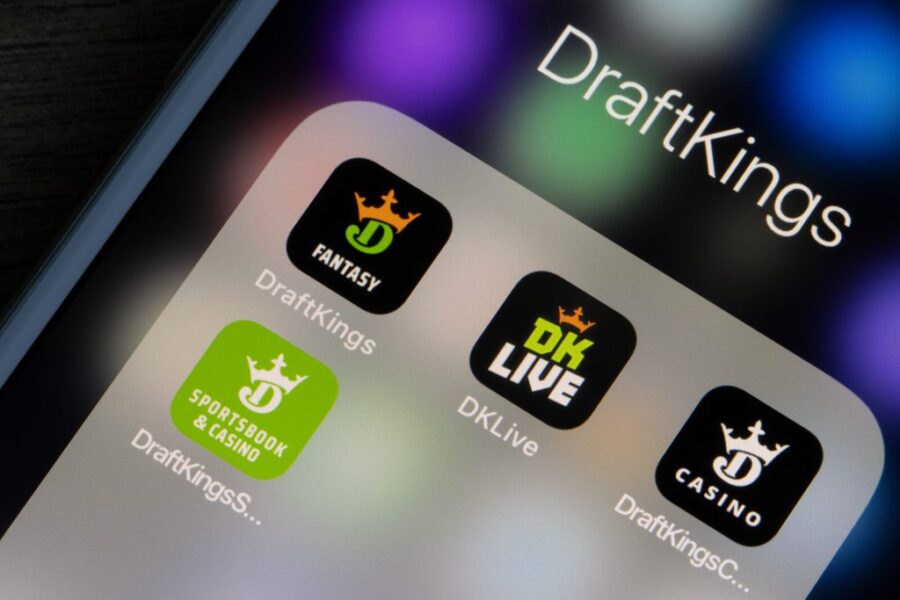
DraftKings CEO Jason Robins says the company is well positioned regardless of how the legal battle over sports event contracts plays out.
Speaking at the Next Predict Summit in New York last week, Robins told CNBC reporter Contessa Brewer that some prediction market firms “have really staked a lot on one outcome or the other.”

“We actually feel like we put ourselves in a win-win spot where, no matter what the outcome of that whole process is, we are well positioned going forward,” he said.
DraftKings launched DraftKings Predictions and its proprietary exchange, DKEx, last December, offering event contracts under the oversight of the Commodity Futures Trading Commission (CFTC). Robins said the company has assured regulators it will not offer prediction markets in jurisdictions where it operates sports betting, a move that protects its gaming licenses.
Robins also defended DraftKings’ use of AI following a New York Times report last month that the company used machine-learning models to target promotions at gamblers most likely to lose money, saying the technology serves relevant content to customers, “not in an effort to target people to get them to do things they shouldn’t be doing.”

The executive addressed a lawsuit filed this month by the Seminole Tribe of Florida against DraftKings and himself in Broward County Circuit Court, which alleges its prediction markets and Pick6 products are illegal, unlicensed sportsbooks violating the tribe’s exclusive gaming rights.
Despite there being a number of prediction market operators in the state, Robins said, “we’re the ones that singularly got sued.”

Dig Deeper
Related stories
 2025/11/07: DraftKings earnings call focuses on prediction markets and how new partnership with ESPN can be leveraged
 2026/10/09: Florida US Seminole Tribe sues DraftKings
 2025/08/07: As second quarter yields record revenue, DraftKings Chief Executive Jason Robins pledges to monitor prediction markets
 2026/04/01: Prediction markets run backlash risk, Jefferies analyst says
2025/11/07: DraftKings earnings call focuses on prediction markets and how new partnership with ESPN can be leveraged
2026/10/09: Florida US Seminole Tribe sues DraftKings
2025/08/07: As second quarter yields record revenue, DraftKings Chief Executive Jason Robins pledges to monitor prediction markets
2026/04/01: Prediction markets run backlash risk, Jefferies analyst says
The Backstory
DraftKings shifts from watching to wagering on a legal opening
DraftKings’ latest defense of its prediction-market strategy marks a sharp change from the posture the company described only months ago. In August, Chief Executive Jason Robins told investors the company was in “monitor mode,” weighing whether to enter a market that sits between federally regulated derivatives and state-regulated gambling. By December, DraftKings had launched its own event-contract product and was telling investors it had positioned itself to benefit regardless of how the legal fight ends.
The pivot reflects the accelerating stakes around sports event contracts, which let customers trade on outcomes in a structure overseen by the Commodity Futures Trading Commission. Operators argue these products are financial instruments. State regulators, tribes and some gaming industry groups say the same products can function like sports betting without the licensing, taxes and consumer protections required of sportsbooks.
For DraftKings, the attraction is clear. Nearly half the country still lacks legal online sports betting. Prediction markets offer a way to reach customers in some of those states without waiting for legislatures to approve sportsbook expansion. But the same strategy now puts the company in conflict with tribal gaming compacts, state regulators and critics who say sports event contracts risk undermining the regulated betting system DraftKings helped build.
A cautious tone gave way to a national rollout
Robins first outlined a measured approach after DraftKings reported record second-quarter results, saying the company would study how other operators fared before committing capital. At the time, he cited state regulators, tribal relationships, stock-market reaction and cash flow as factors shaping the company’s decision. The comments came during a strong operating period, with DraftKings reporting revenue of US$1.51 billion, up 37% from a year earlier, net income of US$158 million and adjusted EBITDA of US$301 million.
That financial strength gave DraftKings room to explore adjacent markets. It also faced pressure from tax increases in sports betting states, including Illinois’ per-bet levy, which sharpened interest in lower-tax or untaxed revenue channels. The company did not present prediction markets as an immediate replacement for sportsbooks. Rather, Robins framed them as an option that could become strategically important if the legal and regulatory landscape proved durable.
By the third-quarter call, the message had changed. As detailed in DraftKings’ investor discussion of prediction markets and ESPN, Robins said DraftKings Predictions could enter many new states with sports event contracts and open a new customer base. He emphasized states where DraftKings does not operate sportsbooks, saying that is where the largest financial opportunity lies. The company also reported third-quarter revenue of US$1.14 billion and raised its 2025 revenue guidance to US$5.9 billion-US$6.1 billion, even as customer-friendly sports outcomes reduced revenue expectations.
ESPN, Railbird and the infrastructure race
DraftKings’ move into prediction markets has been tied to a broader effort to strengthen distribution. Its partnership with ESPN, set to make DraftKings the network’s sole official sportsbook and odds provider, gives the company access to one of the largest sports media platforms in the U.S. Robins told investors ESPN’s fantasy database, app traffic and customer engagement tools could help DraftKings market new products without heavy incremental national spending.
That media reach matters because prediction markets are still unfamiliar to many sports bettors. DraftKings is betting that brand recognition, odds infrastructure and existing customer relationships can give it an edge over firms built primarily around event contracts. Robins has argued that the company’s scale and experience make it harder for newer entrants to compete, particularly if the category survives legal challenges and begins to resemble a mass-market sports product.
The company also sought technical capacity through its acquisition of Railbird Technologies, a CFTC-licensed exchange. Yet DraftKings’ initial launch did not rely on Railbird. As reported in DraftKings’ December prediction-market rollout, the company introduced DraftKings Predictions in partnership with CME Group across 38 states and Washington, D.C., while saying Railbird would be added later. The rollout included a mix of sports and non-sports offerings depending on the state, with blackouts in several jurisdictions after discussions with regulators.
DraftKings also said it would extend responsible-gambling tools into prediction markets through what it called responsible trading, including deposit limits, cooling-off periods, self-exclusion and customer education. That pledge was designed to answer criticism that event-contract platforms operate with fewer mandated safeguards than sportsbooks. It also signaled that DraftKings understood the political risk of appearing to evade gaming rules while using products that look familiar to bettors.
The industry split widened as regulators pushed back
DraftKings’ entry into prediction markets followed a visible break with the American Gaming Association. The company and FanDuel left the trade group as they prepared to pursue event contracts, while the AGA continued to argue that prediction markets are not subject to the same state tax, licensing and responsible-gambling obligations as regulated sportsbooks. The rupture exposed a divide within the gaming industry between operators seeking a federal path into new states and stakeholders defending state-by-state gambling frameworks.
Analysts have warned that the opportunity carries significant legal and political risk. In Jefferies’ assessment of prediction-market backlash risk, analyst David Katz wrote that event-contract operators benefit from an enforcement-light CFTC environment and avoid the costly licensing and tax burdens applied to gaming companies. He also noted the absence of federally required self-exclusion, loss limits and problem-gambling messaging comparable to sportsbook rules.
Katz described an asymmetric outcome for large sportsbook operators. If courts uphold sports event contracts, DraftKings and FanDuel have the scale to compete aggressively. If courts or Congress restrict the products, prediction-market-first rivals could lose a major growth channel. That reasoning echoes Robins’ current “win-win” framing: DraftKings can participate if the market survives while limiting exposure in states where it already holds valuable sports betting licenses.
The legal questions are likely to take years to resolve. Challenges around state authority, tribal exclusivity, the definition of swaps and congressional intent have emerged across multiple jurisdictions. Some cases could reach the U.S. Supreme Court, while Congress also could clarify whether sports or political contracts fall outside the Commodity Exchange Act. Until then, operators are making strategic bets in a market whose rules remain unsettled.
Florida case puts tribal rights at the center
The most direct challenge to DraftKings now comes from Florida, where the Seminole Tribe has exclusive rights to online sports betting through its 2021 compact and operates Hard Rock Bet as the only authorized platform. In the Seminole Tribe’s lawsuit against DraftKings, the tribe alleges that DraftKings Predictions and the Pick6 fantasy product amount to illegal, unlicensed sports betting in the state.
The complaint names DraftKings, Robins and GUS III LLC, the legal entity behind DraftKings Predictions. It cites the Indian Gaming Regulatory Act, Florida gaming statutes, the Florida Deceptive and Unfair Trade Practices Act, unfair competition law and a RICO claim. The tribe seeks to stop DraftKings from offering or advertising sports wagering products in Florida, arguing the company is infringing on exclusivity rights central to the state’s gaming structure.
DraftKings has responded that its prediction markets operate under the federal Commodity Exchange Act and CFTC oversight, while Pick6 is a peer-to-peer fantasy sports product rather than sports betting. The company also has said it respects tribal sovereignty and remains confident in its legal position. Robins’ remark that DraftKings was “singularly” sued despite other prediction-market operators in Florida underscores the company’s view that it has become the highest-profile target in a broader fight.
The stakes extend beyond one product line
Prediction markets could alter the economics of U.S. sports wagering. If sports event contracts remain legal under federal oversight, they may open large states such as California, Texas and Georgia to products that resemble betting before lawmakers approve online sportsbooks. That would shift leverage away from state legislatures, tribes and gaming regulators, while reducing tax receipts tied to licensed sports betting.
For DraftKings, the upside is access to new customers and a potentially lighter regulatory cost structure. The downside is conflict with the same states and tribes that control its core licenses. Robins has tried to thread that needle by saying DraftKings will not offer prediction markets in jurisdictions where it operates sportsbooks, preserving regulatory relationships while pursuing untapped markets.
That compromise may not satisfy opponents who see sports event contracts as a workaround. The Florida lawsuit, analyst warnings and industry split all point to a prolonged battle over who controls sports wagering in the U.S. DraftKings’ strategy is to be prepared for either outcome. Whether that proves to be a hedge or a legal flashpoint will depend on courts, regulators and lawmakers now being forced to define the boundary between trading and betting.