


DraftKings and FanDuel dominate new Missouri sports betting market

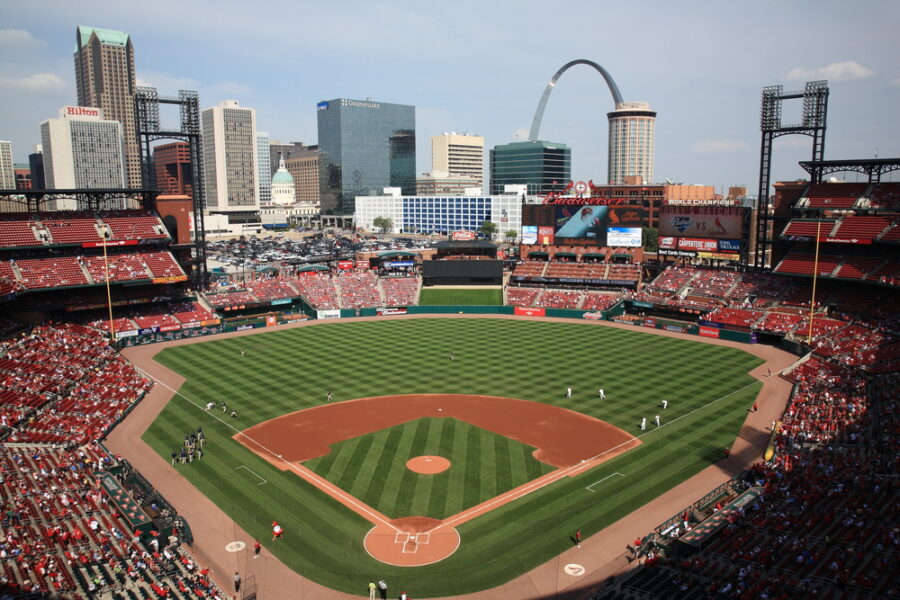
FanDuel and DraftKings continue to be major winners of Missouri’s new sports betting market, handling almost three-quarters of the money wagered in Missouri during the first two months of legal sports betting.
According to recent data published by the Missouri Gaming Commission, the pair accounted for about 73% of the nearly US$928 million wagered in the first two months, cashing in US$120 million in profit.

According to the Missouri Independent, the sportsbooks have since tripled their spending during the 2024 campaign to legalize sports betting, with both operators contributing US$20 million each.
That campaign, financed largely by the two of them and Missouri’s professional sports teams, paid for extensive advertising outlining the potential tax revenues for education and other public priorities that could result from legalizing sports gambling.
“The latest data shows more Missourians are ditching their bookies and illegal websites and enjoying the safeguards and convenience of placing sports bets legally,” Jack Cardetti, spokesman for the Sports Betting Alliance, said in a news release. “This initial success is building a rock-solid foundation that will ensure Missouri receives the ongoing benefits of legal, regulated sports betting for decades to come.”

Supporters of sports gambling say Missouri’s market is stabilizing after a strong launch and that, over time, tax revenue will grow.
Opponents, however, believe the large profits for out-of-state companies highlight the limits of the benefits for Missouri taxpayers. Over two months, sports betting has generated US$659,196 in taxes, which is less than 1% of the total revenue from retail and online sportsbooks.
Charlotte Capewell brings her passion for storytelling and expertise in writing, researching, and the gambling industry to every article she writes. Her specialties include the US gambling industry, regulator legislation, igaming, and more.

Dig Deeper
Related stories
 2026/04/10: Missouri sports betting tax revenue hits US$1.2 million
 2026/01/22: Missouri to decide on NCAA request to ban prop bets on college sports
 2025/09/30: Underdog partners with Kansas City Royals for Missouri sports betting license
 2026/01/13: Xpoint expands into Missouri sports betting market
2026/04/10: Missouri sports betting tax revenue hits US$1.2 million
2026/01/22: Missouri to decide on NCAA request to ban prop bets on college sports
2025/09/30: Underdog partners with Kansas City Royals for Missouri sports betting license
2026/01/13: Xpoint expands into Missouri sports betting market
The Backstory
How Missouri’s market took shape
Missouri’s sports betting launch followed a compressed timeline after voters approved legalization last November with a mandate to be live by Dec. 1, 2025. Operators moved quickly. DraftKings and Underdog were first to file online applications, signaling early interest in the state’s limited set of licenses and foreshadowing a contest dominated by national brands. Regulators at the Missouri Gaming Commission said they could issue up to 19 retail and 14 online permits, splitting the market between “tethered” entrants tied to a casino or pro team and a pair of coveted untethered mobile licenses that allow stand-alone launches.
By summer, the field widened. Fanatics Sportsbook joined the queue for online and retail access, becoming the fifth operator to apply after Circa Sports, DraftKings, Underdog and FanDuel. Supplier interest gathered, too, with applications from vendors including Catalist, GLI, GeoComply, OpticOdds and Sportradar as the commission refined rules and took public comments ahead of formal adoption.
The structure mattered because Missouri carved out only two untethered mobile slots, raising the stakes for brands seeking statewide reach without paying for team or casino partnerships. That created a bifurcated route to market: pay up for a partnership and move fast, or win one of the two stand-alone licenses and buy flexibility over the long term.
License winners and first alliances
Regulators settled the untethered race in August. Circa Sports and DraftKings secured the two stand-alone licenses after the commission evaluated applicants against seven constitutional criteria, including business expertise, integrity, safety, advertising plans, revenue potential, responsible gaming commitments and an ability to grow the player base. The decision was notable. Circa, known for high-stakes, low-hold wagering, overcame concerns its model could generate less tax revenue than larger rivals, underscoring Missouri’s emphasis on platform quality and sustainability over short-term yield.
FanDuel, left without an untethered slot, pivoted quickly. It announced a partnership with Major League Soccer club St. Louis City SC, locking in market access through the tethered path. The move preserved FanDuel’s standard playbook—lean on a strong product, heavy promotions and marquee partnerships—while ensuring statewide exposure in a sports-centric market anchored by teams in St. Louis and Kansas City.
The early lineup left room for others to enter by partnering with casinos or pro teams. That flexibility kept the door open for brands such as BetMGM, Caesars and Bet365 to assemble alliances and for upstarts like Underdog to stake a claim in niche segments, including fantasy-sports conversions.
Debut month: sky-high hold, heavy promos
Missouri’s first month of legal online wagering delivered eye-catching economics. Books posted a 19.2% hold on $538 million in handle for December, producing $103.4 million in gross revenue, according to Deutsche Bank figures cited in industry reporting. But operators dug deep to acquire customers. Promotional credits reached $125.1 million, flipping the month to a collective $21.6 million net loss.
FanDuel led out of the gate with $212.5 million in handle and $46 million in revenue, while DraftKings handled $195.1 million and won $31.6 million. Bet365’s 31.7% hold topped the table, with Caesars at 15.1% and theScore Bet—Penn Entertainment’s successor to ESPN Bet after the brand’s November retirement—posting a modest but profitable start thanks to restrained promo spend. Circa’s debut was measured, reflecting its low-promo strategy and emphasis on high-limit players; it generated $100,000 in winnings on $1.4 million in handle.
Those figures aligned with national launch patterns: aggressive bonus spend to seed accounts, headline revenue buoyed by parlay-heavy betting, and immediate stratification between high-scale national apps and smaller challengers still building databases.
Concentration and the national playbook
The early Missouri split tracks competition in other large states where two brands jockey for lead share. In New York, March Madness recently lifted DraftKings past FanDuel for monthly revenue for the first time in more than a year, showing how event calendars and product tweaks can swing the top spot even in mature markets. Still, the broader picture remains consistent: DraftKings and FanDuel tend to control a dominant share of handle and revenue, with midtier players rotating in the single digits and niche operators fighting for profitability through differentiated offerings.
Missouri’s architecture sharpened that dynamic. With DraftKings holding an untethered license and FanDuel tethered to a high-profile MLS partner, both secured direct, statewide channels to fans before the broader roster filled in. That created a first-mover moat as promotional surges, same-game parlays and in-app features routed early adopters into ecosystems designed to boost retention and cross-sell.
Monthly data released by the Missouri Gaming Commission shows the consolidation in real time, allowing regulators and lawmakers to track how quickly the top brands capture and maintain market share. For a snapshot of the evolving ledger, the commission’s January report is available here.
The money behind legalization
The path to launch was fueled by an unusual alliance of operators and pro teams that framed legalization as a revenue generator for education and public services. The spending has drawn scrutiny now that results are in. A Missouri Independent brief reported that FanDuel and DraftKings’ Missouri profits nearly tripled what they spent on the 2024 campaign to legalize betting, with each contributing $20 million. Supporters argue the market is stabilizing after a fast start and that tax receipts will grow as promotions taper and bettors settle into regular habits. Skeptics counter that large out-of-state earnings highlight limits on the fiscal upside for Missouri taxpayers.
That debate will intensify as promotional deductions burn off and the hold normalizes from launch highs. Early months often overstate gross revenue because parlay-heavy win rates are buoyed by new users and light pricing pressure. As competition evens and bonus spend recedes, net revenue and taxable win tend to fall into a steadier band. Lawmakers will watch whether actual collections match ballot expectations and whether responsible gaming safeguards keep pace with adoption.
What to watch next
Missouri’s market is entering its second phase: less about who can launch and more about who can sustain. Key questions include:
- Promo discipline and margins: Will operators pull back enough on bonuses to convert headline wins into durable, taxable revenue without ceding share?
- Circa’s growth curve: Can a high-limit, low-hold strategy scale in a state dominated by parlay-heavy mass market books?
- Partnership chessboard: As more casinos and teams strike deals, do midtier brands carve stable niches or get squeezed by the top two?
- Regulatory fine-tuning: The Gaming Commission’s data releases will shape how policymakers assess advertising intensity, responsible gaming programs and the balance between consumer protections and market growth.
For now, Missouri resembles other states where national leaders seized early share and leveraged product depth to cement it. The next several quarters—through the NCAA tournament, baseball season and the NFL kickoff—will show whether that pattern holds or if local partnerships and differentiated models can bend the arc.
