Complete Media Group connects media brands through new global navigation bar

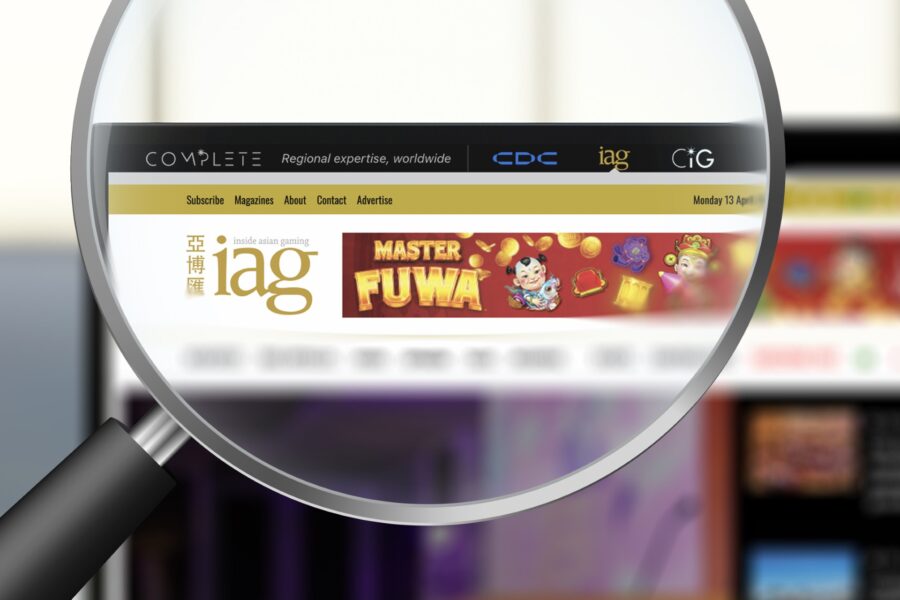
Complete Media Group, the parent company of Complete iGaming, Inside Asian Gaming, and CDC Gaming, has unveiled a new navigation bar to provide easier access to each platform.
The global navigation bar, now located at the top of each website, creates a seamless transition between brands.

The feature is intended to make news, insights, and analysis published through its global network more accessible for readers.
“It’s a small refinement but one designed to better connect our ecosystem of worldwide industry intelligence,” said Cory Roberts, Chief Operating Officer and Chief Technical Officer of Complete Media Group. “By bringing our brands closer together, we’re making it more convenient for readers to explore the full breadth of our content and stay informed across the global gaming landscape.”
Complete Media Group will make additional visual changes to the navigation bar over the coming days as it continues to ensure a smooth viewing experience for its users.

The company added that it looks forward to improving how users interact with its brands as part of its effort to provide a unified experience.
In January of last year, Inside Asian Gaming and CDC Gaming merged under newly formed Complete Media Group. Following the merger, Complete iGaming was launched, becoming the third brand under Complete Media Group.
Charlotte Capewell brings her passion for storytelling and expertise in writing, researching, and the gambling industry to every article she writes. Her specialties include the US gambling industry, regulator legislation, igaming, and more.

Verticals:
Sectors:
Dig Deeper
Related stories




The Backstory
Why a unified navigation matters now
Complete Media Group’s new cross-site navigation arrives as its three titles — Complete iGaming, Inside Asian Gaming and CDC Gaming — work in tandem more than a year after Inside Asian Gaming and CDC merged under the new umbrella and Complete iGaming launched as the third brand. The technical step to stitch these newsrooms closer together reflects a wider shift in gambling media: readers need faster, cleaner access to geographically dispersed regulatory news, deal flow and policy tightening that increasingly affect one another. A shared bar that keeps readers flowing across brands is a bet that coverage is more valuable when the dots connect across regions and verticals.
The timing aligns with fast-moving stories that span continents and regulatory philosophies. Operators are retooling strategies as compliance becomes a core growth lever, crypto rails are tested against new rules and labor markets pivot toward emerging hubs. A navigation layer that flattens those boundaries is a small product change with outsized editorial and commercial stakes: it should reduce friction for audiences following the cause-and-effect chain from policy to product to people.
Operators recalibrate: from gray to regulated
The clearest example of that chain is unfolding at Yolo Group. The company said it will shutter flagship gray-market brands Sportsbet.io and Bitcasino.io while it pursues two vendor licenses in the UAE and consolidates under a single regulated site at Yolo.com. As reported, the move will come with job losses across the B2C arm, but it aligns the group with regulators that “are not keen on other group operations continuing to operate in pre-regulated markets.” Read our coverage of how Yolo Group is closing gray-market brands to pursue UAE licenses and positioning its crypto stack under MiCA in the EU and regulated markets in Canada, Sweden and Finland.
The Yolo shift underscores a broader industry inflection: scale in 2025 and beyond is increasingly tethered to demonstrable compliance in high-value jurisdictions. That is not just about licenses. It is also about how companies talk to consumers, partners and policymakers — and where they appear in the media ecosystem. A multi-brand newsroom with a single navigation spine can surface these cross-border pivots quickly, helping readers map strategic retreats from gray markets to capital flows into newly regulated ones.
Regulators lean on media to shape markets
Policy momentum is also running through the media channel itself. In Ontario, the Alcohol and Gaming Commission called on publishers to stop running ads for unregulated operators that target local players. The appeal named Bodog and framed the ask as a public-safety issue and a reinforcement of market integrity. For details, see how the Ontario regulator urged media to stop promoting illegal sites and why that pressure could widen to other provinces and states.
The Ontario note highlights an underappreciated lever in market formation: ad inventory. If mainstream outlets cut off offshore books, legal operators gain cleaner acquisition paths and regulators can better police the perimeter. For industry readers, this is not merely a Canadian story. It shows how compliance expectations can extend to third parties — affiliates, creators and newsrooms — and why cross-site context is useful. When a regulatory playbook gains traction in one region, it often reappears elsewhere, from payments rules to ad standards.
Policy optics and the advertising dilemma
The interplay between advocacy, optics and gambling is also on display in Australia. Investigative reporting linked 36 Months, a lobby group that pushed for a high-profile youth social media ban, to Finch, an advertising firm behind campaigns for major wagering brands. While there is no suggestion of direct lobbying to deprioritize gambling reforms, the overlap raises questions about policy sequencing and influence. Our report on the Australian lobby group’s ties to a major gambling ad company captures the tension for reformers pressing for tighter limits on gambling advertising.
This is the policy backdrop in which operators are dialing up compliance narratives and event organizers are refocusing agendas. It is also where a unified news experience earns its keep: readers tracking advertising curbs in one country and regulatory consolidation in another need a fast way to compare, contrast and forecast outcomes. Single-click movement between brands reduces the risk that critical signals remain siloed by geography or format.
Global convenings are redrawing the map
Industry gatherings are responding accordingly. SBC Summit 2025 will add Global Markets and Emerging Markets stages, reflecting surging participation from Latin America, Asia, Africa and North America. Programming is set to drill into regulatory change, partner models and market-entry tactics across regions, including the Middle East and Africa’s mobile-first wave. For the full rundown, see SBC’s addition of two new stages focused on global and emerging markets.
The event recalibration mirrors what news consumers increasingly expect: market-by-market depth tied to a global frame. A navigation layer that keeps readers within one ecosystem — whether they start with Asia-facing casino policy, U.S. media standards or Brazilian tax shifts — helps them carry context into the next click. That is especially valuable as operators like Yolo emphasize paths into the UAE and as regulators elsewhere test enforcement strategies that reverberate through sponsorships, payments and media.
Talent follows regulation — and opportunity
These shifts are reshaping hiring, too. Recruiters are building practices around the same emerging hubs where policy is solidifying and capital is moving. Glasgow-based HireStakes launched with an explicit focus on Asia and the UAE alongside North America, Latin America and Europe, citing momentum in Brazil, Ontario and a post-overhaul Philippines. Learn how HireStakes is targeting fast-growing igaming markets with tech-enabled screening and a watchful eye on tax and regulatory overhang in the U.K.
The labor story completes the loop. As compliance and market access rise in importance, operators restructure around licensed growth, regulators harden lines on advertising and payments, and conferences mirror the new gravity centers. Talent then migrates to where clarity and capital converge. A tighter media network that helps readers trace those arcs — policy to product to people — is not just a usability upgrade. It is an editorial stance about how to cover a sector in transition.
Complete Media Group’s navigation change is best read through that lens: a lightweight product tweak designed to speed a heavier editorial job. With regulatory stakes high, market maps redrawn and hiring shifting toward new hubs, the value of coverage lies in stitching together what happens in Toronto, Tallinn, Sydney and Dubai without losing readers to fragmentation. The bet is that a single bar, shared across brands, can help do that.