


CFTC: “swap” includes sports contracts, excludes “casino-style gambling products, including wagers placed on sportsbooks”

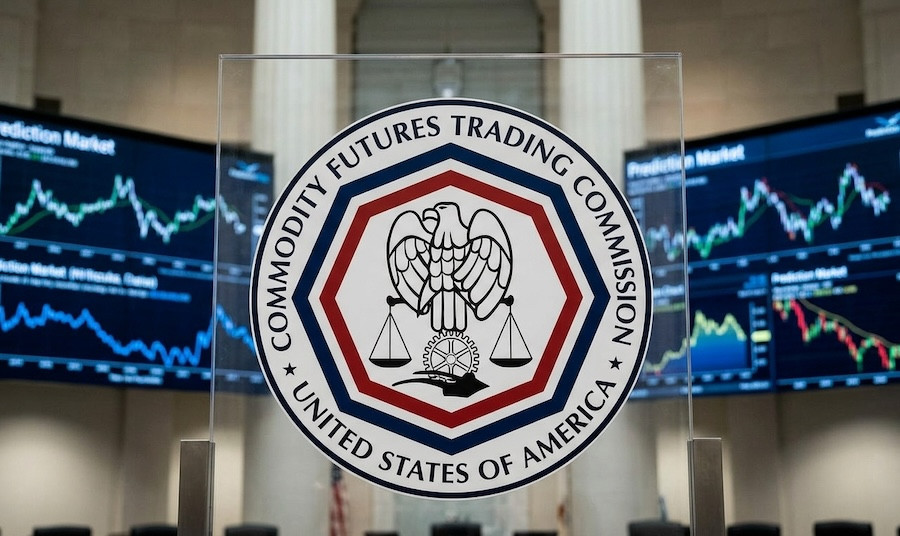
The US Commodity Futures Trading Commission (CFTC), which oversees prediction markets, has issued a “Notice of Proposed Rulemaking (NPRM)” that aims to clarify that its definition of “swap” includes sports events.
On 9 October, the CFTC published two notices indicating that it its NPRM “proposes providing additional market clarity by expressly further defining the term “swap” to include event contracts, including those based on sports, politics, cultural, and weather-related events.”

The oversight body, widely challenged across the US in regards to its assertion that sports contracts should be overseen by the CFTC and not by gambling regulators, noted that “The proposal notes these contracts are financial instruments that are commonly known to the trade as swaps and proposes to resolve any ambiguity regarding these contracts.”
CFTC Chairman Michael Selig included a quote in the release, noting “Americans use event contracts to hedge risks, speculate, and provide the public with information about the outcome of future events.”
The executive furthered that “These products are commodity derivatives squarely within the CFTC’s regulatory remit under the Commodity Exchange Act and are within the agency’s exclusive jurisdiction.”

On the same day, the CFTC published an “Interim Final Rule (IFR) that codifies the CFTC’s longstanding position that casino-style gambling products, including wagers placed on sportsbooks and casino games, are excluded from the “swap” definition.”
In the release, the CFTC Chairman noted that “Casino-style gambling products are not derivatives.”
There is a 30-day comment period for both items.

As noted by CiG’s sister publication CDC, the CFTC is trying to confirm its oversight of prediction markets, including sports-event contracts, before the issue heads to the Supreme Court. This comes after multiple attorneys general, tribal gaming groups, regulators and companies have rallied against the CFTC being allowed to oversee what they consider to be sports betting activity.

Dig Deeper
Related stories
 2026/10/01: CFTC submits two prediction market rules to White House for review
 2025/09/12: Analyst: New Jersey trial a win-win for DraftKings, FanDuel
 2026/08/11: CFTC warns prediction markets against using sportsbook-style odds
 2026/04/01: Prediction markets run backlash risk, Jefferies analyst says
2026/10/01: CFTC submits two prediction market rules to White House for review
2025/09/12: Analyst: New Jersey trial a win-win for DraftKings, FanDuel
2026/08/11: CFTC warns prediction markets against using sportsbook-style odds
2026/04/01: Prediction markets run backlash risk, Jefferies analyst says
The Backstory
Federal regulators move to draw a brighter line
The Commodity Futures Trading Commission’s latest rulemaking push is an attempt to settle a fast-moving jurisdictional fight before courts, state regulators and market operators define the boundaries for it. By proposing that event contracts, including sports, politics, cultural and weather products, be expressly treated as swaps, the agency is seeking to place prediction markets more firmly inside the federal derivatives framework.
At the same time, the commission is trying to separate those products from traditional gambling. Its interim final rule would exclude casino-style gambling products, including sportsbook wagers and casino games, from the swap definition. That dual-track approach reflects the agency’s central argument: sports event contracts can be derivatives under the Commodity Exchange Act, while conventional sportsbook bets remain outside the CFTC’s remit.
The distinction is critical. If sports event contracts are swaps, federally registered platforms can argue they operate under exclusive CFTC jurisdiction. If they are gambling products, states retain the power to license, tax and police them under gaming laws. The current rulemaking therefore does more than clarify terminology. It is a bid to shape the legal foundation for a national market in sports-linked contracts before the issue potentially reaches the Supreme Court.
A White House review signaled the shift
The agency’s October notices followed an earlier procedural step that showed how close the debate had moved to formal federal action. The CFTC recently sent two prediction-market rules to the White House’s Office of Information and Regulatory Affairs for review, a move that put the regulatory dispute on the administration’s desk. As the CFTC’s White House submissions on event-contract rules made clear, one proposal would expand the swap definition to include event contracts, while the other would exclude casino-style gaming products from that category.
That pairing matters because it gives the CFTC a way to defend prediction markets without appearing to federalize casinos or sportsbooks. Chairman Michael Selig has argued that event contracts are commodity derivatives and that the agency has exclusive jurisdiction over markets that fall within the Commodity Exchange Act. But the commission also has reason to reassure state gaming regulators, tribes and lawmakers that it is not inviting federally regulated exchanges to relabel every gambling product as a financial contract.
The White House review also came as operators faced conflicting signals from courts. Federal preemption arguments have found traction in some venues, while others have rejected the claim that sports-related contracts are swaps. The CFTC’s rulemaking is designed to reduce that ambiguity, but it may also deepen conflict with states that view the move as an encroachment on gambling oversight.
Courts have split over Kalshi’s sports contracts
Kalshi has become the focal point of the dispute because its sports event contracts test the boundary between financial markets and sports betting. The company has argued that its contracts are swaps and therefore subject to CFTC oversight. State regulators have countered that the products function like sports wagers, use sports outcomes as the underlying trigger and should comply with state gambling laws.
Recent court developments have moved in both directions. In New Jersey, an appellate fight over a preliminary injunction suggested that judges were receptive to at least part of Kalshi’s argument that federal law could supersede state gambling restrictions. Jefferies analyst David Katz said after the hearing that the court appeared sympathetic to the view that sports events could be commercially consequential and therefore fit within a broad swap definition. As described in an analysis of the New Jersey trial’s implications for DraftKings and FanDuel, the court also appeared to consider possible limits, particularly around player prop bets.
Connecticut produced a sharper setback for Kalshi. A federal judge denied the company’s request for a preliminary injunction, allowing the state to enforce its sports wagering laws. The court found that Kalshi’s sports event contracts did not meet the statutory definition of a swap because they depended on event outcomes or discrete in-game occurrences rather than on the occurrence or extent of an underlying event. The ruling, covered in Connecticut’s denial of Kalshi’s appeal against state enforcement, also emphasized the public interest in state regulation of gambling.
Those competing decisions underscore why the CFTC is moving now. Without a clearer federal rule, the market could be shaped by a patchwork of injunctions, state enforcement actions and appeals. That uncertainty affects exchanges, sportsbooks, tribes and investors, all of whom need to know whether sports contracts will be treated as federally regulated derivatives or state-regulated wagers.
Consumer presentation became part of the fight
The legal dispute has not been limited to statutory definitions. Regulators have also focused on how prediction-market products are presented to customers. In August, the CFTC warned prediction market operators against displaying contract prices in American odds format, the style used by sportsbooks. The agency said such presentation could mislead users about the nature of the transaction and obscure market-depth and pricing information.
That guidance, detailed in the CFTC warning against sportsbook-style odds, revealed the commission’s own concern that prediction markets could look too much like betting platforms even while claiming derivatives status. The warning named the broader responsibility of registered entities and market participants not to mislead consumers about financial products.
The presentation issue cuts both ways for the CFTC. On one hand, it supports the agency’s claim that prediction markets are distinct from sportsbooks if operators use derivatives-style pricing and disclosures. On the other, it gives states evidence that consumer-facing sports contracts may be marketed and understood as bets. When platforms use the language of odds, bets or nationwide legal sports betting, state regulators can argue the functional reality is gambling, not hedging.
The current proposed rules therefore arrive after months of attempts to police the boundary through guidance, litigation and enforcement positioning. The CFTC is trying to preserve a derivatives identity for event contracts while discouraging features that make them resemble casino or sportsbook products.
States, tribes and sportsbooks see high stakes
The backlash from state officials and tribal gaming groups reflects more than regulatory turf. Sports betting is licensed, taxed and supervised at the state level, often with extensive responsible-gambling requirements, suitability reviews and market-access fees. Prediction markets, by contrast, have operated under a lighter federal framework with lower licensing costs and without the same state-by-state tax burden.
Katz captured those risks in an earlier assessment, warning that prediction markets benefited from an “enforcement-light” CFTC but faced legal and political backlash. His analysis, summarized in Jefferies’ warning on prediction-market backlash risk, noted that prediction markets are not subject to the same mandated responsible-gambling tools that apply to online sportsbooks and iGaming operators, including self-exclusion, loss limits and problem-gambling messaging.
That gap is a central reason states and tribes have pushed back. Tribal operators also have exclusivity concerns tied to gaming compacts and the Indian Gaming Regulatory Act. If federally regulated event-contract platforms can offer sports-linked products nationwide, they could bypass state licensing systems and tribal arrangements that were negotiated around gambling rights.
For commercial sportsbooks, the outcome is more nuanced. DraftKings, FanDuel and other incumbents face a potential competitive threat if prediction markets can offer sports products without equivalent taxes and compliance costs. But analysts have argued that a definitive legal outcome could also favor incumbents because they have scale, customer databases and product infrastructure. If prediction markets are restricted, the competitive threat recedes. If they are legalized under clear rules, established operators may be well placed to enter or partner in the category.
The next phase is likely legal, not just regulatory
The CFTC’s rulemaking may clarify the agency’s position, but it is unlikely to end the dispute. States that have already challenged prediction markets are likely to contest any rule that they believe displaces traditional gambling authority. Operators will continue to argue that federal derivatives law preempts state restrictions. Courts will be asked to decide whether Congress intended sports event contracts to fit within the swap framework and whether state gaming laws can apply to federally regulated exchanges.
The commission is also acting against a political backdrop. Lawmakers have floated the possibility of amending the Commodity Exchange Act to exclude sports or political contracts from the swap definition. Such legislation would resolve the matter more directly than agency rulemaking, but Congress has not yet delivered a final answer.
Until then, the stakes remain substantial. A CFTC victory could establish a federally regulated channel for sports-linked event contracts across the country. A state victory could preserve the existing sports betting model, with licensing, taxation and consumer protections controlled locally. The current rulemaking is the CFTC’s clearest attempt to define the market before the courts or Congress do it instead.
