


CFTC submits two prediction market rules to White House for review

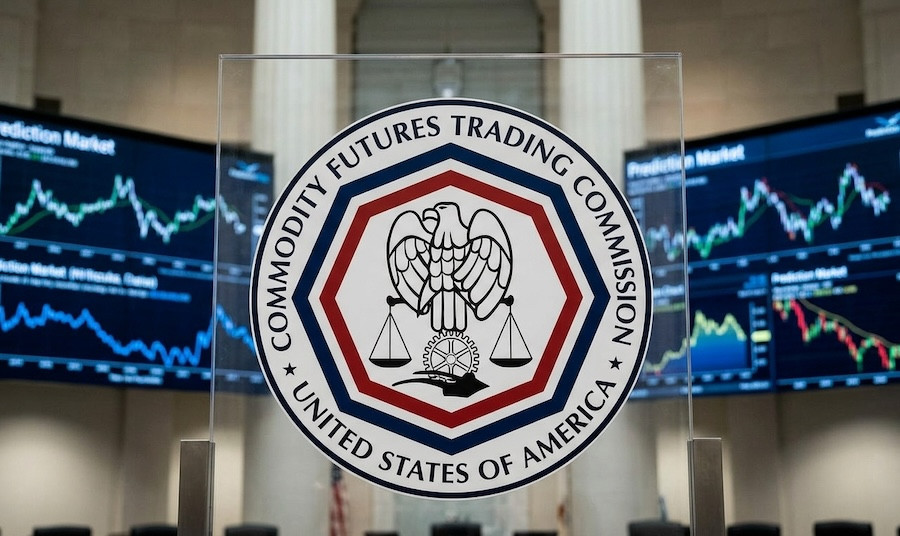
The US Commodity Futures Trading Commission (CFTC) has submitted two proposed rules concerning prediction market event contracts to the White House for regulatory review.
According to Bloomberg sources, both measures were received by the Office of Information and Regulatory Affairs, part of the White House’s Office of Management and Budget, earlier this week.

The proposals address how event contracts should be treated under the Commodity Exchange Act and could affect the ongoing dispute over whether sports event contracts fall under federal or state regulation.
One proposed rule, RIN 3038-AF82, would expand the definition of a “swap” to cover event contracts. If the contracts are classified as swaps, they would fall under the CFTC’s authority.
CFTC Chairman Michael Selig has argued that the commission has exclusive jurisdiction over such markets and that state gambling laws cannot be applied to contracts within that federal jurisdiction.

The second proposed rule, RIN 3038-AF81, is classified as an interim final rule that would exclude casino-style gaming products from the definition of a swap. An interim final rule can take effect when published, but agencies can still seek public feedback afterward.
These rule submissions come as prediction market operators face legal challenges from US states over their sports-related event contracts.
The 6th US Circuit Court of Appeals recently ruled that Ohio and Tennessee can enforce their gambling regulations against prediction market operator Kalshi, rejecting the platform’s argument that its sports event contracts are “swaps” that are governed federally by the CFTC.
Charlotte Capewell brings her passion for storytelling and expertise in writing, researching, and the gambling industry to every article she writes. Her specialties include the US gambling industry, regulator legislation, igaming, and more.

Dig Deeper
Related stories
 2026/08/11: CFTC warns prediction markets against using sportsbook-style odds
 2026/07/16: Michigan AG hits back after CFTC orders Kalshi to honor Michigan trades
 2026/05/28: White House reviews CFTC prediction market proposal
 2025/05/31: Prediction markets are gaming’s next big shortcut to 50-state access
2026/08/11: CFTC warns prediction markets against using sportsbook-style odds
2026/07/16: Michigan AG hits back after CFTC orders Kalshi to honor Michigan trades
2026/05/28: White House reviews CFTC prediction market proposal
2025/05/31: Prediction markets are gaming’s next big shortcut to 50-state access
The Backstory
Federal rules move into a crowded legal fight
The White House review of two Commodity Futures Trading Commission proposals marks a pivotal step in a regulatory dispute that has been building across courts, statehouses and the gaming industry. At issue is whether sports-linked prediction market contracts are federally regulated derivatives or gambling products subject to state control.
The distinction could determine whether platforms such as Kalshi, Polymarket, Crypto.com, Robinhood and others can operate sports event markets nationwide under CFTC oversight or must comply with each state’s licensing, tax, consumer protection and responsible gambling rules. For traditional sportsbooks, state regulators and tribal gaming interests, the stakes are substantial: A federal pathway could allow prediction market operators to bypass the state-by-state framework that has defined legal sports betting since the fall of the federal wagering ban in 2018.
The latest CFTC submissions to the White House’s Office of Information and Regulatory Affairs follow an earlier White House review of a CFTC prediction market proposal, first reported by Bloomberg. That earlier filing did not disclose details, but it signaled that the agency was preparing to formalize its position after months of litigation and enforcement conflict. The new proposals appear designed to clarify whether event contracts fall within the Commodity Exchange Act and when gaming-related products should be excluded from swap treatment.
From niche markets to a national sports betting challenge
Prediction markets were once viewed mainly as specialized platforms for trading on political, economic or cultural outcomes. Their expansion into sports has changed the regulatory temperature. Contracts tied to game results can resemble wagers to state officials, even if operators describe them as derivatives traded on federally regulated exchanges.
That shift has made prediction markets a strategic issue for the broader gambling sector. In a recent industry analysis, Complete iGaming described how prediction markets are emerging as a potential shortcut to 50-state access. The appeal is clear: If sports event contracts are treated as federally regulated products, operators could reach customers without securing individual sports betting licenses in every jurisdiction.
That prospect alarms state regulators, who have spent years building controlled sports wagering systems that include licensing fees, tax obligations, geolocation rules, age verification, advertising restrictions and responsible gambling requirements. It also worries incumbent sportsbooks that operate under those rules and tribal operators whose gaming rights are often protected through state compacts. A federally supervised prediction market model could alter competitive dynamics by giving newer platforms a lower-cost path into sports-related products.
The tension mirrors earlier debates over daily fantasy sports, sweepstakes casinos and social gaming, where companies used different legal classifications to offer products that looked similar to gambling but did not always fit neatly into state betting statutes. Prediction markets add a federal markets regulator to the mix, raising the likelihood of a higher-stakes jurisdictional clash.
States push back with cease-and-desist orders
State attorneys general and gaming regulators have increasingly treated sports event contracts as unlicensed betting. Missouri became one of the latest states to act when Attorney General Catherine Hanaway issued cease-and-desist letters to six prediction market platforms: Crypto.com, Kalshi, Novig, Polymarket, Robinhood and Underdog.
Missouri argued that contracts based on sports outcomes fall under its gambling laws rather than the Commodity Exchange Act. The state launched legal sports wagering Dec. 1 under the Missouri Gaming Commission and requires licensed operators to verify users are at least 21. Hanaway said companies cannot repackage sports bets as event contracts to avoid laws approved by voters.
Michigan has been another flashpoint. The state sued Kalshi earlier this year, alleging its sports-related event contracts amounted to unlicensed sports betting. After an Ingham County judge temporarily blocked Kalshi from offering sports event contracts, the CFTC ordered the company to honor pending trades from Michigan residents. Michigan Attorney General Dana Nessel’s office criticized the move, saying it interfered with the state’s authority to regulate companies operating within its borders.
The conflict, detailed in coverage of Michigan’s response to the CFTC order on Kalshi trades, shows how quickly the dispute can move from abstract legal theory to operational questions. If a federally registered exchange must operate as a single national market, state-by-state restrictions on customer access may conflict with the CFTC’s view of impartial access. But if the products are gambling, states argue they retain the right to block unlicensed operators.
The CFTC tries to draw lines without conceding ground
The CFTC has not simply defended prediction markets in court. It has also moved to shape how they present products to consumers. In August, the agency warned operators against displaying event contract prices in the “American” odds format common to sportsbooks. The CFTC said that presentation could mislead users about the nature of the transaction and obscure market depth and pricing impact.
The warning, described in CFTC guidance on sportsbook-style odds, underscored the agency’s balancing act. It wants to preserve its authority over federally regulated derivatives while preventing platforms from marketing those contracts in ways that make them look indistinguishable from conventional sports bets.
That distinction may become more important if the proposed rules advance. One rule under review would expand the definition of a swap to cover event contracts, strengthening the CFTC’s jurisdictional claim. Another would exclude casino-style gaming products from the swap definition, suggesting the agency recognizes a boundary between federally regulated prediction markets and products more clearly tied to gambling.
The problem is that sports event contracts sit near the center of that boundary dispute. For operators, a contract on whether a team wins a game can be priced and traded like any other event derivative. For state regulators, the same contract may function like a sports wager, especially when offered to retail customers in a mass-market format. The CFTC’s task is to define the category without creating a loophole so broad that it swallows state sports betting regimes.
Court rulings raise pressure on federal regulators
The courts have so far delivered mixed signals, but recent rulings have increased pressure on the CFTC to clarify its position. The 6th U.S. Circuit Court of Appeals ruled that Ohio and Tennessee can enforce their gambling regulations against Kalshi, rejecting the company’s argument that its sports event contracts are swaps governed exclusively by federal law. That decision strengthened the hand of states seeking to police sports prediction markets under gambling statutes.
In Michigan, a federal judge denied Polymarket’s request for a preliminary injunction, finding that its sports event contracts did not fall under CFTC regulation. New York, Minnesota, Illinois, Kentucky and New Mexico have also featured in the widening conflict, through lawsuits, legislation or enforcement action. The result is a fragmented legal map that undermines certainty for operators, consumers and regulators.
The CFTC’s rulemaking can help create a more consistent national framework, but it may not end the dispute. Former CFTC and Securities and Exchange Commission Chairman Gary Gensler has said states may have the stronger claim under current law and that the issue could ultimately reach the Supreme Court. That possibility reflects the constitutional and statutory questions embedded in the debate: how far federal commodities law extends and where state police powers over gambling begin.
Why the White House review matters now
White House review does not guarantee final approval, but it is a necessary step before major federal rules can advance. The review also comes at a time when political attention to prediction markets is increasing. President Donald Trump has publicly supported maintaining CFTC authority over the sector, giving the agency’s rulemaking a broader policy backdrop.
For prediction market operators, the rules could provide a clearer route to growth after months of state challenges. For sportsbooks and state regulators, they could either preserve the existing gambling framework or accelerate competition from federally supervised platforms. For consumers, the outcome may determine whether sports-related contracts are governed by financial-market disclosure and exchange rules or by state gambling safeguards built around age limits, location controls, tax collection and problem gambling protections.
The central question remains unresolved: Are sports event contracts financial instruments, gambling products or a hybrid that requires a new regulatory settlement? The CFTC’s submissions to the White House are an attempt to answer that question before courts and states answer it instead. Whatever the final rules say, they are likely to shape the next phase of the fight over who controls the fastest-growing edge of U.S. betting and trading markets.
