


CFTC moves to block Arizona enforcement against Kalshi

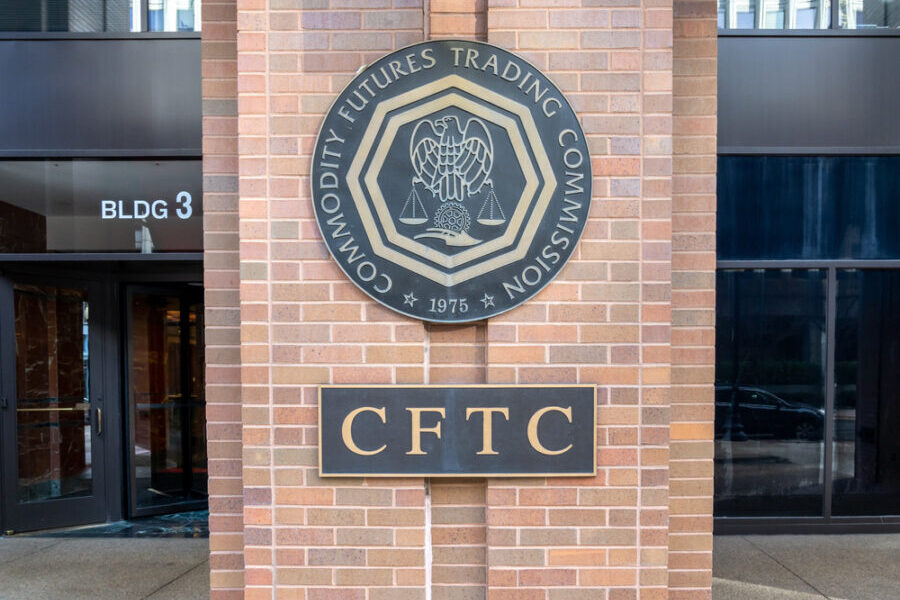
The US Commodity Futures Trading Commission and the Department of Justice have filed a court motion to classify sports-related prediction markets as financial derivatives rather than gambling.
In a recent court filing, federal regulators asked a judge to block Arizona from enforcing its gambling laws against prediction platforms such as Kalshi, arguing that these markets fall under federal regulation.

The case focuses on whether contracts tied to the outcome of sporting events should be treated as ‘event contracts’, a type of financial derivative, or as sports betting, as several state gambling regulatory bodies across the US see them.
The Commodity Futures Trading Commission argues that the contracts on the prediction platforms qualify as swaps or trades under the Commodity Exchange Act.
According to the Commission, this places the platforms within its jurisdiction. If courts agree, individual states will have limited authority to regulate or ban such platforms.

The ruling could affect how US states regulate prediction market platforms, as over 10 states have already issued cease-and-desist orders or taken similar steps against prediction market platforms within their jurisdictions.
Arizona is one of the states to have already acted and has even gone as far as being the first state to file criminal charges alongside legal complaints.
Arizona officials argue that allowing users to trade on sports outcomes is effectively gambling and should be subject to local laws, including licensing requirements and consumer protections.

Last month, Kalshi sued Arizona regulators to prevent them from shutting down its operations in the state.

Dig Deeper
Related stories
 2025/10/17: Kraken eyes prediction market launch with acquisition of CFTC-licensed Small Exchange
 2026/04/30: CFTC sues Wisconsin over prediction market dispute
 2026/02/18: CFTC files amicus brief to keep prediction markets federally regulated
2026/05/28: White House reviews CFTC prediction market proposal
2026/02/18: CFTC files amicus brief to keep prediction markets federally regulated
2026/05/28: White House reviews CFTC prediction market proposal
2025/10/17: Kraken eyes prediction market launch with acquisition of CFTC-licensed Small Exchange
2026/04/30: CFTC sues Wisconsin over prediction market dispute
2026/02/18: CFTC files amicus brief to keep prediction markets federally regulated
2026/05/28: White House reviews CFTC prediction market proposal
The Backstory
Why the Arizona fight matters now
The Commodity Futures Trading Commission’s bid to block Arizona from enforcing its gambling laws against prediction markets caps months of legal and political maneuvering over who polices event-based trading in the United States. The immediate dispute turns on whether contracts tied to sports outcomes are financial derivatives subject to federal oversight or unlicensed wagers under state law. But the stakes reach far beyond one platform or one state: a federal court’s embrace of the CFTC’s position would narrow state power over a fast-growing corner of retail speculation, while an adverse ruling could embolden states to shut the markets down.
The clash has been building since Arizona regulators warned Kalshi that only licensed sportsbooks can offer sports wagers in the state and that state law bans bets on “any other unknown or contingent future event.” Kalshi responded by going to federal court, arguing its event contracts are swaps regulated by the CFTC, not gambling. The company asked a judge for a preliminary injunction to stop the state from acting while the case proceeds. For background on that filing and Arizona’s warning letter, see Kalshi sues Arizona to block state regulators.
Arizona’s escalation raised the temperature
What made Arizona an outlier, and a flashpoint for federal preemption, was its move to pair civil threats with criminal charges. Attorney General Kris Mayes filed counts tied to Kalshi’s event contracts, including political and sports markets, marking the first criminal case of its kind among states pressing similar claims. The filing drew a sharp response from Kalshi co-founder Tarek Mansour, who framed the case as an overreach that bypasses federal courts already weighing the CFTC’s authority.
Arizona’s step changed the litigation calculus for platforms and regulators. Criminal exposure raises operational risk, increases potential penalties and can chill activity in other jurisdictions. It also invites separation-of-powers questions if state prosecutors bring cases where federal agencies assert exclusive domain. Mansour’s remarks and the context for Arizona’s charging decision are detailed in Kalshi founder says Arizona overstepped by pressing criminal charges.
A shifting legal landscape after election contracts ruling
While Arizona turned up the heat at the state level, a separate federal courtroom development strengthened the platforms’ hand. The CFTC dropped its appeal after a Washington, D.C., district judge ruled Kalshi could list contracts on political elections, rejecting the agency’s effort to block them on public interest grounds. The dismissal signaled a recalibration inside the CFTC and gave prediction market operators a precedent they say supports broader federal jurisdiction over event contracts.
The decision did not settle whether sports outcomes should be treated as swaps, nor did it preempt state gambling laws outright. But it underscored the courts’ willingness to consider event contracts within the framework of commodities law and it illustrated the risks to the CFTC of pressing appeals it might lose. The agency’s retreat also galvanized critics who view prediction markets as gambling, and it left room for states to argue that sports remain distinct from politics for regulatory purposes. For more on the appeal’s withdrawal and industry reaction, read CFTC drops Kalshi election betting appeal.
Kalshi, meanwhile, points to mixed but meaningful wins at the state level. The company has secured temporary injunctions in Tennessee and New Jersey that limited state enforcement while litigation continues, though courts elsewhere have let regulators proceed. Those outcomes set the table for the present Arizona fight, where a federal ruling could either entrench a patchwork or impose a nationwide framework for sports-related event contracts.
Sports leagues and state regulators push back
The NBA weighed in directly with the CFTC, warning that sports prediction markets pose integrity risks that differ from, and in its view exceed, those in state-licensed sports betting. The league flagged the rapid expansion of basketball-related contracts and cautioned that player and officiating props could follow, heightening manipulation concerns. It drew a line between state-regulated sportsbooks, which operate under sport-specific oversight regimes, and prediction markets regulated by a commodities agency without a dedicated sports integrity unit.
The letter dovetailed with concerns raised by state gambling regulators, including the Michigan Gaming Control Board, that event contracts on sports effectively replicate wagering without the consumer protections and enforcement architecture in place for sportsbooks. That argument buttresses Arizona’s position and complicates the CFTC’s case that its rulebook can mitigate game-fixing or insider misuse specific to sports. Details on the league’s submission and the broader state concerns are in NBA expresses concerns over sports prediction integrity to CFTC.
The CFTC’s counter, echoed by platforms, is that federally supervised exchanges can implement position limits, surveillance and clearing protocols comparable to other derivatives markets. The practical question for courts is whether those tools map onto the incentives and data flows of modern sports in a way that satisfies the public interest and statutory definitions under the Commodity Exchange Act.
Leadership questions at the CFTC add a political layer
The debate over where event contracts belong is unfolding as Washington rethinks the CFTC’s mandate and leadership. Former Commissioner Brian Quintenz, nominated to return to the agency, has served on Kalshi’s board and pledged to divest if confirmed. Senators pressed him on potential conflicts and on the agency’s preparedness to oversee event contracts and crypto markets simultaneously. His comments framed prediction platforms as part of an evolving toolkit for hedging real-world risks, a view that resonates with industry but alarms critics wary of financializing civic and sporting outcomes.
Any perception that the CFTC is too close to the entities it regulates could color judicial and legislative attitudes toward preemption. Even if a nominee recuses from specific matters, senators have signaled that appearances matter at a time when the agency may gain new authorities. For a fuller account of Quintenz’s testimony and the divestment pledge, see Kalshi director and CFTC nominee advocates for prediction markets.
What the next ruling could decide
The CFTC’s move to halt Arizona enforcement seeks to draw a bright line: that sports event contracts offered on federally regulated platforms are swaps, not bets, and therefore off limits to state gambling regulators. A court siding with the agency would curtail state-by-state crackdowns and potentially open the door to broader sports offerings, subject to federal rules and exchange compliance. A ruling for Arizona would validate a patchwork in which platforms must navigate or retreat from jurisdictions that deem event contracts illegal gambling, especially where criminal penalties are in play.
Either way, the outcome will influence how leagues, state regulators and Congress engage with prediction markets. If federal jurisdiction expands, expect leagues to press for sport-specific guardrails within the CFTC regime and for states to seek legislative clarity. If state authority prevails, platforms may double down on political and macroeconomic contracts while testing sports markets only in friendly venues. Arizona’s hard line, Kalshi’s multistate litigation and the CFTC’s recent courtroom loss on election contracts set the contours of a decision that could define the sector’s next phase.
