


Canada’s New Brunswick considers allowing private igaming industry


Canada’s province of New Brunswick is considering whether to introduce regulations to permit private online gambling operators to enter its market, which would potentially end the Atlantic Lottery Corporation’s (ALC) monopoly on legal online gambling in the province and expand the regulated igaming market to three provinces.
According to Telegraph-Journal, New Brunswick’s Finance Minister Rene Legacy confirmed that the government is “exploring options around regulating private online operators”, citing the expansion of both licensed and unregulated gambling platforms.

However, officials haven’t provided a timeline for the review.
This comes as the ALC estimates that online gambling operators outside of the province’s jurisdiction are generating over CA$250 million (US$178 million)1 CAD = 0.7102 USD
2026-10-20Powered by CMG CurrenShift annually in revenue from players across Atlantic Canada.
The corporation said that these platforms do not contribute towards provincial governments or face the same regulatory requirements as its own services. Budget documents have also revealed that New Brunswick’s lottery revenue has fallen by CA$8 million (US$5.7 million)1 CAD = 0.7102 USD
2026-10-20Powered by CMG CurrenShift over the past two years.

The Canadian Alliance for Responsible Gaming hasn’t endorsed a particular market model, with its Executive Director Molly Cormier saying effective oversight, stronger safeguards, and enforcement remain essential.
She told the publication that advertising for unlicensed platforms can confuse customers about what services are legally available.
The ALC said any changes would need to be decided by its provincial shareholders. The corporation is continuing to develop its digital products, including online casino games, to compete with alternative gambling platforms.

Dig Deeper
Related stories
 2025/02/26: ‘We’re not afraid of competition’, says Atlantic Lottery Corporation’s new President
 2025/02/12: NorthStar points to growth in preliminary Q4 results
 2025/01/23: iGaming Ontario switches to monthly reporting as revenue grows
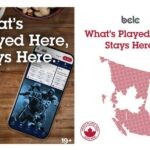 2025/03/19: British Columbia Lottery Corporation launches ad campaign targeting illegal markets
2025/02/26: ‘We’re not afraid of competition’, says Atlantic Lottery Corporation’s new President
2025/02/12: NorthStar points to growth in preliminary Q4 results
2025/01/23: iGaming Ontario switches to monthly reporting as revenue grows
2025/03/19: British Columbia Lottery Corporation launches ad campaign targeting illegal markets
The Backstory
Atlantic Canada weighs a break from the monopoly model
New Brunswick’s review of whether to allow private online gambling operators marks a significant test for Atlantic Canada’s long-standing lottery model. For decades, online and retail gambling in the region has been conducted through Atlantic Lottery Corporation, the jointly owned entity of New Brunswick, Nova Scotia, Prince Edward Island and Newfoundland and Labrador. The structure has kept gambling revenue within provincial systems, but it is now facing pressure from a fast-growing offshore and out-of-province digital market.
The province’s deliberations come as Canada’s regulated igaming map is beginning to shift. Ontario opened a competitive private-operator market in 2022, creating a template that other provinces are studying. Alberta is expected to follow with a similar framework, while most provinces continue to rely on lottery corporations. If New Brunswick moves ahead, it could become the third province to embrace a private igaming model and the first in Atlantic Canada to challenge the region’s shared monopoly arrangement.
The policy question is not simply whether private brands should be permitted to compete. It is whether a licensing system can capture spending that is already happening, improve consumer protections and preserve public revenue. Atlantic Lottery has estimated that hundreds of millions of dollars in online gambling revenue is leaving the region through operators outside provincial control. That figure has become central to the debate over whether enforcement, product upgrades or market liberalization offers the best response.
Atlantic Lottery has tried to answer competitive pressure
Atlantic Lottery’s new leadership has acknowledged the scale of the challenge. In an interview with COMPLETE iGAMING, Dallas McCready, the corporation’s president and chief executive, said the organization was not afraid of competition as offshore and out-of-region gambling sites target Atlantic Canadians. He said one persistent problem is advertising that gives players the impression that unlicensed websites are lawful in the region.
That confusion is a core weakness in the monopoly model. Atlantic Lottery may be the only legal online gambling option in the four Atlantic provinces, but consumers are exposed to national advertising, affiliate marketing and sports sponsorships from brands that are not authorized locally. The result is a gap between legal availability and consumer perception. New Brunswick’s review appears to be aimed at that gap: whether the province can impose rules on private operators already reaching local players rather than leaving them outside the system.
Atlantic Lottery has also sought to improve its product offering. Its 2023-24 annual report showed CA$487 million returned to the four provincial governments, including CA$151.2 million to New Brunswick. The corporation’s ilottery business grew 17% from the previous fiscal year, evidence that the platform is expanding even without private competition. But the same results also show why governments are cautious. Lottery profits support public budgets, and any private market model would need to account for how revenue is taxed, shared and protected from cannibalization.
Sports betting modernization points to one path
Atlantic Lottery has not stood still as competition has intensified. A major sign of its strategy came when Kambi Group announced a multi-province agreement to provide sportsbook services for Atlantic Lottery and British Columbia Lottery Corporation. The deal will support sports betting in Nova Scotia, New Brunswick, Prince Edward Island and Newfoundland and Labrador, while also extending to BCLC operations in Saskatchewan and Manitoba.
The Kambi contract created a shared technology foundation for provincial lottery operators seeking to compete with private and offshore bookmakers. It reflects an alternative to opening markets: lotteries can pool procurement, upgrade products and use outside suppliers while remaining the only legal operators in their jurisdictions. For governments, that model preserves direct public control while improving the customer experience.
But modernization may not resolve the broader channelization problem. Ontario’s model rests on the idea that players using gray-market operators can be migrated into a licensed system if the brands they already recognize are allowed to operate under provincial oversight. The lottery-led model assumes a public operator can win back customers through better products, trust and legal clarity. New Brunswick’s review is effectively a test of which assumption provincial officials find more persuasive.
Sports betting also has become an important part of the competitive landscape because it is highly visible through advertising and media. If residents see familiar sportsbook brands promoted during national broadcasts but cannot legally use them in New Brunswick, the province is left with either enforcement challenges or pressure to license those brands. That dynamic has helped push igaming policy from a niche lottery issue into a wider consumer protection and revenue debate.
Regulatory credibility is under scrutiny
Any move toward private licensing will require New Brunswick to show that oversight can be strengthened, not weakened. Recent anti-money laundering penalties have complicated the argument that government-run gambling systems are inherently safer. Canada’s financial intelligence agency fined New Brunswick Lotteries and Gaming Corporation and Nova Scotia Gaming Corporation a combined CA$631,538.50 for compliance failures linked to online gaming operations. Earlier, Atlantic Lottery was fined CA$212,025 for similar issues.
The penalties, detailed in coverage of FINTRAC fines against two government gaming corporations over anti-money laundering breaches, do not settle the debate over market structure. They do, however, raise the stakes for any reform. A private market would require licensing standards, reporting obligations, responsible gambling controls, enforcement powers and clear accountability across government agencies. A public monopoly also must meet those standards if it is to argue that exclusivity delivers stronger protections.
For responsible gambling advocates, the central concern is not whether operators are public or private, but whether the province can create effective supervision. Advertising controls, player data monitoring, self-exclusion, affordability checks and anti-money laundering reporting all become more complex as digital gambling grows. The more New Brunswick residents gamble with unregulated operators, the less visibility provincial authorities have. But adding private operators without sufficient regulatory capacity could also expand gambling exposure and promotional intensity.
The fight against Bodog shows the limits of enforcement
Provincial lottery corporations have tried to confront illegal or unauthorized operators through the courts. The Canadian Lottery Coalition, which includes Atlantic Lottery, BCLC, Loto-Quebec, Manitoba Liquor & Lotteries and Lotteries & Gaming Saskatchewan, has backed legal action in Manitoba against Bodog. The case seeks to block the operator from doing business and advertising in the province.
The Manitoba injunction against Bodog moving through court illustrates both the seriousness of the gray-market challenge and the difficulty of relying on enforcement alone. Lottery corporations argue that unauthorized operators present themselves as safe and legal while avoiding Canadian oversight and public revenue contributions. They also argue that profits from legal platforms flow back to provincial priorities such as health care and education.
Still, litigation is slow, jurisdictionally complex and operator-specific. Even if a province succeeds against one brand, others can continue to reach consumers online. That has pushed policymakers toward broader structural questions. A regulated private market could bring some operators inside the tent, but it would still require enforcement against those that refuse to participate. Maintaining a monopoly requires the same enforcement burden, paired with continued efforts to persuade players to use the legal platform.
New Brunswick’s choice could reshape the region
New Brunswick’s review has implications beyond its borders because Atlantic Lottery is jointly owned by four provinces. A unilateral shift toward private igaming would raise questions about shared assets, revenue allocation and the future role of the corporation. Atlantic Lottery has said any changes would need to be decided by its provincial shareholders, underscoring the regional complexity of what may appear to be a single-province policy review.
The fiscal context adds urgency. New Brunswick’s lottery revenue has fallen by CA$8 million over two years, while unregulated operators are estimated to generate substantial revenue from Atlantic Canadian players. A licensing regime could create new tax receipts and regulatory fees, but it could also redirect spending away from Atlantic Lottery products. The province would need to balance potential growth against the risk of weakening an entity that has long delivered reliable public returns.
The outcome will signal how smaller Canadian provinces intend to respond to a nationalizing gambling market. Ontario proved that private igaming can generate scale under regulation. Atlantic Lottery is trying to prove that public operators can modernize fast enough to defend market share. New Brunswick now sits between those models, weighing whether competition is a threat to public revenue or a tool to reclaim it.
