
Bragg Gaming Group launches content in Brazil with Blaze

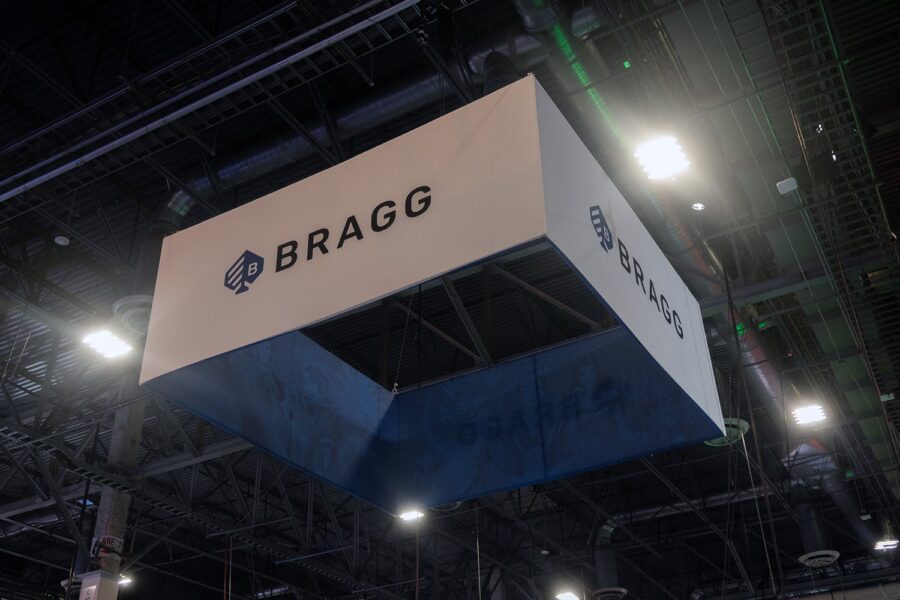
Casino supplier Bragg Gaming Group has launched its proprietary igaming content with operator Blaze in Brazil.
The launch saw Blaze add Bragg’s full library of Brazil-approved content, consisting of approximately 80 games, including Electric Jungle and Mighty Mountain.
Blaze Head of iGaming Integration Jorge Domingos said, “The launch of Bragg’s full suite of content is highly anticipated by our customers. We are confident their exclusive titles, including local favorites, will perform exceptionally well, adding significant value to our casino offering in Brazil.”
Bragg stated that the agreement forms part of its wider effort to grow the share of revenue generated from proprietary and exclusive gaming content.
In a separate agreement, Bragg entered into a content distribution partnership with igaming subsidiary Expanse Studios, covering over 30 regulated markets.

The supplier said distribution through Blaze supports that strategy and expands the availability of its content in the Brazilian igaming market, which it entered in January this year.
Bragg Gaming Group Regional Director for LatAm Sara Mosallaee added, “The sheer scale of this launch, featuring our entire certified library of around 80 games, ensures we are maximizing our reach in this critical market. Going live with Blaze directly supports our profitability goals and allows us to diversify our revenue stream through increasing the proportion generated via our proprietary and exclusive content.”
Abi Bray brings strong researching skills to the forefront of all of her writing, whether it’s the newest slots, industry trends or the ever changing legislation across the U.S, Asia and Australia, she maintains a keen eye for detail and a passion for reporting.

Verticals:
Sectors:
Topics:
Dig Deeper
Related stories
 2025/05/29: Bragg Gaming Group launches Big Ticket Bonanza gamification system
2025/10/28: Bragg Gaming Group expands West Virginia presence with Internet Vikings collaboration
2025/04/28: Bragg Gaming Group settles US$5 million debt
2025/10/15: Betespecial teams up with Yggdrasil to deliver slot content in Brazil
2025/05/29: Bragg Gaming Group launches Big Ticket Bonanza gamification system
2025/10/28: Bragg Gaming Group expands West Virginia presence with Internet Vikings collaboration
2025/04/28: Bragg Gaming Group settles US$5 million debt
2025/10/15: Betespecial teams up with Yggdrasil to deliver slot content in Brazil
 2025/05/29: Bragg Gaming Group launches Big Ticket Bonanza gamification system
2025/10/28: Bragg Gaming Group expands West Virginia presence with Internet Vikings collaboration
2025/04/28: Bragg Gaming Group settles US$5 million debt
2025/05/29: Bragg Gaming Group launches Big Ticket Bonanza gamification system
2025/10/28: Bragg Gaming Group expands West Virginia presence with Internet Vikings collaboration
2025/04/28: Bragg Gaming Group settles US$5 million debt
 2025/10/15: Betespecial teams up with Yggdrasil to deliver slot content in Brazil
The Backstory
Setting the scene in a newly regulated market
Bragg Gaming Group’s move to deepen its footprint with Blaze lands amid Brazil’s fast transition from gray-zone giant to regulated hub. The shift accelerated when the country’s igaming framework went live on Jan. 1, opening a formal path for licensed operators and suppliers. Bragg positioned itself early. In January, the company announced it was already live with several licensed brands, including Betano, Betboo, KTO, Novibet, Sportingbet and Superbet, and set a target to be integrated with half of Brazil’s licensed operators by the end of the second quarter of 2025. That commitment, outlined in the company’s entry update for the market, signals a go-big strategy in Latin America’s largest economy and offers context for its latest scale-up with Blaze. Read more on Bragg’s initial Brazil launch and targets in Bragg Gaming enters the regulated igaming market in Brazil.
The stakes are straightforward: Brazil’s regulated market has the player base and momentum to materially influence supplier revenue mix and margins. For content-led companies, speed to integrate, breadth of titles and local fit can dictate share. Bragg’s decision to push a full certified library, along with an emphasis on proprietary and exclusive content, fits an industry pattern in high-growth jurisdictions where control over IP and promotion mechanics can unlock better unit economics than third-party aggregation alone.
From foothold to scale: a phased Brazil plan
Bragg’s Brazil strategy has unfolded in distinct steps. Step one was securing distribution with multiple licensed operators at market opening, creating a base of access and compliance. Step two has been to widen availability and visibility of its in-house titles, leaning on recognized local performers to build stickiness. The company’s market-entry note emphasized a broad lineup that included proprietary games alongside exclusive “Powered by Bragg” content from studio partners. That positioning made it simpler to scale when larger operators opened additional pipes for exclusive libraries.
The Blaze integration reflects the next turn of the flywheel: pushing the entire approved slate, which the company values for diversification and profitability. By consolidating rollout under a single operator with significant reach, Bragg can test promotional pacing, track title-level KPIs and refine localized roadmaps faster than a fragmented distribution approach would allow. It also sets a performance baseline as more operators in Brazil look to balance differentiation with regulatory certainty.
Competitive dynamics are tightening. Other suppliers are expanding aggressively, and operators are shopping for portfolios that combine recognizable hits with promotional tooling. For instance, rival content house Yggdrasil recently widened its Brazil presence via a partnership with Betespecial, delivering both new releases and its Masters program titles. That underscores why Bragg is pairing content scale with feature-driven engagement and why direct operator relationships in Brazil carry outsized importance.
Product edge: gamification and engagement tools
Content breadth alone rarely secures lasting share in a crowded market. Bragg has been investing in player engagement tools that operators can turn on quickly to lift retention and time on site. The company’s recent launch of Big Ticket Bonanza, a gamification layer inside its Fuze marketing suite, aims to add that edge. The add-on lets casinos award guaranteed-win scratchcards, cash prizes and raffle entries tied to gameplay, with weekly or monthly draw cadence and customizable rewards.
For a market like Brazil, where promotional intensity and social mechanics shape acquisition costs, these tools can matter. They give operators knobs to target cohorts, trim bonus burn and drive repeat sessions without relying solely on headline jackpots or generic free spins. Bragg has said it intends to roll out Big Ticket Bonanza across partners in the United States, Latin America and Europe, signaling that its engagement stack will follow the content into priority markets. If deployed with Blaze and other Brazilian partners, the toolkit could amplify proprietary titles’ performance, which feeds directly into Bragg’s stated goal to lift the share of revenue from owned and exclusive content.
Infrastructure and compliance: lessons from U.S. expansion
Scaling in regulated markets depends on more than content and campaigns. Resilient infrastructure and jurisdiction-specific compliance are prerequisites, and Bragg has been building that muscle in the United States. In West Virginia, the company expanded its collaboration with Internet Vikings to secure dual in-state data center environments covering both primary operations and disaster recovery. The arrangement, detailed in Bragg Gaming Group expands West Virginia presence with Internet Vikings collaboration, mirrors an earlier New Jersey setup and support for Pennsylvania via the Spin Games unit.
Those U.S. deployments show how Bragg handles uptime, redundancy and regulator expectations in mature markets. The same operational discipline is relevant in Brazil, where compliance standards are tightening and oversight falls to the Secretariat of Prizes and Betting. As traffic scales with new integrations, a tested playbook for infrastructure, monitoring and incident response reduces regulatory risk and protects commercial momentum. It also strengthens operator confidence when choosing among suppliers with comparable catalogs.
Operational stability can have a financial halo. Bragg cited U.S. growth as a driver of a 7.1% first-quarter revenue increase earlier this year. Consistent delivery in complex markets supports the case for further investment in content and platform upgrades that Brazil’s operators will expect as competition rises.
Balance sheet moves underpin growth
Expansion requires capital flexibility, and Bragg has been adjusting its balance sheet to support that. The company recently settled $5 million of a $7 million promissory note owed to entities controlled by a company executive, extended the remaining $2 million to June 6, 2025, and said it is arranging a new third-party credit facility with lower costs and more flexible drawdown. Management framed the step as a way to strengthen liquidity, reduce financing costs and preserve standby credit for strategic opportunities.
For Brazil, those moves matter. As suppliers race to integrate, certify and launch localized features, working capital needs can spike. A cheaper, more flexible credit line creates room to accelerate roadmaps, fund co-marketing and extend commercial terms selectively without overreliance on short-dated internal loans. Bragg also forecast 9% revenue growth in 2024 and double-digit growth in 2025, setting expectations that Latin America will be a contributor alongside U.S. rollouts and European operations.
What to watch next in Brazil’s ramp
Several signals will indicate whether Bragg’s Brazil thesis is playing out. First, conversion of its pipeline toward the goal of going live with half of licensed operators by the end of the second quarter of 2025. Second, evidence that proprietary and exclusive titles are increasing as a share of content revenue, aided by engagement tools like Big Ticket Bonanza. Third, comparative performance versus peers expanding through local operators, as seen with Yggdrasil’s Betespecial deal.
Regulatory cadence is another factor. As Brazil refines enforcement and advertising guardrails, operators will likely favor suppliers with proven compliance and infrastructure track records, a lane Bragg has sought to occupy through its U.S. operations. Finally, watch for how new financing translates into product cycles and partner support. If Bragg maintains operational stability while accelerating content and gamification rollouts, the company could convert early access into durable share in a market that is quickly setting the tone for Latin American igaming.


