


Better Gambling Forum opens gambling framework consultation to public

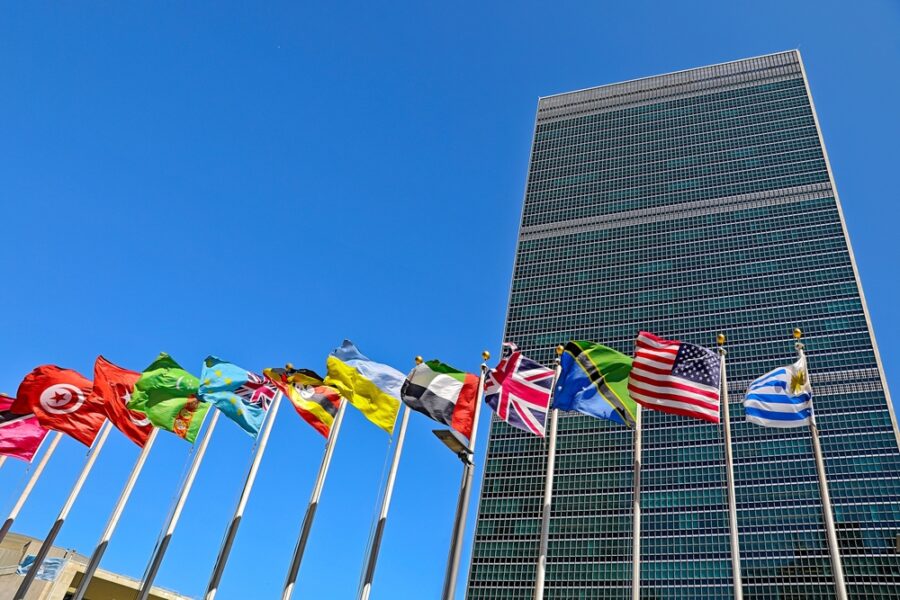
Gambling harm prevention organization Better Gambling Forum has launched a public consultation on a framework for responsible gambling that it has developed with the United Nations.
The Better Gambling Forum was set up to work with international institutions, including the United Nations and G7 and G20 countries, to craft an evidence-based approach to gambling harm prevention.

The consultation will look for feedback on the Responsible Gambling Triple-P Framework that was outlined in a report released by the Better Gambling Forum. The consultation will focus on the six key areas of education, support, research, ethical practices, and risk detection and intervention.
The Better Gambling Forum says the consultation is intended to test and refine the framework by getting input from a broad range of stakeholders. Respondents are to be encouraged to give examples from different jurisdictions, highlight views that aren’t yet represented, submit evidence, and raise concerns.
Participants who attended the United Nations General Assembly sessions last year will receive the report directly, while others can request access through the Better Gambling Forum, who say that feedback will inform the next version of the framework.

That will then be discussed in regional consultations and international forums through 2026, including sessions linked to G7 and G20 meetings.
The launch of the consultation comes at a time when the gambling sector is under increasing scrutiny from politicians and public health bodies in multiple countries over its perceived failings to protect vulnerable customers and its effect on society.
In July, online gambling developer Play’n Go led multiple sessions at G7, G20, and the United Nations over responsible gambling polices.

Verticals:
Sectors:
Dig Deeper
Related stories
 2025/06/11: Play’n Go to represent industry in gambling policy discussions at G7, G20, and UN
 2026/05/03: PAGCOR releases new regulatory framework governing live-dealer studios streaming
 2025/09/02: Responsible Online Gaming Association to partner with Responsible Gaming Council
 2025/04/22: United Nations warns of US$40 billion in Asian gambling and fraud scams
2025/06/11: Play’n Go to represent industry in gambling policy discussions at G7, G20, and UN
2026/05/03: PAGCOR releases new regulatory framework governing live-dealer studios streaming
2025/09/02: Responsible Online Gaming Association to partner with Responsible Gaming Council
2025/04/22: United Nations warns of US$40 billion in Asian gambling and fraud scams
The Backstory
Why a global framework lands now
Calls for firmer guardrails on gambling have accelerated, creating the backdrop for a United Nations-aligned framework to draw public input. Regulators, health advocates and industry groups have spent the past two years testing new ways to reduce harm, police integrity risks and harden payments against fraud. The push spans online sports betting, e-games and affiliates, reflecting how digital distribution has outpaced legacy rules. Recent moves in Brazil, the Philippines, Australia and the United States show a through line: policymakers want coordinated standards that match the speed and scale of modern betting products.
The Better Gambling Forum’s consultation seeks to standardize best practices across education, support, research, ethics, risk detection and intervention. That mirrors how national and regional authorities are already experimenting with sector-wide fixes. What’s different is the attempt to pull those threads into a coherent, evidence-based template that can be iterated through 2026 alongside multilateral venues. The stakes are significant: a common framework could shape licensing terms, marketing limits, product design and data sharing in multiple jurisdictions.
Industry momentum is part of the story. More operators and suppliers operate across borders, and the growth of online products has broadened exposure to vulnerable consumers. Governments are responding with measures that blend public health aims with financial and integrity protections. A UN-linked process adds political heft that could influence how future laws are drafted or enforced.
The consultation also arrives as markets test high-frequency, in-play experiences that heighten engagement and risk. Health groups warn that product design, payments and data distribution can amplify harm without guardrails. Those concerns are increasingly surfacing in academic forums, consumer litigation and ministerial decisions, and they are feeding into the case for unified standards.
Taken together, the policy arc is bending toward comprehensive, cross-sector solutions—precisely the kind of approach a global framework attempts to codify.
Integrity and payments: Brazil’s coordinated experiment
One of the clearest examples of cross-industry alignment is Brazil, where sports betting went live on Jan. 1. The International Betting Integrity Association brought major processors into a dedicated working group with its Payment Provider Forum in Brazil. Members including Bazk, Z.ro Bank, Onekey Payments, OKTO, VPag and Pay4Fun agreed to collaborate on fraud defenses, responsible gambling, regulatory engagement and ethical standards.
The model matters for three reasons. First, payments are a primary vector for both consumer protection and criminal abuse; harmonizing standards across operators and processors can close gaps that bad actors exploit. Second, access to the association’s monitoring network can align vigilance across firms that may not otherwise share data at speed. Third, Brazil is a growth market; early structure-setting tends to anchor expectations for compliance and oversight as volume scales.
The Payment Provider Forum’s cross-sector posture aligns with the thrust of a UN-linked framework: common rules of the road that cut across silos. If the Brazilian pilot shows measurable reductions in fraud or clearer incident response paths, it will bolster the case for replication in other markets, as the association itself has suggested.
For regulators weighing licensing and audit obligations, Brazil’s effort is a live test of how industry coordination can support government objectives without waiting for statutory mandates. That model could inform the framework’s recommendations on payment risk, data intelligence and information sharing.
Tightening the supply chain: Philippines resets affiliate oversight
Governments are also moving upstream to the vendors that power online gambling. The Philippine regulator PAGCOR introduced a consolidated regime for third parties with its new regulatory framework for gaming affiliates and support service providers. The shift requires accreditation for content suppliers, payment gateways, marketing shops, customer service vendors, KYC providers and testing labs, with fees and performance deposits and a reclassification of gaming system service providers as system administrators.
This supply-chain approach recognizes that harm reduction and integrity depend as much on middleware and operations as on the operator brand. By creating clear categories and accreditation steps, PAGCOR is signaling that compliance is a shared responsibility—and that penalties can flow through to vendors if standards slip.
The policy move tracks with the Philippines’ digital tilt; the regulator said online products generated the majority of gaming revenue in the first quarter. With e-games and e-bingo gaining share, integrated oversight of vendors becomes a logical counterpart to operator-focused rules.
For a global framework, the Philippine blueprint offers a practical template: define vendor roles, tie them to control obligations, and align classifications across B2B segments. That level-setting can make cross-border supervision and audits more efficient, especially when suppliers serve multiple jurisdictions.
Public health alarms shape the risk agenda
While regulators retool rules, public health voices are pushing for stronger limits on product design and access. A Harvard T.H. Chan School panel warned that the convergence of frictionless tech, engaging design and instant payments has “changed the fabric” of consumption, increasing addiction risks among young adults and now, increasingly, higher-income consumers. The discussion, captured in a report on the Harvard panel on gambling-related public health risks, called for a federal presence akin to tobacco and alcohol oversight.
That drumbeat is getting louder in college sports. The Public Health Advocacy Institute criticized the NCAA’s data deal with Genius Sports, arguing it will fuel high-intensity wagers on micro-moments that can escalate harm. The institute framed the deal as a missed opportunity to lead with public health safeguards and transparency, as outlined in its rebuke of the NCAA’s data sale. It also pointed to its litigation over bonus offers as evidence that aggressive marketing and product mechanics can mislead or overexpose consumers.
These interventions matter because they affect political risk. They give legislators cover to back stricter advertising codes, product limits and affordability checks. They also pressure industry to embrace standards that go beyond minimum compliance, particularly around data governance and in-play wagering features.
A global framework that centers education, early detection and intervention, and ethical practice can translate these concerns into concrete protocols—on customer communication, deposit and session friction, and age and identity controls—while still enabling regulated growth.
Marketing pushback: Australia tests a high-visibility curb
Marketing is another fault line. New South Wales is removing gambling ads from all public transport, reflecting a policy view that omnipresent promotions normalize wagering for children and casual riders. The statewide decision to ban gambling advertising across trains, buses and stations adds to a package of harm-reduction reforms rolled out over the past 20 months.
The transport ban is limited in scope but broad in visibility. It signals that Australia’s most populous state is comfortable carving out ad-free zones where exposure is unavoidable. If the policy reduces youth recall and intent measures, it may embolden stricter ad limits around schools, live sports and digital platforms.
For a global framework, the lesson is not necessarily to prescribe universal ad bans, but to define criteria and metrics for when and where restrictions are justified, how they are evaluated and how compliance is monitored. Clearer standards would also give operators and agencies more predictable guardrails for creative and media planning.
What to watch as standards converge
The next phase will test whether voluntary coordination can keep pace with product innovation and market expansion. Brazil’s payments forum will show if shared intelligence can dent fraud and match-fixing risks. The Philippines’ vendor accreditation will be a marker for supply-chain accountability. New South Wales’ ad pullback will provide data on exposure and youth impact. In the United States, academic pressure and litigation will keep attention on micro-betting, marketing claims and federal oversight.
A UN-linked framework can knit these strands into a cohesive playbook: cross-sector data sharing on integrity and payments, vendor-level accreditation and testing, marketing boundaries tied to risk evidence, and health-first protocols for product design and customer interactions. If widely adopted, that could reduce regulatory fragmentation, lower compliance costs across borders and, critically, curb harm for at-risk groups.
The open question is speed. Markets and technologies move fast; policy typically does not. The consultation process aims to bridge that gap by inviting examples from diverse jurisdictions and surfacing blind spots early. The outcome could shape how governments, operators and vendors share responsibility for an industry that is expanding online and into everyday life.
