


BetMGM joint venture unchanged as People Inc. drops MGM Resorts bid

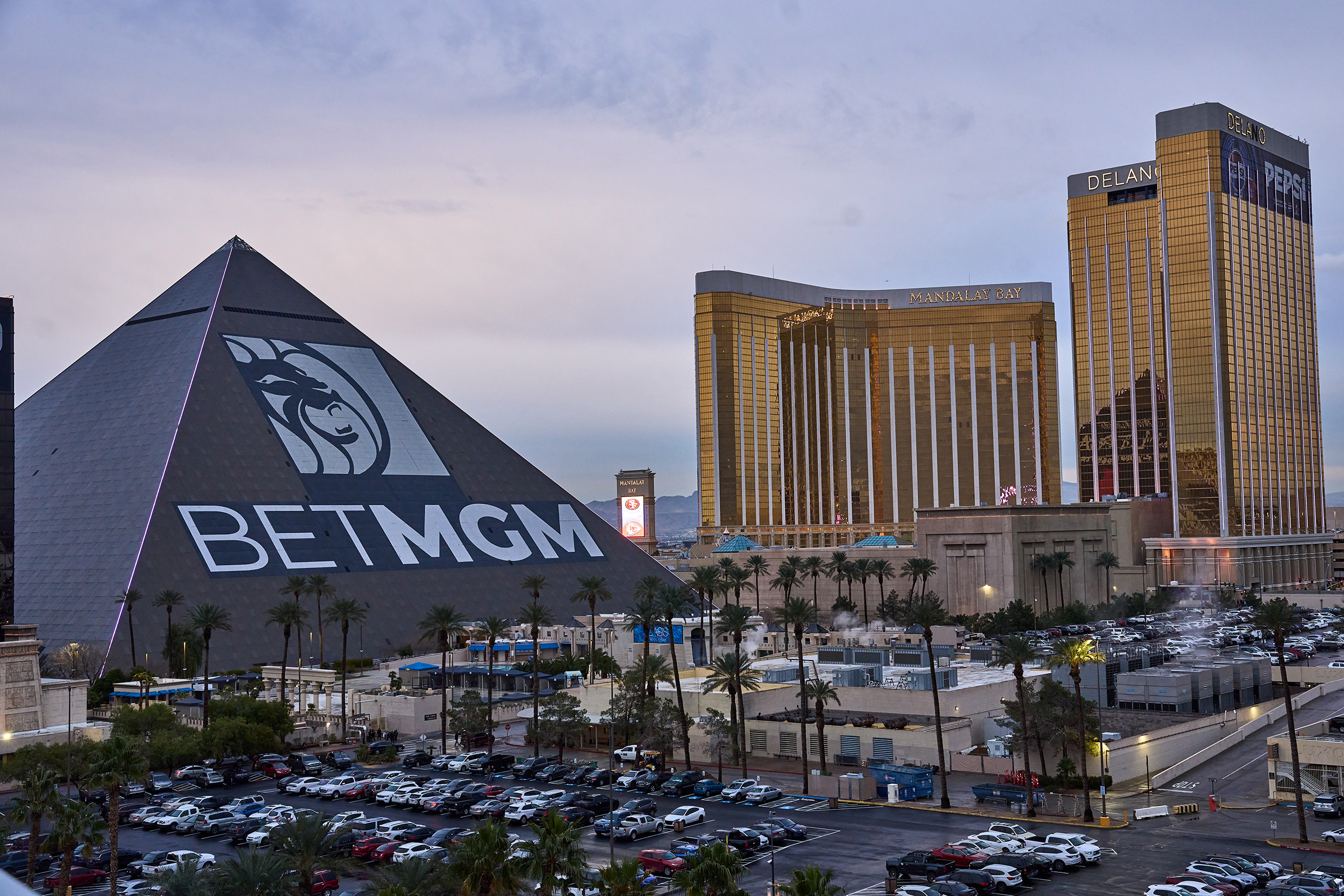
MGM Resorts International has announced it will continue as a standalone company after People Incorporated withdrew its takeover proposal. That leaves MGM’s half of its 50/50 BetMGM joint venture with Entain unchanged, for now.
People Inc., formerly IAC and chaired by Barry Diller, submitted the non-binding proposal on 1 June, offering US$48.30 in cash for each MGM share it did not already hold. In its proposal letter, People Inc. listed MGM’s “exceptional digital growth opportunities” among its reasons for the bid.

The offer had raised questions over BetMGM’s future. Entain shares climbed more than 3% on the London Stock Exchange after the announcement. Morgan Stanley analysts noted that “any potential change in MGM ownership could raise the possibility of a follow-on transaction regarding the JV.”
MGM confirmed the withdrawal on 23 September, noting that a special committee of its Board had taken part in negotiations with People Inc. over the past several months.
“We didn’t feel the mix was coming together in the way we had hoped and have decided not to pursue taking the company private at this time,” Diller said.

People Inc. still holds 66.8 million MGM shares, about 27% of the company, and remains “open to and interested in the possibility of a strategic transaction with MGM Resorts.”
MGM Resorts Chairman Paul Salem pointed to BetMGM as part of the standalone strategy: “Our leading position in Las Vegas, our best-in-class regional properties, and BetMGM’s continued momentum highlight the value we bring to our shareholders.”
Besides BetMGM’s sports betting and online gaming business in North America, MGM’s digital portfolio includes LV Lion Holding Limited, which serves the European and Brazilian markets.

Dig Deeper
Related stories
 2026/06/26: Entain divesting European interest, selling 20% of Entain CEE to Emma Capital for US$484 million
 2025/03/14: MGM Resorts CEO cites digital as top focus in 2025
 2026/06/24: BetMGM and MGM Resorts International renew multi-year partnerships with Major League Baseball
 2025/02/04: BetMGM execs bullish, despite wider losses
2026/06/26: Entain divesting European interest, selling 20% of Entain CEE to Emma Capital for US$484 million
2025/03/14: MGM Resorts CEO cites digital as top focus in 2025
2026/06/24: BetMGM and MGM Resorts International renew multi-year partnerships with Major League Baseball
2025/02/04: BetMGM execs bullish, despite wider losses
The Backstory
BetMGM stays at the center of MGM’s valuation debate
People Inc.’s decision to drop its proposal for MGM Resorts International leaves the casino operator’s structure intact, but it does not end the strategic questions that surrounded the bid. The approach, led by Barry Diller’s People Inc., put a fresh spotlight on MGM’s digital assets, particularly BetMGM, the 50/50 venture with Entain that has become central to how investors assess both companies.
The bid came as MGM was telling shareholders that digital growth would be a leading priority. Chief Executive Bill Hornbuckle had already described online betting, iGaming and international digital expansion as the company’s top focus for 2025, ahead of major land-based growth projects in New York, Japan and potentially Thailand. That message helped explain why People Inc. cited MGM’s digital growth opportunities in its rationale, even though the offer was framed as a takeover of the broader casino and hospitality group.
For MGM, remaining public and independent means it can continue to present BetMGM as part of a wider ecosystem that includes Las Vegas resorts, regional casinos, loyalty programs and international development. For Entain, the withdrawal removes the near-term risk that a new MGM owner would seek to revisit the joint venture structure. But the episode also reinforced a broader point: BetMGM has moved from a costly growth project to an asset whose ownership, scale and potential profitability can influence corporate strategy on both sides of the Atlantic.
Digital ambitions had already moved up MGM’s agenda
MGM’s leadership had spent much of the year making the case that digital growth was no longer peripheral. At an investor forum in Las Vegas, Hornbuckle said the company’s biggest focus in 2025 was its online presence, with BetMGM and other interactive businesses positioned for growth as additional iGaming states consider legalization. He said BetMGM could reach about $2.5 billion in business, while MGM’s broader internet interactive group could move toward $500 million, with Brazil on the horizon.
That strategy was outlined in more detail when MGM Resorts’ CEO cited digital as the company’s top 2025 focus. Hornbuckle said MGM had pulled back from some expensive marketing after concluding that product improvements, single-game parlays, omnichannel capability and a single wallet were more important to retaining players. The shift followed a period in which BetMGM lost share in parts of online sports betting and sought to improve speed, engagement and cross-sell with iGaming.
The same investor remarks also showed why MGM’s digital strategy cannot be separated from its physical assets. The company wants BetMGM customers to interact with MGM Rewards and eventually with resort experiences in Las Vegas and elsewhere. That omnichannel pitch is meant to differentiate BetMGM from digital-only rivals and to justify MGM’s continued investment in the business. It also makes BetMGM strategically harder to separate from MGM’s casinos than a simple financial stake might suggest.
Losses narrowed the debate to execution and scale
BetMGM’s growth story has not been linear. The venture reported wider losses in 2024, with losses rising to $291 million from $97 million a year earlier. Negative return on investment also deepened. Yet executives used the results to argue that the business had rebuilt momentum, generated $2.1 billion in revenue and entered 2025 with a clearer path to profitability.
That contrast was evident when BetMGM executives remained bullish despite wider losses. Chief Executive Adam Greenblatt described the company as an iGaming leader and said its focus had shifted toward higher-value players rather than costly mass acquisition. Management emphasized stronger key performance indicators, more efficient marketing and a larger role for existing customers already inside the BetMGM platform.
The financial argument matters because any change in MGM ownership could have forced a reassessment of BetMGM’s capital needs and governance. BetMGM has already drawn substantial support from MGM and Entain, and executives have pointed to a revolving credit line as a way to avoid further equity contributions from the parents. If the venture can fund growth internally while moving toward positive returns, its valuation becomes more meaningful for both MGM shareholders and Entain investors.
There are also regulatory stakes. BetMGM’s sports betting operation spans 24 U.S. jurisdictions, Canada and Puerto Rico, while its iCasino business remains limited to a smaller set of markets. Executives have repeatedly said broader iGaming legalization would be more valuable than further sports betting expansion alone. That makes state legislative developments in places such as New York, Illinois and Maryland important to the venture’s future earnings profile.
Entain’s own portfolio reset sharpened the focus
Entain’s position in the joint venture has been shaped by its own restructuring. The company has been reviewing assets, reducing leverage and looking for ways to simplify its portfolio while preserving exposure to markets where it sees long-term growth. That made the MGM takeover speculation more significant, because a change of control at MGM could have reopened questions over whether Entain should remain a long-term 50% owner of BetMGM or seek to monetize the stake.
In June, Entain announced a phased exit from its Central and Eastern Europe business, selling part of its interest in Entain CEE to EMMA Capital for €425 million. The deal implied a €2.1 billion valuation for the business and was presented as a way to unlock value, reduce debt and sharpen capital allocation. Entain said proceeds would help lower leverage and potentially support shareholder returns once its balance sheet targets are met.
That divestment was not directly tied to BetMGM, but it showed the discipline Entain is applying to its portfolio. Selling down CEE reduced reported exposure to profitable Croatian and Polish operations, while leaving Entain with a path to a full exit. BetMGM, by contrast, remains a core strategic investment despite its losses because of its U.S. scale, iGaming position and long-term optionality.
The market reaction to People Inc.’s withdrawal suggested investors saw reduced uncertainty as positive for Entain. Its shares rose after MGM confirmed the bid had been pulled. That response reflected relief that the joint venture would not immediately be drawn into a broader MGM ownership transaction, but it also underscored how central BetMGM has become to Entain’s equity story.
Sports, loyalty and Las Vegas deepen the joint venture ties
MGM and BetMGM have continued to build commercial links that make the joint venture more embedded in MGM’s consumer platform. The companies renewed their partnerships with Major League Baseball, keeping BetMGM visible across MLB platforms and maintaining MGM Resorts as the league’s exclusive integrated resort and casino partner. The agreements include marketing across MLB Network, MLB.com and digital channels, along with co-branded casino games.
The renewal of MGM and BetMGM’s multiyear MLB partnerships fit MGM’s broader strategy of using sports to drive resort demand, digital engagement and brand recognition. In Las Vegas, MGM’s Strip portfolio gives it direct exposure to major sporting events at nearby venues, while BetMGM can use the same fan base to promote wagering and online casino products where legal.
The Las Vegas connection is also becoming operational. BetMGM is moving to take over MGM Resorts’ Nevada sportsbooks, including the hub at Mandalay Bay and satellite operations at other properties. The transition, detailed in BetMGM’s plan to assume control of MGM Resorts’ Nevada sportsbooks, follows the launch of BetMGM’s mobile sportsbook app in Las Vegas and additional licensing approvals.
That move tightens the relationship between MGM’s retail betting floors and BetMGM’s digital platform. It also signals that MGM is willing to place more day-to-day sportsbook operations under the joint venture, even as it remains co-owned with Entain. The arrangement gives BetMGM more control over product consistency and customer data, while MGM keeps sports wagering integrated into its resort experience.
A withdrawn bid leaves strategic pressure in place
The end of People Inc.’s pursuit resolves the immediate takeover question, but it does not remove the forces that made the proposal plausible. MGM is a major Las Vegas and regional casino operator with international ambitions, but its fastest-growth narrative increasingly depends on digital wagering, iGaming and the ability to connect online customers to physical resorts. That is why BetMGM featured prominently in discussions around valuation and potential corporate change.
For now, MGM can continue arguing that its standalone plan offers shareholders the best exposure to Las Vegas, regional gaming, Macau, Japan and digital growth. Entain can continue its balance sheet reset without having to respond to a change in control at its U.S. partner. BetMGM, meanwhile, must prove that its recent operational changes can convert scale into durable profit.
The stakes are high because the U.S. online betting market is entering a more mature phase. Customer acquisition is becoming more selective, sports betting taxes are rising in some states and iGaming legalization remains slow. Operators that already have scale, recognized brands and casino-linked loyalty programs may be better placed than smaller rivals, but they still need execution to match investor expectations.
People Inc. remains a large MGM shareholder and has left open the possibility of future strategic discussions. That means the ownership question could return if MGM’s valuation fails to reflect its digital ambitions or if BetMGM’s performance changes the math. For now, the joint venture remains unchanged. The pressure to show why it should remain that way has only become more visible.
