


Beter licensed to enter Arizona gambling market

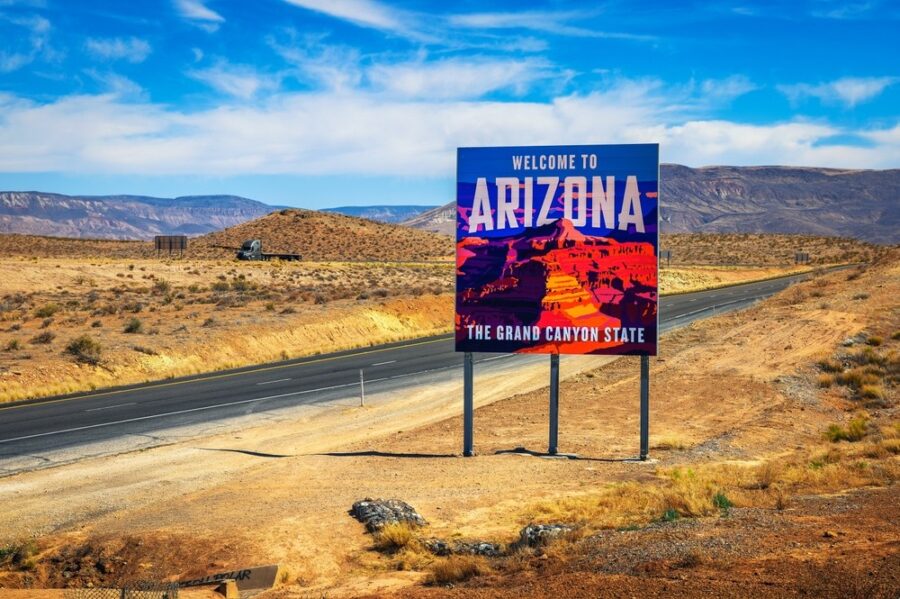
Betting data supplier Beter has expanded its operations in the US after being awarded a supplier license to enter Arizona.
The Event Wagering Supplier License was approved by the Arizona Department of Gaming. Beter can now provide its betting products, including its ESportsBattle and Setka Cup table tennis tournaments, which are currently live with Bet365.

Arizona marks the seventh US state in which Beter now operates, including North Carolina, New Jersey, Florida, Indiana, Iowa, and Colorado.
Beter Chief Executive Gal Ehrlich said, “Securing regulatory approval in Arizona is a pivotal moment in our ongoing US expansion strategy. This marks our seventh state, and we are incredibly proud to continue our trajectory of growth in one of the world’s most dynamic betting markets.
“Our mission has always been to provide operators with the most reliable, high-velocity content available, and receiving the green light from the regulator is a testament to the integrity and quality of our offering.”
Ehrlich continued, “We are thrilled to kick off this journey with Bet365 and look forward to bringing our industry-leading esports and sports content to even more Arizona players in the near future.”
Charlotte Capewell brings her passion for storytelling and expertise in writing, researching, and the gambling industry to every article she writes. Her specialties include the US gambling industry, regulator legislation, igaming, and more.

Dig Deeper
Related stories
 2026/06/02: Beter extends North American presence with Illinois entry
 2025/04/10: Beter expands into the US with New Jersey regulatory approval
 2026/01/13: Beter gains regulatory approval in North Carolina and launches Setka Cup tournaments
 2025/12/15: Beter partners with Meridianbet in Peru and Europe
2026/06/02: Beter extends North American presence with Illinois entry
2025/04/10: Beter expands into the US with New Jersey regulatory approval
2026/01/13: Beter gains regulatory approval in North Carolina and launches Setka Cup tournaments
2025/12/15: Beter partners with Meridianbet in Peru and Europe
The Backstory
Why Arizona matters now
Beter’s entry into Arizona caps a rapid, state-by-state push to plant its fast-betting content in major U.S. markets. The company’s path has been deliberate: prove integrity and reliability to regulators, secure distribution through large operators, then widen the footprint with 24/7 programming that keeps sportsbooks stocked with always-on events. Arizona is the latest proof point in that playbook, arriving after a string of regulatory wins and commercial tie-ups that positioned Beter to scale quickly once approvals arrive.
The company’s model hinges on volume and velocity. Beter supplies real-time data, streams and odds across hundreds of thousands of annual events, anchored by its Setka Cup table tennis tournaments and ESportsBattle-branded esports. By the time Arizona regulators signed off, Beter had already shown U.S. agencies it can monitor integrity and deliver predictable feeds, and it had lined up operator demand that would switch on new states with minimal friction. That sequencing explains why the Arizona launch snapped into place alongside an existing partner and a ready-made content slate.
The expansion also shows how suppliers are adapting to a fragmented U.S. regulatory map. Unlike prediction markets seeking federal oversight, Beter has stayed on the traditional state-by-state licensing route for sports wagering content, stacking approvals to build national reach without running afoul of local rules. The result is a network effect: each new state expands the addressable audience for always-on betting products, making the offering more attractive for books that need consistent engagement beyond marquee sports windows.
New Jersey lit the fuse
Beter’s U.S. run began when New Jersey regulators granted vendor registration, allowing the company to provide real-time data and live streams to licensed operators in the state. The debut centered on Setka Cup, which the Division of Gaming Enforcement cleared to go live, with matches streaming through Bet365’s New Jersey site. That first authorization established the company’s compliance baseline and put a flagship product in front of a sophisticated, high-volume market. Read more in Beter expands into the US with New Jersey regulatory approval.
New Jersey also served as a showcase for Beter’s integrity controls. The firm touts an in-house integrity team overseeing thousands of monthly Setka Cup matches and an event catalog spanning basketball, tennis and esports. Those guardrails were essential to convincing additional states that the tournaments are structured, surveilled and fit within sports wagering frameworks, not gray-area contests. As a launchpad, New Jersey gave Beter credibility and live product metrics to take on the road.
Colorado proved the esports pitch
The next pivotal step came with approval from the Colorado Division of Gaming, which authorized Beter to supply content to licensed sportsbooks. Crucially, Colorado marked the first time U.S. bettors could access the company’s ESportsBattle tournaments, extending the portfolio beyond table tennis. The move tested Beter’s promise of high-velocity, data-rich esports for a state that has been open to innovative betting content. Details are in Beter approved as vendor in Colorado.
Colorado’s sign-off underscored Beter’s emphasis on scale and repeatability. The company says it generates content for roughly 700,000 events annually, and the state’s authorization validated that large-volume model in a jurisdiction known for strict oversight of integrity and fair play. It also demonstrated Beter’s ability to expand operator integrations quickly; by the time of approval, the firm was already positioned to deliver ESportsBattle and Setka Cup through its Bet365 pipeline.
Momentum built in North Carolina
By the time North Carolina’s State Lottery Commission cleared Beter to launch Setka Cup, the company framed the state as its sixth U.S. market and a sign of rising demand for fast-betting content across the country. Beter emphasized a road map that included Ohio, Kentucky and Arizona, telegraphing a near-term wave of additional launches. The North Carolina approval, with distribution already live through Bet365, showed the strategy at work: secure the license, flip the switch with an existing operator, then recruit more books. See Beter gains regulatory approval in North Carolina and launches Setka Cup tournaments.
North Carolina also highlighted Beter’s message to regulators: the product is tightly controlled, continuous and compliant. For states wary of novel betting formats, that framing distinguishes Beter’s offerings from unregulated contests while satisfying a sportsbook’s need for engagement between major U.S. sports seasons. With approvals stacking up, the company could credibly position Arizona as the next logical node in a growing national network.
Distribution muscle beyond the U.S.
Even as it stitched together U.S. market access, Beter broadened its international footprint with operator partnerships designed to amplify reach. The tie-up with Meridianbet extended ESportsBattle and Setka Cup across 18 licensed jurisdictions in Europe, Africa and Latin America, including Peru. That deal signaled Beter’s view that demand for quick-turn, streamable events is global, and that aligning with multi-market sportsbooks accelerates adoption wherever regulatory doors open. More in Beter partners with Meridianbet in Peru and Europe.
The Meridianbet agreement also complements Beter’s U.S. approach. Global distribution helps the company refine scheduling, pricing and integrity procedures at scale, which it can then port into newly opened American states. For operators, the benefit is consistent content that behaves the same way in multiple markets, with known risk profiles and settled liability patterns. That operational consistency lowers friction when regulators evaluate new formats or when sportsbooks plan year-round calendars.
Regulatory crosscurrents raise the stakes
Beter’s state-by-state path contrasts with the federal track gaining attention among prediction market entrants. Kraken’s $100 million acquisition of the CFTC-licensed Small Exchange points to a push for U.S.-native derivatives platforms that could list event contracts under federal oversight. The firm signaled interest in prediction markets, joining players testing whether the Commodity Futures Trading Commission’s framework can support broader event trading. For context, see Kraken eyes prediction market launch with acquisition of CFTC-licensed Small Exchange.
That trend has drawn regulatory friction as states debate whether sports event contracts listed on federally regulated exchanges are still sports wagering. The uncertainty is a reminder that U.S. market structure remains unsettled at the edges, particularly where sports, finance and gaming collide. Beter’s choice to operate squarely within state sports betting regimes reduces legal ambiguity but increases the operational lift of collecting licenses market by market. The bet is that predictable compliance unlocks faster deployment when approvals come through, as Arizona just demonstrated.
Taken together, New Jersey’s launch pad, Colorado’s esports validation, North Carolina’s momentum and international distribution deals set up Arizona as a timely expansion rather than a one-off win. The company’s thesis is straightforward: continuous, monitored, high-velocity content can fill engagement gaps for sportsbooks and travel cleanly through U.S. regulatory channels. With Arizona live and more states on deck, the next test is depth—broadening operator rosters beyond anchor partners and proving that volume can convert to sustained handle across diverse markets.
