


Basketball icon Michael Jordan to join Sportradar founder and DraftKings’ chairman for SBC Summit 2026 keynote

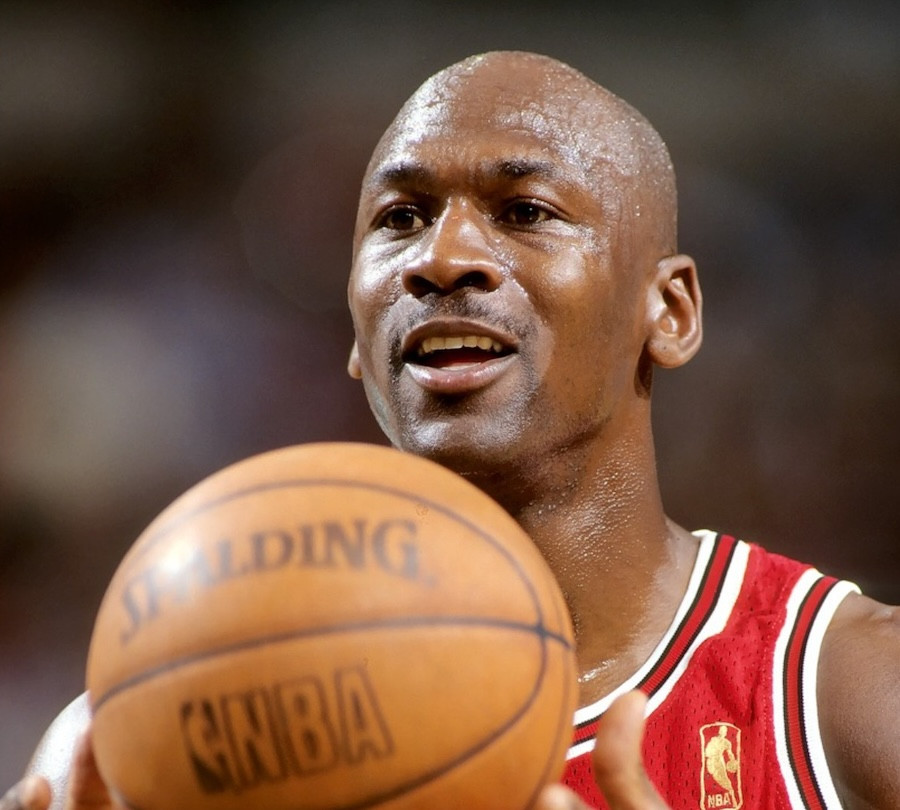
SBC Summit 2026 in Lisbon will feature two of the most respected names in the gaming industry and one of the greatest basketball players to ever grace the hardwoods.
Sportradar Founder and CEO Carsten Koerl and DraftKings Co-Founder, CEO, and Chairman Jason Robins will be joined by Michael Jordan, the basketball icon, investor and philanthropist, in a discussion hosted by Sky Sports News presenter, broadcaster and journalist Kirsty Gallacher during SBC Summit 2026’s keynote session, “Leadership in Sports Business.”

The headline keynote will take place 29 September on the first day of SBC Summit 2026, and will explore the evolution of sports, technology, media, data and fan engagement through the perspective of three leaders who have helped shape the modern sports ecosystem.
“This is the kind of conversation that transcends our industry,” SBC CEO and Founder Rasmus Sojmark said in a statement. “To have Michael Jordan, Carsten Koerl, and Jason Robins on stage together is something truly special. These are individuals who have each changed the way people engage with sports and business in completely different ways — through performance, technology, innovation, and vision. Bringing them together at SBC Summit reflects both the scale of where this industry is today and where it is heading.”
The connection between sports betting and igaming will be examined, highlighting how the sectors are increasingly operating in parallel and in collaboration. Broader leadership themes also will be explored, including building global businesses at scale, decision‑making under pressure, and how leaders navigate change across sports and technology markets.

SBC Summit 2026 is expected to attract more than 40,000 industry professionals from across sports, betting, gaming, payments, marketing, affiliation, technology and media.
Additional details regarding the keynote session, including timing and attendee access, will be announced in the coming months.

Dig Deeper
Related stories



The Backstory
Sports betting’s conference circuit turns to crossover power
SBC Summit 2026’s decision to place Michael Jordan alongside Sportradar founder Carsten Koerl and DraftKings Chief Executive Jason Robins reflects a broader shift in how the betting and gaming industry presents itself. The sector is no longer selling only odds, platforms or regulatory updates. It is trying to frame its future around sports entertainment, data rights, media distribution, technology and the global business of fandom.
Jordan’s role as a keynote participant gives the Lisbon event a rare mainstream sports-business draw. His presence also signals how much value betting and gaming companies now place on figures who can speak beyond wagering mechanics. Jordan represents athletic performance, brand equity, team ownership and commercial influence. Koerl represents the data infrastructure that powers betting markets and sports media products. Robins represents the operator side of the U.S. online betting boom and the push into adjacent categories.
That combination is consistent with SBC’s recent strategy. The events group has been building agendas around leadership, market expansion and the convergence of sports and betting. The Jordan keynote is the most prominent expression of that approach, but it follows a series of moves that show SBC and rival industry conferences competing for attention with speakers who connect gambling to wider business trends.
Robins arrives with DraftKings at an inflection point
Robins’ appearance in Lisbon will come after a period in which DraftKings has been reassessing where its next phase of growth may come from. The company has continued to report large revenue numbers, but the U.S. sports betting market has become more complex as taxes rise, customer acquisition costs remain high and states move at different speeds on legalization.
In the second quarter, DraftKings reported record revenue of $1.51 billion, up 37% from the prior year, along with record net income and adjusted earnings before interest, taxes, depreciation and amortization. Even with those results, Robins used the company’s investor call to signal caution and optionality around new products. He said DraftKings was watching prediction markets closely while weighing regulatory relationships, tribal interests, state rules, capital concerns and reputational risk. That measured stance, described in DraftKings’ record second-quarter update, showed how the company was balancing near-term performance with longer-term uncertainty.
By the third quarter, the tone had shifted. Robins told investors that DraftKings planned to launch DraftKings Predictions in states where it does not operate a sportsbook, describing the product as a way to reach customers outside the current online betting map. The move, covered in Robins’ comments on prediction markets and igaming regulation, suggested DraftKings sees event contracts as both a commercial opportunity and a possible catalyst for more states to reconsider sports betting and igaming legislation.
That backdrop matters for the SBC Summit keynote. Robins is likely to be speaking not only as the head of a large sportsbook operator, but as a public-company executive navigating the boundary between regulated wagering, federally overseen prediction products, media partnerships and new customer channels.
Data, media and fan engagement are now the core product
Sportradar’s presence on the keynote stage underscores how betting’s center of gravity has moved toward data and distribution. Koerl helped build one of the industry’s most important data businesses at a time when live sports information became essential to sportsbooks, leagues, broadcasters and digital platforms. In-play betting, personalized content, risk management and integrity monitoring all depend on data systems that are fast, reliable and trusted by rights holders.
That makes the pairing with Jordan and Robins more than symbolic. Betting operators need data to price markets and engage users. Athletes and leagues need partners that can turn competition into digital products without undermining integrity. Media companies need statistics and live information that deepen viewing. Fans increasingly expect second-screen experiences, real-time insights and betting-adjacent engagement even when they are not placing wagers.
This convergence has been visible across the industry’s event programming. Conferences that once focused mainly on compliance, payments and affiliate marketing now devote more space to technology, leadership, artificial intelligence, brand building and the sports content economy. Robins has also said DraftKings is exploring more internal use of AI to automate manual workflows, indicating that technology is not only a consumer product issue but an operational priority.
The stakes are high because the same tools that drive engagement can draw regulatory scrutiny. Data-rich products raise questions about responsible gambling, advertising, consumer protection and the speed at which customers are encouraged to act. For event organizers, putting leaders from sports, data and sportsbook operations on the same stage allows them to frame those tensions as strategic business questions rather than narrow compliance issues.
SBC’s global agenda follows regulation and growth markets
The Lisbon keynote also fits into SBC’s broader international expansion. The company has been reshaping events around regions where regulation, market access and operator strategy are changing quickly. Its decision to combine its North American and Latin American events into SBC Summit Americas reflected the need to address two connected but distinct regions in one forum.
The Fort Lauderdale event, previewed in SBC’s plan for a combined Americas summit, gave Latin America dedicated programming on Brazil, Caribbean licensing, Peru’s regulatory system, the Andean region, player protection and responsible gambling. SBC founder Rasmus Sojmark said the unified event would allow industry professionals to learn across regions while still focusing on local market conditions.
That approach mirrors the industry’s operating reality. Large suppliers and operators often pursue global scale, but gambling regulation remains local. Brazil’s regulated market, Canadian provincial models, U.S. state-by-state legalization and European compliance regimes create different risks and opportunities. Events that can connect those markets while giving executives practical regulatory intelligence have become more valuable.
Canada is another example. SBC Summit Canada 2026 added a leadership track featuring executives from Bet365, BetMGM, DraftKings and the Ontario Lottery and Gaming Corp. The agenda, detailed in SBC Summit Canada’s new sports betting and igaming leaders track, is set to examine Alberta’s expected launch, the 2026 World Cup and the balance between sportsbook growth and a strong igaming market. That focus shows how SBC is using leadership programming to connect policy shifts, major sporting events and operator strategy.
Star executives and athletes are becoming event assets
SBC is not alone in using high-profile figures to elevate gambling industry conferences. iGB Live tapped former Williams Formula One team principal Claire Williams as a keynote speaker for its first London edition, positioning her experience as relevant to igaming through themes such as data, performance culture, technology adoption and organizational change.
Williams’ appearance, described in iGB Live’s announcement of Claire Williams as keynote speaker, was built around the parallels between Formula One and gaming. Williams led an overhaul of her team’s engineering structure, budget and culture, and the team finished third in the Constructors’ Championship in both 2014 and 2015. The message for gambling executives was clear: high-performance sports organizations can offer lessons in data use, fast decision-making, talent management and innovation.
The Jordan keynote applies that logic on a larger commercial scale. His appeal extends beyond one sport, while his business career provides a bridge from athletic achievement to ownership, investment and brand building. For SBC, the value is not only attendance. It is positioning the summit as a venue where the sports betting industry debates its place inside the wider sports economy.
The Lisbon stage will test the industry’s preferred narrative
The central question for the 2026 keynote is whether the industry can convincingly present sports betting and igaming as part of mainstream sports business while addressing the regulatory and social concerns that accompany growth. DraftKings’ exploration of prediction markets, state tax pressures, AI-enabled operations, sports data commercialization and media partnerships all point to a sector seeking new paths as mature markets become more competitive.
Jordan, Koerl and Robins embody different parts of that equation. Jordan brings the athlete, brand and fan relationship. Koerl brings the data layer that makes modern sports engagement measurable and monetizable. Robins brings the operator perspective from one of the companies most closely associated with the U.S. betting expansion.
For SBC, assembling those figures is a statement about where it believes the industry is heading: toward a more integrated sports, media, data and gaming marketplace. The commercial opportunity is large, but so are the constraints. Regulation, taxation, integrity, responsible gambling and public trust will determine how far that integration can go.
