


ArenaPlus renews sports betting deal with two volleyball leagues

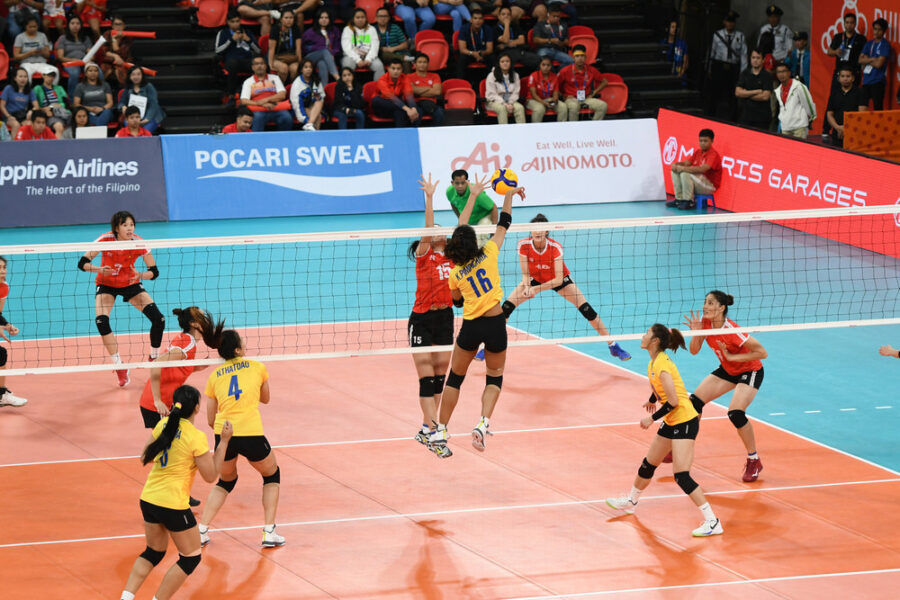
Philippine sportsbook ArenaPlus has renewed its sports betting deal with the Premier Volleyball League and Spikers’ Turf for a third consecutive year.
Under the deal, ArenaPlus will continue its involvement in both competitions and has been designated as the official sportsbook for both tournaments.

Jasper Vicencio, representing ArenaPlus, attended the announcement on March 26 alongside Premier Volleyball League Control Committee Chairman Sherwin Malonzo and other officials.
Vicencio said that the sportsbook was always looking to improve Philippine sports, adding, “Through this partnership, ArenaPlus is proud to elevate the sports entertainment experience surrounding volleyball. Whether inside the arena or among fans cheering from different parts of the country, the energy of the game continues to unite people and create moments that fans truly live for.”
“We extend our heartfelt appreciation to ArenaPlus for its partnership with the Premier Volleyball League and the Spikers’ Turf. Your continued investment and confidence in the PVL and Spikes’ Turf play a vital role in elevating the league’s growth, enhancing fan engagement, and strengthening the platforms for our athletes,” Malonzo added.

The Premier Volleyball League and Spikers’ Turf have seen increasing attendance and viewership in recent years, reflecting broader interest in volleyball across the Philippines. ArenaPlus said its mission is to make it as accessible as possible to Filipinos.
In January, DigiPlus, which owns PAGCOR-licensed ArenaPlus, launched a series of online casino games with boxer Manny Pacquio, which were made available on its igaming sites, including ArenaPlus.

Dig Deeper
Related stories
 2026/04/15: Philippine sportsbook ArenaPlus becomes exclusive partner of the NBA
 2026/04/21: ArenaPlus to combat match-fixing via integration with Sportradar Integrity Exchange
 2025/06/20: Dr. Laila Mintas to join board of European T20 Premier League partner Rules X
 2026/04/09: Sportradar signs deal with Liga Nacional de Basquete
2026/04/15: Philippine sportsbook ArenaPlus becomes exclusive partner of the NBA
2026/04/21: ArenaPlus to combat match-fixing via integration with Sportradar Integrity Exchange
2025/06/20: Dr. Laila Mintas to join board of European T20 Premier League partner Rules X
2026/04/09: Sportradar signs deal with Liga Nacional de Basquete
The Backstory
Inside the wager on volleyball’s momentum
ArenaPlus’ third straight deal with the Premier Volleyball League and Spikers’ Turf lands at the intersection of surging local interest in volleyball, rising expectations for regulated betting, and a broader global pivot toward data-fueled sports engagement. The extension underscores how sportsbooks are embedding deeper into domestic competitions to capture loyal fan bases and year-round schedules, while leagues trade official designations and activation rights for investment and visibility.
The bet is that volleyball’s expanding footprint in the Philippines can deliver reliable customer acquisition and retention, complementing higher-profile properties that spike during marquee seasons. It also reflects a playbook spreading across sports: formalize betting partnerships, lean into in-venue activations and digital touchpoints, and position “official” status as a differentiator in a crowded marketplace. The stakes are reputational and regulatory, not just commercial. ArenaPlus and its parent, DigiPlus, must court fans and officials without triggering backlash in a policy climate where tolerance for gambling visibility is being actively renegotiated.
Regulatory crosswinds at home
DigiPlus has moved to preempt policy risk by publicly supporting tighter rules for licensed operators while warning against an outright ban. In late March the company said it backs “increased regulation” and is updating its marketing practices to comply with new guidance, including billboard limits, while arguing that prohibition would drive players to unregulated sites and jeopardize tens of thousands of jobs. The stance, detailed in DigiPlus backs stronger regulation in the Philippines igaming market, signals how operators aim to stay onside with the Marcos administration and regulators by highlighting existing controls such as KYC, deposit caps, cooling-off periods and self-exclusion.
That context matters for a volleyball tie-up that depends on public sentiment as much as on handle. Volleyball’s fan base skews community driven and grassroots. Any misstep in advertising tone or placement could invite scrutiny. Conversely, consistent adherence to responsible gambling norms can bolster the social license needed for long-run partnerships with domestic leagues that pride themselves on accessibility and family appeal. DigiPlus’ recent product moves, including a January rollout of online titles with Manny Pacquiao across its sites, show the company pairing mainstream celebrity endorsements with a message of compliance. That dual track will be tested as enforcement tightens.
Data becomes the currency of trust
Globally, rights holders and operators are rewriting how data underpins betting and broadcast experiences. The European Leagues Association’s multi-year pact with Genius Sports extends official collection and distribution across 8,000 matches in 46 competitions and brings the AI-driven GeniusIQ platform into stadiums for real-time tracking and analysis. The deal, covered in Genius Sports lands data rights deal with European Leagues, centralizes control of official data and ties fan tools, performance insights and betting integrity to a single provider.
The implications reach far beyond Europe. Exclusive data channels help regulators and leagues monitor anomalies, while sportsbooks market faster, richer feeds as a competitive edge. For Philippine volleyball and ArenaPlus, the direction of travel is clear: standardized, official data that supports risk management and credible markets. Even if the local ecosystem is earlier in its evolution, the expectations set by football’s top tiers will inform how fans, advertisers and watchdogs assess the maturity of betting-linked partnerships in other sports. Operators aligned with official data strategies may find it easier to maintain institutional support.
When fees and integrity collide
As betting becomes a staple of sports revenues, fee structures are drawing fire. In Australia, a push by Football Australia to overhaul product fees has triggered bookmakers including Tabcorp, Sportsbet and Entain to pull state-level soccer from their boards. Industry sources warned the proposed model could amount to nearly 30% of revenue on some games, well above rates for rival codes. The standoff, detailed in Bookmakers drop state leagues in Football Australia betting fee dispute, comes as Victoria’s regulator probes the sport’s integrity framework after match-fixing cases.
The episode is a reminder that partnerships can unravel if commercial terms or compliance expectations get out of sync. Volleyball’s governing bodies and ArenaPlus are far from that brink, but the Australian dispute offers a cautionary template: align on pricing, integrity protocols and data governance early, or risk abrupt market withdrawals that confuse fans and dent league finances. For domestic sports seeking stable sponsor income, predictability in fee design and clear integrity accountability are now part of the basic package.
Mobile betting and prediction markets redraw the field
In the United States, lawmakers are still arguing over how much new money regulated wagering can really deliver. Mississippi’s House is pressing for mobile betting for a third straight year and would earmark all state online revenue to the public pension system. Backers cite a sprawling illegal market and project up to $80 million in annual taxes. Skeptics peg the figure closer to $30 million and say even that would be a rounding error against long-term liabilities. The push and counterpoints are laid out in Mississippi renews push for mobile sports betting in bid to plug pension shortfall.
At the same time, sports properties are experimenting with prediction markets as fan-engagement tools distinct from traditional wagering. Major League Soccer named Polymarket an official partner to surface “real-time collective sentiment” around matches and storylines and to integrate prediction features into live experiences. The league says safeguards and independent monitoring will protect integrity. Details appear in Polymarket becomes the official prediction market of MLS and Leagues Cup. The Mississippi debate even notes how prediction platforms can dilute projected sportsbook revenue. For rights holders, the lesson is to diversify engagement while protecting core economics and compliance.
What it means for Philippine volleyball
The ArenaPlus renewal signals that local leagues can convert fan energy into durable sponsorships despite tougher scrutiny. But the bar is rising. Regulators want clearer guardrails. Fans expect responsible messaging. Data standards are moving toward official, exclusive feeds tied to integrity services. Fee fights in other markets show how quickly inventory can disappear if the math fails. And the line between betting and “prediction” products is blurring in ways that can reshape revenue and risk.
For ArenaPlus and its volleyball partners, the path forward is execution: deliver fan-first activations that respect new ad limits, embed robust integrity monitoring, and prepare for an ecosystem where official data and transparent pricing are nonnegotiable. If they get it right, volleyball can continue to convert packed arenas and rising viewership into sustainable commercial value, and the Philippines can point to a model of how domestic sports and regulated betting coexist under firmer rules.
