


Analyst reiterates faith in DraftKings

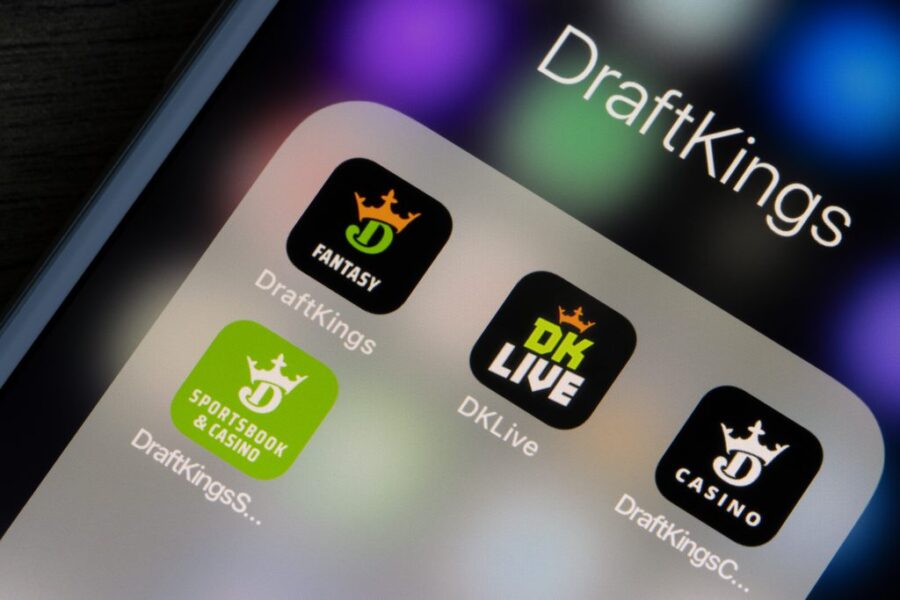
DraftKings is, according to Macquarie analyst Chad Beynon, “one of the most compelling structural growth stories in gaming.” He published his views in a May 8 investor note.
In making his case, Beynon cited DraftKings’ leadership in both online sports betting and igaming. He also pointed to the breadth of its product offerings, now including event contracts.

“The predictions product is fast evolving,” Beynon reported, “with market making already launched and the proprietary exchange to follow in the coming weeks.” Along with the exchange, he added, would come an increase in customer-acquisition costs.
Said Beynon, “We have seen this playbook before, when upfront investment secures the long-term growth runway”. He placed an ‘Outperform’ rating on the stock, along with a price target of US$38 per share. DraftKings was trading at US$25.29 per share at press time.
The analyst noted that DraftKings had beaten its forecasts for revenue and cash flow in the first quarter of 2026. US revenues of US$1.6 billion had come in 1% higher than expected. Cash flow was U$S168 million, an 8% beat. Both numbers represented double-digit improvements from 2025’s first quarter.

“The results were driven by efficient customer acquisition, healthy customer engagement, and higher sports net margin,” Beynon explained. He added that handle from OSB was up 1.5% but that revenue had leapt 24%, on the strength of tighter hold. iGaming revenues were up 9%.
DraftKings’ management was of the view that cash flow would have been US$200 million were it not for one-time items. These included the cost of going live in Arkansas and that of launching a prediction-market product.
The company’s event-contract investment will, it believes, be between US$200 million and US$300 million. In addition, it expects at least US$700 million in annual cash flow, perhaps as much as US$900 million. It guided to revenue of US$6.5 billion to US$6.9 billion in 2026.
David McKee is an award-winning journalist who has three decades of experience covering the gaming industry.

Dig Deeper
Related stories




The Backstory
Why optimism endures even as the terrain shifts
DraftKings’ latest beat on revenue and cash flow, and Macquarie’s framing of the company as a structural growth story, land in a market that has been recalibrating expectations all year. Analysts have juggled two narratives: surging engagement and higher structural hold on one side, and mounting tax pressure and a fast-evolving prediction-market landscape on the other. In recent months, several research shops have mapped the fault lines. Macquarie’s sector work sketched a constructive setup for online gaming, with operators capturing outsized hold and igaming outpacing broader equities. Jefferies and J.P. Morgan, meanwhile, have detailed how state taxes, new state launches and event-contract experimentation could complicate DraftKings’ near-term cash generation without derailing the longer arc.
Macquarie’s late June note argued that online operators were benefiting from a run of strong hold, pointing to second-quarter levels near 11% and calling out FanDuel and DraftKings among those likely to post record rates. The firm said igaming shares were climbing three times as fast as the S&P 500, and it flagged DraftKings as a top pick given its U.S. exposure and market position. That backdrop helps explain why bulls see room for investment in new products, including prediction markets, even if it raises customer-acquisition costs in the short run. The sector view is laid out in Macquarie’s call that igaming will outperform this year.
Tax math and the cash-flow squeeze
The most immediate headwind is tax policy. Jefferies’ David Katz has been explicit that higher levies in key states will shave DraftKings’ cash flow in the back half of the year and into 2026. In an early July note, Katz estimated that increases in Illinois, Louisiana, New Jersey and Maryland would knock about $25 million from third- and fourth-quarter cash flows apiece, with a Missouri launch adding another $10 million drag in the fourth quarter. He modeled break-even cash flow in the third quarter and $460 million in the fourth, or $775 million for the year, a notch below Street consensus and under DraftKings’ high-end guide. The analysis is detailed in Jefferies’ view that higher taxes will crimp DraftKings’ earnings.
Looking to 2026, Katz projected that DraftKings’ player surcharge would blunt Illinois’ handle tax, but he still penciled in an $80 million cash-flow hit from other state hikes. He also reserved $100 million as a placeholder for prediction-market costs. That framing echoes Macquarie’s sector note, which put tax debates at the center of investor attention and anticipated pressure from Missouri’s December go-live and a possible New Jersey increase to as high as 22%. The contrast between strong operating momentum and a heavier tax load is the crux of the current investment debate. Bulls argue the user base, product breadth and higher in-play penetration can shoulder the impact. Bears focus on a thinner cushion for errors during NFL swings.
Prediction markets: competitor or complement
The rise of event contracts has become the other swing factor. The latest flashpoint arrived when Kalshi posted heavy volumes around an NFL doubleheader, rattling sports-betting stocks. Katz responded that the market was extrapolating too much from a narrow product set. He put a $54 target on DraftKings after a selloff and argued that prediction-market economics are not comparable to online sports betting. His note emphasized that Kalshi’s take rates near 2% trail DraftKings’ roughly 7% sports margin, and that Kalshi’s NFL parlay experiment lacked in-play depth and customization. Those points are laid out in Jefferies’ defense of DraftKings despite a stock dip.
J.P. Morgan’s Daniel Politzer made a similar case, saying the market “shot first” on fears of share loss and margin compression. He wrote that regulatory clarity will be decisive, and he outlined two paths: curtailment of sports-style event contracts or a greenlight that invites OSB leaders to bring superior tech and brand power. He also questioned whether a peer-to-peer exchange can scale parlays without deep capital to absorb sports volatility. Politzer’s analysis is in J.P. Morgan’s take that prediction-market fears are overhyped.
User data supports the idea that these products tap a distinct, younger-skewing audience with heavy overlap into OSB and daily fantasy. Truist’s Barry Jonas found that only 7% of prediction-market users are 50 or older, and that 74% also play OSB or DFS, with sports the leading subject of wagers. The survey suggests OSB operators can use event contracts to expand databases in states without legal sports betting and position for conversion once markets open. Read more in Truist’s profile of prediction-market users.
Volatility, brand power and the Street’s reset
The tug of war has produced sharp, sometimes reflexive moves in gaming stocks. Politzer noted recent double-digit declines for DraftKings and Flutter tied to Kalshi headlines, while reminding investors that NFL outcomes can swamp structural hold in a single quarter. That resonates with Katz’s observation that DraftKings’ third-quarter New York handle was up 12% with gross gaming revenue up 14%, and that trends outside the state were stronger, even as the market priced in the prediction-market scare. The implication: scale, product breadth and brand remain moats, but weekly NFL variance and headlines can mask underlying share gains.
Against that backdrop, operators are recalibrating spend. Event contracts and proprietary exchanges require upfront investment but could create new engagement loops and cross-sell opportunities. Jefferies and Macquarie both acknowledge that customer-acquisition costs will rise as products proliferate. The Street will watch whether incremental bettors acquired through prediction venues convert to higher-ARPU OSB or igaming, and whether those users stick through the NFL calendar and into the NBA and MLB seasons. The tax layer raises the bar for payback periods and puts a premium on marketing efficiency.
What matters next for the thesis
Three markers will decide whether the bullish growth narrative holds. First, tax glide paths. If states stabilize rates after this year’s resets, modeling gets cleaner and surcharges can be fine-tuned to protect margins without denting growth. The push-pull is captured in Jefferies’ tax and cash-flow framework and the sector lens in Macquarie’s outlook for igaming outperformance.
Second, regulatory clarity on event contracts. A definitive line between prediction markets and sports betting would either cap competitive encroachment or open a lane for OSB leaders to deploy parity products at scale. Politzer argues either outcome is manageable for incumbents given their technology and brands, as laid out in J.P. Morgan’s analysis.
Third, operating execution through peak sports months. Macquarie expects higher structural hold, faster in-play adoption and new-state legalization to keep lifting online GGR above expectations. If elevated hold persists into football and basketball seasons, it can offset taxes and new-product spend. Katz’s stance that prediction-market volumes are still a fraction of DraftKings’ handle underscores the importance of scale during volatility, as argued in Jefferies’ post-selloff note.
The through line across recent research is consistent. Taxes will pinch. Event contracts will evolve. But the sector’s demand drivers—product depth, in-play, parlay sophistication and igaming mix—are intact. That is the backdrop for investors weighing near-term cash-flow friction against a longer runway that, for now, still tilts toward growth.
