


US senator targets prop bets and offshore sportsbooks

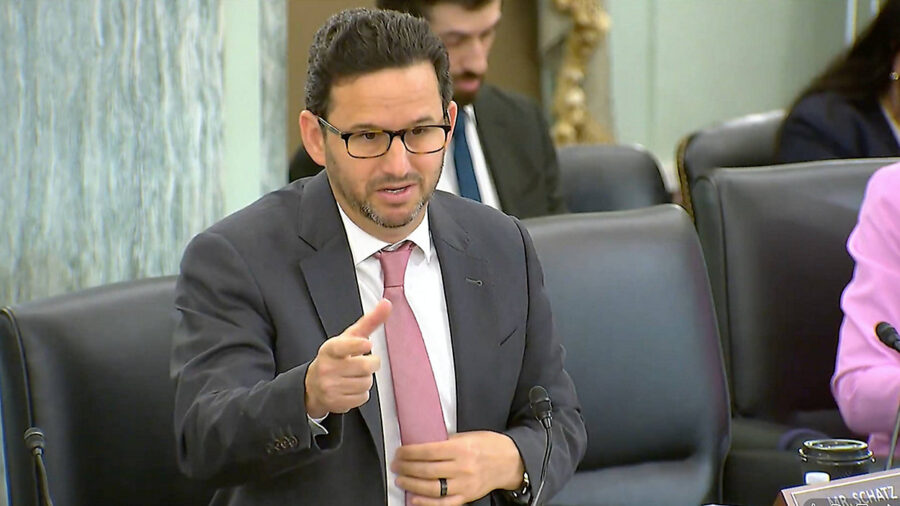
US Senator Brian Schatz has said he is preparing legislation to tighten oversight of sports betting by targeting micro prop bets and illegal offshore sportsbooks, according to Spectrum News.
Schatz said the bill would ban so-called micro prop bets, which are wagers placed on highly specific in-game events such as the outcome of a single pitch, play, or possession.

During a Senate Commerce subcommittee discussion on sports betting, Schatz had strong words for micro bets, saying, “the more micro you get, the more insidious it is, from an integrity standpoint. But it also taps into the addictive, manic, algorithmically driven problem that we’re dealing with. I think this particular problem is especially acute and needs to be dealt with immediately.”
The Hawaii Democrat also wants to give the Federal Trade Commission more authority to pursue companies that knowingly support illegal offshore sportsbooks operating in the US. Those platforms often bypass state regulations, tax requirements, and consumer protections while continuing to accept bets from American users.
In a statement on sports journalist Pablo Torre’s podcast, Pablo Torre Finds Out, Schatz said that sports betting had grown into a multi-billion-dollar industry that has ultimately changed the way fans interact with sports.

“But when every in-game moment and outcome can be wagered on it creates real risks,” Schatz said. “Integrity is essential to competitive sport, and recent allegations about gambling in the NBA and MLB have made it clear we need federal protections.”
States also have introduced legislation to limit prop bets. In March, Kentucky officials filed House Bill 904, which would simultaneously raise the betting age and ban prop bets.

Dig Deeper
Related stories
 2025/08/01: Ohio governor calls for sports betting changes after Major League Baseball investigation
 2026/02/24: Utah lawmakers advance bill to ban prop bets
2025/11/18: Ohio pauses updates to sports betting regulation as MLB limits prop wagers
2026/02/24: Utah lawmakers advance bill to ban prop bets
2025/11/18: Ohio pauses updates to sports betting regulation as MLB limits prop wagers
 2025/11/24: Maryland lawmaker calls for reconsideration of micro bets
2025/08/01: Ohio governor calls for sports betting changes after Major League Baseball investigation
2026/02/24: Utah lawmakers advance bill to ban prop bets
2025/11/18: Ohio pauses updates to sports betting regulation as MLB limits prop wagers
2025/11/24: Maryland lawmaker calls for reconsideration of micro bets
The Backstory
Federal pressure builds around in-game wagers
Sen. Brian Schatz’s push for federal legislation marks a sharper turn in the U.S. sports betting debate: away from whether states should legalize wagering and toward whether some products should exist at all. His focus on micro prop bets targets the fastest, most granular form of sports betting, where consumers can wager on a single pitch, possession or play. Those bets sit at the intersection of integrity risk, compulsive use and technology-driven engagement, three concerns that have grown as online sportsbooks have expanded across the country.
The proposal also reflects frustration with a regulatory structure built largely state by state. Since the Supreme Court opened the door to legal sports betting in 2018, states have set their own rules on tax rates, advertising, eligible bet types and enforcement. That approach created a large regulated market, but it also left gaps. Offshore sportsbooks still take U.S. customers, and prop betting rules vary widely. Schatz’s plan to give the Federal Trade Commission more authority over companies that knowingly support illegal offshore operators would move part of that fight to the federal level.
The timing is significant. Allegations and investigations in major U.S. leagues have given lawmakers a clearer political basis to argue that wagering on discrete in-game outcomes poses risks beyond ordinary betting. Micro markets can be settled quickly, can be repeated throughout a game and may involve events controlled by a small number of athletes or officials. That makes them commercially attractive to sportsbooks but troubling to regulators focused on manipulation, harassment and problem gambling.
States have already started drawing lines
Schatz is not acting in a vacuum. State lawmakers and regulators have begun testing limits on the sports betting industry, especially around prop bets and online engagement. In Massachusetts, state Sen. John Keenan has advanced a broader public health framework through the Bettor Health Act, which would raise the online sportsbook tax rate from 20% to 51%, restrict advertising during sports events and ban in-play betting and prop bets. The proposal, detailed in Massachusetts Sen. John Keenan’s plan for a higher online sportsbook tax rate, frames sports betting less as entertainment policy and more as a health and consumer-protection issue.
Keenan’s bill would also require more contributions to the state’s Public Health Trust Fund, impose affordability checks after certain spending levels and require anonymous data sharing for research into problem gambling. That package shows how concerns over prop betting are becoming part of a wider critique of online sportsbooks. Lawmakers are no longer focused only on age verification or licensing. They are asking whether product design, advertising volume and data-driven betting prompts can push consumers toward harmful behavior.
Massachusetts already bans college player prop bets, a common restriction in legalized states. The proposed expansion to in-play and prop betting would go further by limiting the very features that distinguish digital wagering from traditional pregame sports betting. If adopted, it would offer a state-level model for the kind of restrictions Schatz is now discussing federally.
Athlete protection becomes a central argument
The case against prop bets has gained traction because it is increasingly tied to athlete safety. The NCAA has been among the most visible institutions pressing states to restrict college player props, arguing that wagers tied to individual performance can fuel harassment. In its expanded data partnership with Genius Sports, the NCAA added a condition blocking sportsbook betting on negative props tied to NCAA data. That development, covered in the NCAA’s move to protect athletes from negative prop bets, shows how sports governing bodies are using commercial contracts as well as lobbying to shape betting markets.
Negative props can include bets on an athlete failing to reach a statistical mark or making a mistake. Those markets create a direct financial incentive for some bettors to root against individual players, often young athletes with limited ability to shield themselves from abuse. The NCAA has cited research showing widespread online harassment of college athletes, with betting-related abuse forming a meaningful share of the problem. Women’s athletes and March Madness players have been frequent targets.
That athlete-safety argument has moved beyond college sports. In Ohio, Gov. Mike DeWine urged regulators to prohibit prop bets after two Cleveland Guardians pitchers were placed on leave during a gambling investigation. He cited threats to athletes and the integrity of competition, saying the benefits no longer justified the harm. The episode helped elevate prop betting from a niche regulatory issue to a mainstream political dispute involving professional sports, tax revenue and personal safety.
Ohio shows the political resistance
Even as calls for restrictions grow, there is clear resistance from lawmakers who view prop betting as a legal consumer product and a meaningful source of state revenue. Ohio Rep. Brian Stewart opposed DeWine’s push, arguing that adults should remain free to place such wagers and that sports betting has generated substantial tax revenue since its January 2023 launch. His position, outlined in the Ohio debate over Gov. Mike DeWine’s effort to ban prop bets, captures the central conflict facing any federal proposal.
For states that legalized sports betting, prop bets are not a marginal feature. They help drive engagement, particularly during live games, and can account for a significant share of sportsbook activity. Removing them could reduce taxable revenue and weaken the legal market’s ability to compete with offshore sites that face no such limits. That argument is likely to be central for industry opponents of Schatz’s bill.
Ohio also illustrates how quickly the politics can shift. College player prop bets are already banned in the state, reflecting a compromise that many jurisdictions have accepted. But DeWine’s move against professional props would broaden the restriction to markets involving adult professional athletes and major leagues. Stewart’s opposition suggests that even in states where integrity concerns are acknowledged, lawmakers may split over whether prohibition is the right tool.
Offshore operators complicate enforcement
The second half of Schatz’s proposal addresses a persistent weakness in U.S. gambling policy: illegal offshore sportsbooks. These platforms often operate outside state licensing regimes, avoid U.S. taxes and may offer products banned in regulated markets. If states or Congress restrict micro prop bets, offshore operators could use those same markets to attract bettors unless enforcement improves.
State regulators have been active but constrained. The Michigan Gaming Control Board recently issued 12 cease-and-desist letters to offshore operators accused of targeting residents with unlicensed casino and sportsbook products. The action, described in Michigan’s crackdown on 12 offshore gambling sites, emphasized the consumer risks of unregulated platforms, including the absence of dispute resolution, fund protections and responsible gambling safeguards.
Nevada has taken a legislative route. State Sen. Rochelle Nguyen introduced a bill to allow harsher penalties against operators violating online gaming laws, including financial penalties beyond the current $50,000 maximum fine. The effort, covered in Nevada’s proposal for stricter fines on offshore operators, drew support from gaming equipment makers, casino interests, problem gambling advocates and business groups. The American Gaming Association has estimated that unregulated offshore betting costs licensed operators more than $17 billion in lost revenue annually.
Those state actions show why Schatz is looking to federal tools. Offshore enforcement often requires pressure on payment processors, affiliates, advertisers, technology vendors and other intermediaries. Giving the FTC more authority could make it harder for illegal operators to reach U.S. customers, though it would not eliminate the jurisdictional challenges posed by companies based abroad.
The stakes for the regulated market
The debate now facing Congress is not simply whether sports betting should be legal. It is whether a regulated market can remain commercially viable while removing products lawmakers view as unusually risky. Sportsbooks, leagues, data companies, state regulators and public health advocates all have different incentives. Operators want broad menus and live betting engagement. Leagues want fan interest but also integrity protections. States want tax revenue without scandal. Lawmakers want safeguards that can be defended when investigations or athlete threats become public.
Schatz’s proposal would test whether federal standards can coexist with state-led legalization. A ban on micro prop bets would set a national floor for one category of wagering, while enhanced action against offshore books would support state markets by targeting illegal competitors. But restrictions could also push some high-frequency bettors toward the very offshore sites regulators are trying to suppress if enforcement lags.
The broader trajectory is clear. Early legalization focused on bringing sports betting into the open. The next phase is about deciding which parts of the market are too vulnerable to manipulation, abuse or addiction to be left to state-by-state discretion. Schatz’s bill enters that debate with momentum from state proposals, athlete-protection campaigns and offshore enforcement actions. Its prospects remain uncertain, but it signals that the federal government may no longer be content to watch the sports betting market evolve from the sidelines.
