


UK’s Midnite expanding into Canada with appointment of former FanDuel exec as General Manager

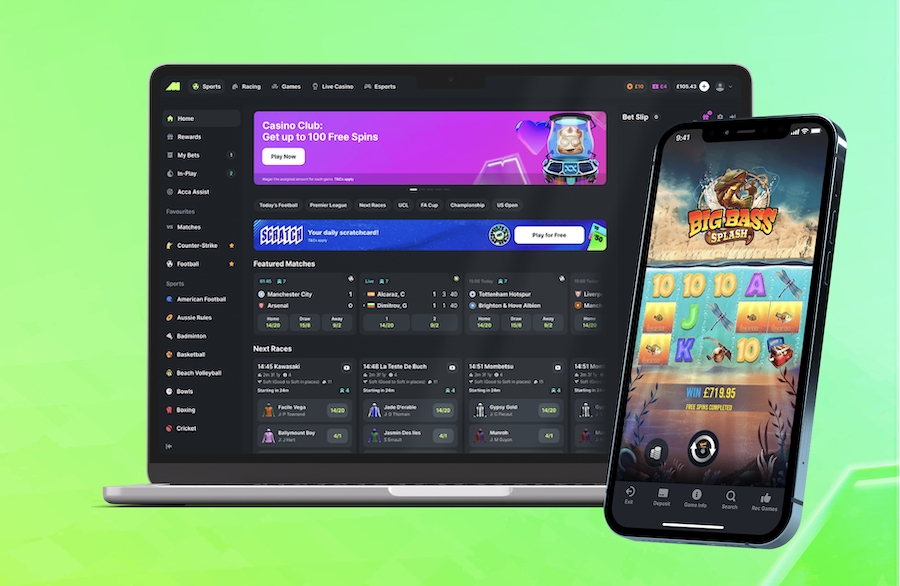

UK-based igaming and sportsbook operator Midnite is expanding beyond the UK and Ireland into Canada, appointing former FanDuel Canada executive Dale Tang as General Manager.
The group notes that Tang is going to lead Midnite’s Canada market strategy and oversee its plans to launch the brand in regulated Canadian markets. Currently only Ontario and Alberta offer legal igaming.

Speaking of the appointment, Midnite Founder and CEO Nick Wright noted, “Dale’s appointment marks an exciting milestone in Midnite’s journey to disrupt the industry. The regulated Canadian market is a huge opportunity for us to expand beyond the UK and Ireland, and bringing Dale on board is a clear signal of our ambition to build a truly localized, next-generation sports betting and casino experience that puts player protection at the front and center.”
The executive furthered that Midnite is aiming to be a “next-generation tier-1 global operator.”
Tang joins Midnite after leading FanDuel’s entry into Alberta, which launched on midnight of 13 July. Data from Citizens JMP Securities indicate annual revenue from Alberta’s transition to a competitive regulated market could reach CA$700 million (US$505 million)1 CAD = 0.7213 USD
2026-08-26Powered by CMG CurrenShift.

Speaking of his new role, Tang noted “The opportunity to build something new in a market I know and care deeply about was simply too exciting to pass up. Midnite has established itself as a brand with a clear vision on how to deliver an exciting proposition for players. I’m looking forward to being a part of the team that helps establish Midnite as a responsible and trusted brand that resonates with Canadian consumers.”
Midnite’s expansion has also included multiple funding rounds, gathering over US$65 million in funding to date. The group is supported by Raine Group, Discerning Capital, Venrex, Makers Fund and Play Ventures.

Dig Deeper
Related stories
 2026/07/09: FanDuel entering Alberta market before 13 July launch, with sign-ups already available
 2026/06/30: Alberta Minister: igaming market will generate CA$76 million in first year tax revenue
2026/07/13: Alberta’s igaming market officially launches with Caesars, DraftKings and more
2026/06/30: Alberta Minister: igaming market will generate CA$76 million in first year tax revenue
2026/07/13: Alberta’s igaming market officially launches with Caesars, DraftKings and more
 2026/07/10: DraftKings to launch sportsbook and online casino in Alberta on market launch day
2026/07/09: FanDuel entering Alberta market before 13 July launch, with sign-ups already available
2026/06/30: Alberta Minister: igaming market will generate CA$76 million in first year tax revenue
2026/07/13: Alberta’s igaming market officially launches with Caesars, DraftKings and more
2026/07/10: DraftKings to launch sportsbook and online casino in Alberta on market launch day
The Backstory
Canada’s second open market sets the stage
Midnite’s move into Canada comes as the country’s regulated online gambling map is beginning to widen beyond Ontario, creating a rare opening for newer operators to challenge established sportsbook and casino brands. The U.K.-based company’s appointment of former FanDuel Canada executive Dale Tang as general manager is tied directly to that shift: Alberta has become the second Canadian province to open a competitive regulated igaming market, giving operators a new route into a country where access remains limited by provincial rules.
For years, Ontario has been the main proving ground for private-sector online betting and casino operators in Canada after launching its regulated market in April 2022. Alberta’s decision to follow with its own model has changed the growth equation. The province’s launch created a fresh contest among global sportsbooks, Canadian brands and casino operators seeking customers in a market analysts have projected could generate CA$700 million in annual revenue.
That context helps explain why Midnite is positioning its Canadian expansion as more than a single-market test. The company is entering at a moment when operators are racing to secure regulatory footing, local leadership and brand recognition before Alberta’s market matures. Tang’s background, including work tied to FanDuel’s Alberta entry, gives Midnite an executive familiar with both the competitive opportunity and the practical demands of launching in a newly regulated province.
Alberta’s framework followed Ontario, but with local priorities
Alberta did not simply copy Ontario’s model. Provincial officials emphasized that the market would include its own policy design, revenue-sharing approach and responsible gambling funding. In the run-up to launch, Dale Nally, Alberta’s minister of service and red tape reduction, said the province expected the regulated online gaming market to generate CA$76 million in first-year tax revenue, while directing attention to player protection and treatment funding.
Under the province’s structure, 80% of net igaming revenue is allocated to operators and 20% is retained by the government. From operator revenue, 2% is directed to First Nations and 1% to social responsibility initiatives. That formula was central to the province’s pitch: Alberta wanted to attract a broad group of operators while showing that legalization would bring activity into a regulated environment with dedicated funding for harms and consumer safeguards.
The province created the Alberta iGaming Corporation to oversee the market, with Alberta Gaming, Liquor and Cannabis handling licensing and approvals. As Alberta officials outlined first-year tax expectations, the scale of early operator interest became clear. Before launch, 28 online gambling operators had signed up, representing more than 40 gaming brands. That roster included large U.S. sportsbooks, international operators and Canadian companies preparing to compete for share from the opening day.
Major sportsbooks moved before the starting gun
The Alberta opening quickly became a test of speed and preparedness. FanDuel, DraftKings, Caesars and other major brands lined up their launches before the market opened at midnight on July 13. Their early moves demonstrated how important timing was: operators wanted account registrations, supplier content, local promotions and responsible gambling partnerships in place before bettors and casino players could legally migrate to private platforms.
FanDuel was among the most visible entrants. The operator allowed eligible Alberta residents to set up accounts before betting and casino services became available, while pairing the launch with content and sports partnerships. Its Alberta plan included an exclusive arrangement with Light & Wonder to bring the Huff N’ Puff slot franchise to local online casino players, as well as an expanded Canadian Football League partnership covering Alberta and online casino activity. As FanDuel prepared sign-ups before Alberta’s launch, it emphasized both entertainment and community engagement.
DraftKings also committed to launch on market day with its sportsbook, online casino and Golden Nugget Online Gaming brand. The company framed Alberta as part of its broader North American footprint, adding the province as its 34th jurisdiction for DraftKings Sportsbook. It also sought to connect the launch to sports demand, including World Cup-related events in Calgary and a CA$150,000 donation to Food Banks Alberta. The company’s plans, detailed when DraftKings set its Alberta launch-day strategy, underscored the importance of combining product breadth with local market activation.
Launch day confirmed the depth of competition
When Alberta’s regulated online gambling market officially opened, the competitive field was broader than a handful of sportsbook brands. AGLC had approved registrations across multiple categories, including 58 critical gaming systems providers, 50 operators, 14 platform providers and 15 igaming goods or service suppliers. That infrastructure matters because online gambling markets depend not only on consumer-facing brands, but also on the technology, payment, content and compliance systems that support them.
Caesars entered with three platforms: Caesars Sportsbook & Casino, Caesars Palace Online Casino and Horseshoe Online Casino. DraftKings launched its sportsbook and casino products alongside Golden Nugget Online Gaming. Pure Canadian Gaming, a land-based Alberta casino operator with seven properties, also launched an online casino app and website, signaling that local gambling companies did not intend to leave the digital market to global rivals.
Suppliers also moved quickly. Pragmatic Play entered after receiving certification for slot games, live dealer titles and table games. The market’s opening marked a transition away from a framework centered on the government-operated Play Alberta platform toward a competitive model with many approved operators and vendors. As Alberta’s market launched with Caesars, DraftKings and other participants, the province immediately became the main Canadian battleground outside Ontario.
Canadian positioning became a competitive asset
Alberta’s opening has not been only a contest among global gambling giants. Canadian identity, local staffing and market-specific product positioning have become part of the battle for consumer trust. PointsBet Canada, for example, enabled registration in Alberta while emphasizing its Canadian-focused sportsbook and online casino products, local expertise and responsible gaming tools. Eligible residents were directed to pre-register at PointsBet Canada’s website for launch notifications and offers.
The company’s message reflected a broader strategic point: in a newly regulated market, operators must persuade customers to move from offshore sites, lottery products or rival licensed brands into their ecosystems. That requires more than odds and casino content. It requires confidence that the operator understands provincial expectations, responsible gambling rules and local sports culture. As PointsBet Canada opened Alberta registration, it framed regulation as a way to give players more choice within a safer environment.
That same logic is relevant to Midnite. The company is not entering Canada as an incumbent. It is trying to build credibility quickly in a market where DraftKings, FanDuel, Caesars, bet365, theScore Bet and local operators already have recognition or scale. Hiring Tang gives Midnite leadership with Canadian experience at a time when regulatory access, launch execution and localized branding may determine whether a newer entrant can gain traction.
The stakes are significant. Alberta offers the first major Canadian expansion opportunity since Ontario, but it also compresses competition into a province where dozens of brands are seeking attention at once. For Midnite, the opportunity is to use Alberta and future regulated provinces as a platform for broader North American growth. The challenge is that Canada’s regulated market is still fragmented, policy-driven and increasingly crowded. Success will depend on turning market entry into durable customer acquisition while meeting the responsible gambling expectations that Alberta has placed near the center of its model.
