
Taiwan prosecutors arrest 35 people for money laundering through illegal gambling sites

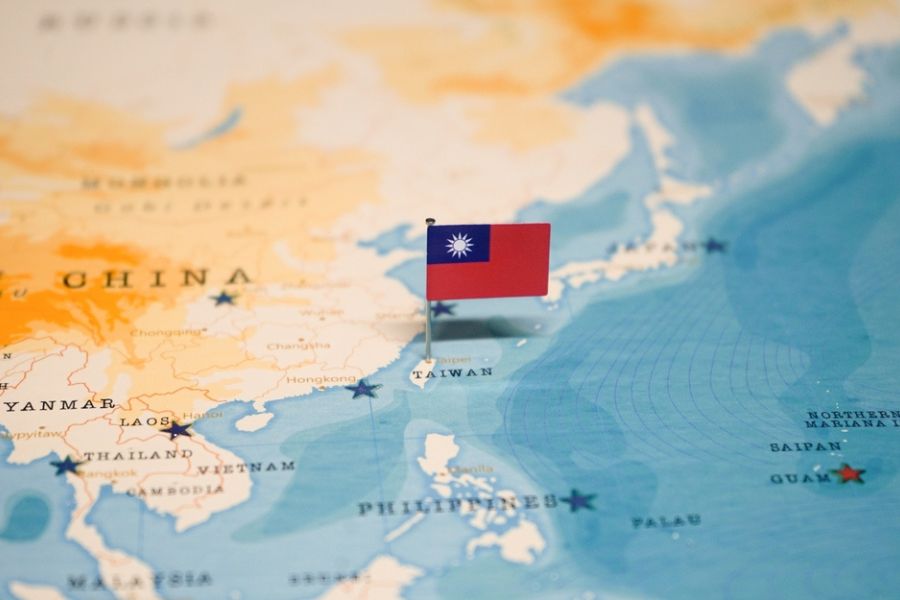
Taiwan prosecutors have confirmed the arrests of 35 people for laundering illegal gaming proceeds of over NT$30.6 billion through payment processing platforms.
Officials from the Taipei District Prosecutors’ Office said the operator of the Ming Shiang Yuan Café (a man with the surname Lo, 41) was charged with money laundering, organized crime, and illegal online gambling.

The scheme began in August 2020, after Lo purchased the source code of a payment platform system and started building services named HeroPay and MatchPay.
He later went on to collaborate with illegal online gambling platforms that operated in China, Japan, and India, with payments routed through his payment services.
Later, he recruited a woman with the surname Huang to handle finances, and rented office space under his restaurant’s name.

The group launched its own online gambling website, Rich11, in June 2022, offering users a range of games, including slot machines, sports betting, and baccarat.
Between July 2021 and September 9, 2025, prosecutors estimate that the group laundered NT$30,695, with the proceeds used for personal profits by Lo and as capital for other businesses.
Prosecutors are seeking a prison term of nine years six months for Lo, and six years for Huang, with an additional 33 others arrested under the Organized Crime Prevention Act, the Money Laundering Control Act, and Criminal Code provisions in relation to online gambling.

Recently, three Taiwanese basketball players faced fines and game suspensions after an investigation by the Chinese Professional Baseball League found they had participated in online gambling.
Abi Bray brings strong researching skills to the forefront of all of her writing, whether it’s the newest slots, industry trends or the ever changing legislation across the U.S, Asia and Australia, she maintains a keen eye for detail and a passion for reporting.

Verticals:
Sectors:
Topics:
Dig Deeper
Related stories
 2025/11/28: Indian authorities arrest gambling executives over money laundering
2025/09/26: Vietnam jails 43 people for running VND88,000 billion online gambling ring
2025/04/22: Philippines scrutinizes online gambling amid money laundering risks
2025/01/16: Former mayor Alice Guo accused of gambling-related money laundering in the Philippines
2025/11/28: Indian authorities arrest gambling executives over money laundering
2025/09/26: Vietnam jails 43 people for running VND88,000 billion online gambling ring
2025/04/22: Philippines scrutinizes online gambling amid money laundering risks
2025/01/16: Former mayor Alice Guo accused of gambling-related money laundering in the Philippines
 2025/11/28: Indian authorities arrest gambling executives over money laundering
 2025/09/26: Vietnam jails 43 people for running VND88,000 billion online gambling ring
 2025/04/22: Philippines scrutinizes online gambling amid money laundering risks
 2025/01/16: Former mayor Alice Guo accused of gambling-related money laundering in the Philippines
The Backstory
Regional tremors behind Taiwan’s latest arrests
Taiwan’s sweep of alleged payment processors and gambling operators follows a growing pattern across Asia: financial crime rings are leveraging cross-border online betting, shell payment platforms and crypto-like rails to move money at scale. In recent months, authorities in India and the Philippines have stepped up investigations into gambling-linked laundering, while Australia’s regulator presses a marquee test of compliance duties for large bookmakers. The through line is simple but consequential. As governments tighten oversight of banks, illicit networks migrate to lightly regulated payment gateways and fast-growing online gaming channels, then thread funds across jurisdictions. The legal and political fallout is spreading.
India’s enforcement dragnet widens
In India, the Enforcement Directorate has signaled a harder line on gaming firms accused of disguising gambling as esports or social play. The agency recently detained two founders of Winzo on allegations they ran an illegal betting business, manipulated outcomes with algorithms and routed “proceeds of crime” to the United States and Singapore through affiliates, as described in an account of the arrests of Winzo executives over money laundering. Authorities said customer acquisition spanned Brazil, Germany, the U.S. and India, underscoring the borderless nature of digital wagering and the velocity with which capital can move through offshore subsidiaries.
The case arrives as the Supreme Court asks the central government to respond to a petition seeking a nationwide ban on platforms that present gambling as esports. That posture, combined with asset freezes and custodial remand for the accused, suggests New Delhi is prepared to test where gaming ends and betting begins. The Taiwanese probe, which allegedly tapped payment services to route bets from China, Japan and India, fits into this cross-jurisdiction narrative: operators target multiple markets, then lean on processors and layered corporate structures to keep funds in motion and out of regulators’ reach.
Philippine whiplash: bans, probes and a gray-list exit
No market illustrates the policy pendulum better than the Philippines. The government has spent the past two years dismantling its once-booming offshore gambling sector and reframing supervision of remaining online activity. The most visible flashpoint centers on a former local official: prosecutors approved dozens of money laundering charges tied to a shuttered POGO hub, as detailed in the case against former mayor Alice Guo in Bamban, Tarlac. The charge sheet spans alleged gambling operations as well as love, investment and crypto scams, plus human trafficking counts, illustrating how illicit enterprises bundle scams with betting to multiply revenue streams and obfuscate flows.
Manila simultaneously rebranded Philippine Offshore Gaming Operators as Internet Gaming Licensees in October 2023, with Inside Asian Gaming reporting on the PAGCOR name change. Then came the policy cliff. President Ferdinand Marcos Jr. moved to end the regime entirely, with Inside Asian Gaming noting an immediate ban and a sweeping shutdown. By February 2025, the Philippines exited the Financial Action Task Force gray list, a milestone highlighted in a report on heightened scrutiny of online gambling by the Anti-Money Laundering Council. Regulators there say online gaming’s rapid revenue growth — up more than threefold last year — demands tighter risk assessments to stop laundering and terror financing, even with POGOs outlawed.
The stakes are clear. Policymakers credit bans and tougher audits for the FATF nod, yet analysts warn clandestine activity will migrate rather than disappear. That tension mirrors Taiwan’s challenge: enforcement success can push operators to neighboring jurisdictions or deeper underground, making cooperative oversight and data sharing essential.
Australia’s compliance test for global bookmakers
Farther south, Australia offers a parallel lesson in how regulators seek to force systemic fixes at scale. The financial intelligence agency AUSTRAC launched civil proceedings alleging one of the country’s largest bookmakers failed to build and maintain a compliant anti-money-laundering program, putting it at “serious risk of criminal exploitation.” That pressure coincided with turnover in senior ranks following publicity around the case, as reported in coverage of an Entain Australia executive resignation amid a money-laundering scandal. Executive departures rarely determine legal outcomes, but they often foreshadow costly remediation and upgrades to transaction monitoring, customer due diligence and reporting protocols.
AUSTRAC has since pared back some claims to align with its own guidance while keeping core allegations alive, according to a report on AUSTRAC dropping key allegations in the Entain case. The suit still focuses on high-risk customers who moved millions through betting accounts between 2016 and 2020, with potential penalties reaching into the tens of millions. For Taiwan’s investigators, the Australian litigation underscores a complementary strategy: tighten institutional defenses at scale so that high-volume bettors and third-party processors cannot exploit gaps across platforms and payment types.
Why the cross-border puzzle matters now
Taiwan’s case highlights the importance of cutting off the payment lifelines that make illegal betting profitable. Prosecutors say operators have shifted from running single-country sites to building or renting payment plumbing that can ingest deposits from multiple markets, then cycle funds through front companies or affiliates. India’s extradition and asset-freeze posture, the Philippines’ licensing reversals and risk reassessments, and AUSTRAC’s institutional enforcement collectively raise the cost of those tactics. But they also shift pressure points.
When one jurisdiction bans offshore operators, the activity often decamps to neighboring markets or to unlicensed crypto wagering sites with embedded peer-to-peer transfers. That dispersal complicates seizure orders, slows mutual legal assistance and forces regulators to harmonize definitions — what qualifies as esports, a game of skill or a remittance — to avoid loopholes. It also places more onus on payment gateways and banks to flag patterns such as rapid in-and-out transfers, nested accounts and customer clusters tied to known gambling domains.
For Taiwan, the stakes extend beyond headline arrests. Coordinated actions with counterparts in India and the Philippines could help trace counterparties and beneficiaries across the same processor networks cited in those probes. Engagement with Australian authorities, where bookmakers face heightened scrutiny of high-risk customer monitoring, could inform best practices for detecting suspicious flows linked to betting accounts that touch Taiwan-based processors. And because organized groups often pair gambling with romance, investment and crypto fraud — a pattern alleged in the Philippines — investigators need to map how proceeds move between scam verticals to frustrate recovery efforts.
The broader market impact is measurable. Online betting remains one of the fastest-growing digital commerce categories in Asia. As regulators turn the screws, operators with legitimate ambitions will face higher compliance costs and more conservative onboarding for cross-border players. Illicit networks will burrow deeper into payment layers. Taiwan’s latest crackdown is not an endpoint but part of a regional realignment, where the effective chokepoints are data, payments and coordinated enforcement — not just arrests at home.

