


Sportsbooks still going to capture 80% of NFL wagering volume: EKG

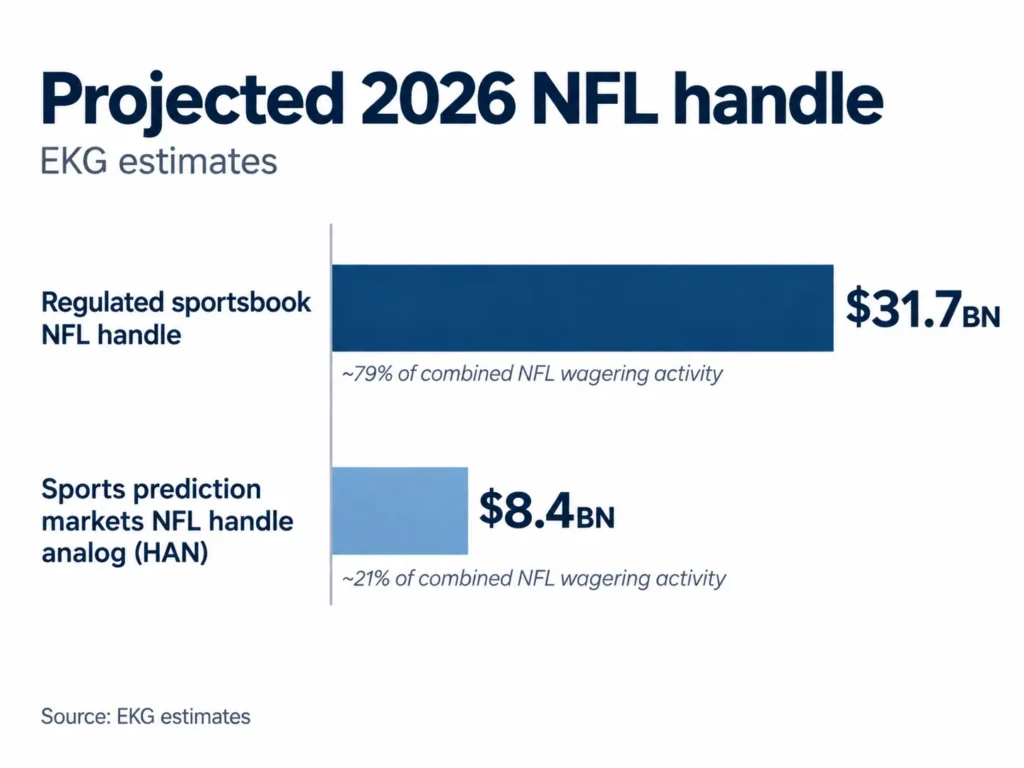
A new report by Eilers & Krejcik Gaming (EKG) indicates that sportsbooks will still account for approximately 80% of the regulated NFL wagering volume this year, with the group assuring that despite the rise of prediction markets, “sportsbooks remain the dominant wagering channel.”
EKG estimates that the regulated sportsbook NFL handle will reach US$31.7 billion, while that of sports prediction markets will reach just US$8.4 billion, which equates to 8% yearly growth for sports betting.

The group notes that the “above-market growth assumption supported in part by a more aggressive football acquisition backdrop: bet365 entered with the richest sportsbook welcome offer we observed ($365 headline), while FanDuel and Fanatics carry $350 headline offers.”
The group furthered that “DraftKings ($200) has said it will increase spending if favorable, 2Q26-like acquisition economics persist, while FanDuel has promised to be more generous on bonusing throughout the entire season via its new Rewards program.”
While prediction markets “represent a meaningful second channel for NFL wagering,” EKG indicates this is “still small on a relative scale, reflecting a new sector with less of an installed base and less ability to be generous with bonuses (Kalshi offering $25 at present).”

However, EKG channel checks indicate that prediction markets are “spending heavily on digital marketing including app stores and PPC, which could make our forecast look light by the end of the season.”

Dig Deeper
Related stories
 2026/08/25: Total Philippines gambling ad ban seen handing market back to illegal operators, data from five countries show
 2025/08/21: Aristocrat Leisure, NFL combine for free-to-play NFL Super Bowl Slots social casino game
 2025/08/13: Optimove study indicates NFL bettors will bet consistently this year
 2026/08/28: NFL announces multi-year agreements with DraftKings, FanDuel and Fanatics as sports betting partners
2026/08/25: Total Philippines gambling ad ban seen handing market back to illegal operators, data from five countries show
2025/08/21: Aristocrat Leisure, NFL combine for free-to-play NFL Super Bowl Slots social casino game
2025/08/13: Optimove study indicates NFL bettors will bet consistently this year
2026/08/28: NFL announces multi-year agreements with DraftKings, FanDuel and Fanatics as sports betting partners
The Backstory
NFL wagering remains the industry’s anchor
The latest Eilers & Krejcik Gaming forecast lands at a pivotal moment for U.S. sports betting. Prediction markets have become a louder part of the conversation, but the NFL remains the core product for regulated sportsbooks, both as a revenue driver and as an acquisition funnel. EKG’s projection that sportsbooks will capture about 80% of regulated NFL wagering volume this season underscores how much of the market still runs through familiar betting apps rather than newer event-contract venues.
That position is reinforced by the way operators and leagues have structured the season. The NFL calendar delivers weekly national audiences, high-frequency betting opportunities and a long runway from kickoff through the Super Bowl. For sportsbooks, that makes football less a seasonal event than a customer-retention system. For challengers, including prediction markets, it sets a high bar: They must compete not only on product design but also on marketing budgets, app habits, promotions, data access and brand trust.
League partnerships gave sportsbooks an early moat
The sportsbook advantage did not emerge by accident. The NFL has spent several years building formal relationships with licensed betting operators, giving them access to league marks, media inventory and data products that are difficult for alternative wagering channels to replicate. In August, the league announced multi-year sports betting agreements with DraftKings, FanDuel and Fanatics, positioning the three companies as official partners ahead of the 2026 season.
Those deals allow the operators to use NFL intellectual property in the sports betting category and to promote online and retail wagering. They also include access to real-time official play-by-play data, Next Gen Stats and BetVision through Genius Sports, the NFL’s exclusive data distributor. That combination matters because NFL wagering is increasingly integrated into media, statistics and live engagement. The official partners are not merely taking bets on games; they are tied into the infrastructure that frames how fans watch, analyze and interact with the league.
The arrangements also carry integrity obligations. DraftKings, FanDuel and Fanatics agreed to work with the league on intelligence sharing, responsible gambling initiatives and restrictions on wagers the NFL deems objectionable, including bets tied to officiating, injuries or outcomes that could be known in advance or easily manipulated. That framework helps explain why regulated sportsbooks retain institutional support even as new wagering formats gain attention.
Fanatics’ rise sharpened the fight for football customers
Fanatics’ entry into the NFL’s official betting roster also intensified competition among the largest operators. Before the league confirmed the broader partner lineup, Fanatics had struck a deal to become an official NFL sportsbook, a move that signaled its intention to use the company’s existing sports merchandise, collectibles and fan-commerce base to accelerate its gambling business.
That agreement gave Fanatics rights to use NFL intellectual property across its sportsbook and online casino brands. It also was expected to include promotion across NFL media channels, hospitality assets and premium fan experiences tied to events such as the Super Bowl and NFL Draft. The strategy reflects a broader industry trend: Sportsbooks are trying to move beyond commodity pricing on spreads and moneylines by embedding themselves in the fan experience.
EKG’s note that football acquisition has become more aggressive fits that backdrop. Welcome offers from bet365, FanDuel, Fanatics and DraftKings are not isolated promotions; they are part of a battle for the most valuable cohort in U.S. betting. NFL bettors are frequent, mobile-first and responsive to bonuses. That makes the start of football season the industry’s version of a retail holiday, with operators willing to spend heavily if they believe customer economics will justify it.
Bettor behavior favors established apps
Consumer data also support the view that sportsbooks remain hard to dislodge. An Optimove report on the 2025-26 NFL season found that NFL bettors expected to wager consistently throughout the season, with 77% planning to bet and weekly wagering remaining the norm. The Super Bowl remains a near-universal betting event among football bettors, with 83% saying they planned to wager regardless of which teams were playing.
The report showed bettors still favor traditional formats. Point spreads, moneylines and totals remained more popular than props, parlays, same-game parlays and live betting. That preference works in favor of conventional sportsbooks, which already have deep menus, pricing teams, promotions and user interfaces built around those core products. Prediction markets may appeal to users looking for event-style contracts, but the mainstream NFL betting audience continues to show comfort with sportsbook conventions.
The same study found 76% of respondents place wagers through mobile or online platforms and 80% use two or more sites weekly. DraftKings and FanDuel led in popularity, while bettors cited app usability and promotional offers as key factors. That multihoming behavior creates openings for newer brands but also benefits the companies with the scale to keep bonuses, marketing and product improvements in front of customers. It is one reason EKG could acknowledge prediction markets as a meaningful second channel while still forecasting that sportsbooks would dominate overall NFL handle.
The NFL brand now stretches beyond real-money betting
The league’s gaming footprint is also expanding outside traditional sports wagering. Aristocrat Leisure’s Product Madness recently launched NFL Super Bowl Slots, a free-to-play social casino game developed with the NFL and the NFL Players Association. The app lets players select any of the league’s 32 teams, unlock branded content and play slot-style games featuring NFL footage and league-linked themes.
The launch builds on Aristocrat Gaming’s NFL-themed land-based slot machines, which have been available in casinos since 2023. It also shows how the league is segmenting gaming products by audience and regulatory exposure. Real-money sportsbooks sit inside state-regulated betting markets. Social casino products are free to download and play, marketed as entertainment for adults and designed to convert fandom into daily engagement without requiring a sports wager.
That expansion matters for the current sportsbook-versus-prediction-market debate because it shows the NFL is not avoiding gaming. Rather, it is managing the categories through licensed partners, intellectual property controls and commercial agreements. The league has become more willing to monetize gaming-adjacent products, but it has favored channels where it can impose brand standards, integrity safeguards and partner obligations.
Regulation and visibility remain the broader stakes
The fight for NFL wagering volume also sits within a wider global policy debate over how gambling should be marketed and supervised. A recent analysis of a proposed Philippine gambling advertising ban argued that sweeping restrictions can unintentionally push consumers toward illegal operators by weakening the ability of licensed companies to compete in public view. The article on the Philippines warned that a total ad ban could hand market share back to illegal operators, especially online platforms beyond domestic enforcement.
The U.S. market differs from the Philippines, but the channelization principle is relevant. Legal sportsbooks depend on advertising, promotions and official partnerships to distinguish themselves from offshore sites and newer alternatives. Regulators and leagues, in turn, rely on licensed operators for age checks, identity verification, responsible gambling tools, dispute resolution and integrity monitoring. When betting activity moves outside that perimeter, the state loses visibility and consumers lose protections.
That is the core context behind EKG’s forecast. Prediction markets may grow quickly, helped by digital marketing and curiosity around new products. But sportsbooks enter the NFL season with structural advantages: league partnerships, established mobile habits, promotional scale, familiar bet types and compliance systems that regulators understand. The question is not whether alternative channels will matter. It is how much volume they can take from operators that have spent years turning the NFL into the central engine of regulated U.S. sports betting.
