
Senator calls for more federal oversight for sports betting

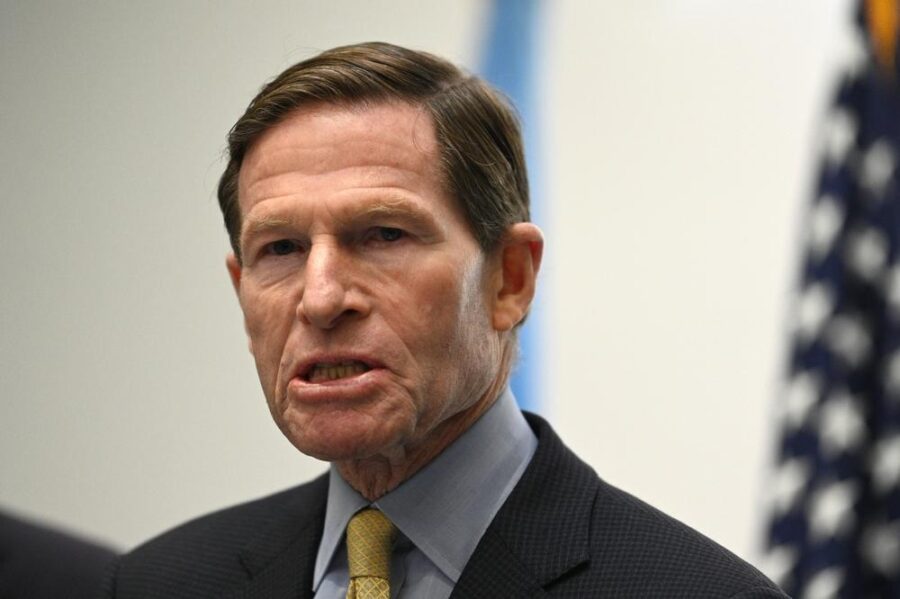
A US senator is calling for the federal government to take a bigger role in regulating sports betting to reduce the risk of corruption and addiction, according to comments made to political newspaper The Hill.
Sen. Richard Blumenthal warned that the rapid expansion of legal gambling had increased the risk of its negative impacts. He argued that Congress should step in to set up national regulations, as the existing rules are not enough.
Sen. Blumenthal said, “Congress should be involved in putting some limits on sports betting, no question. There are two consequences from the exploding level of activity we’ve seen: corruption and addiction. The prevalence of corruption shows the guardrails are not working.”
Currently, the regulation of sports betting is largely a matter for the states, following the Supreme Court’s overturn of the Professional and Amateur Sports Protection Act in 2018, and the professional sports leagues.
These leagues currently have rules governing the sharing of inside information by players and partner with sportsbooks to identify suspicious betting patterns. Some leagues also collaborate with betting companies to limit bets on certain types of wagers.

The concerns of Sen. Blumenthal and other senators were reinforced by a recent survey from Quinnipiac University, which shows that as many as one-third of NBA fans believe that coaches or players could be involved in illegal gambling.
Senator Cory Booker has also expressed concern, calling for more limits on prop bets and warning that new types of betting formats could lead to more corruption unless there is much stronger government oversight. The calls for increased oversight on sports betting follow recent scandals involving the MLB and NBA after players were found to be involved in rigging performances to help profit bettors.
Charlotte Capewell brings her passion for storytelling and expertise in writing, researching, and the gambling industry to every article she writes. Her specialties include the US gambling industry, regulator legislation, igaming, and more.

Verticals:
Sectors:
Topics:
Dig Deeper
Related stories
 2025/09/10: Brazilian gaming and advertising regulators unite to strengthen oversight of betting advertisements
2025/08/20: Philippine senator calls for stricter enforcement of e-wallet directive
2025/06/19: Kalshi betting app opposed by 36 state attorneys in federal case
2025/08/11: Philippine senator calls for online gambling ban for civil service workers
2025/09/10: Brazilian gaming and advertising regulators unite to strengthen oversight of betting advertisements
2025/08/20: Philippine senator calls for stricter enforcement of e-wallet directive
2025/06/19: Kalshi betting app opposed by 36 state attorneys in federal case
2025/08/11: Philippine senator calls for online gambling ban for civil service workers
 2025/09/10: Brazilian gaming and advertising regulators unite to strengthen oversight of betting advertisements
 2025/08/20: Philippine senator calls for stricter enforcement of e-wallet directive
 2025/06/19: Kalshi betting app opposed by 36 state attorneys in federal case
 2025/08/11: Philippine senator calls for online gambling ban for civil service workers
The Backstory
Momentum builds behind a federal check on sports betting
Calls in Washington to tighten oversight of sports wagering did not emerge in a vacuum. Since the Supreme Court cleared the way for states to legalize betting in 2018, the market has expanded quickly, and so have questions about integrity, consumer protection and jurisdiction. Those concerns have sharpened this year as surveys and court fights exposed gaps in the patchwork of state rules and raised the stakes for regulators, leagues and bettors.
A key data point fueling scrutiny is public trust. A recent Quinnipiac University poll found that many fans doubt the reliability of outcomes, with a sizable share of NBA followers believing players or coaches could be entangled in illicit gambling. That perception threat, combined with a spate of player discipline across leagues, has given traction to proposals to curb prop bets and to consider national standards. Senators have framed the issue as a matter of preventing corruption and limiting addiction in a market that increasingly blurs sports, finance and entertainment.
States have largely shouldered compliance since the federal ban fell, writing their own rules on marketing, data use and bet types. But the last year has shown how uneven enforcement can be, especially where new platforms test the line between trading and gambling. The tension is not just academic: it is playing out in courts and attorney general coalitions that argue federal permissions cannot override state gaming laws.
States flex muscle against prediction markets
One flashpoint is the prediction platform Kalshi, which lists contracts on real-world events and says it operates under the Commodity Exchange Act. A bipartisan group of 36 attorneys general led by Ohio’s Dave Yost urged a federal appeals court to back New Jersey’s efforts to rein in the platform, arguing it enables unregulated gambling through event contracts. In filing an amicus brief, they warned that weakening state power would expose consumers to harm. The coalition’s argument is outlined in coverage of the multistate brief and in Yost’s own news release, which frames the dispute as a defense of states’ right to police online betting.
The AG push underscores a broader point animating federal-oversight advocates: when businesses design products that resemble gambling but claim a capital markets exemption, state regulators must expend significant resources to keep up, and consumers receive mixed signals. For lawmakers concerned about the addictive design of micro-wagers or the ease with which prop markets can invite manipulation, a federal floor could simplify what is now a state-by-state chase.
Court rulings add to the legal whiplash
The judiciary has delivered split messages on where prediction markets fit. In the spring, a New Jersey federal court sided with Kalshi in its dispute with the state’s Division of Gaming Enforcement, a decision that emboldened the platform and stirred worries among state officials about preemption. A law firm analysis summarized the ruling’s implications for the industry in a recent note, New Jersey federal court sides with Kalshi over prediction market.
But momentum shifted elsewhere. In Maryland, a federal district judge denied Kalshi’s bid to block state regulators from enforcing gaming laws, finding the company fell short of showing it was likely to prevail. The case, now on appeal, reinforced states’ authority to require licenses for sports outcomes even when a platform has federal approval. Details are in reporting on the Maryland ruling.
The whipsaw underscores why some in Congress want baseline rules: absent federal clarity, platforms face a patchwork of permissions and prohibitions, while states litigate to defend their regimes. That uncertainty is costly for operators and confusing for consumers, especially as product design evolves to mimic financial markets.
Global regulators tighten advertising and payments
Outside the United States, regulators are not waiting for case law to settle the boundaries. Brazil’s Secretariat of Prizes and Betting and the National Council for Advertising Self-Regulation (Conar) created a joint framework to police advertising in the fixed-odds sector, aiming to speed investigations, identify repeat violators and shield minors. The pact, which includes new education initiatives, signals a move toward coordinated enforcement between statutory regulators and self-regulatory bodies. Read more in Brazil’s plan to strengthen oversight of betting ads.
The Philippines has turned to payments and workplace rules to curb risk. After the central bank ordered e-wallets to delink from gambling sites, operators shifted to alternative apps, prompting lawmakers to press for tougher enforcement against workarounds. Senator Sherwin Gatchalian urged regulators to ensure platforms are disconnected from e-wallets and to pursue operators using messaging or e-commerce apps to process bets. The push is detailed in calls to enforce the e-wallet directive.
Separately, Senator Joel Villanueva called for a ban on online gambling by civil servants and for access blocks inside government facilities, a proposal he said could be implemented by revising existing workplace conduct rules. That debate, coming as the administration weighs a broader crackdown, shows how policy makers are trying to narrow exposure among at-risk groups. See the civil service online gambling proposal.
These steps abroad bolster the case made by U.S. lawmakers: targeted restrictions on marketing, payments and access can reduce harm without banning legal markets. They also demonstrate that coordinated enforcement—between regulators and industry or across agencies—can close loopholes faster than siloed rules.
Integrity fears drive scrutiny of prop bets and micro-wagers
Integrity concerns are not hypothetical. Leagues have tightened codes and partnered with sportsbooks to flag suspicious patterns, but recent player betting scandals and the growth of micro-wagers have amplified calls to limit props tied to individual performance. The fear is twofold: that granular bet types create more vectors for undue influence, and that rapid, app-based wagering heightens addiction risk. Polling reflects that worry, with the Quinnipiac results pointing to skepticism among fans about the sanctity of outcomes.
State officials, meanwhile, argue they need room to respond to new risk vectors. The multistate brief against Kalshi, backed by industry groups, warns that if federal permissions trump state controls, regulators will be hamstrung just as product innovation accelerates. The bipartisan nature of that effort, as noted in the Ohio AG’s announcement, shows political lines are blurrier here than in other tech policy fights.
What a federal floor could change
A federal framework would not necessarily displace state regimes. Proponents envision baseline standards on marketing, bet types and data-sharing, leaving room for states to go further. That could standardize integrity protocols across leagues and books, impose consistent age and identity checks, and clarify how prediction markets intersect with gambling law. It could also set common restrictions on props most vulnerable to manipulation, addressing the signal from fan polling and league incidents.
For operators, uniform rules would reduce regulatory arbitrage and compliance complexity, but they could also narrow product offerings in some states. For consumers, the main effects would be clearer protections and fewer gray zones—particularly around financial-like contracts and rapid-fire wagers. And for regulators, especially attorneys general and gaming commissions, a federal floor would ease the resource drag of litigating jurisdiction while preserving the ability to tailor rules to local conditions.
The next phase will unfold in courts and committees. Appeals in the Kalshi cases, ongoing state enforcement and potential federal hearings will shape how far Washington goes. Abroad, Brazil’s ad enforcement pact and the Philippines’ payments crackdown offer a preview of policy levers that U.S. officials are already studying. The through line is simple: as betting embeds deeper into sports culture and digital finance, the cost of fragmented oversight rises—and so does the pressure for a common playbook.


