


Scientific Games lauds success of scratch lottery ticket/mobile game Scratch Connect

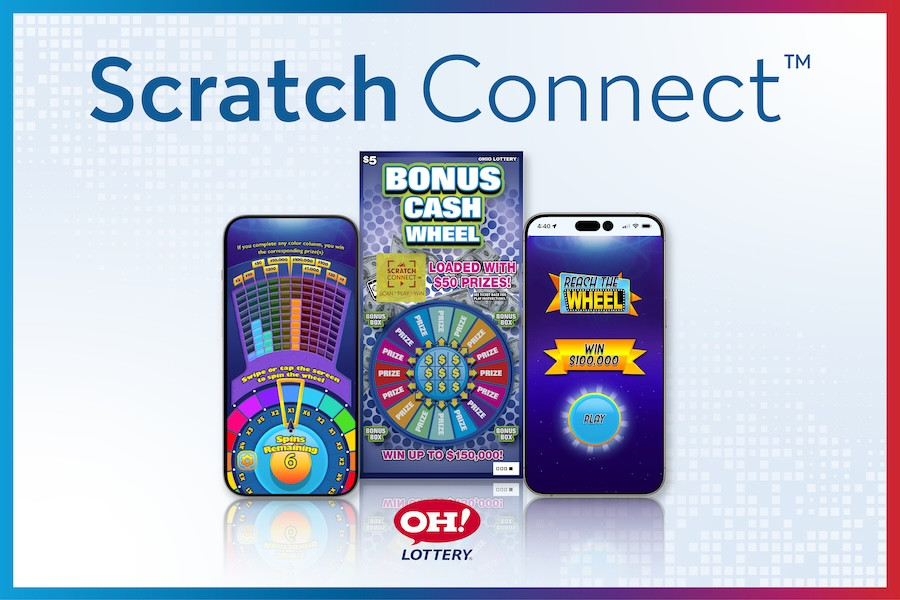
Lottery operator Scientific Games is seeing strong feedback from its Scratch Connect product, which moves players from a scratch-off lottery ticket to a mobile digital game.
The group announced on Thursday that the Ohio Lottery’s first Scratch Connect game saw nearly 570,000 Ohio players (as of 22 August) scan their US$5 Bonus Cash Wheel retail game to play Reach the Wheel online, with 90% completing the digital game.

The group highlights that of those players, 40% then selected “Play it Again by Entering Another Ticket.”
After playing the traditional scratch game on their ticket, players scratch off the Scratch Connect logo and scan a QR code with their mobile device to unlock a digital bonus game with its own separate opportunity for winnings. Following simple age confirmation, players can immediately play without creating an account or registering.
Ohio is the third Scratch Connect launch in the US, following Kentucky and Pennsylvania, with further launches planned.

Scientific Games highlights that “The physical game ticket remains the bearer instrument, and all prizes are redeemed at retail, including those revealed through digital bonus play. This keeps lottery retailers at the center of the experience.”
Speaking of the launch, Charlie Scannella, VP, Customer Success & Relationship Management for Scientific Games, noted “Scratch Connect extends the entertainment of a physical scratch game to mobile while keeping the retail network central to the experience. Players can move easily from the ticket to digital play without an account or registration, giving lotteries a simple way to introduce a connected experience while supporting their retail business.”
The crossover highlights the ongoing shift towards omnichannel entertainment, leveraging physical outlets and operations with digital platforms.

Dig Deeper
Related stories



The Backstory
Retail tickets meet mobile play
Scientific Games’ early results for Scratch Connect in Ohio underscore a strategic priority that has been building across the lottery sector: using digital features to deepen engagement without displacing the retail channel that remains central to lottery sales. The product lets players move from a physical scratch ticket to a mobile bonus game through a QR code, while keeping the ticket as the bearer instrument and requiring prizes to be redeemed at retail. That structure is significant because it gives lotteries a route into mobile entertainment without moving fully into account-based online gaming.
The Ohio Lottery’s Bonus Cash Wheel launch followed deployments in Kentucky and Pennsylvania, giving Scientific Games a three-state test bed for a format designed to bridge two historically separate behaviors: buying instant tickets at retail and playing games on a phone. The company said nearly 570,000 Ohio players had scanned tickets as of Aug. 22, with 90% completing the digital game. The high completion rate matters because it suggests the product is not merely a promotional add-on but a format that can hold player attention after the retail purchase.
A broader push into connected lottery systems
Scratch Connect fits into a wider modernization effort by Scientific Games, which has been expanding systems, content and digital services for government-regulated lotteries. The company’s work with the Arizona Lottery showed how technology upgrades can support new game features while strengthening the retail network. In that rollout, Scientific Games deployed its Momentum platform, including a central gaming system and retailer management tools, while adding Powerball Double Play to the draw games portfolio. The Arizona project also included upgrades to gem | suite, a software platform used for licensing, communications and business intelligence across 3,600 retailers.
That systems work helps explain the importance of Scratch Connect. Lotteries are seeking ways to keep legacy retail networks productive while meeting consumer expectations shaped by mobile gaming, ecommerce and app-based entertainment. Scientific Games’ recent Arizona Lottery technology launch showed the infrastructure side of that shift; Scratch Connect shows the product side. In both cases, the goal is to give players more reasons to engage while preserving the regulated, retailer-supported model that funds public programs.
The approach also reflects the company’s positioning as both a lottery games supplier and a systems provider. By combining retail tickets, digital bonus play, analytics and retailer management, Scientific Games can offer lotteries incremental innovation rather than a wholesale migration to online lottery. That distinction is politically and commercially important in markets where retail partners, state lawmakers and regulators remain cautious about direct digital gambling expansion.
Leadership change comes during expansion
The product launch also arrives as Scientific Games prepares for a leadership transition. Pat McHugh, who became CEO in 2022 after nearly two decades with the company, is set to retire Sept. 8 and move into a vice chair role. Kevin Schneider, a board member and vice chair, has been named interim chief executive while the board searches for a permanent successor. The change comes at a moment when the company is expanding its lottery footprint and pushing more advanced technology across regulated markets.
McHugh’s tenure coincided with Scientific Games’ focus on global lottery growth after the company sharpened its identity around lottery products and services. His planned retirement, detailed in the company’s CEO transition announcement, is not being presented as a strategic reset. Instead, the board has emphasized continuity, pointing to Schneider’s experience in regulated industries and the company’s existing leadership team.
That continuity will matter because lottery customers typically make long-term vendor decisions around reliability, compliance and operational scale. A product such as Scratch Connect depends not only on game design but also on execution across retailers, ticket validation, prize redemption and consumer support. Leadership stability could help Scientific Games reassure lottery clients that modernization efforts will proceed without disruption.
Digital content strategy adds branded games
Scientific Games’ mobile ambitions extend beyond QR-linked scratch games. The company has been building its SG Content Hub, a platform for ilottery content available to regulated lotteries. A recent agreement added London-based Pixiu Gaming to the hub, expanding the catalog with Monopoly and Battleship titles through Scientific Games’ partnership with Hasbro. The move shows how the company is using familiar brands and third-party studios to broaden play styles and attract different player segments.
The addition of Pixiu is relevant to Scratch Connect because both initiatives rely on the same premise: lottery products need to feel more like contemporary digital entertainment while remaining simple, regulated and lottery-specific. The Pixiu Gaming content deal gives Scientific Games more ilottery inventory, while Scratch Connect gives retail instant games a digital extension that does not require an account or registration. Together, they suggest a layered strategy for markets at different stages of digital adoption.
Brand licensing is also part of that strategy. Scientific Games and Hasbro previously extended their licensing agreement for Monopoly and other brands through 2025, according to a company release at Scientific Games’ Hasbro licensing announcement. Licensed brands can reduce the burden of introducing new mechanics because players already recognize the themes. For lotteries, that familiarity can help support sales without relying solely on jackpot size or traditional scratch-ticket design.
Compliance and responsible play shape the rollout
As lottery products become more connected and more mobile, responsible gambling standards become a larger part of the commercial case. Scientific Games received re-certification for the World Lottery Association’s Responsible Gambling Certificate of Alignment, reinforcing its claim that its tools and operations are designed around harm minimization and ethical gaming practices. The company’s Healthy Play program, launched in 2022, gives lotteries research-based tools intended to improve public understanding of lottery games and promote accountable play.
That context is important for Scratch Connect. The product adds digital play but stops short of creating a full online account relationship. Players confirm age, play immediately and redeem prizes at retail. This design may help lotteries and regulators view the product as an enhancement to instant tickets rather than an expansion into higher-risk online gambling. The company’s WLA responsible gambling re-certification gives it a credential to support that argument with government customers.
Regulatory trust also affects international opportunities. Scientific Games was recently licensed by the General Commercial Gaming Regulatory Authority as a gaming-related vendor in the United Arab Emirates, allowing it to supply lottery products and services in a newly developing regulated market. The UAE vendor license demonstrates how jurisdictions building gaming frameworks are looking for suppliers with scale, compliance infrastructure and responsible-gaming credentials. For Scientific Games, products that blend retail, digital engagement and controlled redemption could be especially relevant in markets trying to balance innovation with public confidence.
The stakes for lotteries and suppliers
The stakes are not limited to one Ohio product launch. State and national lotteries face pressure to maintain proceeds for public programs while competing for attention in an entertainment market dominated by mobile experiences. Retail remains a powerful distribution channel, but younger and digitally native consumers increasingly expect interactive features, instant feedback and personalized experiences. Scratch Connect is one answer to that tension: it makes a paper ticket more interactive without severing the economics of the store-based model.
For Scientific Games, the Ohio results offer evidence it can convert long-standing lottery relationships into new product adoption. The company serves 150 lotteries in 50 countries, giving it a large base for incremental rollouts if early deployments prove durable. The more players scan, finish games and reenter with another ticket, the stronger the case becomes for lotteries to use connected instant games as part of their regular product mix.
The question now is whether the early engagement translates into repeat purchases, broader demographic reach and sustained retailer support. If it does, Scratch Connect could become a model for lottery modernization that advances gradually through familiar retail channels. If not, it may remain a promotional tool. Either way, the launch reflects where the lottery business is heading: toward products that are physical and digital at once, regulated from end to end and designed to keep public-benefit revenue relevant in a mobile-first market.
