


Report claims 2026 FIFA World Cup attracted 174.3 billion illegal stream views and 95% had gambling ads

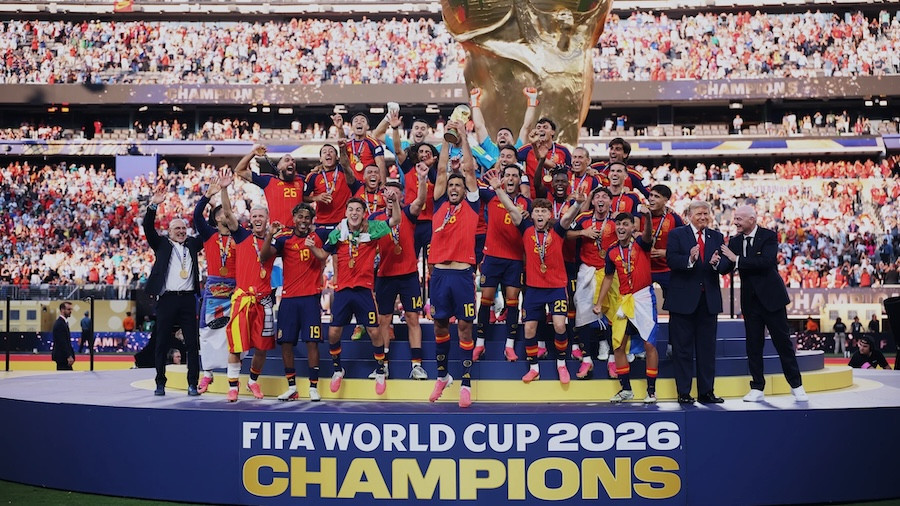
A new report from Gaming Compliance International (GCI) claims that there were some 174.3 billion illegal stream views of the 2026 FIFA World Cup worldwide, with 95% carrying advertising for unregulated gambling.
This figure covers illegal stream views that lasted 90 seconds or more and doesn’t represent the number of individual viewers. GCI calculated an average of 1.68 billion views per match, with the Spain-Argentina final generating an estimated 6.2 billion views on illegal streams.

“The World Cup showed us the dark nexus between illegal streaming and unregulated gambling at a scale we have never measured before,” Ismali Vali, President of the GCI, noted.
“Consumers experience one marketplace. Legal broadcasters pay for rights, invest in content and compete for audiences. Illegal streaming steals the same content, puts it all in one place for ‘free’, and monetizes the audience through unregulated gambling and other forms of crime,” he furthered.
The scale of the wider betting market was also significant. GCI projected that the tournament generated US$593 billion in global online betting handle, with US$409 billion, or 69%, coming through unregulated markets. Licensed operators accounted for the remaining US$184 billion, the group claims.
The company also said that illegal stream operators can earn between 25% and 50% of the net gaming revenue from users they direct to unregulated gambling sites.

The findings follow wider scrutiny of betting activity surrounding the tournament.
According to The Athletic, advisory body Group of Copenhagen raised concerns over a potential betting scandal linked to unusual wagering activity during the tournament, including the overturning of Folarin Balogun’s one-game suspension.
However, the FIFA Integrity Task Force later reported that it had not identified any suspicious betting activity during the 2026 World Cup. The task force monitored betting markets throughout the competition as part of FIFA’s efforts to identify potential match manipulation.

Alongside traditional sports betting, FIFA also entered the prediction market space during the tournament. The organization partnered with blockchain-based prediction market ADI Predictstreet to offer event contracts tied to World Cup outcomes, which raised concerns within the industry.
Prediction market trading surged during the competition, accounting for an estimated 27% of all US sports betting volume, according to H2 Gambling Capital.
Charlotte Capewell brings her passion for storytelling and expertise in writing, researching, and the gambling industry to every article she writes. Her specialties include the US gambling industry, regulator legislation, igaming, and more.

Dig Deeper
Related stories



The Backstory
World Cup scale magnified old enforcement gaps
The 2026 FIFA World Cup was built to be the largest edition of the tournament, with 104 matches across North America and a commercial plan that FIFA projected would generate about US$11 billion in revenue. That scale created more inventory for broadcasters, sponsors, betting operators and fan engagement platforms. It also gave illegal streaming networks and unregulated gambling sites a larger global event around which to organize traffic.
The new Gaming Compliance International estimate that the tournament drew 174.3 billion illegal stream views sits against that broader expansion. It does not measure unique viewers, but it points to the commercial value of audience aggregation outside licensed channels. Illegal stream operators did not need to acquire media rights, produce coverage or satisfy local gambling rules. They could use pirated broadcasts as a funnel into gambling offers, often in markets where licensed operators face tax, advertising and player-protection obligations.
The finding that 95% of illegal streams carried advertising for unregulated gambling connects two problems that sports bodies, media companies and regulators often treat separately. Piracy undermines rights holders and broadcasters. Offshore betting undercuts licensed markets and can increase integrity risk. In this case, the same consumer journey appears to have linked both: a free stream, gambling advertising and potential conversion to an unlicensed operator.
FIFA moved closer to betting before the tournament
FIFA’s commercial ties to the gambling sector had already been expanding before the tournament began. Kaizen Gaming’s Betano, which became the World Cup’s first betting sponsor through a Europe-only deal at the 2022 tournament in Qatar, extended its arrangement for 2026 into European and Latin American markets. The move put a regulated betting brand inside FIFA’s official sponsorship structure at the same time the governing body was preparing for the most commercially ambitious World Cup in its history.
The agreement, covered in Complete iGaming’s report on Betano sponsoring the 2026 World Cup in Europe and Latin America, reflected a wider calculation by FIFA. Betting companies were no longer merely adjacent to the tournament through odds, media advertising and sponsorship of clubs. They were becoming direct tournament partners, with official rights and brand visibility. FIFA framed those deals around fan engagement and integrity, but they also increased scrutiny of where regulated betting ended and harder-to-police products began.
That distinction mattered because the tournament’s betting ecosystem was broader than traditional sportsbooks. FIFA also had a deal with sports data company Stats Perform that allowed certain betting operators to livestream matches online. Data, live video and in-play wagering are among the most valuable parts of modern sports betting. They also raise the stakes for enforcement because delays, unauthorized feeds and gray-market distribution can become competitive advantages for unlicensed platforms.
Prediction markets blurred product boundaries
The most consequential shift during the tournament may have been the rise of prediction markets. FIFA’s partnership with ADI Predictstreet, described by industry observers as a move into blockchain-based event contracts, put the governing body inside a category that does not fit neatly within traditional sports betting law. Prediction markets often frame their products as event trading rather than gambling, allowing them to operate under different regulatory assumptions from sportsbooks.
Complete iGaming reported that Fanatics Markets and ADI Predictstreet launched an official World Cup prediction market hub for US fans, combining contracts, live statistics, tournament news and content through Fanatics’ app and website. The hub operated across 23 US states and four territories where Fanatics Markets offered services. That structure gave fans a tournament experience that resembled a hybrid of media, data product and betting interface.
The World Cup then became a test of whether prediction markets could move from niche financial-style trading into mainstream sports fandom. A separate Complete iGaming article reported that prediction markets accounted for an estimated 27% of World Cup bets in the US, citing H2 Gambling Capital data reported by Bloomberg. The estimate was imprecise because sportsbooks and prediction markets measure activity differently, but the direction was clear: these platforms had captured meaningful attention during the tournament.
That growth put pressure on sportsbook operators. Prediction markets can operate in states where sports betting is illegal and can accept customers aged 18 or older, while sportsbooks generally face state licensing and a minimum age of 21. Those differences are not minor compliance details. They shape customer acquisition, marketing reach and the competitive balance between federally regulated event-contract venues and state-regulated gambling operators.
Fan engagement became a commercial channel
FIFA’s 2026 strategy also stretched beyond wagering. The governing body sought to make the tournament a broader entertainment product, especially around the final weekend. Fanatics, already active in merchandise, collectibles, betting and events, became a central partner in that effort.
In June, Complete iGaming reported that Fanatics Fest teamed up with FIFA ahead of the World Cup, bringing FIFA into a four-day event at the Javits Center in New York that coincided with the tournament’s final matches. The event included immersive fan experiences, appearances by soccer figures, streaming access to the finals and a soccer-specific component inside Fanatics Games.
That partnership was not a gambling deal, but it helped explain the commercial environment in which betting, streaming, data and fandom converged. Fanatics has relationships across sports retail, media-style fan engagement and betting products. Its World Cup activity showed how companies can use a major tournament to move fans among merchandise, content, experiences and wagering-adjacent platforms.
For rights holders, that convergence is attractive because it can increase engagement beyond the 90 minutes of a match. For regulators and broadcasters, it complicates the map. A fan may watch highlights, trade an event contract, follow live data, attend an official activation and encounter gambling-related promotions within the same wider ecosystem. Illegal streamers exploited the same dynamic, but without the costs and compliance obligations borne by licensed participants.
Suppliers filled the gaps between matches
The tournament’s 104-match schedule still left downtime between fixtures, and suppliers moved to capture that demand. Beter expanded its eFootball content before the World Cup, adding World Cup-themed competitions and increasing its volume to 4,200 monthly events. The company said the expansion was designed to give operators more events during peak betting hours and between major fixtures.
Complete iGaming’s report on Beter expanding eFootball content ahead of the FIFA World Cup showed how the industry treats major sports events as always-on betting cycles rather than isolated matches. Simulated and esports-style products can keep bettors active before, during and after real games. They also give operators a way to maintain engagement when live inventory is thin.
That strategy helps explain why the World Cup generated such large projected betting volume. The betting market was not limited to match outcomes, totals or player props. It included in-play wagering, prediction markets, esports-style content and surrounding engagement products. GCI’s estimate of US$593 billion in global online betting handle, including US$409 billion through unregulated markets, reflects a tournament that functioned as a monthlong betting platform as much as a sporting event.
Integrity concerns met formal assurances
The size and complexity of the market also made integrity a central issue. Reports during the tournament raised concerns about unusual wagering activity, including attention on the overturned one-game suspension of Folarin Balogun. Those concerns fed into a familiar fear for global sports bodies: that liquidity in betting markets, especially unregulated ones, can create incentives or signals around manipulation.
FIFA later said its Integrity Task Force had not identified suspicious betting activity during the 2026 World Cup. That statement mattered because FIFA was simultaneously defending a commercial model that included regulated betting sponsorships, prediction-market partnerships and broader digital engagement. A major integrity failure would have sharpened criticism that the governing body had moved too close to gambling-linked products without sufficient safeguards.
The current piracy report does not claim match manipulation. Its significance is different. It suggests that even when official integrity monitoring does not detect suspicious betting patterns, the commercial perimeter around a global event can still be breached at enormous scale. Illegal streams can siphon audiences from rights holders, expose consumers to unregulated gambling and convert World Cup attention into revenue for operators outside national oversight.
That leaves FIFA, broadcasters and regulators facing a linked enforcement problem. The legal market is expanding through sponsorships, data deals, prediction products and fan hubs. The illegal market is expanding by using the same audience demand, but with stolen content and fewer constraints. The 2026 World Cup showed that the battle over sports betting integrity is no longer confined to wagers placed on matches. It also runs through the screens fans use to watch them.
