


PointsBet warns that tightening Australian gambling ad restrictions will give a free hit to illegal offshore operators

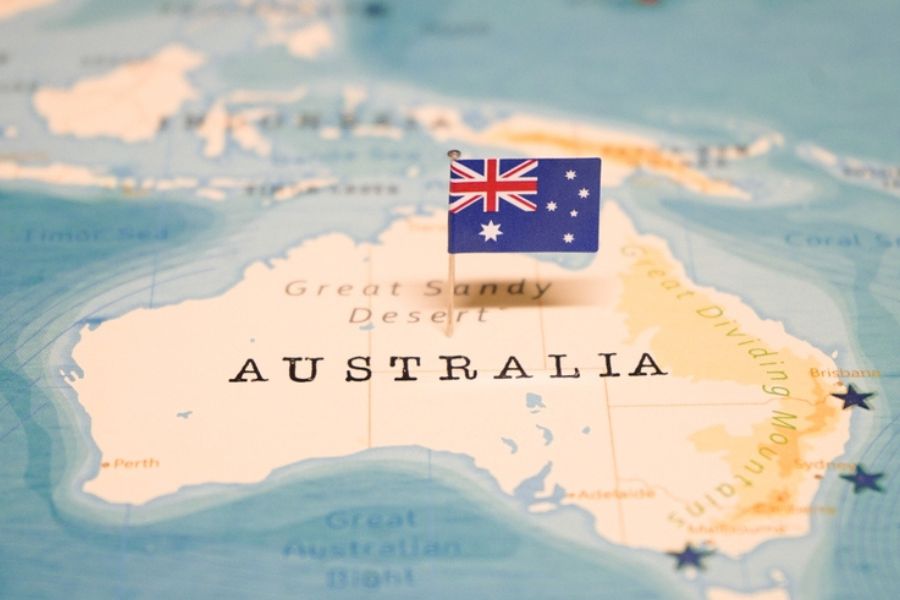
Australia-based sports betting operator PointsBet has taken aim at the government’s wagering advertising reforms, warning that further restrictions risk handing the market advantage to illegal offshore operators.
The reforms will also make the operating model for licensed operators “more complicated and more expensive,” according to comments from PointsBet Group CEO Andrew Catterall at the company’s Annual General Meeting on Wednesday.

As reported by Complete iGaming, the parliament has – under pressure from anti-gambling campaigners – passed the Interactive Gambling Amendment (Gambling Reform) Bill 2026, which among many other changes will see wagering advertising banned during live coverage of sporting events on broadcast and online content services, as well as in sports venues and on players’ and officials’ uniforms. Similarly, the reforms ban the use of athletes, celebrities or influencers to promote wagering and restrict wagering advertising on TV to no more than three ads each hour between 5am and 8.30pm.
Catterall acknowledged that advertising reform was necessary, with PointsBet having already voluntarily discontinued its major sponsorship of NRL clubs the Manly Sea Eagles and Cronulla Sharks in 2025 and materially reduced its Free-to-Air Television spend.
However, while reserving judgement on the latest reforms until the company has received firm government guidance, he noted, “What’s clear at this point is that the operating model for licensed Australian wagering operators post-reform will get even more complicated and more expensive.

“No one involved in the Gambling Advertising reform debate should want this to afford even more advantage to the illegal offshore operators who currently don’t follow any of the rules, don’t pay any Australian tax, don’t answer to any Australian authorities and represent a very real and growing risk to the protection of Australian consumers.
“As the Government turns its attention to the implementation detail, we hope to see them focus on ensuring the relevant agencies are fully equipped to exercise new powers to block out the illegal offshore market.”
The great irony of Australia’s gambling advertising reforms and the ongoing calls from anti-gambling voices to tighten them further is that they come at the same time as discussions are underway around a potential easing of the tax burden on Australia’s tobacco industry.

Mandatory annual tax hikes imposed by the Australian government in 2013 have seen the cost of cigarettes more than triple in the decade since but have also driven a thriving illicit tobacco industry and violent gang wars between rival factions competing for control of this new multi-billion-dollar black market supply chain.
The real concern for Australia’s licensed gaming and wagering operators – both online and land-based – is that there are already signs of similar underground activity as a result of the increasingly burdensome operating restrictions they have seen introduced in recent years.

Dig Deeper
Related stories
 2026/08/25: Total Philippines gambling ad ban seen handing market back to illegal operators, data from five countries show
 2025/06/17: PointsBet rejects Betr takeover proposal in favor of MIXI deal
 2025/06/13: Australian government gives green light for PointsBet takeover
 2025/06/26: PointsBet defends shareholder vote amid Betr challenge
2026/08/25: Total Philippines gambling ad ban seen handing market back to illegal operators, data from five countries show
2025/06/17: PointsBet rejects Betr takeover proposal in favor of MIXI deal
2025/06/13: Australian government gives green light for PointsBet takeover
2025/06/26: PointsBet defends shareholder vote amid Betr challenge
The Backstory
Australia’s licensed wagering model faces another reset
PointsBet’s warning on Australia’s gambling advertising reforms lands at a moment when the company and the broader wagering sector are already adjusting to tighter rules, higher compliance costs and a more contested market for customers. The Interactive Gambling Amendment (Gambling Reform) Bill 2026 will sharply narrow how licensed bookmakers can promote their products, including bans around live sport, sports venues, uniforms and celebrity or influencer endorsements. It also limits wagering advertising on television to no more than three ads an hour between 5 a.m. and 8:30 p.m.
The policy direction reflects years of pressure from public health advocates, broadcasters, sporting bodies and lawmakers over the visibility of betting brands in Australian sport. But the industry’s counterargument has become more pointed: restrictions that bind licensed operators may not reduce demand for betting. They may instead redirect it toward offshore sites that do not pay Australian tax, comply with consumer-protection standards or submit to local enforcement.
That is the core of PointsBet Chief Executive Andrew Catterall’s argument. The company accepts that advertising reform was coming and says it had already moved ahead of the legislation by ending major sponsorships with the Manly Sea Eagles and Cronulla Sharks in 2025 and reducing free-to-air television spending. Its concern is that the final shape of implementation could raise licensed operators’ costs while leaving illegal rivals with a cleaner path to customers.
A regional debate over channeling players into legal markets
Australia’s debate mirrors a wider policy conflict across regulated gambling markets: whether limiting legal advertising suppresses gambling overall or weakens the licensed channel that regulators can monitor. In the Philippines, the same tension has shaped arguments over a proposed total ban on gambling advertising. A recent Complete iGaming analysis found that a blanket Philippines gambling ad ban could hand market share back to illegal operators, citing data from Italy, Belgium, France, the Netherlands and the U.K.
The Philippine case is relevant because regulators there have spent several years trying to move players away from unlicensed offshore platforms and into PAGCOR-supervised operators. That channelization strategy combined lower license fees, know-your-customer checks, payment controls, supplier accreditation and site-blocking referrals. The result, according to the analysis, was a legal online market that for the first time captured more than half of estimated play after years in which offshore sites dominated.
The same article argues that advertising is not merely a sales tool in a partially illegal market. It is also how consumers distinguish licensed platforms from unregulated ones. Legal operators can be fined, suspended or stripped of their licenses when promotions breach rules. Illegal platforms can change domains, use private messaging channels and pay influencers without submitting to those standards. That asymmetry is central to the Australian industry’s warning: a restriction that looks neutral on paper may be one-sided in practice.
Tobacco comparisons carry political force but economic risks
Supporters of tougher gambling advertising restrictions often point to tobacco regulation as a precedent. Australia has its own tobacco control history, and the Philippines debate explicitly invoked the Tobacco Regulation Act of 2003. The comparison is politically powerful because both industries raise concerns about addiction, youth exposure and long-term social harm.
But wagering operators argue the analogy has limits. Tobacco advertising restrictions targeted companies selling through physical supply chains that governments could tax, inspect and police. Online gambling is more porous. Offshore operators can reach customers through search, social media, encrypted groups, mirror domains and affiliate networks. The legal and illegal products also differ more sharply in gambling than in tobacco. Licensed wagering platforms are required to verify age and identity, apply exclusion lists, monitor activity, offer safer-gambling tools and respond to regulator intervention. Illegal sites avoid those obligations.
The Australian tobacco comparison also cuts another way. PointsBet’s current warning references the illicit tobacco market that grew after years of steep excise increases. The company’s argument is not that gambling should escape reform. It is that regulation that makes legal supply too constrained, expensive or invisible can improve the economics of illegal supply. For lawmakers, the challenge is to reduce harmful exposure without eroding the licensed market that gives enforcement agencies leverage.
PointsBet’s corporate battle sharpened the stakes
The advertising dispute comes after a turbulent period for PointsBet as it weighed competing takeover approaches. The company became the target of a contested acquisition process involving Japan’s MIXI and Australian rival Betr Entertainment, a fight that underscored how valuable scale, customer access and operating efficiency have become in a tightening wagering market.
PointsBet first rejected a Betr takeover proposal in favor of MIXI’s cash offer, saying Betr’s proposal was worth less than MIXI’s AU$1.20-a-share bid and carried execution risks. Betr’s offer included a mix of cash and scrip, making part of the consideration dependent on Betr’s share price. PointsBet said the synergies claimed by Betr were overstated and that integration would be difficult.
The MIXI proposal then cleared a key regulatory hurdle when the Australian government approved MIXI’s proposed takeover of PointsBet under foreign acquisition rules. That approval did not end the matter. PointsBet still needed approvals tied to its Ontario business, while Betr, which had built a stake of nearly 20%, remained in position to complicate or oppose the transaction.
The dispute escalated after a shareholder meeting on the MIXI plan. PointsBet defended the shareholder vote approving the MIXI deal after Betr alleged its vote had been improperly excluded and threatened legal action. PointsBet said the claim was inaccurate and that voting records supported its position. Betr continued to press its case and later made an improved all-scrip offer for PointsBet, valuing the company slightly above MIXI’s cash bid based on Betr’s share price and pointing to potential annual cost synergies.
Why scale matters as marketing channels narrow
The takeover fight is not separate from the advertising issue. In wagering, scale helps absorb fixed compliance costs, fund technology, maintain risk management systems and compete for customers as regulated marketing channels shrink. If advertising reform raises costs or reduces customer acquisition efficiency, operators with stronger balance sheets and larger databases are better placed to withstand the pressure.
That explains why industry consolidation tends to accelerate when regulation tightens. Smaller or mid-sized operators face a squeeze: they must keep investing in compliance while losing some of the promotional tools needed to grow. Larger groups can spread those costs over more revenue. MIXI’s interest in PointsBet offered shareholders cash certainty and the backing of a broader entertainment and technology group. Betr’s rival pitch emphasized domestic wagering synergies and the potential value of combining overlapping operations.
PointsBet’s own compliance record also forms part of the backdrop. The company recently faced an AU$500,000 fine after the Australian Communications and Media Authority found that more than 800 marketing messages breached spam and self-exclusion laws. Such enforcement actions show regulators already have tools to police licensed operators. They also strengthen the political case for tougher advertising controls. But they reinforce the industry’s counterpoint: the operators receiving fines are the ones inside the system. Offshore competitors are harder to identify, penalize or shut down.
The policy choice is enforcement as much as exposure
The next phase of Australia’s reforms will depend on implementation detail. Operators are looking for clarity on what advertising will remain permissible, how digital channels will be treated, how sports and media partners must comply and whether enforcement agencies will receive stronger powers to block offshore sites and payment pathways.
The stakes extend beyond bookmakers’ marketing budgets. Gambling tax revenue, sports sponsorship models, media advertising income and consumer-protection systems all depend in part on keeping wagering activity inside licensed channels. If legal operators lose visibility while offshore operators continue to reach Australians online, regulators could face a market that is less transparent rather than less harmful.
The emerging lesson from Australia and comparable markets is that advertising policy cannot be separated from illegal-market enforcement. Restrictions may reduce the prominence of betting in sport and mainstream media, a goal with broad public support. But without strong blocking powers, payment disruption, platform accountability and clear legal pathways for licensed brands to identify themselves, the reforms risk weakening the very operators regulators can control. That is the balance PointsBet is urging the government to strike.
