
PointsBet appoints Andrew Catterall as Group Chief Executive

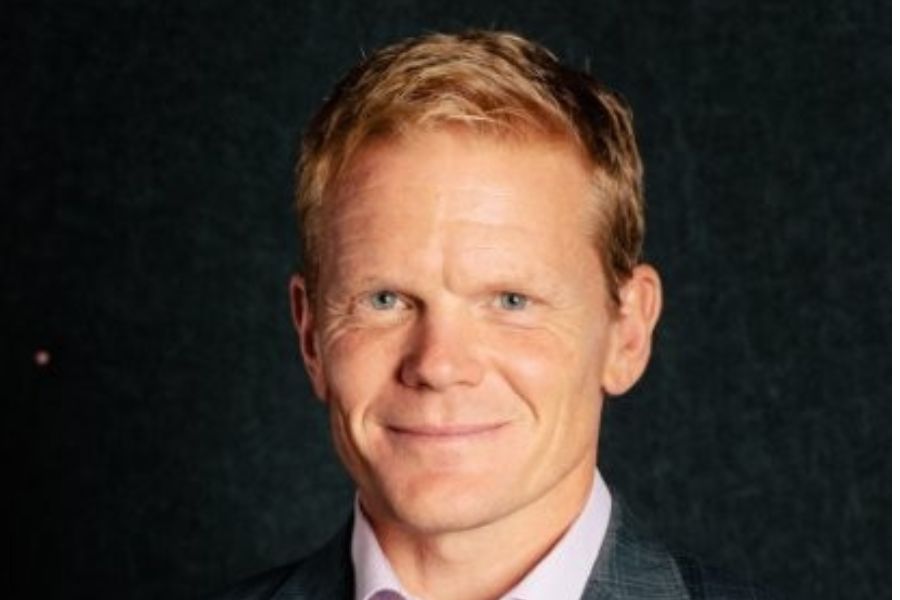
PointsBet Holdings has announced the appointment of Andrew Catterall as Group Chief Executive.
Catterall succeeds Sam Swanell, who will remain with the company through the transition and handover period before taking on an advisory role.

Catterall, who is currently Chief Executive for PointsBet’s Australian operations, will step into the new role on February 1, 2026.
According to PointsBet, Catterall has over two decades of leadership experience in the gambling, sports, and digital media sectors. After joining PointsBet in 2022, he was involved in significant changes at the Australian business.
Previously, he served as Chief Executive at horse racing media company, Racing.com, and held senior roles with the Australian Football League, Racing Victoria, and the US management consultancy firm Boston Consulting Group.
In a statement, PointsBet Holdings Chairman Brett Paton acknowledged Swanell’s contribution to the company and expressed optimism over the appointment.
“Andrew has delivered strong performance within our Australian operations and brings extensive industry expertise, strategic capability and leadership qualities that will guide PointsBet into its next phase. The board congratulates Andrew on his appointment and looks forward to working closely with him as he leads the group forward,” he said.
Earlier this week, PointsBet announced it had partnered with independent casino game developer Thunderkick in Ontario, with PointsBet to integrate a selection of Thunderkick’s slot titles to its platform.

Verticals:
Sectors:
Topics:
Dig Deeper
Related stories
 2025/08/27: Entain Australia appoints Andrew Vouris as Chief Executive
2025/11/05: Kalshi appoints former Uber executive as first Chief Financial Officer
2025/09/26: Light & Wonder appoints Rohan Gallagher as Global Chief Corporate Affairs Officer
2025/05/13: PointsBet to consider Betr takeover proposal
2025/08/27: Entain Australia appoints Andrew Vouris as Chief Executive
2025/11/05: Kalshi appoints former Uber executive as first Chief Financial Officer
2025/09/26: Light & Wonder appoints Rohan Gallagher as Global Chief Corporate Affairs Officer
2025/05/13: PointsBet to consider Betr takeover proposal
 2025/08/27: Entain Australia appoints Andrew Vouris as Chief Executive
 2025/11/05: Kalshi appoints former Uber executive as first Chief Financial Officer
 2025/09/26: Light & Wonder appoints Rohan Gallagher as Global Chief Corporate Affairs Officer
 2025/05/13: PointsBet to consider Betr takeover proposal
The Backstory
Why the shake-up matters now
PointsBet’s decision to install Andrew Catterall as group chief executive in 2026 lands at a pivotal moment for Australia’s online wagering sector. The company is navigating a contested sale process while the domestic market is tightening under higher point‑of‑consumption taxes, rising product fees and an accelerating shift of bettors to unlicensed offshore sites. The leadership handover underscores how boards are prioritizing operators with deep local experience, cost discipline and regulatory fluency as consolidation and compliance pressures converge.
The operational backdrop is unforgiving. Licensed bookmakers have been forced to recalibrate pricing, marketing and promotions as state levies increase and sports and racing bodies push for larger slices of betting turnover. At the same time, offshore competitors are exploiting ad restrictions and price sensitivity to gain share, complicating growth for domestic brands and magnifying the execution risk for any strategic pivot PointsBet attempts under new leadership.
That mix of deal uncertainty and market headwinds is why the transition’s timing matters. The company must preserve customer momentum and regulatory standing while weighing materially different futures proposed by rival bidders, each with distinct implications for capital structure, strategy and management continuity.
A takeover tug-of-war frames the next chapter
PointsBet’s board has been balancing two offers that would reshape the business. On one side, the company confirmed it would evaluate an improved approach from Betr Entertainment, a cash‑and‑stock offer carrying an implied valuation tied to expected synergies and share consideration. The company said it would conduct mutual due diligence with a focus on testing synergy value and the durability of equity upside, as outlined in its update that it would consider Betr’s takeover proposal. Betr has also amassed a 19.9% stake, positioning it to influence any shareholder vote on a rival deal.
On the other side, Japanese entertainment group Mixi raised the pressure with a sweetened bid. Mixi lifted its offer by 13.2% to AU$1.20 per share, implying a higher enterprise value and signaling willingness to proceed via an off‑market takeover with a 50.1% minimum acceptance threshold if needed. PointsBet’s board recommended shareholders accept the revised Mixi proposal, and a rescheduled investor meeting to assess the competing bids was set for June 25, according to the company’s disclosure that Mixi increased its PointsBet offer.
The outcome of that contest will influence not only ownership but also how PointsBet allocates capital, approaches product investment and aligns leadership incentives. A buyer prioritizing rapid synergy extraction could mean sharper cost cuts and a narrower product footprint. A strategic parent aiming at longer‑horizon growth may tolerate lower near‑term margins to support technology upgrades and customer acquisition. Catterall’s remit will be shaped by whichever scenario prevails, making governance alignment and stakeholder management central to the transition.
Taxation, fees and the offshore drag
Even a clean transaction will not neutralize macro headwinds. Market leader Sportsbet has warned that unlicensed offshore sites now account for a growing slice of online betting in Australia, eroding the economics for compliant operators. Sportsbet chief Barni Evans said illegal providers comprise about 15% of the market and argued that mounting fees and taxes are pressuring local bookmakers to raise overrounds and trim promotions, with knock‑on effects for customer value. He also said advertising spend has fallen sharply, opening gaps exploited by offshore brands. Those remarks came at a Sydney industry conference and were detailed in coverage that illegal offshore operators comprise 15% of the Australian market.
For PointsBet, those dynamics heighten the urgency to differentiate on product, responsible gambling and pricing discipline while defending share. They also complicate monetization for second‑tier operators without the scale of leaders. Any new chief executive will need to calibrate risk controls against growth tactics and navigate a policy environment that is moving toward tougher enforcement, higher compliance costs and potentially tighter marketing rules.
Leadership churn signals a broader reset
Catterall’s elevation fits a regional pattern of leadership changes designed to steady operations and reset culture. Entain named Andrew Vouris as permanent chief executive for Australia and New Zealand after a period in the role on an interim basis, part of a repositioning that followed regulatory scrutiny and executive departures. The company framed his mandate as building a sustainable, compliance‑led and customer‑focused culture across the Ladbrokes and Neds brands, as reported when Entain appointed Andrew Vouris as chief executive for ANZ.
That emphasis on compliance and fundamentals reflects how operators are responding to AUSTRAC enforcement, public expectations and the sector’s pivot away from a growth‑at‑any‑cost mindset. Boards are rewarding leaders who can manage stakeholder risk, keep regulators onside and still deliver product innovation that retains customers without leaning on high‑cost bonuses.
Finance firepower is becoming a competitive edge
The hunt for capital markets fluency is not limited to Australia’s bookmakers. In the United States, prediction market Kalshi appointed former Uber dealmaker Saurabh Tejwani as its first chief financial officer, signaling a desire to match regulatory expansion with financial strategy. The company’s new finance head said an initial public offering is a consideration, but the brief centers on dealmaking, international expansion and disciplined growth. The move underscores a wider trend of wagering‑adjacent platforms arming themselves with seasoned operators who can navigate fundraising cycles, evaluate partnerships and manage competitive threats, detailed when Kalshi named a former Uber executive as CFO.
For PointsBet, whether it remains independent under a new owner or as part of a larger group, the ability to fund product and compliance investments at acceptable returns will be a defining constraint. A chief executive steeped in local racing and sports ecosystems, as well as digital media, can help prioritize where to spend and where to partner. But the balance sheet and cost of capital will shape how quickly those plans move.
What’s at stake and what to watch
The stakes span beyond shareholders. Racing and sports bodies depend on operator payments. Customers feel changes in pricing, responsible gambling tools and product breadth. Employees face uncertainty during prolonged deal processes. Regulators are watching how operators implement harm‑minimization and shore up anti‑money laundering controls in a sector under public scrutiny.
Key markers ahead include the execution of PointsBet’s due diligence with Betr, any further revisions from Mixi or rival bidders, and outcomes from the rescheduled shareholder meeting targeted for June 25 under the revised timetable tied to Mixi’s increased bid. Internally, continuity during the handover to Catterall will be tested against the company’s need to hold share in a market grappling with higher taxes and rampant offshore leakage, issues highlighted in Sportsbet’s warning on illegal sites’ market share. The ability to steady operations while repositioning for the next ownership structure will determine how much freedom the incoming chief executive has to invest for growth once he takes the helm.


