

Philippines tax bureau goes after POGO linked to jailed former mayor Alice Guo

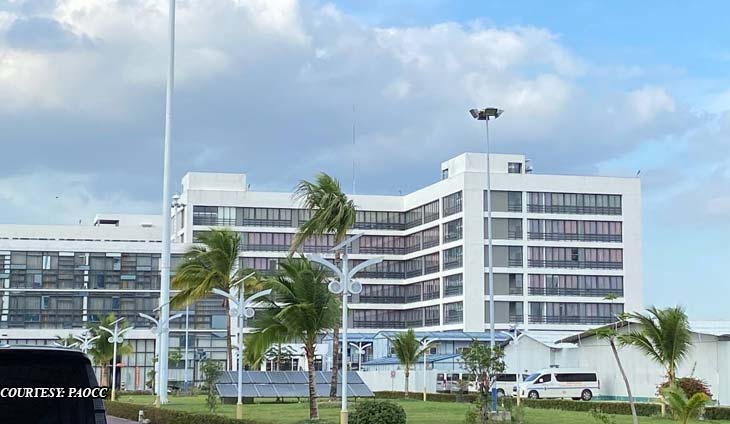
The Philippines’ Bureau of Internal Revenue (BIR) is going after a former Philippine Offshore Gaming Operator (POGO) for tax evasion, pursuing PHP2.23 billion (US$36.2 million)1 PHP = 0.0162 USD
2026-08-20Powered by CMG CurrenShift in alleged unpaid dues.
According to the Manila Bulletin, BIR Commissioner Charlito Martin R. Mendoza indicated that the tax department had lodged a criminal complaint with the Department of Justice early this month, targeting the operations of Hongsheng Gaming Technology Ltd.

The official said that investigations into the company found discrepancies between its declared earnings, finding PHP2.2 billion (US$35.7 million)1 PHP = 0.0162 USD
2026-08-20Powered by CMG CurrenShift in unpaid corporate tax income, value-added tax and employee withholding taxes.
The official noted that “No business should be able to operate in the Philippines, earn income here, and evade the taxes required by law. The BIR will pursue these cases wherever the evidence leads us.”
Hongsheng Gaming Technology has a complicated past in the Philippines, being linked to former “POGO Mayor” Alice Guo, who is currently service a life sentence in prison for qualified human trafficking linked to scam compounds.

Hongsheng operated out of a compound owned by Baofu Land Development Inc, which was co-founded by Huang Zhiyang, with Alice Guo as an owner. The Philippine Department of Justice has described Baofu as the “mother corporation” overseeing the establishment of scam centers within its compound. Huang Zhiyang has also been linked to other companies and scam compounds which authorities raided in 2023 and 2024.
The Philippines’ Anti Money Laundering Council also listed Huang Zhiyang as an officer of Hongsheng, with a warrant to search and seize computer data from the individual during its raid on Hongsheng.
Zhiyang, who has a passport from Cypress, has since been charged with money laundering. He fled the Philippines after evading arrest during the raid on Hongsheng, allegedly using Alice Guo’s helicopter. In September of 2024 he was reported to be in Hong Kong but his current whereabouts are unknown.

POGOs were officially banned from the beginning of 2025; in April of this year the Department of Justice claimed it had fully eradicated POGOs from the country.

Dig Deeper
Related stories
 2025/01/16: Former mayor Alice Guo accused of gambling-related money laundering in the Philippines
 2025/11/25: Philippine Department of Justice offers PHP1 million reward for help finding POGO-linked Cassandra Li Ong
 2025/06/10: Philippines passes Anti-POGO Act
 2026/08/17: POGO crackdown again in the spotlight, police on the lookout
2025/01/16: Former mayor Alice Guo accused of gambling-related money laundering in the Philippines
2025/11/25: Philippine Department of Justice offers PHP1 million reward for help finding POGO-linked Cassandra Li Ong
2025/06/10: Philippines passes Anti-POGO Act
2026/08/17: POGO crackdown again in the spotlight, police on the lookout
The Backstory
From licensed offshore betting to criminal-liability dragnet
The Bureau of Internal Revenue’s case against Hongsheng Gaming Technology Ltd. sits at the intersection of two Philippine policy shifts: the collapse of the POGO licensing model and the government’s effort to pursue alleged criminal proceeds after the industry’s formal shutdown.
For years, Philippine Offshore Gaming Operators were treated primarily as a regulated online gambling segment serving customers outside the country, especially in China. That model, introduced during the Duterte administration, later became a tax and enforcement problem as authorities linked some operators to scams, trafficking, money laundering and immigration violations. The state’s response has moved from regulation to prohibition, then to asset seizure, criminal prosecution and tax recovery.
The tax bureau’s PHP2.23 billion claim against Hongsheng reflects that broader turn. The company was not only part of the former offshore gaming sector. It operated from a compound that investigators have tied to former Bamban Mayor Alice Guo, Baofu Land Development Inc. and a network of figures now central to the government’s case against POGOs and associated scam hubs.
A sector first rebranded, then banned
Before the ban, regulators attempted to reset the industry’s image and oversight structure. In October 2023, the Philippine Amusement and Gaming Corp. moved to rename POGOs as internet gaming licensees, a shift described by Inside Asian Gaming in its report on PAGCOR’s plan to rename POGOs as internet gaming licensees. The change was meant to distinguish licensed offshore operators from illegal activity and narrow the number of approved entities.
That effort did not stem the political backlash. Raids on compounds in Central Luzon and elsewhere exposed alleged forced labor, cyber scams and opaque corporate structures. The industry’s fiscal contribution became harder to defend as lawmakers framed the issue as a national security, law enforcement and reputational risk.
President Ferdinand Marcos Jr. ultimately ordered the end of POGOs in 2024, a decision reported by Inside Asian Gaming in its coverage of Marcos’ immediate ban on all POGOs. The ban took effect at the start of 2025, converting what had been a contested regulatory sector into an enforcement target. By late 2024, the government was still tracking licensed and unlicensed operators as the deadline approached, with Inside Asian Gaming reporting that 47 POGOs were still operating as the shutdown deadline neared.
The tax case against Hongsheng is therefore not an isolated assessment dispute. It is part of the post-ban accounting of who profited, who facilitated operations and whether operators paid the liabilities incurred while they were active.
The Guo cases turned POGOs into a governance crisis
The political center of the crackdown became Alice Guo, the former mayor of Bamban, Tarlac. Her case linked local government, real estate ownership and offshore gaming in a way that sharpened scrutiny of how POGO-linked compounds were able to operate.
Guo has faced several proceedings tied to alleged activity in Bamban, including money laundering charges connected to a POGO hub. Prosecutors alleged that gambling-related funds were part of a wider set of illicit proceeds that also included love scams, investment scams and crypto scams. The Department of Justice’s move to approve dozens of money laundering counts showed that the government was no longer treating the Bamban case as merely an illegal gaming matter.
That broadened theory is central to the Hongsheng tax action. The government has described Baofu Land Development Inc. as a key corporate vehicle connected to the compound, while Hongsheng’s operations there became part of the evidence trail. If tax authorities can prove that income was generated but not properly reported, they add a fiscal enforcement route to criminal and forfeiture proceedings already under way.
The Guo-linked network also extended beyond a single defendant. The Justice Department later offered a PHP1 million reward for information on Cassandra Li Ong, described as a key figure in a pending case involving POGOs and human trafficking in Central Luzon. The search for Ong, detailed in the report on the Justice Department reward for help locating Cassandra Li Ong, illustrated the government’s concern that suspects and witnesses could move across borders and frustrate prosecutions.
Lawmakers built a broader enforcement architecture
The ban alone did not settle how to dismantle the sector. Lawmakers moved to strengthen the legal basis for pursuing remaining operators, property owners and assets. The Senate’s passage of the Anti-POGO Act of 2025 created a more explicit framework for confiscating properties and equipment tied to offshore gaming operations and for penalizing those that host them.
The law marked a reversal from the earlier tax-and-regulate approach under Republic Act No. 11590, the 2021 statute that set fiscal rules for offshore gaming licensees. That regime, reflected in the Bureau of Internal Revenue’s guidance under Revenue Memorandum Circular No. 107-2021, had been premised on collecting taxes from operators, service providers and employees. The Anti-POGO Act shifted the policy objective from revenue capture to eradication.
That shift helps explain why a tax case remains relevant even after the ban. The government is not choosing between prosecution, deportation, forfeiture and taxation. It is using all available tools. A company that has ceased operating may still face tax claims for income earned under the former regime. Its assets may also be subject to seizure if courts find links to prohibited activity.
The Senate bill that underpinned the new law, available in the chamber’s records as Senate Bill No. 2868, reflected growing legislative consensus that the social costs of POGOs outweighed their economic benefits. That framing turned unpaid taxes from a narrow compliance issue into part of a larger account of public harm.
Asset forfeiture raises the cost for property networks
The legal campaign advanced further when new rules on civil forfeiture of POGO-linked assets came into effect. The rules, covered in the report on POGO asset forfeiture procedures taking effect Aug. 24, allow courts to act against property itself, including buildings, equipment and other assets tied directly or indirectly to prohibited offshore gaming activity.
That mechanism matters for cases involving compounds such as the one associated with Baofu. Offshore gaming and scam operations often relied on property structures, service companies, dormitories, equipment suppliers and local facilitators. Civil forfeiture gives prosecutors and regulators a way to immobilize or seize assets even when individuals are outside the country, difficult to locate or contesting criminal charges.
For the tax bureau, forfeiture and criminal cases can strengthen the practical value of a tax complaint. A large assessment is easier to collect if assets can be preserved, if related companies are mapped and if courts accept that the properties were part of the operating infrastructure. The civil process also raises pressure on landlords and corporate officers who might otherwise argue that they merely provided premises.
That is one reason the Hongsheng matter has broader significance. The government is trying to show that former POGO operators cannot escape liability by shutting down, changing names or leaving behind insolvent shells. The message to property owners, officers and financiers is that the enforcement cycle can continue after the gambling operation ends.
Police pressure continues after the official shutdown
Authorities have also had to address the risk that POGO-linked groups reconstitute as clandestine operations. The Philippine National Police has said it remains on alert for scam hubs and underground operators, a push described in the report on the renewed police crackdown on former POGOs. The implementing rules for the Anti-POGO Act are intended to give agencies clearer authority to coordinate surveillance, raids and evidence gathering.
The stakes extend beyond domestic enforcement. Philippine officials have worried that operators displaced by the ban could relocate within the region or continue targeting victims from hidden bases. The country’s removal from the Financial Action Task Force grey list in 2025 added another incentive to sustain the crackdown: demonstrating that reforms against money laundering, trafficking and illicit finance are not temporary.
The Hongsheng tax complaint fits that credibility test. It links old regulatory obligations to the new anti-POGO regime and shows how fiscal agencies can support criminal justice efforts. For the BIR, the case is about alleged unpaid corporate income tax, value-added tax and withholding taxes. For the wider government, it is part of proving that the end of POGOs means more than license cancellations. It means tracing money, holding facilitators accountable and preventing the infrastructure of offshore gaming from being reused for scams.