
Peter & Sons partners with Casino Time to expand Ontario presence

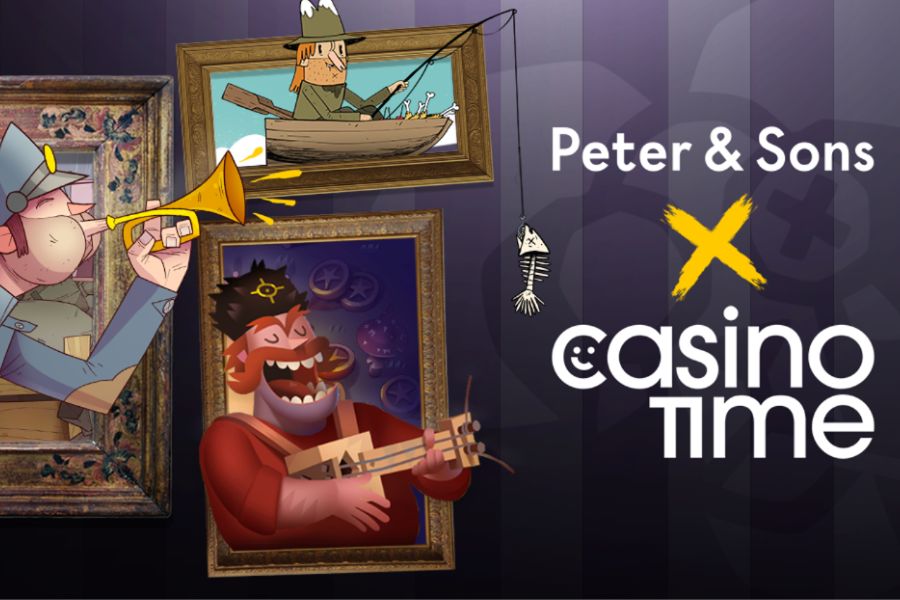
Game development studio Peter & Sons has partnered with Ontario operator Casino Time, in collaboration with Light & Wonder, to strengthen its presence in the province.
As part of the move, Casino Time players will be able to access Peter & Sons’ extensive collection of casino titles, including Barbarossa Dragon Empire, Bad Santa, and Zombie Road.
Peter & Sons Founder and Commercial Director Yann Bautista said, “Ontario has long been a major focus for us, and partnering up with Casino Time marks an exciting milestone for our expansion in the region. Their commitment to delivering top-tier entertainment aligns perfectly with our bold vision, and we’re looking forward to sharing some of our most beloved titles with Casino Time’s audience.”
The gaming development studio is renowned for its diverse array of indie-style games and meticulously crafted character and game worlds. It also offers a variety of game types, including slots, live casino games, and bingo.
Chief Operating Officer of Casino Time, Jeffrey Holmes, added, “We are thrilled to partner with Peter & Sons, a studio renowned for its distinctive artistic style and highly engaging gameplay. As we continue to cement our leading position in the Ontario market, this agreement represents a major step in expanding the premium entertainment we offer to players.”

In September of last year, Casino Time announced a partnership with software provider Playson to gain access to Playson’s Hold and Win Portfolio of titles.
Abi Bray brings strong researching skills to the forefront of all of her writing, whether it’s the newest slots, industry trends or the ever changing legislation across the U.S, Asia and Australia, she maintains a keen eye for detail and a passion for reporting.

Verticals:
Sectors:
Topics:
Dig Deeper
Related stories




The Backstory
Ontario’s pull and the race for distribution
Ontario has become a proving ground for real-money gaming studios looking to scale fast inside a regulated North American market. That explains why midtier developers and aggregators keep circling the province’s licensed operators and why partnerships continue to stack up. The momentum favors suppliers that can place content with multiple brands, then calibrate hits for local tastes. For operators, the appeal is a fuller library that improves acquisition and retention while meeting compliance standards. The commercial logic behind that two-sided marketplace has set off a steady cadence of deals that prime the pump for more content and more cross-promotion in 2025.
Casino Time is a case study in how that flywheel works. The operator only launched online in 2024 yet has moved quickly to extend its catalog through aggregator pipes and direct studio deals. One pivotal move was Playson’s Ontario expansion via Casino Time, which brought the supplier’s Hold and Win portfolio to the brand through Light & Wonder’s platform. It paired a growth-minded operator with a studio known for sticky mechanics and mobile-forward design. In a parallel lane, Playson also broadened its provincial reach with another operator, signaling depth across the market, through a High Flyer Casino tie-up in Ontario. Those moves show a pattern: studios establish a beachhead with one or two operators, prove performance, then widen distribution to secure sustained shelf space.
What recent deals signal about content strategy
For suppliers, the playbook is increasingly consistent. First, secure regulated access and an aggregation pathway. Second, seed the market with a compact slate tailored to local preferences. Third, follow with a pipeline of fresh titles to keep the carousel moving. RubyPlay’s U.S. push reflects that model. In New Jersey, it aligned with a high-visibility brand via a partnership with Hard Rock Bet Casino, debuting a curated mix like Diamond Explosion Patriots and Immortal Ways Diamonds SE, then planning staged rollouts of 10 more games. The studio used Rush Street Interactive for its initial state entry earlier in the year, then leveraged a second operator to broaden exposure. Ontario suppliers are following similar sequencing to widen their footprint while keeping marketing efficient.
Operators, meanwhile, want reliable performers they can surface in promotions and loyalty programs without overspending on bespoke integrations. That’s why mechanics-driven series such as Hold and Win keep showing up across multiple lobbies. Playson’s deal with High Flyer Casino underscores that the format has traction in Ontario, helping operators fill themed collections and seasonal campaigns. When operators like Casino Time layer in additional studios with distinct art styles and math models, the combined catalog reduces volatility in engagement metrics. This diversification helps brands smooth out peaks around major launches and retain players between tentpole drops.
Market context: regulated growth and competitive pressure
Ontario’s regulated framework has drawn a wide mix of international studios precisely because it offers predictable licensing and consumer protections alongside a sizable player base. That balance contrasts with unregulated gray markets, allowing operators to invest in longer-term content road maps. It also puts pressure on suppliers to localize quickly and to demonstrate measurable uplift in session length, conversion and reactivation. Partnerships like Playson’s integration with Casino Time through Light & Wonder indicate how aggregation reduces friction and shortens time to market for both sides.
Competitive dynamics outside Ontario add urgency. In the U.S., state-by-state growth rewards early movers that lock in marquee distribution before the field crowds. RubyPlay’s New Jersey alignment with Hard Rock Bet Casino shows how a single high-profile operator can amplify brand recognition and speed data collection on local preferences. In Latin America, scale is accelerating even faster as regulation opens new channels and mobile adoption deepens. The studio slate that connects in Ontario today often becomes the backbone for regional portfolios elsewhere, creating efficiencies in art, math and feature iteration across markets.
Global expansion informs the play in Ontario
Studios also see Ontario as one node in a broader global expansion strategy where learnings transfer across regulated regions. Peter & Sons, for instance, has been pushing into Latin America with a Brazil launch via SkillOnNet’s PlayUZU.br and BacanaPlay.bet.br. That move follows entries into Mexico, Peru and Argentina, positioning the studio to test content against diverse audiences. Brazil’s potential scale, with analysts projecting a multibillion-dollar market by 2028, raises the stakes for studios to refine game families and live ops that can travel. Insights from those rollouts can inform Canadian positioning, from volatility tuning to theme selection to bonus pacing that suits provincial player behavior.
The feedback loop runs the other way too. Ontario’s emphasis on responsible gaming tools and transparent promotion provides a template that can be adapted as other jurisdictions formalize oversight. Cross-market synergies matter because studios need consistent revenue streams to sustain production and user acquisition. Deals that place content with multiple Ontario operators, as seen with Playson’s High Flyer Casino partnership and its Casino Time integration, help de-risk release schedules and strengthen negotiating leverage on future pipeline commitments.
Why the digital shift elsewhere is a warning and an opportunity
The online pivot isn’t limited to North America. In the Philippines, integrated resort operators are scaling remote offerings as electronic gaming outpaces legacy channels. Newport World Resorts laid out plans to grow its digital touchpoints after electronic gaming surged to represent a majority of industry performance, with Newport World Resorts preparing a mass-market version of its online casino while reiterating compliance with evolving regulation. The message for Ontario-facing suppliers and operators is clear: digital distribution is becoming the primary growth driver, and the competitiveness of a portfolio will increasingly be judged on its ability to capture time across devices and markets.
As regulators sharpen scrutiny, operators that can demonstrate robust responsible gaming features and verifiable compliance will have an edge in cross-border expansion. Studios that align with those standards can expect smoother certifications and faster onboarding. Ontario’s ecosystem, with its emphasis on regulated stability and data-informed operations, offers a living laboratory for that future. The province’s steady inflow of partnerships—from Playson’s distribution with High Flyer Casino to broader U.S. moves like RubyPlay’s New Jersey rollout—underscores how content, compliance and scale now move in lockstep.
The stakes are rising. Operators want differentiated libraries that keep players engaged without promotional overspend. Studios need multi-operator exposure to monetize pipelines and benchmark performance across geographies. Aggregators seek to be the connective tissue that accelerates both. Ontario sits at that intersection. The deals cut here are setting the tone for how studios and brands will compete in North America and beyond through 2025, with content cadence, localization and responsible play shaping who wins share and who follows.

