


PAGCOR Chairman sets 4Q26 for launch of official app to find legitimate online gaming platforms at opening of IAG Academy Summit


The Chairman and CEO of the Philippine gaming regulator PAGCOR has announced that the group is planning to launch an official application within the fourth quarter of this year to help online players find legitimate online gaming platforms.
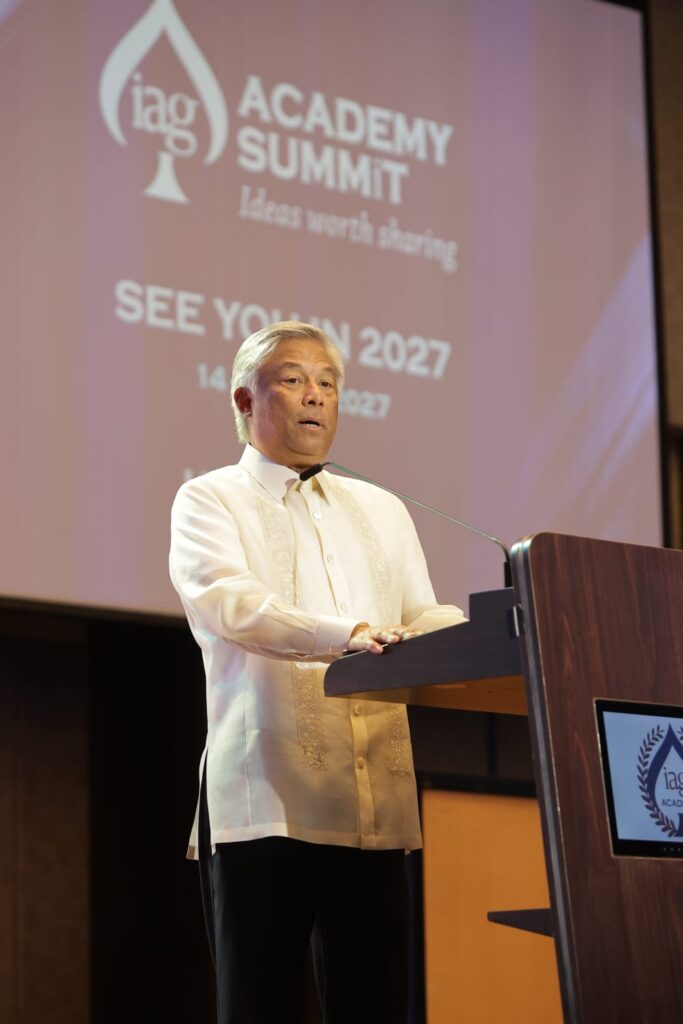
Speaking at the opening day of the IAG Academy Summit at the Hilton at Newport World Resorts in Manila, PAGCOR Chairman Alejandro H. Tengco noted that the new “platform will give players a convenient and reliable tool to access legitimate platforms where safeguards, accountability, measures and responsible gaming standards are firmly in place.”

The announcement comes after Monday panels at the inaugural Complete iGaming iDEA Summit, where numerous panelists, including PAGCOR’s Assistant Vice President, Remote Operations and Ancillary Services Department, Jessa Mariz R. Fernandez, noted that the unlicensed or unregistered online gaming platforms still make up roughly 50% of the market.
Electronic gaming saw significant growth in recent years in the Philippines, even outpacing land-based GGR. Under new stringent conditions, including the de-linking of e-wallets from igaming platforms, more stringent advertising and KYC rules and a move to improve responsible gaming initiatives.
In addition, after a March 2024 moratorium on new Gaming System Administraors (GSAs), this year PAGCOR also implemented a Minimum Guaranteed Fee (MGF) for GSA, meaning the licensed companies have to pay a percentage-based fee per month on GGR and cannot remain dormant. The Chairman mentioned the MGF in his keynote, noting that it was “meant to improve transparency, prevent revenue underdeclaration and ensure that all participants contribute fairly to national revenues.”

This went in line with the Unified Gaming License – “a streamlined licensing approach for land-based electronic licenses.” Together the Chairman notes that the MGF and UGL “reforms reflect the new reality that, as the Philippine gaming landscape becomes more complex, regulation must adapt.”
In his keynote address at the event, the Chairman highlighted that in 2Q26, “industry gross gaming revenue declined by 20% to PHP88 billion (US$1.4 billion)1 PHP = 0.0159 USD
2026-09-15Powered by CMG CurrenShift […] compared with PHP110 billion (US$1.7 billion)1 PHP = 0.0159 USD
2026-09-15Powered by CMG CurrenShift […] in the same period of last year.”
Tengco noted that, “The decline was driven largely by weaker revenues by the electronic gaming sector, compounded by inflationary pressure and persistent tensions in the Middle East, which has affected discretionary consumer spending.”

The executive furthered that “These developments are a reminder that the gaming industry cannot rely solely on the momentum of the previous years. Market conditions evolve, consumer behavior changes and external factors can quickly reshape the operating landscape.”
Despite the challenges, the PAGCOR Chairman lauded how “the rapid growth of electronic and online gaming in recent years has demonstrated the enormous opportunities created by technology and digital connectivity,” while cautioning that “competition across the region continues to grow.”

Dig Deeper
Related stories
 2026/08/21: Report warns potential investors that purchasing PAGCOR-accredited igaming companies is more complicated than it appears
 2026/08/25: Total Philippines gambling ad ban seen handing market back to illegal operators, data from five countries show
 2026/08/30: Complete iGaming announces full program for igaming-focused CiG iDEA Summit at IAG EXPO in Manila on Monday 14 September
 2025/11/27: PAGCOR Chairman commends Philippine licensees for resilience amid tightening regulation
2026/08/21: Report warns potential investors that purchasing PAGCOR-accredited igaming companies is more complicated than it appears
2026/08/25: Total Philippines gambling ad ban seen handing market back to illegal operators, data from five countries show
2026/08/30: Complete iGaming announces full program for igaming-focused CiG iDEA Summit at IAG EXPO in Manila on Monday 14 September
2025/11/27: PAGCOR Chairman commends Philippine licensees for resilience amid tightening regulation
The Backstory
Regulator moves from licensing push to consumer navigation
PAGCOR’s plan to launch an official app directing players to legitimate online gaming platforms is the latest step in a regulatory campaign that has shifted from expanding the licensed market to protecting it. The Philippine regulator spent the past several years trying to move online gambling out of offshore and unlicensed channels and into supervised operators that pay fees, verify customers and follow responsible gaming rules. The proposed app addresses a practical weakness in that strategy: players still need a reliable way to tell a legal platform from an illegal one.
The stakes have grown as electronic gaming became one of the Philippines’ most important gaming segments, at times outpacing land-based gross gaming revenue. That growth drew operators, suppliers, payment providers and investors into the market, but it also forced PAGCOR to tighten controls around advertising, e-wallet links, player verification and platform approvals. The app proposal fits that broader shift. It is not merely a directory. It is intended to reinforce channelization, the policy goal of moving wagers onto platforms where the regulator can see transactions, sanction misconduct and apply responsible gaming safeguards.
A summit framed around a market at an inflection point
The announcement came against the backdrop of the inaugural CiG iDEA Summit and IAG Academy Summit in Manila, events built around the same regulatory questions now confronting the market. Inside Asian Gaming and Complete iGaming had positioned the CiG iDEA Summit as a forum on the Philippines’ evolving online gaming framework, with sessions on market entry, localization, operating models, sustainability, suppliers and Special Class BPOs. The program’s emphasis reflected how quickly the Philippines had become the region’s central test case for regulated iGaming.
PAGCOR Assistant Vice President Jessa Mariz R. Fernandez was selected to deliver the summit keynote, underscoring the regulator’s central role in shaping the next phase. Her portfolio covers remote operations, electronic gaming licensing, service-provider accreditation and platform approvals. Complete iGaming said Fernandez would address PAGCOR’s framework for the long-term health of the regulated online gaming industry, a theme that now runs through Tengco’s latest remarks: growth is welcome, but only if it can withstand public concern, enforcement pressure and political scrutiny.
Illegal operators remain the central threat
The policy urgency is rooted in the size of the illegal market. Summit panelists, including Fernandez, said unlicensed or unregistered platforms still account for roughly half of Philippine online gaming activity. That figure helps explain why PAGCOR wants an official consumer-facing tool. If illegal sites can mimic licensed brands, buy digital traffic and reach players through informal marketing channels, licensing alone may not be enough to steer customers toward legal platforms.
The risk was explored in a recent analysis by Arden Consult’s Marie Antonette Quiogue, published by Complete iGaming, which argued that a total gambling advertising ban could hand visibility back to illegal operators. The article traced how the Philippines moved from a market dominated by offshore operators in 2022 toward one in which licensed platforms had gained ground through lower license fees, real-time monitoring, KYC-verified payments, supply-chain accreditation and site-blocking efforts. Its central warning was that legal operators can be controlled only because they are licensed, while illegal operators remain harder to fine, suspend or deter.
That argument is directly relevant to PAGCOR’s planned app. If advertising is curtailed and payment access becomes more restrictive, players may have fewer obvious signals of which brands are legitimate. A regulator-approved registry in app form could become a substitute discovery channel, allowing PAGCOR to promote legal options without relying solely on commercial advertising. It would also support responsible gaming messaging by pointing users toward platforms subject to exclusion rules, complaint handling and technical controls.
New safeguards have already slowed momentum
PAGCOR’s tighter rules have had measurable commercial effects. Tengco has acknowledged that delinking e-wallets from online gaming platforms triggered a temporary decline in activity, even as he defended the policy as necessary for safer practices. At an Association of Independent Licensed Gaming and Amusement Operators event, he commended licensees for complying with stricter regulation and said operators should view reforms as safeguards rather than obstacles.
The transition has not been painless. The industry has faced tighter advertising rules, enhanced KYC requirements, prohibitions on certain payment methods, stronger technical controls and closer scrutiny of promotions. Those measures are intended to protect players and separate licensed operators from illegal sites. But they also raise costs, reduce frictionless deposits and pressure revenue, particularly for companies that built growth models around fast onboarding and broad digital reach.
Tengco’s latest disclosure of a 20% year-on-year decline in second-quarter industry GGR to PHP88 billion from PHP110 billion shows the scale of the adjustment. He attributed the fall largely to weaker electronic gaming revenue, compounded by inflation and geopolitical tensions affecting discretionary spending. That matters because the regulator’s enforcement campaign depends in part on a viable licensed sector. If legal revenues contract too sharply while illegal operators keep recruiting players, the state loses both visibility and funding.
Investment appeal now comes with regulatory complexity
The Philippines remains attractive to foreign suppliers and operators because it offers something scarce in Asia: a functioning regulated online gaming market. But the conditions for participation have become more demanding. A recent Arden Consult legal guide, summarized by Complete iGaming, warned that investors looking to acquire PAGCOR-accredited companies face a more complicated process than a simple license purchase. The report said a moratorium on new Gaming System Administrator applications and a new minimum guaranteed fee structure had created consolidation pressure, but also made due diligence more important.
According to the analysis, buyers considering PAGCOR-accredited iGaming companies must account for continuing board approval, historical liabilities, player-fund obligations and restrictions on who may control regulated operations. A platform, domain or brand does not itself confer authority to conduct gaming. PAGCOR must approve changes in ownership, system architecture and operating arrangements.
That caution aligns with the regulator’s broader posture. PAGCOR is signaling that licenses are not passive assets to be traded or warehoused. Operators must show capital, compliance systems, responsible gaming tools and sustainable revenue. The planned app would likely amplify that distinction by giving players a direct way to identify companies still in good regulatory standing, increasing the reputational value of compliance.
The next phase is about trust, not just growth
The current debate is less about whether online gaming will continue in the Philippines than about what kind of market will survive. PAGCOR is trying to preserve the gains of legalization while responding to public concern over gambling harm, aggressive promotions and easy payment access. Lawmakers are considering advertising restrictions, operators are adjusting to lower-friction controls being removed and illegal sites are competing outside the system.
An official app could become a practical bridge between those pressures. It would give consumers a government-backed reference point, help legal operators remain discoverable under stricter marketing rules and reinforce the principle that regulated play carries protections illegal sites do not offer. Its effectiveness, however, will depend on adoption, accuracy, user experience and whether PAGCOR can keep pace with illegal operators that constantly change domains and marketing tactics.
The broader lesson from the related developments is that the Philippines has entered a more mature phase of regulation. Early growth proved demand. The next phase will test whether PAGCOR can keep that demand inside supervised channels while reducing harm and maintaining public confidence. Tengco’s app proposal is a response to that challenge: if the legal market is to remain viable, players must be able to find it.
